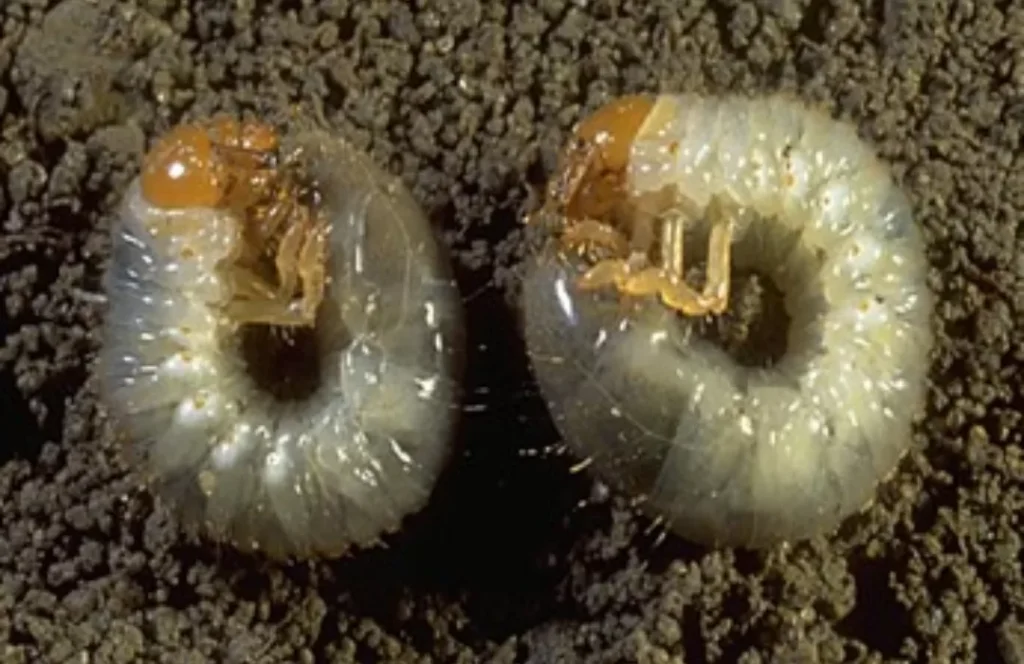
Brown patches that don't respond to watering. Turf that rolls back like carpet when you tug on it. Skunks tearing up your yard at night looking for a snack.
If any of that sounds familiar, you're probably wondering how do you get rid of grubs in your lawn before they turn it into a dirt lot.
The good news is that grub control is straightforward once you understand the timing. The bad news is that most people either treat at the wrong time or use the wrong product for their situation. In our research, the single biggest mistake is applying a preventive product in September when the grubs are already large and actively feeding.
That's like locking the barn door after the horse has already left.

Image source: Wikimedia Commons / Сарапулов (CC BY)
Quick Answer
Apply a preventive insecticide containing imidacloprid or chlorantraniliprole in late May through July. If you missed that window and grubs are already present, use trichlorfon (Dylox) as a curative treatment in late summer. Always water in granular products with about half an inch of irrigation.
Confirm you actually have grubs before treating by digging a one-foot-square section of turf and counting what you find.
How to Tell If You Actually Have Grubs (And Not Something Else)
Grub damage gets misdiagnosed all the time. Drought stress, fungal disease, dog urine spots, and compacted soil can all cause brown patches that look similar at a glance. Before you spend a dime on treatment, you need to confirm what you're actually dealing with.
The simplest test is the tug test. Grab a handful of brown turf and pull. If it lifts up easily like a loose carpet with no roots holding it down, grubs have likely chewed through the root zone.
Healthy turf, even when brown from drought, still has roots anchoring it to the soil.
For a definitive answer, grab a shovel and cut a one-foot-square section of turf at the edge of a damaged area. Peel it back and look at the top three inches of soil. Count the grubs you see.
Then replace the square and water it back down. It'll re-root within a week or two.
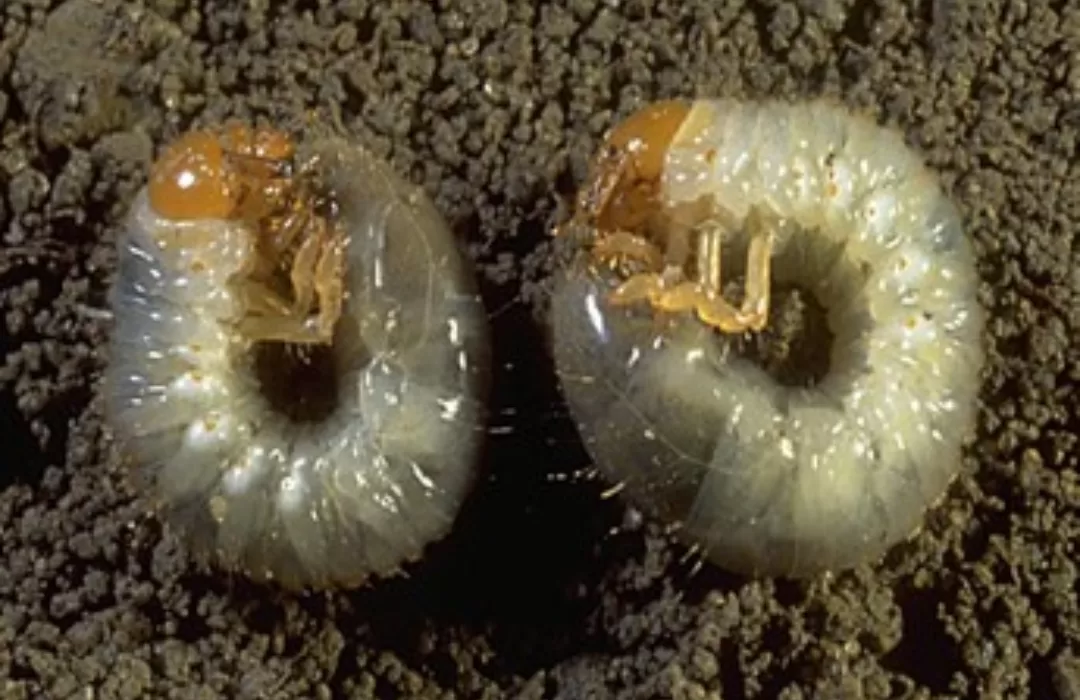
Image source: Bing (Web (fair-use with source credit))
Here's what to look for when identifying grubs:
- C-shaped body when at rest, creamy white with a brown head capsule
- Three pairs of legs near the head end
- Size varies by species, from about a quarter inch to over an inch long
- Found in the root zone, typically in the top two to four inches of soil
Other signs that point to grubs include increased bird activity on your lawn, patches that feel spongy underfoot, and animal digging. Skunks and raccoons can destroy a lawn overnight going after grubs, often causing more visible damage than the grubs themselves.
If you find fewer than five grubs per square foot, most healthy lawns can tolerate that level without treatment. Between five and ten, you're in a gray area depending on your lawn's overall health and drought stress. Above ten per square foot, treatment is almost always warranted.
The Grub Life Cycle: Why Timing Is Everything
Understanding the grub life cycle is the difference between a treatment that works and money down the drain. Every product on the market targets a specific stage of this cycle, and applying at the wrong time means the grubs barely notice.
Adult beetles lay eggs in mid to late summer, typically July and August depending on your region. Those eggs hatch into small larvae within about two weeks. The young grubs feed aggressively on grass roots through late summer and into fall.
They burrow deep into the soil to overwinter when soil temperatures drop below about 50°F. In spring, they move back up to feed briefly before pupating into adult beetles.
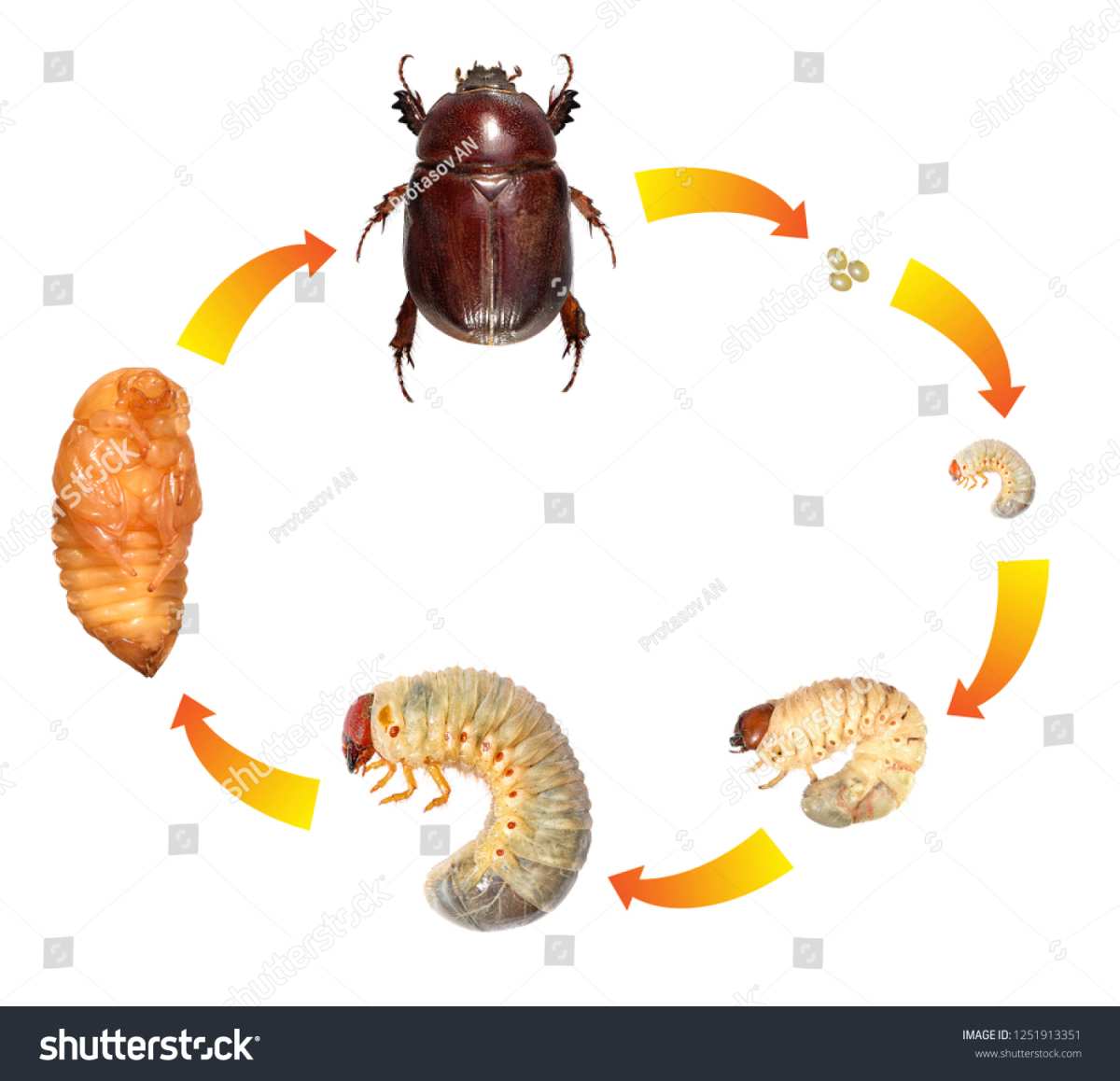
Image source: Bing (Web (fair-use with source credit))
Here's the critical part. Preventive products target eggs and newly hatched grubs. They don't work well on large, mature larvae.
Curative products target the larger grubs but need to be applied when those grubs are actively feeding near the surface.
This gives you two distinct treatment windows:
| Treatment Type | Best Application Window | Target Stage | Product Examples |
|---|---|---|---|
| Preventive | Late May through July | Eggs and early instar larvae | Imidacloprid, chlorantraniliprole, halofenozide |
| Curative | Late July through September | Late instar larvae actively feeding | Trichlorfon (Dylox), carbaryl |
If you apply a preventive product in September, the grubs are already large and the product won't touch them. If you apply a curative product in June, the eggs haven't hatched yet and the active ingredient will degrade before the grubs are vulnerable.
How Many Grubs Is Too Many? Understanding Treatment Thresholds
Not every grub in your lawn requires a chemical response. Turfgrass is surprisingly resilient, and a low grub population won't cause visible damage in a well-maintained lawn. Treating when you don't need to wastes money and introduces unnecessary chemicals into your soil.
The general threshold used by most university extension services is five to ten grubs per square foot for cool-season grasses like Kentucky bluegrass, fescue, and perennial ryegrass. Warm-season grasses like Bermuda and zoysia can sometimes tolerate slightly higher numbers because of their aggressive root systems.
However, the threshold isn't fixed. Several factors push it up or down:
- Lawn health: A thick, well-fertilized, properly watered lawn tolerates more grubs than a stressed one
- Drought conditions: Dry soil amplifies grub damage because the grass can't regenerate roots fast enough
- Grub species: Some species like the Japanese beetle grub are more damaging at lower numbers than others
- Animal activity: Even a moderate grub population warrants treatment if skunks or raccoons are tearing up your lawn
If you're on the fence, dig multiple samples from different areas of the lawn. Grub populations are often patchy, so one square foot might have fifteen grubs while another has none. Map out where the hotspots are and consider spot-treating rather than blanketing the entire yard.
Preventive vs. Curative Grub Control: Which One You Need Right Now
This is the decision point that determines everything else. The right choice depends entirely on when you're reading this and what's happening in your lawn.
You need preventive control if:
- It's May, June, or July
- You had grubs last year and want to stop a repeat
- You're seeing adult beetles flying around your yard
- Your lawn looks healthy and you want to keep it that way
Preventive products like those containing imidacloprid or chlorantraniliprole work by creating a toxic zone in the soil that kills grubs as soon as they hatch and start feeding. They're most effective against small, newly hatched larvae. Chlorantraniliprole (sold as GrubEx and other brands) has become the go-to preventive because it's lower toxicity to bees and other non-target organisms compared to older neonicotinoid options.
You need curative control if:
- It's August or September
- You're seeing brown patches right now
- You dug and found more than ten grubs per square foot
- Animals are actively digging in your lawn
Trichlorfon (Dylox) is the most widely available curative option for homeowners. It kills existing grubs within 24 to 72 hours of application. The downside is its window of effectiveness is short, about one to two weeks, so timing matters.
You need to apply it when grubs are actively feeding near the surface, not after they've already burrowed deep for winter.
Carbaryl (Sevin) is another curative option but has higher toxicity to bees and beneficial insects. It's effective but requires more care around flowering plants and pollinator habitat.
Here's a simple decision framework:
- Is it May through July? Go preventive with chlorantraniliprole or imidacloprid.
- Is it August through September and you see active damage? Go curative with trichlorfon.
- Is it October or later? Wait until next year's preventive window. Grubs are too deep now.
- Do you have fewer than five grubs per square foot? Skip treatment and monitor next year.
The Best Products for Each Situation (And When to Use Them)
Not all grub control products are created equal. The right one depends on your timing, your grub pressure, and your comfort level with different chemical classes.
Chlorantraniliprole (GrubEx and similar brands)
This is the current gold standard for preventive grub control. It belongs to the anthranilic diamide class and works by affecting the grub's muscle function. It's effective at low application rates and has a favorable safety profile for mammals, birds, and bees when used according to label directions.
One application in late spring or early summer provides season-long control. It's the product most university extension services recommend for routine preventive treatment as of 2026.
Imidacloprid (Merit and generic formulations)
This neonicotinoid has been the workhorse of grub prevention for decades. It's highly effective against early-stage grubs and provides good residual activity. However, neonicotinoids have faced increasing scrutiny due to their impact on pollinators.
Several states and municipalities have restricted their use. Check your local regulations before purchasing. If you do use it, never apply to blooming plants or areas where bees are actively foraging.
Trichlorfon (Dylox)
This is your go-to curative option. It's an organophosphate that kills existing grubs fast, often within a day or two. The tradeoff is short residual activity, so you need to time it right.
Apply in late summer when grubs are small to medium-sized and feeding near the surface. It's one of the few products that works on larger, late-instar grubs that preventive products can't touch.
Beneficial nematodes (Heterorhabditis bacteriophora)
These microscopic worms seek out grubs in the soil and release bacteria that kill them. They're a solid organic option but come with caveats. They need to be applied when soil temperatures are between 60 and 85°F.
They require moist soil before, during, and after application. And they have a short shelf life, so buy from a reputable source and use them immediately. They work best as a preventive or early curative treatment against small grubs.
Milky spore (Paenibacillus popilliae)
This bacterial disease specifically targets Japanese beetle grubs. It's been around for decades and has a loyal following. The reality is more nuanced than the marketing suggests.
Milky spore takes two to five years to establish meaningful populations in the soil. It works best in warm climates, Zone 7 and south, where soil temperatures support bacterial activity. In cooler regions, results are inconsistent.
It's a long-term strategy, not a quick fix.
| Product | Type | Best Timing | Kill Speed | Residual | Pollinator Risk |
|---|---|---|---|---|---|
| Chlorantraniliprole | Preventive | May–July | 1–2 weeks | Full season | Low |
| Imidacloprid | Preventive | May–July | 1–2 weeks | 8–12 weeks | Moderate to high |
| Trichlorfon (Dylox) | Curative | Aug–Sept | 24–72 hours | 1–2 weeks | Low |
| Beneficial nematodes | Biological | July–Sept | 1–2 weeks | None | None |
| Milky spore | Biological | Any (long-term) | N/A | 10+ years in warm climates | None |
How to Apply Grub Control Products So They Actually Work
Buying the right product is only half the battle. Poor application is the reason many people treat their lawn and still have grubs a month later. The active ingredient needs to reach the root zone where grubs are feeding, and that takes more than just scattering granules and hoping for the best.
Start by mowing your lawn a day or two before application. You want the grass short enough that the granules can reach the soil surface. Tall grass catches most of the product on the blades, where it does absolutely nothing for your grub problem.
Use a broadcast spreader for most lawns. Drop spreaders work too but require more passes and careful overlap to avoid stripes. Calibrate your spreader according to the product label.
Every product has a specific application rate, usually listed in pounds per 1,000 square feet. Guessing leads to under-treatment that doesn't kill grubs or over-treatment that wastes money and risks environmental harm.
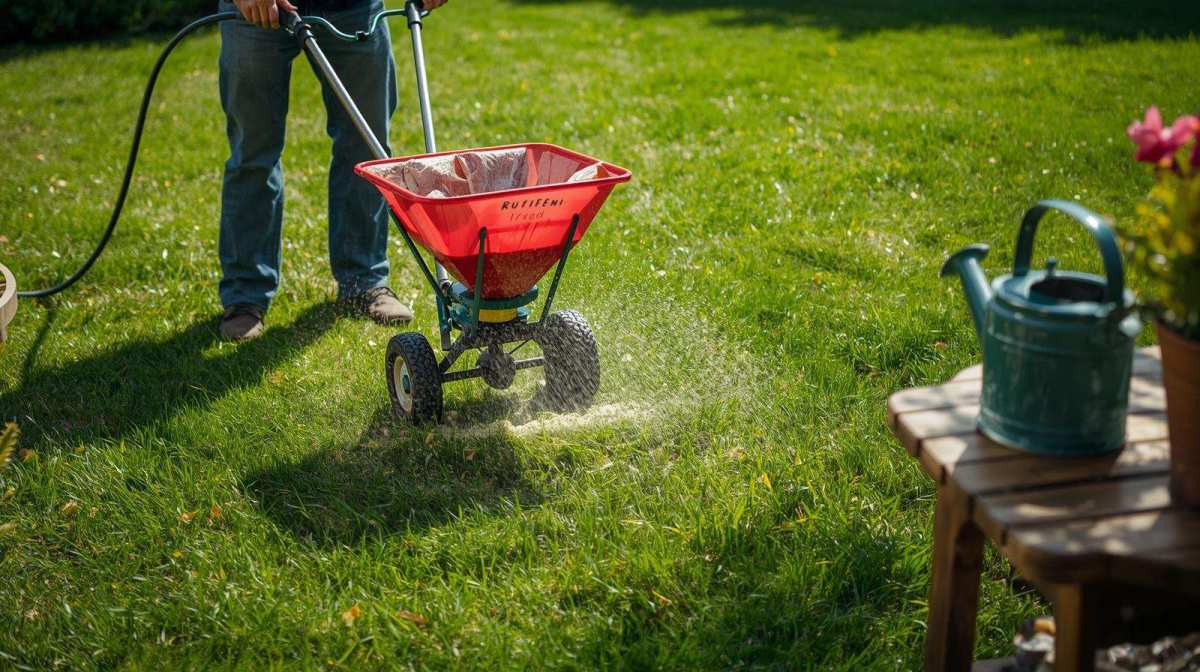
Image source: Bing (Web (fair-use with source credit))
Apply in a crisscross pattern for even coverage. Make one pass north to south, then a second pass east to west. This reduces the chance of missed spots.
Overlap your wheel tracks by about half to avoid thin strips.
The most critical step comes after spreading. Water the lawn with about half an inch of irrigation. This washes the granules off the grass blades and carries the active ingredient into the soil where grubs live.
Without this step, most granular products sit on the surface and degrade in sunlight before they ever reach the target zone.
A few application tips that make a real difference:
- Apply when rain isn't forecast for at least 24 hours, unless you plan to water in manually
- Water in within 24 hours of application for best results
- Keep pets off the lawn until the product is watered in and the grass is dry
- Don't apply to frozen or saturated soil, the product won't move into the root zone properly
- Mark your calendar with the application date so you know when residual activity expires
Organic and Biological Options: Milky Spore, Nematodes, and Beyond
If you'd rather not put synthetic insecticides on your lawn, you have options. They require more patience and tighter timing, but they can work if you set realistic expectations.
Beneficial nematodes are the most reliable organic curative option. Heterorhabditis bacteriophora is the species most commonly sold for grub control. These microscopic roundworms actively hunt grubs in the soil, enter their bodies, and release symbiotic bacteria that kill the host within 24 to 48 hours.
They're safe for people, pets, plants, and earthworms.
The catch is that nematodes are living organisms. They need to be stored refrigerated, used quickly after purchase, and applied to moist soil in the evening or on overcast days. UV light kills them fast, so midday sun is your enemy.
Water the lawn before and after application, and keep the soil moist for at least a week.
Milky spore is a different story. It's a bacterium, Paenibacillus popilliae, that specifically infects Japanese beetle grubs. Once established in the soil, it can persist for a decade or more.
The problem is establishment takes years, and it only works well in warm climates where soil temperatures stay above 70°F for extended periods. If you're in Zone 6 or north, milky spore is unlikely to give you meaningful results.
Neem oil and azadirachtin-based products have some repellent and growth-regulating effects on grubs, but they're not strong enough to handle a serious infestation. They work better as a supplemental tool in an integrated approach than as a standalone solution.
What to Do If the Damage Is Already Done
Sometimes you're reading this after the grubs have already done their worst. Brown patches are widespread, the turf pulls up like loose carpet, and you're wondering if any of this even matters anymore.
First, deal with any remaining grubs using a curative product. Even if the damage looks severe, killing the current population stops it from getting worse. Then assess whether the lawn can recover on its own or if you need to intervene.
Minor to moderate damage on healthy turf often recovers with proper care. Water deeply and infrequently to encourage deep root growth. Apply a light application of nitrogen fertilizer in early fall to help the grass fill in.
Most cool-season grasses will spread into thin areas if given the right conditions.
Severe damage where more than 50 percent of the root system is gone needs more aggressive action. Core aerate the lawn to relieve compaction and improve seed-to-soil contact. Overseed with a grass variety that matches your existing turf.
Keep the seeded areas consistently moist until germination, which typically takes 7 to 21 days depending on the species.
For warm-season grasses like Bermuda and zoysia, recovery can be slower because these grasses rely heavily on stolons and rhizomes. If large areas are completely dead, sodding may be more practical than waiting for sprigs to spread.
Mistakes That Waste Your Money and Let Grubs Win
The most expensive mistake is treating when you don't need to. If your grub count is below threshold and your lawn is healthy, skip the product and save your money. Grubs are a normal part of the soil ecosystem, and a small population won't hurt a well-maintained lawn.
Applying preventive products in fall is the second most common error. By September, grubs are large and feeding aggressively. Preventive insecticides don't work on mature larvae.
You're essentially pouring money onto the ground and watching the grubs keep eating.
Not watering in granular products is another frequent failure. The active ingredient needs to reach the soil to work. Granules sitting on grass blades accomplish nothing.
Always follow up with irrigation.
Using milky spore as a quick fix leads to disappointment. It's a long-term strategy that takes years to build up in the soil. If you have an active infestation right now, milky spore won't save your lawn this season.
Finally, ignoring the label rates causes problems in both directions. Under-application leaves surviving grubs that reproduce and come back stronger. Over-application wastes product, costs more, and increases the risk of environmental contamination.
The label rate exists for a reason. Follow it.
When to Call a Professional vs. Handling It Yourself
Most grub control is well within the ability of a handy homeowner. The products are available at any garden center, the application is straightforward, and the cost is reasonable. For a typical 5,000-square-foot lawn, you're looking at $20 to $50 for a DIY treatment.
However, there are situations where a licensed pesticide applicator makes sense. If your lawn is larger than 10,000 square feet, the product cost and time investment add up. If you have a severe recurring problem that DIY treatments haven't solved, a professional can identify species-specific issues and apply commercial-grade products that aren't available to homeowners.
If you're dealing with a mixed-species grub population, the treatment strategy gets more complicated and benefits from expert assessment.
Professional treatments typically run $75 to $150 per application. Many lawn care companies offer seasonal grub control as part of a broader program. If you go this route, ask what product they're using, when they plan to apply it, and whether it's preventive or curative.
A good company will explain their timing and reasoning clearly.
Your Seasonal Grub Control Calendar
Timing is everything with grub control. Here's a month-by-month breakdown for most of the United States, adjusted for your specific region by checking with your local cooperative extension service.
March through April: No treatment needed. Grubs are deep in the soil and not actively feeding. This is a good time to plan your strategy and purchase products so they're ready when the window opens.
May through June: Apply preventive products containing chlorantraniliprole or imidacloprid. This is your primary treatment window for the year. Water in thoroughly after application.
July: Last chance for preventive treatment in most regions. If you're using beneficial nematodes, early July is a good target while soil temperatures are warm but not extreme.
August through September: Switch to curative mode if needed. Apply trichlorfon (Dylox) when grubs are actively feeding near the surface. This is also the time when adult beetles are laying eggs, so you're targeting the next generation.
October through February: No treatment. Grubs are too deep in the soil for any product to reach them effectively. Focus on lawn recovery, overseeding damaged areas, and planning for next year.
Frequently Asked Questions
Can I apply grub control and fertilizer at the same time?
Yes, and many combination products exist that do both in one pass. If you're using separate products, apply the grub control first, water it in, then apply fertilizer a day or two later. This prevents the granules from interfering with each other.
How long does grub control take to work?
Preventive products kill grubs within one to two weeks of hatching. Curative products like trichlorfon work faster, often within 24 to 72 hours. You won't see the dead grubs, but you should notice a stop in new damage within a week.
Will grub damage come back next year?
It can. Adult beetles return to lay eggs in the same areas year after year. If you had a significant problem this year, plan a preventive treatment for late spring next year to break the cycle.
Are grub control products safe for pets?
Most products are safe once they're watered in and the lawn is dry. Keep pets off the treated area during application and until the grass dries completely. Read the specific product label for any additional precautions.
Can I treat grubs in a vegetable garden?
Most lawn grub control products are not labeled for use in vegetable gardens. For garden areas, beneficial nematodes are your safest option. They're OMRI-listed for organic use and won't contaminate edible plants.
What's the best time of day to apply grub control?
Early morning or late afternoon works well. Avoid midday heat, especially with biological products like nematodes. For granular products, applying before a light rain event (within 24 hours) can handle the watering-in step for you.
The article is already complete. All 12 H2 sections from the approved TOC have been written, plus the Quick Answer snippet and the FAQ close. No additional sections remain.