If you've noticed brown patches in your lawn that peel back like loose carpet, you're probably wondering how to get rid of white grubs in soil before the damage spreads. The good news is that most grub problems are fixable once you understand what you're actually dealing with. The bad news is that the wrong treatment at the wrong time won't do much at all.
White grubs are the larval stage of scarab beetles, and they feed on grass roots just below the surface. In our research, the threshold for action in most home lawns sits around 5 to 10 grubs per square foot, depending on your turf type and overall lawn health. Below that, your grass can usually outgrow the damage.
Above it, you'll want to act, but the right move depends on the species, the time of year, and how many you're dealing with.

Image source: Bing (Web (fair-use with source credit))
Quick Answer
White grubs are scarab beetle larvae living in your soil. Confirm the problem by cutting a 1-square-foot section and counting grubs at the thatch line. If you find more than 5 to 10 per square foot, treatment is warranted.
Small grubs in late summer and early fall respond best to curative treatments. Preventive products work when applied in early summer before eggs hatch. Choose biological options for long-term control or synthetic insecticides for fast knockdown.
How to Tell If You Actually Have a Grub Problem (And Not Something Else)
Grub damage has a look that's easy to mistake for other lawn issues. The affected areas turn brown and feel spongy underfoot. The real tell is that the turf lifts away from the soil with almost no resistance because the roots have been chewed through.
If you can roll back a patch of dead grass like a rug, grubs are a strong possibility.
But here's where people get tripped up. Drought stress, fungal diseases like brown patch or dollar spot, and even dog urine damage can all create similar-looking brown areas. The difference is in the texture and the tug test.
Grub-damaged sod comes up clean. Fungal patches usually stay anchored and may show visible mycelium or spotting on the blades.
Another clue is secondary damage. Skunks, raccoons, and armadillos love grubs and will tear up overnight looking for them. If you're finding small cone-shaped holes or larger sections of sod flipped over in the morning, something is digging for food below the surface.
That's often the first sign homeowners notice before they ever see the grubs themselves.
The only way to confirm is to dig. Cut a square about 1 foot on each side and 2 to 3 inches deep in a damaged area, then peel it back and inspect the root zone and soil. Count what you find.
Do this in a few spots across the lawn because grub populations tend to cluster rather than spread evenly.
White Grub Identification: Species, Damage Signs, and Threshold Numbers
Not all white grubs are the same, and the species matters more than most people realize. The most common culprits in North American lawns include Japanese beetle grubs, European chafer grubs, Northern masked chafer grubs, and June beetle grubs. Each has a slightly different life cycle timing, which directly affects when treatment will work.

Image source: iNaturalist / Irene
You can identify species by looking at the raster pattern, the arrangement of tiny hairs and spines on the underside of the grub's last abdominal segment. Japanese beetles have a distinctive V-shaped pattern. European chafers have two diverging rows.
A hand lens or phone macro shot is usually enough to see the difference. State extension services publish identification guides with clear photos if you want to confirm what you're looking at.
What healthy grub levels look like vs. damaging levels
A few grubs in your soil is normal and even beneficial. They break down organic matter and aerate as they move through the root zone. The problem starts when populations exceed what your turf can tolerate.
Here's a practical threshold guide:
| Grub Count per sq ft | Action Needed |
|---|---|
| 0 to 4 | Monitor only. Your lawn can handle this. |
| 5 to 9 | Borderline. Treat if turf is stressed, thin, or newly established. |
| 10 or more | Treat. Damage will likely become visible within weeks. |
These numbers shift a bit based on grass type. Cool-season lawns like Kentucky bluegrass and tall fescue tend to tolerate slightly higher populations because of their dense root systems. Warm-season grasses like Bermuda and zoysia can show damage at lower counts, especially during drought stress.
The time of year also changes the equation. A count of 8 grubs per square foot in September is far more concerning than the same count in May. By fall, those grubs have been feeding for months and are reaching their largest, most destructive size.
In spring, grubs are either pupating or moving deeper, so root damage slows down naturally.
Choosing Your Treatment Window: Preventive vs. Curative Timing
This is where most grub control efforts succeed or fail. The single biggest mistake homeowners make is applying the right product at the wrong time. Grub treatments fall into two categories, and each has a narrow window where it actually works.
Preventive treatments target eggs and newly hatched larvae. They need to be in the soil before or just as beetles are laying eggs. For Japanese beetles and European chafers, that window is roughly mid-June through late July in most of the eastern and midwestern United States.
Products containing imidacloprid or other neonicotinoid insecticides are the standard preventive option. They create a toxic zone in the thatch layer that kills tiny grubs as they start feeding.
Curative treatments go after grubs that are already established. These work best from late August through October when grubs are small, actively feeding near the surface, and vulnerable. Products with trichlorfon (Dylox) or carbaryl (Sevin) are common curative choices.
They act fast, often killing grubs within one to three days, but they need to be watered in thoroughly to reach the root zone.
Here's the critical point. If you apply a preventive product in September, it won't do much because the grubs are already too large and will stop feeding soon anyway. If you apply a curative product in June, the grubs from last year have already pupated and the new eggs haven't hatched yet.
You're spraying into a gap.
Map your treatment to the calendar based on your region and the species present. Your local cooperative extension office can give you beetle flight timing for your specific area, which takes the guesswork out of it.
How to Pick the Right Treatment Based on Your Situation
There's no single best grub treatment. The right choice depends on what species you have, how many grubs you're dealing with, what time of it is, and whether you're comfortable using synthetic chemicals. Think of this as a decision tree rather than a product recommendation.
Start with your grub count. If you're below 5 per square foot and your lawn is otherwise healthy, you can probably skip treatment entirely and just monitor next year. If you're in the 5 to 9 range, biological options like beneficial nematodes or Bacillus thuringiensis galleriae (Bt-G) are worth considering, especially if you have pets, kids, or a vegetable garden nearby.
If you're at 10 or more per square foot and the damage is spreading, you need something with more firepower. A curative insecticide applied in early fall will knock the population down fast. Follow up with a preventive application the following June to break the cycle.
Consider your lawn's history too. If you've had grub problems two years in a row, the beetle population in your area is established and preventive treatment makes sense going forward. If this is a one-time flare-up, a single curative application may be all you need.
Match the method to the species, season, and severity
Japanese beetle grubs are the one species where milky spore disease (Paenibacillus popilliae) can work as a long-term solution. It's highly specific and won't touch European chafers or other species. Milky spore takes two to five years to build up in the soil, so it's a commitment, not a quick fix.
For European chafers and masked chafers, beneficial nematodes, specifically Heterorhabditis bacteriophora, are the go-to biological option. They actively hunt grubs in the soil and release bacteria that kill the host within 24 to 48 hours. They need soil temperatures above 70 degrees Fahrenheit and must be applied in the evening or on overcloudy days to avoid UV damage.
Bt-G is a middle ground. It's a naturally occurring bacterium that targets beetle larvae and works on multiple species. It's less potent than a synthetic insecticide but more reliable than milky spore for mixed grub populations.
Apply it in late summer when grubs are small and feeding actively.
Synthetic insecticides remain the most reliable option for severe infestations. Imidacloprid for prevention, trichlorfon for cure. Both are effective when used correctly, but both come with environmental considerations we'll cover in the safety section.
Organic and Biological Options: Milky Spore, Nematodes, Bt-G, and Neem Oil
If you'd rather not put synthetic chemicals on your lawn, you have several biological options. Each one works differently, and each has a specific set of conditions where it performs well. None of them are as fast-acting as a synthetic insecticide, but they're safer for beneficial insects, pets, and the broader soil ecosystem.

Image source: Bing (Web (fair-use with source credit))
Milky spore disease is caused by the bacterium Paenibacillus popilliae. It's highly specific to Japanese beetle grubs and won't affect other species. When a grub ingests the spores while feeding, the bacteria multiply inside its body and kill it within one to three weeks.
The dead grub releases billions of new spores back into the soil, which is how the treatment spreads over time.
The catch is patience. Milky spore takes two to five years to establish fully in the soil, and it works best in regions where winter temperatures don't drop below about zero degrees Fahrenheit for extended periods. It's a long-term investment, not a rescue treatment.
If you've got 15 grubs per square foot right now, milky spore alone won't save your lawn this season.
Beneficial nematodes are microscopic roundworms that actively hunt grubs in the soil. Heterorhabditis bacteriophora is the species most commonly used for grub control. The nematodes enter the grub's body through natural openings and release symbiotic bacteria that kill the host within 24 to 48 hours.
They then reproduce inside the dead grub and release a new generation to continue hunting.
Nematodes are living organisms, which means they need to be handled carefully. Keep them refrigerated until application. Apply them in the evening or on overcast days because UV light kills them within minutes.
Water the lawn before and after application because they move through the soil in the water film around soil particles. Soil temperature needs to be above 70 degrees Fahrenheit for them to be active and effective.
Bt-G (Bacillus thuringiensis galleriae) is a naturally occurring bacterium that targets beetle larvae. It works on multiple grub species, which makes it more versatile than milky spore. The grub ingests the bacteria while feeding on treated thatch and root tissue, and the toxin disrupts its digestive system.
Death occurs within a few days.
Bt-G sits in a useful middle ground. It's more reliable than milky spore for mixed grub populations and faster-acting than nematodes in some conditions. It's also safe around pollinators, fish, and birds because the toxin is highly specific to beetle larvae.
Apply it in late summer when grubs are small and feeding near the surface.
Neem oil, derived from the neem tree and containing the active compound azadirachtin, works as a repellent and feeding disruptor rather than a direct killer. It's the weakest of the biological options for established grub infestations but can help suppress populations when applied preventively. It's most useful as part of an integrated approach rather than a standalone solution.
Here's a quick comparison of the biological options:
| Method | Best For | Time to Results | Species Targeted |
|---|---|---|---|
| Milky spore | Long-term Japanese beetle control | 2 to 5 years | Japanese beetle only |
| Beneficial nematodes | Active infestations, organic lawns | 1 to 2 weeks | Multiple species |
| Bt-G | Mixed grub populations, moderate infestations | 3 to 7 days | Multiple species |
| Neem oil | Prevention, light populations | Variable | Multiple species |
Synthetic Insecticides: When They Make Sense and How to Apply Them
Synthetic insecticides get a bad reputation in some circles, and not always without reason. But when you're dealing with a severe grub infestation and your lawn is actively dying, they're the most reliable tool available. The key is using the right product at the right time and following the label exactly.
Imidacloprid is the most common active ingredient in preventive grub control products. It's a neonicotinoid that works systemically, meaning it gets taken up by the grass roots and distributed through the plant tissue. When young grubs feed on treated roots, they ingest the insecticide and die.
Apply it in early to mid-summer, typically June through July, before adult beetles finish laying eggs.
The advantage of imidacloprid is longevity. A single application provides season-long protection because it remains active in the soil for several months. The disadvantage is its toxicity to pollinators.
Neonicotinoids have been linked to bee population declines, and several states have restricted their use. Never apply imidacloprid to flowering plants or during bloom periods. Check your state's current regulations before purchasing.
Trichlorfon, sold under the brand name Dylox, is the go-to curative insecticide. It works on contact and by ingestion, killing grubs within one to three days when applied correctly. The window for trichlorfon is late August through October when grubs are small, actively feeding near the surface, and most vulnerable.
Carbaryl, sold as Sevin, is another curative option. It's a broad-spectrum insecticide that kills grubs on contact. It's less targeted than trichlorfon and will also kill beneficial insects in the treated area, so use it only when necessary and only on the affected sections of lawn.
Application technique matters more than most people think. For granular products, use a broadcast spreader calibrated to the rate on the label. Spreading too little won't control the grubs.
Spreading too much wastes product and increases environmental risk. Water the lawn thoroughly after application, about a quarter to half inch of water, to move the active ingredient down into the root zone where grubs are feeding.
Liquid products need to be mixed according to label directions and applied with a hose-end or pump sprayer. Water in after application just as you would with granules. Don't apply either format when rain is forecast within 24 hours because runoff carries the product off-target and into storm drains.
Step-by-Step Grub Treatment Process From Sampling to Follow-Up
Getting grub control right is a process, not a single event. Here's the sequence that works.
Turf sampling method
Start by confirming you actually have a problem. In a damaged area, cut a square of sod about 1 foot on each side and 2 to 3 inches deep using a spade or knife. Peel it back carefully and examine the soil and thatch layer.
Count every grub you find. Repeat this in three to five spots across the lawn because populations cluster.
If your average is below 5 per square foot and your lawn is otherwise healthy, skip treatment and monitor next year. If you're above the threshold, move to treatment selection based on the calendar and species.
Application tips that actually matter
Mow the lawn to normal height before applying any product. Remove clippings so the treatment reaches the soil surface. For granular products, calibrate your spreader using the settings on the bag or a small test area.
Apply in two passes at half rate, walking perpendicular directions, for even coverage.
Water immediately after application. This is the step most people skip or do halfheartedly. You need enough water to dissolve the granules or carry the liquid down through the thatch and into the top inch of soil.
A quarter to half inch is the general guideline. Set out a rain gauge or tuna can to measure.
For nematodes, the process is different. Mix them with water according to package directions and apply with a sprayer or watering can in the evening. Pre-water the lawn so the soil is moist.
Apply the nematode solution evenly across the treated area. Water again lightly after application to help them move into the soil. Keep the area moist for the next week.
Post-treatment monitoring
Check your results about 7 to 14 days after a curative treatment. Go back to the same sampling spots and dig again. If you're still finding live grubs, a second application may be needed, especially if the grubs were large at the time of treatment.
For preventive treatments, you won't see immediate results because the product is working on eggs and tiny larvae. Judge success the following spring by checking for new damage and sampling again in late summer.
Common Mistakes That Waste Time and Money
The most common mistake is treating at the wrong time. Applying a preventive product in September or a curative product in May is almost always wasted effort. Know your treatment window and stick to it.
Overwatering your lawn in midsummer is another one. Adult beetles prefer moist soil for egg-laying. If you're irrigating heavily in June and July, you're essentially rolling out a welcome mat for beetles.
Water deeply and infrequently rather than light daily sprinklings.
Treating the whole lawn when grubs are only in one section is unnecessary and expensive. Grub populations are almost always patchy. Map the affected areas and treat only those spots.
Using milky spore for a mixed grub population is a frequent disappointment. Milky spore only works on Japanese beetles. If you have European chafers or masked chafers, it won't touch them.
Identify your species before committing to a species-specific treatment.
Skipping the watering-in step after granular application is probably the number one reason treatments fail. The active ingredient needs to reach the root zone. If it sits on the surface, it degrades in sunlight and never contacts the grubs.
Finally, don't expect biological treatments to work as fast as synthetics. Nematodes and Bt-G need time and the right conditions. If you apply them during a heat wave or let the soil dry out, you've wasted your money.
How to Repair Grub Damage and Restore Your Lawn
Once you've dealt with the grubs, the dead patches need attention. The timing depends on your grass type and climate.
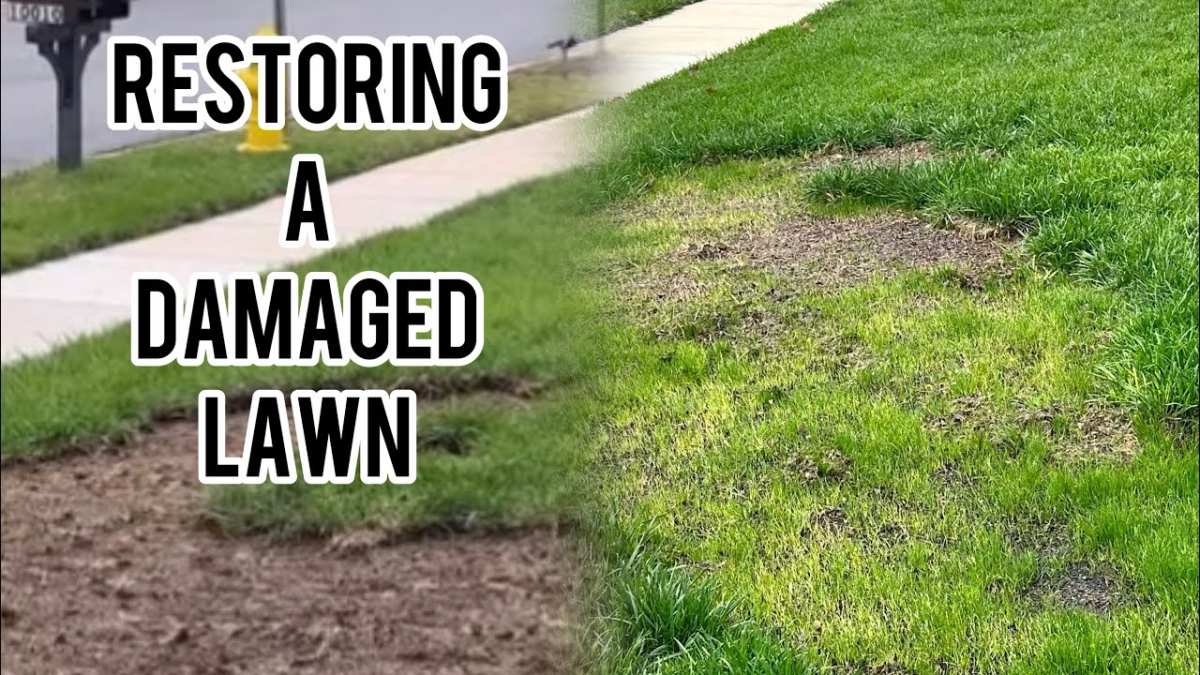
Image source: Bing (Web (fair-use with source credit))
For cool-season grasses like fescue, bluegrass, and ryegrass, early fall is the best time for repair. Soil is still warm, air temperatures are cooling, and weed competition is dropping off. Rake out the dead material, loosen the top inch of soil, and spread seed at the rate recommended for your grass type.
Cover lightly with straw or compost and keep the area moist until germination.
Warm-season grasses like Bermuda and zoysia repair best in late spring and early summer when soil temperatures are consistently above 65 degrees Fahrenheit. If the damage is extensive, sodding is faster than seeding for these species because many warm-season grasses spread by rhizomes and stolons rather than seed.
In either case, don't fertilize heavily right after seeding. A light application of starter fertilizer is fine, but heavy nitrogen pushes top growth at the expense of root development. You want those new roots establishing deep before winter or summer stress hits.
Watering is critical for the first two to three weeks after seeding. Keep the top inch of soil consistently moist but not saturated. Light, frequent watering works best until the new grass is established, then transition to deeper, less frequent sessions.
If animal digging caused secondary damage, you may need to address that too. Skunks and raccoons are harder to deter, but removing the food source by controlling grubs usually stops the digging within a week or two. In the meantime, flatten any torn sod and press it back into contact with the soil so it can re-root.
Costs, Pricing, and What to Budget Per Application
Grub treatment costs vary widely depending on the method and lawn size. Biological options like beneficial nematodes run about $30 to $60 for enough product to treat 5,000 square feet. Milky spore costs $25 to $50 per treatment but is applied less frequently over time.
Synthetic insecticide products for preventive control, such as those containing imidacloprid, typically cost $20 to $40 for the same coverage area. Curative products with trichlorfon fall in a similar range. Professional lawn care services charge $50 to $150 per application depending on your region and lawn size, which includes labor and product.
Factor in that nematodes may need two applications in a single season for heavy infestations. A single synthetic application usually suffices. Over a three-year period, the total cost difference between DIY biological and synthetic approaches narrows considerably.
Safety, Legal, and Environmental Considerations
Always read and follow every product label; verify current registration with the EPA or your regional authority before use. Imidacloprid restrictions exist in several states, including Maryland, Massachusetts, and Vermont. Trichlorfon availability varies by state registration as well.
Keep pets and children off treated areas for the interval specified on the label, usually 24 to 48 hours. Avoid applying any insecticide near flowering plants. Maintain a buffer zone of at least 6 feet from water bodies.
When to Call a Professional vs. Handle It Yourself
DIY works well if you have a small to moderate lawn and a confirmed grub problem under 15 per square foot. Call a licensed applicator if the infestation covers your entire property, if you have difficulty identifying the species, or if state regulations restrict the products you need.
Frequently Asked Questions
When is the best time to treat for grubs?
Curative treatments work best from late August through October. Preventive applications go down in June and July before eggs hatch.
Can grubs come back the same year?
No. Grubs have one generation per year. New adults emerge the following summer and lay the next batch of eggs.
How long does it take for milky spore to work?
Milky spore requires two to five years to build up enough concentration in the soil to provide reliable control.
Will grub damage fix itself?
Sometimes. If populations are low and your lawn is healthy, it can outgrow minor root feeding. Above the threshold, treatment is necessary before permanent damage sets in.
Final Decision Guide: What to Do Right Now Based on Your Situation
Grab a spade and sample your lawn today. Count the grubs, identify the species if you can, and check the calendar. If it's late summer and you're over 10 per square foot, apply a curative treatment immediately.
If it's early summer and you had problems last year, put down a preventive product. If you're under the threshold, skip it, water sensibly, and check again next season.