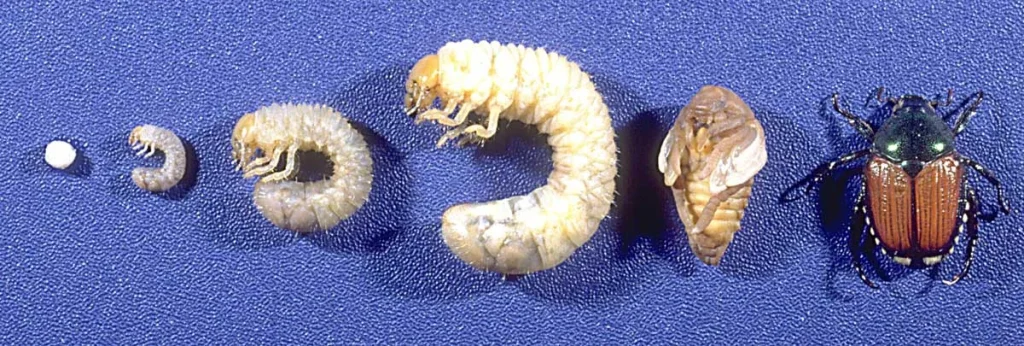
What animal do grubs turn into? If you’ve ever dug up a C-shaped, creamy-white larva in your lawn or garden soil, that’s the exact question running through your head. Most people assume all grubs become the same destructive pest beetle, but that’s a common misconception.
The specific species of grub you’re holding determines exactly what adult insect it will become, and that ID changes how you manage your yard.
Per 2026 USDA Agricultural Research Service data, at least 12 common scarab grub species live in North American residential lawns, each with distinct adult forms and damage patterns. Misidentifying even a similar-looking species leads to ineffective pest control or unnecessary treatment of beneficial soil-aerating grubs. This guide breaks down what each common grub becomes, how to tell them apart visually, and what that means for your yard.
Quick Answer
Grubs are the larval stage of scarab beetles.
The most common species turn into Japanese beetles, June beetles, or chafer beetles.
A small number of grub species become beneficial beetles like the green June beetle.
Exact ID requires checking physical traits like body length and underside spine patterns.

Why All Grubs Don’t Turn Into the Same Beetle
The term "grub" is a catch-all for the larval stage of beetles in the Scarabaeidae family, not a single unique species. There are hundreds of scarab species worldwide, and at least a dozen that commonly live in residential lawns and gardens across North America. Each species develops into a distinct adult beetle, from the metallic green and copper Japanese beetle to the dull brown June beetle.
Some species even become large, flightless beetles that feed on rotting fruit instead of plant roots. Assuming all grubs turn into the same destructive pest leads to wasted effort and incorrect control methods.
Why Visual ID Is Non-Negotiable for Grub Species
Text descriptions alone can’t separate most common lawn grub species. Two grubs that look identical to the untrained eye may be different species with totally different adult forms and control needs. The only reliable way to tell them apart is to examine specific physical traits: body length, head capsule width, and the unique spine pattern on the underside of the last abdominal segment, called the raster pattern.
This is why this guide is built around visual identification, not just written descriptions. A macro close-up of the raster pattern (shown later in this guide) is the gold standard for accurate species ID.
The Grub-to-Beetle Lifecycle With Visual Stage Markers
All scarab beetles go through complete metamorphosis with four distinct life stages. The cycle starts when an adult beetle lays eggs in soil, usually 2, 4 inches deep in moist, grassy areas. Eggs hatch into small larvae, which grow through multiple molts called instars into the C-shaped grubs you find when digging.
After reaching full size, the grub burrows deeper to form a smooth, oval pupal chamber, where it transforms into an adult beetle over 2, 4 weeks. The adult then emerges to feed, mate, and lay eggs to start the cycle again.
The hero image for this guide shows a white grub side-by-side with the adult Japanese beetle it becomes, so you can see the full transformation at a glance. Lifecycle length varies by species: most chafer grubs complete their cycle in one year, while June beetles can take up to three years to mature. Knowing which stage your grubs are in tells you the best time to treat, if treatment is needed at all.
Common Grub Species and the Adult Beetles They Become
Let’s start with the most common species you’re likely to encounter, and exactly what they turn into as adults. The table below breaks down key traits for quick reference:
| Grub Species | Adult Beetle Type | Key Identifying Feature | Lawn Damage Level |
|---|---|---|---|
| Japanese beetle | Metallic green and copper beetle | Raster has two parallel rows of short spines | High (roots and adult foliage) |
| European chafer | Light brown tan beetle | Raster has a V-shaped patch of spines | High (roots only) |
| Northern masked chafer | Dark brown beetle | Raster has a broad, scattered spine arrangement | Moderate (roots only) |
| Green June beetle | Large, velvety green beetle | Raster has a transverse band of small spines | Low (adults eat fruit, grubs aerate soil) |
| Black turfgrass ataenius | Small black beetle | Raster has a single row of spines | Low (only damaging in high populations) |

As you can see, the raster pattern is the most reliable way to tell similar-looking grubs apart. For example, a Japanese beetle grub and a European chafer grub are nearly identical to the naked eye, but their raster patterns are completely different. This matters a lot for control: milky spore, a biological treatment, only works on Japanese beetle grubs, not chafers, per National Pesticide Information Center guidelines.
Common Visual ID Mistakes That Lead to Wrong Answers
Even small errors in visual ID can lead to big problems with lawn care. The most common mistake is relying on color alone: all healthy scarab grubs have creamy white bodies with brown head capsules, so color tells you nothing about species. Another frequent error is confusing grubs with lookalike larvae: billbug larvae are legless, wireworms are hard and segmented, and leatherjackets are grayish and legless, none of which are true scarab grubs.
Misidentifying a beneficial grub like the green June beetle as a pest leads to unnecessary pesticide use. Assuming all grubs are Japanese beetles means you’ll waste money on milky spore that does nothing for chafer or June beetle populations. Finally, misreading the raster pattern by not looking at the correct abdominal segment will give you a wrong ID every time.
Step-by-Step Visual ID Process for a Grub You Found
You found a grub in your soil. Now what do you do? Follow this process to identify the species accurately.
Step 1: Collect the sample. Scoop up the grub gently with soil to avoid damaging it. Place it in a small container or on a flat, light-colored surface where you can see it clearly.
Step 2: Wash off the dirt. Rinse the grub with cool water to remove soil clumps. Dirt hides the raster pattern you need to examine. Pat it dry gently with a paper towel.
Step 3: Measure the body. Use a ruler to measure from the head capsule to the tip of the abdomen. For example, a 1-inch long grub is likely a June beetle, while a 3/4-inch one is probably a Japanese beetle or European chafer.
Step 4: Examine the raster pattern. Turn the grub over and look at the underside of the last abdominal segment. Use a 10x to 20x magnifying loupe if you have one. Compare what you see to the patterns shown above for each species.
Step 5: Check the legs. Look for three well-developed pairs of legs near the front. If you see no legs, you have a billbug larva, not a scarab grub. If the body is hard and segmented, it's a wireworm.
Step 6: Match to the adult. Use the table earlier in this guide to connect your grub's traits to its adult beetle form. If your grub has a V-shaped raster pattern, it's a European chafer that becomes a tan beetle.
What Your Grub’s Adult Form Tells You About Lawn and Garden Care
Knowing the adult beetle changes how you manage your lawn. Each species has a different lifecycle, damage window, and treatment timing.
For Japanese beetles, the adult form is highly damaging to plants in addition to the root damage from grubs. These beetles feed on leaves of 300+ plant species, including roses, grapes, and linden trees. If you find Japanese beetle grubs, you need to plan for both soil and foliar management.
Keeping the lawn healthy with proper watering and mowing helps tolerate root damage, but you may also need targeted control during the adult flight period from June to August.
European chafers are a different story. The adults do not feed on plant foliage at all. They emerge, mate, and die within a few days.
The only damage comes from the grubs feeding on roots. For chafer grubs, your focus should be on soil treatment in late summer when the young grubs are near the surface.
Green June beetle grubs tell you something else again. These grubs are actually beneficial in small numbers. They tunnel through soil and aerate it while feeding on organic matter.
The adults feed on overripe fruit, not lawn roots. Finding green June beetle grubs means you may want to leave them alone and focus on picking up fallen fruit instead.
The practical insight is that your control strategy should match the species. Using the same approach for every grub type wastes time and money.
Side-by-Side Comparison of Pest, Beneficial, and Lookalike Grubs
Not everything you dig up is a scarab grub. And not every scarab grub is a pest. This comparison helps you sort them out.
| Larva Type | True Grub? | Body Shape | Legs | Damage Potential | Best Action |
|---|---|---|---|---|---|
| Japanese beetle grub | Yes | C-shaped, 3/4–1 inch | 3 pairs | High | Targeted treatment |
| European chafer grub | Yes | C-shaped, 3/4 inch | 3 pairs | High | Targeted treatment |
| Green June beetle grub | Yes | C-shaped, 1 inch | 3 pairs | Low (beneficial) | Leave alone |
| Billbug larva | No (weevil) | Legless, slightly curved | None | Moderate | Different treatment needed |
| Wireworm | No (click beetle) | Slim, hard, segmented | 3 pairs tiny | Low to moderate | Different treatment needed |
| Leatherjacket | No (crane fly) | Grayish, legless, tubular | None | Low | Usually not needed |
The key takeaway is simple: if you see a legless, grayish larva, it's not a grub at all. Treating it with grub-specific products will fail. If you find a green June beetle grub, you can leave it in place to keep aerating your soil.
Safety and Compliance Rules for Grub Sampling and Treatment
Working with grubs means handling soil and sometimes applying pesticides. Follow these safety rules to protect yourself, your family, and the environment.
Wear gloves when handling grubs. Some people have skin reactions to grub secretions or soil microbes. A simple pair of gardening gloves prevents any issues.
Wash your hands thoroughly after sampling soil. Soil can contain bacteria and fungi that cause infections if you touch your face or food.
Check your local pesticide regulations before applying any treatment. As of 2026, several states restrict neonicotinoid insecticides in residential lawns due to pollinator protection laws. The EPA maintains a list of registered products and their approved uses.
Read every product label completely. The label is the law. It tells you the exact species the product controls, the correct timing, the safe re-entry interval for people and pets, and the proper application rate.
Avoid treating near water sources. Grub treatments can run off into storm drains and contaminate ponds and streams. Always leave a buffer zone of at least 10 feet near waterways.
Keep children and pets off treated lawns until the product has fully dried. Most labels specify a re-entry interval of 4 to 24 hours.
Expert Tips for Accurate Grub ID Without Lab Equipment
You don't need a microscope or a university entomology lab to identify common lawn grubs. These expert tips work with simple tools you probably already have.
Use a white paper plate. Place the rinsed grub on a white plate or paper towel. This gives you a consistent background to see body color, size, and the raster pattern clearly.
Use your phone camera. Take a close-up photo of the underside of the grub. Zoom in on the raster pattern. This lets you compare it side by side with reference images without straining your eyes.
Compare to known size references. Place a dime next to the grub in your photo. Dimes are about 0.7 inches wide. If the grub is longer than the dime, it's likely a June beetle or green June beetle.
If it's about the same length, it's probably a Japanese beetle or chafer.
Sample from multiple spots. Dig up 5 to 10 soil samples around your lawn, each about 1 square foot by 4 inches deep. One grub could be a stray. A consistent pattern tells you the dominant species.
Check the season. Grubs found in late summer (August through September) are typically young and small. Grubs found in spring and early summer are large and close to pupation. This context helps narrow the species list.
Contact your local extension office. If you can't get a confident ID, your county extension agent can help. Many offer free grub identification services with a photo or a sample drop-off.
Quick Visual Reference Cheat Sheet for Common Grub Species
This table summarizes the key ID traits for the five most common lawn grub species. Use it as a quick field reference when you're digging in the soil.
| Species | Body Length (Final Instar) | Raster Pattern | Head Capsule Color | Adult Beetle |
|---|---|---|---|---|
| Japanese beetle | 3/4–1 inch | Two parallel rows of short spines | Reddish brown | Metallic green and copper |
| European chafer | 3/4 inch | V-shaped patch of spines | Dark brown | Light tan |
| Northern masked chafer | 3/4–1 inch | Broad, scattered spines | Reddish brown | Dark brown |
| Green June beetle | 1–1.5 inches | Transverse band of small spines | Dark reddish | Velvety green |
| Black turfgrass ataenius | 1/2 inch | Single row of spines | Pale brown | Small black |
Print this table or save it to your phone. When you find a grub, measure it, flip it over, and match the raster pattern. That gives you the species and the adult beetle it will become in a few minutes.
Frequently Asked Questions About Grub Metamorphosis
Do all white grubs turn into Japanese beetles?
No. Only grubs with the specific two-row raster pattern become Japanese beetles. Grubs that look nearly identical often turn into European chafers, June beetles, or masked chafers.
Always check the spine pattern on the underside before assuming the species.
How long does it take for a grub to become a beetle?
The timeline varies by species. European chafers complete their life cycle in one year. June beetles take two to three years.
Japanese beetles typically finish in one year in most regions. The pupal stage inside the soil lasts 2 to 4 weeks before the adult emerges.
Can I tell what beetle a grub will become by its size alone?
Size helps narrow it down but is not reliable on its own. A 1.5-inch grub is almost certainly a green June beetle. A 3/4-inch grub could be a Japanese beetle, European chafer, or masked chafer.
Combine size with the raster pattern for an accurate ID.
What happens if I misidentify a grub species?
You risk using the wrong control method. Milky spore only works on Japanese beetle grubs. Applying it for chafer grubs wastes money and time.
You might also treat a beneficial green June beetle grub that was actually helping your soil.
Do grubs turn into moths or butterflies?
No. Grubs are beetle larvae and always turn into adult beetles. Moths and butterflies come from caterpillars, which look completely different.
Caterpillars have multiple pairs of fleshy prolegs on their abdomen, while grubs have three pairs of true legs at the front only.
Should I remove every grub I find in my lawn?
Not necessarily. A healthy lawn can tolerate up to 8 to 10 grubs per square foot for Japanese beetles and up to 15 for chafers. Green June beetle grubs are beneficial and should be left alone.
Only treat when grub populations exceed the threshold for your specific species.