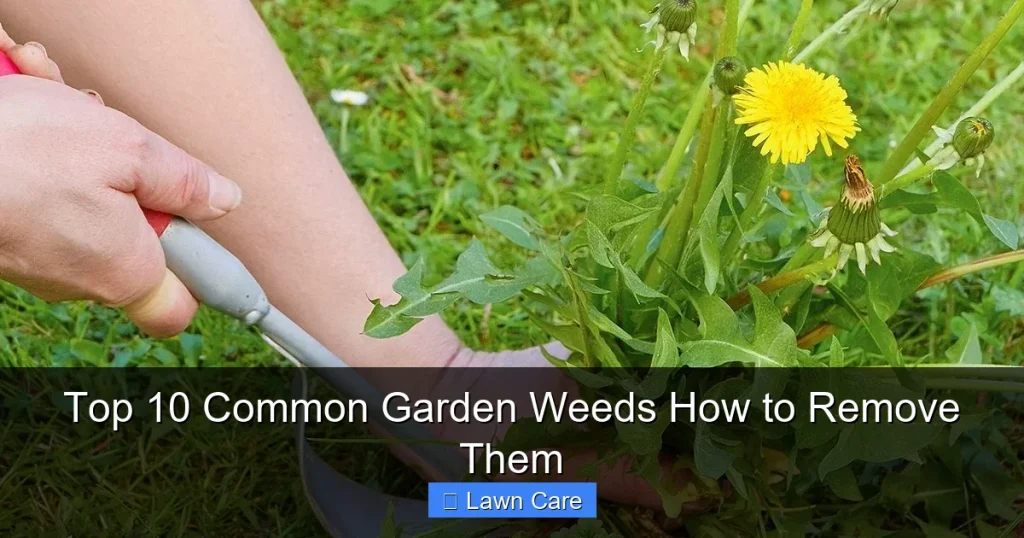
Tackling stubborn garden weeds doesn’t have to be a losing battle! This guide identifies the top 10 common garden weeds and provides clear, actionable strategies for their removal. From manual pulling to natural herbicides, learn how to win the fight against unwanted invaders and maintain a lush, healthy yard.
We’ve all been there. You step out into your beautiful garden, ready to enjoy a cup of coffee or simply admire your handiwork, only to be met with an invasion of unwelcome green guests. Weeds. They seem to sprout overnight, choking out your carefully planted flowers and lawn. It can be incredibly frustrating, turning your gardening dreams into a constant battle against these tenacious invaders. But don’t despair! Understanding your enemy is half the battle, and with the right knowledge and tools, you can significantly reduce and even eliminate common garden weeds.
This article is your go-to guide for identifying and conquering the top 10 most common garden weeds. We’ll dive into practical, effective removal methods, from simple hand-pulling to more advanced techniques, ensuring you can reclaim your green spaces and enjoy a weed-free oasis. Let’s get started on turning that weed-ridden patch into a picture-perfect paradise.
- Identify your foe: Recognizing common weeds is the first step to effective control.
- Manual removal is key: For many weeds, pulling them by hand, especially after rain, is the most effective and eco-friendly method.
- Preventative measures matter: Healthy soil, proper mowing, and mulching can significantly reduce weed growth.
- Understand weed types: Annuals, biennials, and perennials require different long-term strategies.
- Natural solutions exist: Vinegar-based sprays and essential oils can be effective for certain weeds.
- Herbicides as a last resort: Use targeted chemical solutions cautiously and follow instructions precisely.
- Persistence pays off: Consistent effort over time is crucial for long-term weed management.
Quick Answers to Common Questions
What is the best time to pull weeds?
The best time to pull weeds is when the soil is moist, typically after a rain or watering. This makes it easier to remove the entire root system, preventing regrowth.
How can I prevent weeds from coming back?
Prevention is key. Maintain a healthy, dense lawn and garden through proper watering, mowing, fertilization, and mulching. Covering bare soil with mulch or ground cover can also significantly reduce weed seed germination.
Are all herbicides bad for the environment?
Not necessarily. While synthetic herbicides should be used with caution, there are also organic and targeted herbicide options available. Responsible use and adherence to label instructions are crucial for minimizing environmental impact.
Why do weeds seem to grow faster than my plants?
Many weeds are opportunists. They often have rapid growth cycles, produce a vast number of seeds, and are highly adaptable to various conditions. This allows them to quickly colonize areas where desired plants may be struggling.
What is a pre-emergent herbicide and when should I use it?
A pre-emergent herbicide is applied before weed seeds germinate. It creates a barrier in the soil that prevents seedlings from emerging. For many annual weeds like crabgrass, the ideal time to apply is in early spring before temperatures consistently reach the mid-60s Fahrenheit.
📑 Table of Contents
Understanding Weed Growth and Your Options
Before we dive into specific weed types, it’s helpful to understand a bit about how weeds operate and what your general approach should be. Weeds are essentially plants that grow where you don’t want them to. They compete with your desired plants for sunlight, water, and nutrients. Many common weeds are incredibly resilient, with deep root systems or prolific seed production, making them challenging to eradicate completely.
Your weed removal strategy will likely involve a combination of methods. This can include:
- Manual Removal: Pulling weeds by hand or using tools.
- Cultural Practices: Things like healthy soil, proper mowing, and dense planting.
- Organic/Natural Methods: Using natural substances to kill weeds.
- Chemical Herbicides: Synthetic chemicals designed to kill weeds.
The best approach often depends on the type of weed, the size of the infestation, and your personal preference for how “natural” you want your gardening to be. Remember, consistent effort is more effective than sporadic bursts of activity. For instance, regularly checking your lawn for new growth can prevent small problems from becoming big ones, much like staying on top of common problems with Zoysia grass before they take hold.
The Top 10 Common Garden Weeds and How to Tackle Them
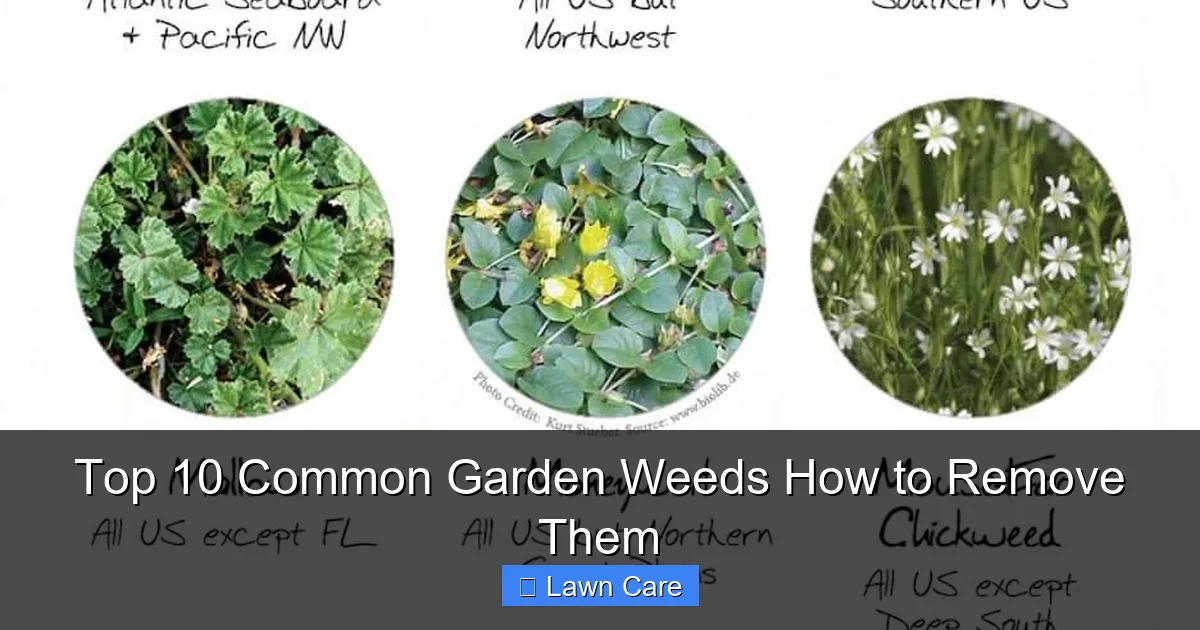
Visual guide about Top 10 Common Garden Weeds How to Remove Them
Image source: greenpal-production.s3.amazonaws.com
Let’s get down to business and identify some of the most persistent garden invaders.
1. Dandelions (Taraxacum officinale)
Ah, the dandelion. Beloved by some for their fluffy seed heads that inspire childhood wishes, but a scourge to most gardeners. These perennial weeds are easily recognizable by their bright yellow flowers and deeply toothed leaves. They spread aggressively via wind-blown seeds and have a tenacious taproot.
Removal Strategies for Dandelions:
- Hand-Pulling: This is most effective when the soil is moist, like after rain. Use a trowel or a specialized dandelion puller to get as much of the taproot as possible. If even a small piece of the root is left, it can regrow.
- Boiling Water: Pouring boiling water directly onto the base of the dandelion can kill it. Be careful not to splash surrounding desirable plants.
- Vinegar Spray: A horticultural vinegar solution (20% acetic acid) can be effective, but it’s a non-selective herbicide, meaning it will kill any plant it touches. Apply directly to the leaves and avoid contact with other plants.
- Prevention: Maintain a healthy, dense lawn. Dandelions thrive in thin, stressed turf. Regular mowing at the correct height also helps.
2. Crabgrass (Digitaria spp.)
Crabgrass is an annual grassy weed that loves warm weather and compacted soil. It has a sprawling growth habit, forming dense mats that can outcompete your lawn grass. It germinates from seeds that have been lying dormant in the soil, often starting in late spring or early summer.
Removal Strategies for Crabgrass:
- Prevention is Key: The best way to deal with crabgrass is to prevent it from germinating in the first place. Applying a pre-emergent herbicide in early spring, before the crabgrass seeds start to sprout, is highly effective. For more details, check out our guide on how to prevent crabgrass and other invasive weeds.
- Manual Removal: For small infestations, you can pull crabgrass by hand, especially when the soil is moist. Make sure to get the roots.
- Healthy Lawn: A thick, healthy lawn is your best defense. Proper watering, fertilization, and mowing at the right height will help your desirable grass outcompete crabgrass.
- Post-Emergent Herbicides: If crabgrass has already emerged, you’ll need a post-emergent herbicide specifically labeled for crabgrass control. These are often applied in multiple treatments.
3. Clover (Trifolium repens)
While often considered a beneficial plant for nitrogen fixation, white clover can quickly become a nuisance in a meticulously manicured lawn. It forms low-growing mats with characteristic three-leaflet leaves and white, pom-pom like flowers.
Removal Strategies for Clover:
- Manual Removal: Clover can be pulled by hand, especially after rain. Its shallow root system makes this relatively easy, but you need to get the crowns to prevent regrowth.
- Herbicides: Many broadleaf weed killers are effective against clover. Ensure the product is safe for your lawn type.
- Improve Lawn Health: Clover often indicates a lawn that is lacking nitrogen. Improving your lawn’s fertility and density can help suppress clover. This is one of those instances where understanding common lawn diseases and how to prevent them can also help maintain overall lawn health, making it more resistant to weeds.
4. Bindweed (Convolvulus arvensis)
Also known as field bindweed or creeping bindweed, this perennial vine is a true menace. It has distinctive arrowhead-shaped leaves and delicate white or pink trumpet-shaped flowers. Its extensive root system can spread horizontally and vertically, making it incredibly difficult to eradicate.
Removal Strategies for Bindweed:
- Persistent Pulling: This requires dedication. You must pull bindweed whenever you see it, and you must get the roots. This can take months or even years of consistent effort.
- Smothering: Covering large patches with landscape fabric or thick layers of mulch can help starve the plant of sunlight. This is a long-term solution.
- Herbicides: Spot-treating with a strong broadleaf herbicide containing glyphosate can be effective, but repeat applications are usually necessary due to the deep root system. Be extremely careful not to spray desirable plants.
5. Purslane (Portulaca oleracea)
Purslane is a succulent, low-growing annual weed with fleshy leaves and stems. It thrives in hot, dry conditions and often appears in vegetable gardens and between paving stones. It can produce a large number of seeds, which remain viable in the soil for many years.
Removal Strategies for Purslane:
- Hand-Pulling: Purslane is easy to pull by hand, especially when the soil is moist. Because it’s an annual, removing it before it sets seed is crucial.
- Mulching: A thick layer of mulch can help suppress purslane by blocking sunlight.
- Hoeing: Regular hoeing in garden beds can effectively remove young purslane plants.
6. Thistle (Cirsium spp.)
Thistles are spiny, herbaceous plants that can be annual, biennial, or perennial, depending on the species. They are characterized by their prickly leaves and showy purple or pink flower heads. Their deep taproots make them hard to remove completely.
Removal Strategies for Thistle:
- Digging: For young plants, digging them out with a sharp spade, ensuring you get the taproot, is the best approach.
- Cutting and Digging: For larger, established thistles, you may need to cut the top growth off first, then dig out the root crown.
- Herbicides: Systemic herbicides can be effective, especially for perennial thistles, but they require careful application.
- Prevention: Maintain a healthy, vigorous lawn and garden to outcompete thistles.
7. Chickweed (Stellaria media)
Common chickweed is a low-growing, sprawling annual weed with small, oval leaves and tiny white flowers. It prefers cool, moist conditions and often appears in the spring and fall. It spreads rapidly by seeds and by its ability to root from stem fragments.
Removal Strategies for Chickweed:
- Hand-Pulling: Chickweed is very easy to pull by hand, especially in damp soil. Remove it before it goes to seed.
- Hoeing: Regular shallow hoeing will disrupt its growth.
- Improve Drainage: Chickweed thrives in damp conditions. Improving soil drainage can make your garden less hospitable.
- Dense Planting: In garden beds, planting desirable plants closely together can help shade out chickweed.
8. Mallow (Malva spp.)
Mallows are common broadleaf weeds with distinctive rounded or lobed leaves and often attractive, though sometimes considered pretty, pinkish-purple flowers. They can be annual or perennial and often have a deep taproot.
Removal Strategies for Mallow:
- Hand-Pulling: Similar to dandelions, removing mallow when young and the soil is moist is the most effective manual method. Ensure you get the taproot.
- Hoeing: Regular hoeing can keep annual mallow in check.
- Herbicides: Broadleaf herbicides can be used for persistent infestations, but apply carefully.
9. Knotweed (Polygonum spp.)
There are several types of knotweed, including Japanese knotweed, which is notoriously invasive. These are vigorous, spreading plants with segmented stems and small leaves. They can quickly take over an area.
Removal Strategies for Knotweed:
- Persistent Removal: This is a tough one. Repeatedly cutting or digging out knotweed is necessary, but it often regrows from even tiny root fragments. This is where persistence is absolutely critical.
- Herbicides: Professional application of herbicides is often the most effective way to control large infestations of invasive knotweed species.
- Containment: For smaller areas, physically containing the spread with barriers can help.
10. Nutsedge (Cyperus spp.)
Nutsedge, often mistaken for a grassy weed, is actually a sedge. It’s characterized by its triangular stems and three-ranked leaves, and it spreads aggressively via underground tubers called “nutlets.”
Removal Strategies for Nutsedge:
- Manual Removal (with care): Pulling nutsedge can sometimes spread it further if you don’t get the entire tuber. Try to dig it out carefully with a trowel, aiming to get the entire root system and nutlets.
- Herbicides: Specific herbicides are available for nutsedge control. These often require repeat applications to be effective because they need to reach the tubers.
- Cultural Practices: Maintaining a healthy, dense lawn is your best long-term defense. Nutsedge often thrives in compacted or poorly drained areas. Aerating your lawn can help aerating compacted lawns with a garden fork can be a good start.
Beyond Manual Pulling: Other Weed Control Methods
While hand-pulling is a great starting point, especially for smaller gardens, you have other options to consider for more stubborn or widespread weed problems.
Organic and Natural Weed Control
For those who prefer to avoid chemicals, several natural methods can be effective:
- Boiling Water: As mentioned for dandelions, this is a simple way to kill weeds on contact, especially effective for weeds in cracks or pathways.
- Vinegar: Horticultural vinegar (20% acetic acid) acts as a natural desiccant. It’s best used on young weeds in sunny, dry conditions. Remember, it’s non-selective, so use it carefully.
- Corn Gluten Meal: This is a pre-emergent weed suppressant. Applied in spring, it can inhibit the germination of weed seeds. It also acts as a natural fertilizer.
- Flame Weeders: These devices use a controlled flame to heat and rupture plant cells, killing weeds. They are effective for pathways and driveways but require extreme caution.
Chemical Herbicides
When natural methods aren’t enough, chemical herbicides can be a powerful tool. It’s crucial to use them responsibly and correctly.
- Pre-Emergent Herbicides: Applied before weed seeds germinate, these prevent them from sprouting. They are often used in lawns to control annual weeds like crabgrass.
- Post-Emergent Herbicides: These are applied to weeds that have already emerged. They can be selective (targeting specific types of weeds) or non-selective (killing most plants).
- Spot Treatment vs. Broadcast: For small infestations, spot treating directly onto the weed is best. For widespread problems, broadcast application might be necessary, but always follow label instructions carefully.
Always read and follow the label instructions meticulously when using any herbicide. Choose the right product for the weed and the surrounding plants, and apply it on a calm day to prevent drift.
Making Your Garden Less Welcoming to Weeds
The best defense against weeds is a healthy, thriving garden and lawn. Here are some practices that make your space less appealing to unwanted guests:
- Healthy Soil: Improve your soil with compost. Healthy soil supports strong plant growth, which can outcompete weeds. Consider the role of microbes in lawn soil health.
- Proper Mowing: Mow your lawn at the correct height for your grass type. Taller grass shades out weed seedlings. Ensure your mower blades are sharp; dull blades can stress the grass, making it more susceptible to weeds and diseases. Learn how to sharpen lawn mower blades without taking them off for optimal lawn health.
- Water Wisely: Deep, infrequent watering encourages strong root growth in your desired plants, making them more resilient. Avoid shallow, frequent watering, which can encourage shallow-rooted weeds.
- Mulching: A 2-3 inch layer of organic mulch (wood chips, straw, shredded leaves) in garden beds suppresses weed growth by blocking sunlight. It also helps retain soil moisture. For great ideas on using leaves, check out how to use shredded leaves to control weeds.
- Dense Planting: In garden beds, plant your flowers and vegetables closely together (while still allowing for proper air circulation) to create a dense canopy that shades out potential weed seedlings.
- Crop Rotation and Cover Cropping: In vegetable gardens, rotating crops and using cover crops can help disrupt weed life cycles.
Conclusion
Conquering weeds is an ongoing process, not a one-time event. By identifying the common garden weeds that plague your yard and employing a combination of manual removal, preventative measures, and appropriate control methods, you can significantly improve the health and appearance of your lawn and garden. Remember that consistency and understanding your specific weed challenges are key to success. Keep at it, celebrate your victories (even small ones!), and enjoy the satisfaction of a beautiful, weed-resistant outdoor space.
Frequently Asked Questions
What are the most common lawn weeds?
Some of the most common lawn weeds include dandelions, crabgrass, clover, and thistle. These weeds are widespread and can quickly spread if not managed.
How do I get rid of weeds in my vegetable garden?
In vegetable gardens, manual weeding and hoeing are often preferred to avoid chemical contamination of edible plants. Mulching with straw or shredded leaves can also help suppress weeds.
Can I use boiling water to kill weeds?
Yes, boiling water can kill weeds by scalding them. It’s a natural and effective method for spot treatment, especially for weeds growing in cracks or on pathways, but be cautious not to harm desirable plants.
What is the difference between an annual and a perennial weed?
Annual weeds complete their life cycle in one year, growing from seed, flowering, and producing new seeds before dying. Perennial weeds live for multiple years, often with extensive root systems that allow them to regrow each season.
How important is soil health for weed control?
Soil health is extremely important. Healthy soil supports vigorous growth in your desired plants, giving them a competitive edge over weeds. Improving soil with compost and ensuring good drainage are vital steps.
When is the best time to apply herbicides for weed control?
The best time to apply herbicides depends on the type of weed and whether you’re using a pre-emergent or post-emergent product. Pre-emergents are applied in early spring before germination, while post-emergents are best applied when weeds are actively growing and before they go to seed.