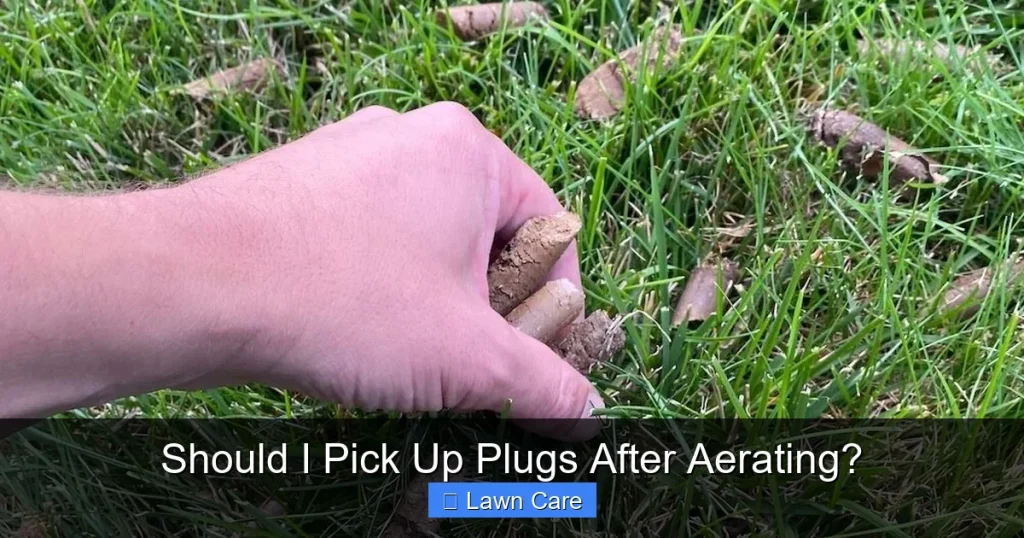
When it comes to lawn plugs after aeration, the general consensus among lawn care experts is to leave them in place. These soil cores, often called “plugs,” are actually beneficial and decompose naturally, feeding your lawn with essential nutrients. However, there are situations where removing them might be necessary.
## Should I Pick Up Plugs After Aerating? Your Lawn’s Best Interest
You’ve just finished aerating your lawn, and you’re left with a scattering of soil plugs across the green carpet. Your first instinct might be to grab a rake and clean them up, just like you would with thatch or fallen leaves. It seems like the tidy thing to do, right? Well, hold on a second! The question of whether you should pick up plugs after aerating your lawn is a common one, and the answer might surprise you. It turns out, those little soil cores are often doing your lawn more good than harm when you leave them be.
Aeration is a fantastic process that helps your lawn breathe. It involves pulling out small cores of soil to relieve compaction, improve air and water penetration, and encourage deeper root growth. It’s like giving your lawn a spa day, and the plugs are the little remnants of that revitalizing treatment. So, let’s dive into why leaving those plugs can be the best move for your turf and when, if ever, you might need to intervene.
## The Undeniable Benefits of Leaving Plugs
Think of the soil plugs you see after aeration as tiny, natural fertilizer bombs waiting to detonate. When you leave them on the surface, they begin to break down. This decomposition process is incredibly beneficial for your lawn in several ways.
### Nutrient Return and Organic Matter
As the plugs dry out and crumble, they release the nutrients they contain back into the soil. This is essentially a free top-dressing of organic matter. This material enriches the soil, providing essential elements that your grass needs to thrive. It’s nature’s way of recycling, and your lawn gets to reap the rewards. This natural fertilization process is often more gentle and effective than simply applying synthetic fertilizers.
### Improved Soil Structure and Drainage
The breakdown of these plugs also contributes to improving your soil’s overall structure. As they decompose, they help to loosen the soil further, enhancing aeration and drainage. This means water can reach the root zone more effectively, and excess water has a better chance of draining away, preventing waterlogging and root rot. This is especially helpful for lawns in areas with heavy clay soil, which tends to compact easily.
### Creating a Seedbed for Overseeding
If you’re planning to overseed your lawn after aerating, leaving the plugs can actually be advantageous. The small pieces of soil from the plugs can help hold moisture around new grass seeds, creating a more favorable environment for germination. The broken-down soil also ensures good seed-to-soil contact, which is crucial for successful germination. Many lawn care professionals recommend leaving the plugs when overseeding because they act as a natural mulch that protects the seeds and retains moisture. For more on this, you might want to check out our article on should I overseed after aerating.
## When You Might Consider Breaking Up Plugs
While leaving the plugs is generally the best practice, there are a few scenarios where you might want to help them along in their decomposition process or even remove them. These situations are usually related to aesthetics or specific lawn conditions.
### Aesthetics and High-Traffic Areas
Let’s be honest, a lawn covered in dirt plugs doesn’t always look its best. If you have guests coming over soon, or if you have a very formal lawn where appearance is paramount, you might feel compelled to tidy things up. For most homeowners, the visual aspect is a temporary concern, as the plugs break down fairly quickly. However, if the plugs are exceptionally large and numerous, or if you have children or pets who will be using the lawn heavily, you might want to speed up the process.
### Very Large or Dense Plugs
Sometimes, depending on the soil type and the aeration equipment used, the plugs can be quite large and dense. If your soil is very wet during aeration (which is generally not recommended, check out should soil be wet or dry when aerating), the plugs might not break apart as easily. In these cases, they can sit on the surface for longer, potentially hindering the aesthetics and even slightly impeding air and water from reaching the soil beneath.
### Potential for Disease Spread
While rare, there’s a very small risk that plugs could carry disease if the aeration equipment wasn’t properly cleaned between uses on different lawns. If you have concerns about disease in your lawn, or if you know the equipment has been used on a diseased lawn, you might consider removing the plugs to be extra cautious. However, for most routine aeration, this is not a significant concern.
## How to Help Plugs Decompose Faster
If you decide that you want to speed up the process of the plugs breaking down, there are a few simple methods you can employ. These methods don’t involve physically picking up every single plug, which can be a tedious task.
### Raking Gently
A light raking with a garden rake can help break up the larger plugs. You don’t need to go at it aggressively; the goal is just to gently crumble the soil cores. This will expose more surface area to the air and sun, accelerating the drying and decomposition process. Be careful not to damage any new seedlings if you have recently overseeded.
### Running a Mower Over Them
Once the plugs have had a little time to dry out, running your lawnmower over them on a higher setting can be very effective. The action of the mower blades will break the plugs into smaller pieces, allowing them to integrate back into the lawn more quickly. This is a particularly good method because it essentially mulches the plugs, similar to how mulching grass clippings works. Just ensure the plugs are dry enough that they don’t turn into a muddy mess.
### Letting Nature Do Its Work
Often, the best approach is simply to wait. On most healthy lawns, the plugs will break down naturally within a week or two, especially with a bit of sunshine and normal rainfall. If you can resist the urge to tidy them up immediately, you’ll likely find that they disappear on their own, leaving behind a healthier lawn.
## What About Aeration Equipment and Lawn Care Practices?
The type of aerator you use can influence the size and consistency of the plugs. Core aerators pull out actual cores of soil, leaving distinct plugs. Spike aerators, on the other hand, simply push tines into the ground, which can cause some soil disturbance but doesn’t typically leave noticeable plugs.
### Types of Aerators
* Core Aerators: These are the most common for residential use and are excellent for relieving compaction. They produce the plugs we’ve been discussing.
* Spike Aerators: These are simpler and can be less effective for severe compaction but don’t leave plugs.
The effectiveness of aeration also depends on proper timing. Aerating at the right time of year for your grass type is crucial for optimal results. For example, many homeowners wonder what month should I aerate my lawn, and the answer varies by grass type.
### Post-Aeration Care
After aeration, the lawn is in a state of recovery and growth. It’s a prime time to consider other lawn care practices that can enhance the benefits of aeration. For instance, if you’re thinking about fertilizing, there’s a specific window for that. You might be interested in should you fertilize right after aerating. Also, consider how watering fits into the picture. A light watering after aeration can help settle the soil and is generally recommended, but you don’t want to saturate the lawn. You can learn more about this in our article on should you water your lawn right after aeration.
And when it comes to mowing, there’s a waiting period after aerating. You don’t want to stress the newly exposed soil or roots. To understand this better, our guide on how long to wait to mow lawn after aerating is very helpful.
## Common Myths and Misconceptions
One of the biggest misconceptions about aerating is that the plugs are a sign of a job done poorly, or that they are waste material that needs to be removed. This couldn’t be further from the truth. The plugs are a natural byproduct of a successful aeration process, and their presence is a positive indicator. They show that you’ve effectively loosened the soil and brought the deeper soil layers to the surface, where they can be exposed to air and sunlight.
Another myth is that the plugs will smother your grass. While very large or thick plugs could potentially cause minor temporary issues, they are typically small and porous enough to allow light and air to penetrate. Their natural breakdown process quickly mitigates any potential negative effects. If you’re concerned about surface debris in general, you might also be wondering should lawn be raked after aeration, which touches on similar principles.
## Making the Decision: When in Doubt, Leave Them
So, to circle back to the main question: Should I pick up plugs after aerating? In almost all cases, the answer is no. Leaving the plugs on the lawn is the most beneficial approach. They are a valuable source of nutrients and organic matter, and they contribute to improved soil health as they decompose. Think of them as free, natural lawn food and soil conditioner.
The key is patience. Give your lawn a week or two to work its magic. With a little help from the sun, wind, and rain, those plugs will break down and become part of your healthy, vibrant lawn. If you’re concerned about appearance for a short period or have unusually large plugs, gentle raking or a pass with your mower on a high setting can speed up the process without the back-breaking work of picking them up individually.
Ultimately, understanding what those plugs represent—a healthier, more robust lawn—will help you make the right decision. Embrace the plugs, and let them do their work. Your lawn will thank you for it with greener growth and a more resilient root system.
Key Takeaways
- Leave the plugs: In most cases, it’s best to leave the soil plugs from aeration on your lawn.
- Nutrient boost: The plugs break down, returning valuable organic matter and nutrients to the soil.
- Improved soil structure: They help improve soil aeration and drainage as they decompose.
- Consider aesthetics: If the plugs are very large or you have a high-traffic area, you might consider breaking them up.
- Mechanical breakdown: Raking or running a lawnmower (on a high setting) over the plugs can help speed up their decomposition.
- Overseeding benefit: Leaving plugs can create a better environment for seeds to make contact with the soil.
- Timing matters: The decision can also depend on your lawn type and the time of year.
Quick Answers to Common Questions
Should I pick up plugs after aerating if I plan to overseed?
No, it’s generally best to leave the plugs when overseeding. They help retain moisture and provide good seed-to-soil contact, which is crucial for germination.
What happens if I leave the plugs on my lawn?
When left on the lawn, the plugs will naturally break down, returning valuable nutrients and organic matter to the soil, improving its structure and drainage over time.
Can leaving plugs smother my grass?
Generally, no. The plugs are porous and will break down relatively quickly, allowing air and light to reach the grass underneath. Only very large, dense plugs might cause minor temporary issues.
How long does it take for aerator plugs to decompose?
Typically, plugs will break down within one to two weeks, especially with adequate sunshine and rainfall. Gentle raking or mowing can speed this up.
When is it okay to pick up plugs after aerating?
You might consider picking them up or breaking them up if they are excessively large and numerous, or if aesthetics are a very immediate concern. However, this is rarely necessary for lawn health.
Frequently Asked Questions
What are the soil plugs left behind after aeration?
The soil plugs are small cores of soil and thatch that are pulled from your lawn by a core aerator. They represent the compacted soil layers that are being brought to the surface to be broken down.
Are plugs good for my lawn?
Yes, plugs are beneficial for your lawn. As they decompose, they release nutrients and organic matter back into the soil, improving its fertility and structure.
How can I speed up the decomposition of soil plugs?
You can speed up decomposition by gently raking them to break them up or by running your lawnmower over them on a high setting after they have dried slightly.
Will leaving plugs attract pests?
Leaving plugs is unlikely to attract pests. They are essentially just small amounts of soil and organic matter that will integrate back into your lawn.
Should I water my lawn after aerating and leaving plugs?
Yes, a light watering after aeration is generally recommended to help settle the soil and the plugs, aiding in their decomposition and promoting new growth.
What’s the difference between core aeration and spike aeration regarding plugs?
Core aeration pulls out actual soil cores, leaving plugs. Spike aeration, however, simply pokes holes in the ground and typically does not leave noticeable plugs behind.