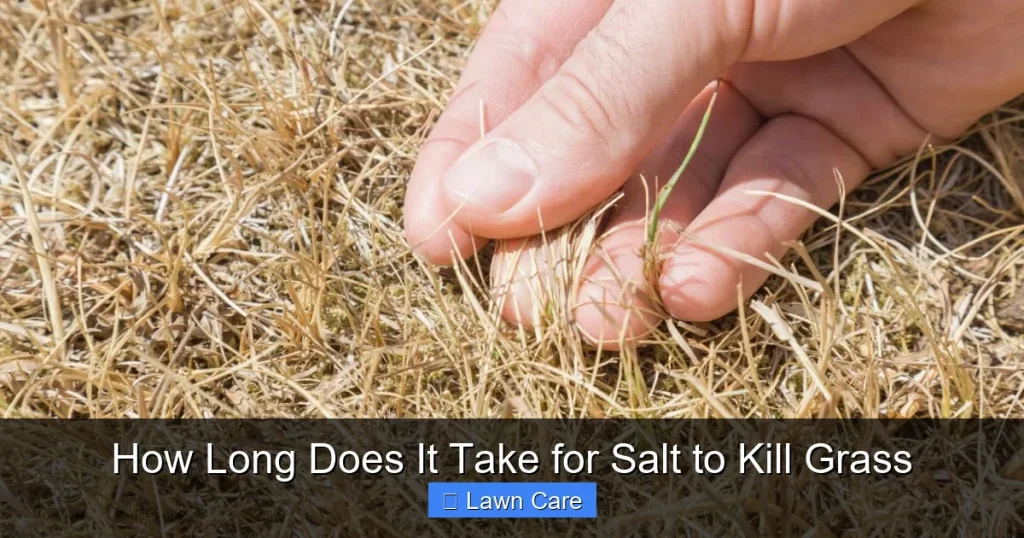
Salt is a surprisingly effective, though harsh, method for killing grass. The speed at which salt kills grass depends on several factors, including the type of salt, the concentration used, and environmental conditions. Generally, you can expect to see noticeable browning within a few days to a couple of weeks, with complete desiccation taking longer. This guide will walk you through the process and considerations.
## How Long Does It Take for Salt to Kill Grass
When you’re looking to eliminate grass from a specific area, whether it’s for a new garden bed, a patio, or simply to clear an unwanted patch, you might consider various methods. One common, albeit aggressive, approach is using salt. While it’s a readily available household item, understanding its effectiveness and the timeline involved is crucial. This guide will delve into how long it takes for salt to kill grass, the factors that influence this process, and what you can expect along the way. We’ll cover everything from the initial application to the final results.
### Understanding How Salt Affects Grass
Before we dive into the timeline, let’s understand *why* salt kills grass. Salt, primarily sodium chloride (common table salt), acts as a powerful desiccant. This means it draws moisture out of whatever it comes into contact with. For grass, this process is devastating.
When salt is applied to grass, it is absorbed by the plant’s roots or directly contacts the blades. The high concentration of salt ions in the soil or on the plant surface creates an osmotic imbalance. Water naturally moves from areas of lower solute concentration to areas of higher solute concentration. In this case, water inside the grass’s cells is pulled out into the saltier environment. This dehydration causes the cells to shrink, collapse, and die. The grass then turns brown, wilts, and eventually perishes.
It’s important to note that salt is a non-selective herbicide. This means it doesn’t differentiate between grass you want to kill and other plants you might want to keep. It will damage or kill almost any vegetation it contacts.
### Factors Influencing How Long Salt Takes to Kill Grass
The speed at which salt kills grass isn’t a fixed number. Several variables come into play, making the process dynamic. Understanding these factors will help you predict the outcome and adjust your approach if needed.
#### 1. Type of Salt
While common table salt (sodium chloride) is often used, other types of salt can also be employed, and they might have slightly different effects.
* Sodium Chloride (Table Salt): This is the most readily available and commonly used type. It’s effective and works quickly by dehydrating the grass.
* Epsom Salts (Magnesium Sulfate): Sometimes mistakenly thought to be a plant killer, Epsom salts are actually a source of magnesium and sulfur, which are beneficial for some plants in moderation. While large quantities can still harm plants due to osmotic stress, they are generally less effective and slower at killing grass compared to sodium chloride. This guide focuses on sodium chloride for its effectiveness as a grass killer.
* Rock Salt (Road Salt): Similar to table salt in its primary component (sodium chloride), rock salt can also be effective. However, it may contain anti-caking agents or other impurities that could affect its performance or the soil.
For the purpose of this guide, we’ll assume you’re using standard table salt or a similar sodium chloride-based product.
#### 2. Concentration and Application Method
How much salt you use and how you apply it are critical determinants of speed.
* Concentrated Solutions: Mixing salt with water to create a strong brine (e.g., 1 part salt to 2-3 parts water) will generally lead to faster results than using dry salt alone, as the liquid can be absorbed more quickly by the roots and leaves.
* Dry Application: Applying dry salt directly to the grass can be effective, but it relies on moisture (dew, rain, or watering) to dissolve the salt and allow it to penetrate the soil and roots. This can slow down the process.
* Frequency of Application: Repeated applications of salt solutions will ensure that the grass remains exposed to a high salt concentration, accelerating its demise.
#### 3. Environmental Conditions
The weather plays a significant role in how quickly salt works.
* Sunlight and Heat: Hot, sunny days are ideal for salt’s dehydrating effect. The increased evaporation from the soil surface and the plant itself, combined with the salt’s desiccant properties, can speed up the wilting and browning process.
* Rainfall: Moderate rainfall can help dissolve the salt and carry it into the soil, reaching the roots. However, heavy, prolonged rain can dilute the salt concentration, potentially slowing down the kill rate over time. If you’re trying to kill grass quickly, you’ll want to apply salt when rain isn’t imminent.
* Soil Type and Moisture: Sandy soils drain more quickly, meaning the salt might be washed away faster, potentially reducing its effectiveness over time. Clay soils retain moisture and salt longer, which can lead to a more persistent killing effect.
#### 4. Grass Type and Health
Different grass species have varying tolerances to stress, including salinity.
* Salt-Tolerant Grasses: Some grasses, like certain varieties of fescue or even some salt-tolerant ornamental grasses, might show resilience and take longer to die.
* Young or Stressed Grass: Grass that is already struggling due to drought, disease, or poor nutrient levels may succumb to salt more quickly. Lush, healthy grass might put up a bit more of a fight initially.
### The Timeline: How Long Does It Actually Take?
Now, let’s get to the core question: How long does it take for salt to kill grass?
#### Initial Signs of Damage (1-3 Days)
You’ll likely notice the first signs of salt damage within 1 to 3 days of application, especially if you’ve used a concentrated solution on a warm, sunny day. The grass blades may start to look a bit dull or slightly wilted. You might see subtle browning appearing at the tips of the leaves. This is the salt beginning its dehydrating work.
#### Visible Browning and Wilting (3-7 Days)
By day 3 to 7, the effects of the salt should be much more obvious. The grass will begin to turn noticeably brown, starting from the tips and spreading downwards. The blades will lose their turgor, appearing limp and wilted. This is the point where the grass is clearly struggling and on its way to dying.
#### Significant Dieback (7-14 Days)
Within one to two weeks, the majority of the grass in the treated area should be dead or dying. You’ll see large patches of brown, dry grass. The plant’s ability to photosynthesize and absorb water will be severely compromised. At this stage, the grass is effectively killed, though some roots might still retain a tiny bit of life, especially if the salt application wasn’t thorough or if there was significant rainfall diluting the salt.
#### Complete Desiccation and Clearing (2-3 Weeks)
For complete eradication, including ensuring the roots are sufficiently damaged and the grass turns completely dry and brittle, it can take 2 to 3 weeks. The grass will become completely brown, brittle, and easy to break.
### Step-by-Step Guide to Using Salt to Kill Grass
If you’ve decided that salt is the method for you, here’s a practical guide on how to apply it effectively. Remember, use this method judiciously and with awareness of its potential downsides.
#### Step 1: Choose Your Salt and Prepare Your Solution
* Gather Your Materials: You’ll need salt (preferably plain table salt without iodine or anti-caking agents, if possible, though regular salt will work), water, and a container for mixing (like a bucket or a watering can). You’ll also need a way to apply it evenly.
* Mix Your Solution: A common and effective ratio is 1 pound of salt per gallon of water. For a more potent solution that acts faster, you can increase the salt concentration, perhaps up to 2 pounds per gallon. Mix thoroughly until the salt is dissolved as much as possible.
#### Step 2: Select the Right Time and Location
* Weather is Key: Choose a dry, warm, and sunny day. Avoid applying salt right before a rainstorm, as it will wash away the salt and reduce its effectiveness.
* Target Area: Identify the specific area of grass you want to kill. Be mindful of any desirable plants nearby, as salt will harm them too. It’s best to use salt for small, contained areas or patches you want to clear entirely.
#### Step 3: Apply the Salt Solution
* Even Application: Pour the salt solution slowly and evenly over the grass you wish to kill. You can use a watering can with a rose nozzle for a gentle spread or a sprayer. Ensure you cover the entire patch thoroughly, including the base of the grass blades.
* Avoid Runoff: Try not to let the solution run off into areas where you don’t want grass to die. If you’re treating a slope, consider using dry salt or applying very carefully.
#### Step 4: Monitor and Reapply (If Necessary)
* Observe: Keep an eye on the treated area over the next few days. You should start seeing wilting and browning within a week.
* Reapply: If, after two weeks, you still see green, living grass, it means the salt concentration wasn’t high enough or the application wasn’t thorough enough. You can reapply the salt solution, perhaps using a slightly stronger mixture or ensuring better coverage.
#### Step 5: Clearing the Dead Grass
* Wait for Desiccation: Once the grass is completely brown and brittle, you can proceed with clearing it. It usually takes about 2-3 weeks for the grass to become fully desiccated.
* Remove: You can rake away the dead grass or simply till it into the soil if you’re preparing the area for new planting and plan to amend the soil. Be aware that the salt will remain in the soil for some time.
### What to Expect After Salt Has Killed the Grass
Killing grass with salt is effective, but it’s not without consequences, especially for your soil.
#### Soil Salinity
The most significant after-effect is increased soil salinity. Salt residues remain in the soil and can make it difficult for new plants to grow. The high salt concentration draws water out of any new plant roots, effectively preventing germination or stunting growth. This is why salt is often used for permanent weed control in areas where you don’t want anything to grow, like between pavers or on gravel paths.
#### Soil Structure Damage
Over time, high salt concentrations can degrade soil structure. It can cause clay soils to become compacted and lose their aeration, while sandy soils can become even less able to retain nutrients and water.
#### Recovery Time for Soil
If you plan to replant the area with desirable plants, you’ll need to address the soil salinity. This can take months, even years, depending on the severity and how you treat the soil. Flushing the soil with large amounts of fresh water can help wash away some of the salt, but it’s a slow process. Amending the soil with organic matter, such as compost, can also help improve soil structure and mitigate the salt’s effects.
### Alternatives to Salt for Killing Grass
While this guide focuses on salt, it’s worth noting that there are other methods to kill grass, some of which may be more environmentally friendly or specific.
* Herbicides: Commercial herbicides are designed to kill grass. Some are selective (only killing certain types of plants), while others are non-selective. Always follow label instructions carefully. For example, understanding how long it takes for crabgrass killer to work can be helpful for targeted weed control.
* Smothering: Methods like sheet mulching (using cardboard or newspaper) or covering the area with a dark tarp can kill grass by depriving it of sunlight and air. This is a slower but natural process.
* Boiling Water: Pouring boiling water directly onto grass can kill it quickly, similar to salt’s desiccant action. This is best for small patches.
* Vinegar: Horticultural vinegar (with a higher acetic acid content than household vinegar) can also burn and kill grass, though it is also non-selective.
Compared to some of these, salt is quite aggressive and can have long-lasting negative impacts on the soil. For instance, if you’re comparing it to other common household items, you might wonder how long does it take for bleach to kill grass, which also offers a rapid but damaging solution.
### Conclusion
So, how long does it take for salt to kill grass? You’re typically looking at a timeframe of **1 to 3 weeks** for complete desiccation, with visible browning and wilting starting within a few days to a week. The exact speed depends on the salt concentration, application method, and environmental conditions.
While salt is a potent tool for eradicating unwanted grass, its use comes with a significant caveat: it can severely damage your soil, making it difficult for any future plants to grow. Use salt strategically and consider its long-term impact on your lawn or garden. For more controlled or environmentally friendly approaches, explore other lawn care options. Remember that for any lawn transformation, understanding the timelines involved, whether it’s killing grass or waiting for new growth, is key to successful gardening. If you’re looking to establish new turf, understanding how long does it take for Bermuda grass seed to germinate or how long it takes for grass seed to sprout is essential.
Key Takeaways
- Salt is a desiccant that dehydrates grass: Salt works by drawing water out of plant cells, causing them to dry out and die.
- Concentration matters for speed: Higher salt concentrations will kill grass faster than weaker solutions.
- Timeframe varies significantly: Expect visible browning in 3-7 days, with complete kill often taking 1-3 weeks, depending on conditions.
- Different salt types have varying effectiveness: Table salt (sodium chloride) is common, but Epsom salts (magnesium sulfate) may have different effects.
- Environmental factors play a role: Heat, sunlight, and lack of rain can accelerate the process.
- Salt can damage soil: Prolonged or heavy use of salt can make soil infertile and difficult for plants to grow back.
- Consider alternatives for weed control: While effective, salt is non-selective and can harm beneficial plants and soil structure.