Image source: iNaturalist / Irene
Why Are My Pepper Plant Leaves Turning White? Quick Diagnosis
You've walked out to your garden and noticed it. Your pepper plant leaves turning white, and you're not sure what's going on. It's a common problem, and the good news is that most causes are fixable if you catch them early.
The tricky part is that "white leaves" isn't one single issue. It's a symptom with several possible causes, and the right fix depends entirely on what's actually triggering it. Let's walk through how to figure out what's happening and what to do about it.
Quick Answer
Pepper plant leaves turning white is usually caused by sunscald, powdery mildew, pest damage, or nutrient deficiency. Sunscald produces bleached, papery patches on upper leaves exposed to intense heat. Powdery mildew shows as a white, powdery coating, often starting on lower leaves.
Pests like spider mites and whiteflies cause stippled or silvery discoloration. A soil test and close leaf inspection will point you to the right fix.
The 6 Most Common Causes of White Pepper Leaves
Before you grab a spray bottle or add fertilizer, you need to know what you're actually dealing with. Here are the six most likely culprits, broken down so you can start narrowing things down.
Sunscald and Heat Stress
Sunscald is probably the most common reason pepper leaves go white, especially in midsummer. It happens when intense direct sunlight, combined with high temperatures above 95°F (35°C), literally bleaches the leaf tissue. You'll see large, irregular pale or white patches, usually on the uppermost leaves and the side of the plant facing the sun.
The affected tissue often turns papery and thin.
This is especially common after a sudden heat wave or if you've recently moved a plant into a sunnier spot without hardening it off. Pepper plants that have been heavily pruned are also vulnerable because you've removed the canopy that was shading the remaining foliage.
Image source: Pixabay / Alexas_Fotos (Pixabay Content License)
Powdery Mildew and Fungal Infections
Powdery mildew is a fungal disease that shows up as white, powdery spots on leaves. It often starts on the lower, older leaves and works its way up. Unlike sunscald, the white coating looks dusty or flour-like and can be wiped off with your finger.
High humidity (50-90%) combined with poor air circulation creates the perfect conditions for it.
Other fungal issues like downy mildew can also cause pale or yellowish-white patches, usually on the upper leaf surface, with fuzzy gray growth underneath. If the white discoloration is spreading gradually across multiple leaves and plants, a fungal cause is likely.
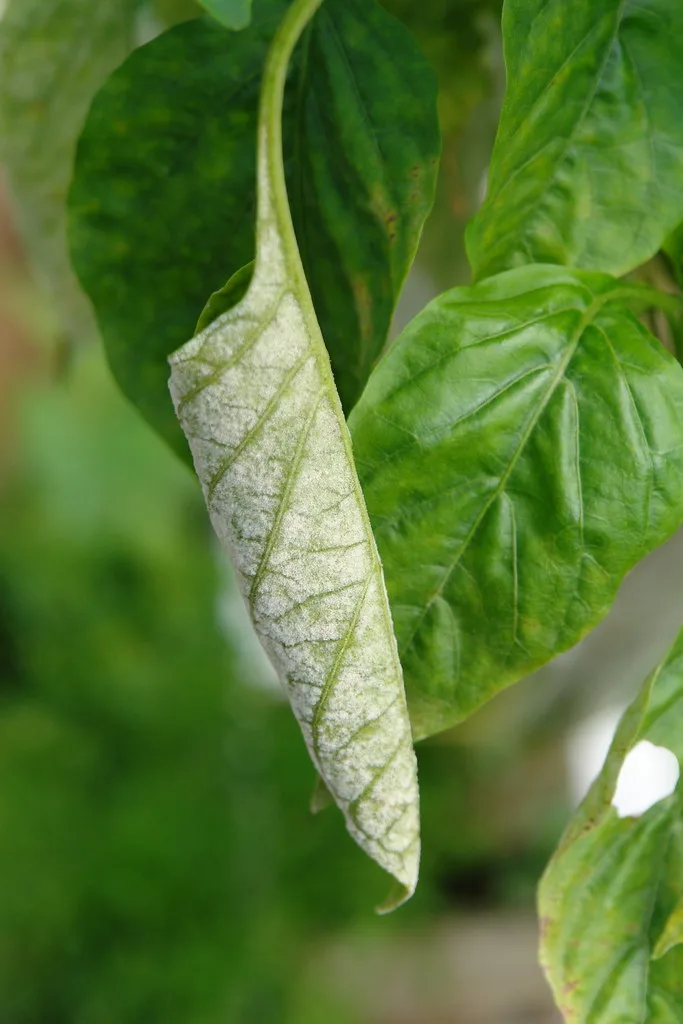
Image source: Openverse / Plant pests and diseases
Pest Damage: Whiteflies, Spider Mites, and Thrips
Tiny pests can cause surprisingly dramatic discoloration. Spider mites, which are barely visible to the naked eye, suck sap from the undersides of leaves and leave behind a stippled or silvery-white pattern. You might also notice fine webbing.
They thrive in hot, dry conditions above 80°F (27°C).
Whiteflies are small, white, flying insects that cluster on leaf undersides. Their feeding causes yellowing and a mottled white appearance. Thrips scrape at leaf surfaces and leave silvery-white streaks or patches.
In all cases, flip the leaf over and look closely. A hand lens or magnifying glass helps a lot here.
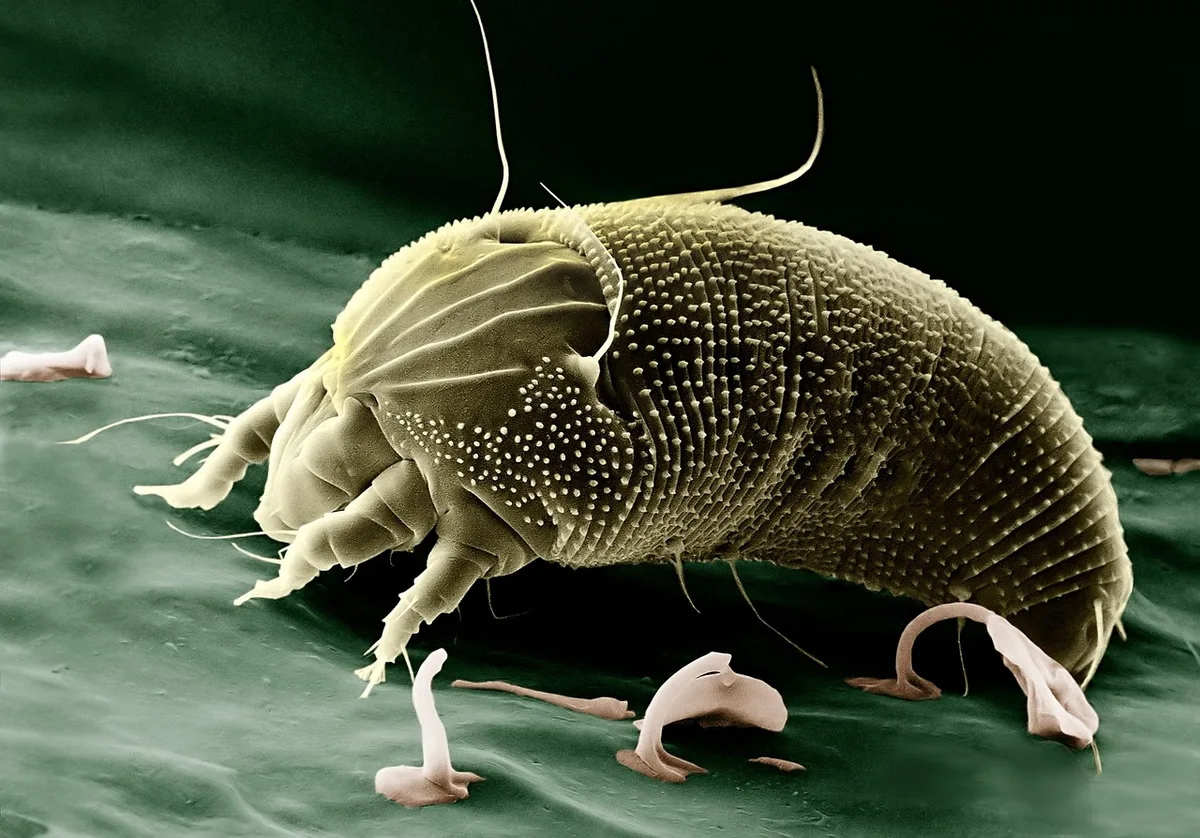
Image source: Pixabay / WikiImages (Pixabay Content License)
Nutrient Deficiencies: Calcium, Magnesium, and Iron
A lack of key nutrients can cause pepper leaves to lose their green color. Magnesium deficiency typically shows as interveinal chlorosis, where the tissue between the veins turns pale or white while the veins stay green. It usually appears on older, lower leaves first.
Calcium deficiency can cause new growth to come in pale or distorted, though it's more commonly associated with blossom end rot in the fruit. Iron deficiency affects the newest leaves first, turning them pale yellow to almost white. Soil pH plays a big role here.
If your soil pH is outside the optimal 6.0-6.8 range for peppers, the plant may struggle to absorb these nutrients even if they're present.
Cold Stress, Frost, and Transplant Shock
Pepper plants are warm-season crops. When nighttime temperatures drop below 55°F (13°C), you can see leaves turn pale, almost whitish, especially on young seedlings. Frost damage is more dramatic.
Affected leaves look water-soaked at first, then turn white or translucent before browning and dying.
Transplant shock can also cause temporary bleaching, especially if seedlings went from a protected indoor environment straight into full sun without a gradual transition. The leaves may look washed out for a week or two before the plant adjusts.
Herbicide Drift and Chemical Damage
If your pepper leaves turned white or pale seemingly overnight and the damage pattern doesn't match any of the above, consider herbicide drift. Even small amounts of a broadleaf herbicide like glyphosate or 2,4-D, carried on the wind from a neighboring property or a recent lawn treatment, can cause rapid bleaching. The damage often appears on the side of the plant closest to the drift source and may affect multiple plant species in the area.
This one is frustrating because there's no cure for the damaged tissue. The plant may recover if the exposure was mild, but you'll need to wait and see.
How to Figure Out What's Actually Wrong With Your Pepper Plant
Now that you know the main causes, it's time to play detective. The right diagnosis comes from looking at the details. Here's a step-by-step approach.
Check the Pattern and Location of the White Discoloration
Where the white appears on the plant tells you a lot. Upper leaves with large, irregular bleached patches point to sunscald. Lower leaves with a powdery white coating suggest fungal disease.
New growth turning pale hints at iron deficiency or transplant shock. Older, lower leaves going white between the veins is a classic magnesium deficiency sign.
Also look at the pattern across your garden. If only one plant is affected, it's more likely a localized issue like herbicide contact or transplant shock. If multiple plants show the same symptoms, think environmental (heat, cold) or infectious (fungus, pests).
Look for Pests on the Undersides of Leaves
Grab a magnifying glass and flip those white leaves over. Spider mites are tiny, about the size of a grain of pepper, and may appear as small dots along the veins. You might see fine webbing.
Whiteflies will fly up in a small cloud when you disturb the leaf. Thrips are slender and fast-moving, often hiding in leaf folds.
If you don't see insects but the leaf undersides look dusty or have tiny dark specks (that's frass, or pest excrement), you've had a pest problem even if the culprits have moved on.
Review Your Recent Weather and Watering Habits
Think back over the last week or two. Did a heat wave hit? That points to sunscald.
Has it been unusually humid with cool nights? Fungal issues become more likely. Did temperatures dip unexpectedly?
Cold stress could be the answer.
Overwatering can cause root problems that show up as pale or white leaves, especially if the soil stays soggy. Underwatering during a heat wave compounds sunscald damage. Check the soil moisture a few inches down before assuming anything.
Test Your Soil pH and Nutrient Levels
If the visual clues aren't giving you a clear answer, a soil test is your next move. You can get an inexpensive test kit from a garden center or send a sample to your local university extension service for a detailed analysis. Testing soil pH is especially important because peppers are sensitive to imbalances.
At a pH below 5.5 or above 7.5, nutrient uptake drops off significantly even if the nutrients are physically present in the soil.
Step-by-Step Treatment for Each Cause
Once you've identified the likely cause, here's how to treat it. Match your situation to the right section below.
Treating Sunscald and Heat Stress
Move container-grown peppers to a spot with afternoon shade. For in-ground plants, install a 30-50% shade cloth over them during the hottest part of the day. Don't prune off the damaged leaves unless they're completely dead.
They're still providing some photosynthetic function. Keep the plant well-watered during heat waves, but water at the base, not overhead. New growth should come in green once temperatures moderate.
Getting Rid of Powdery Mildew on Pepper Plants
Remove and dispose of severely affected leaves. Don't compost them. Improve air circulation by spacing plants properly and pruning crowded branches.
Apply a sulfur-based fungicide or neem oil every 7-14 days, following the label instructions carefully. A homemade spray of 1 tablespoon baking soda in a gallon of water with a few drops of liquid soap can help in mild cases. Avoid overhead watering, which spreads spores.
Eliminating Whiteflies, Spider Mites, and Thrips
Start with a strong spray of water from the hose to knock pests off the undersides of leaves. Follow up with insecticidal soap or neem oil, applied thoroughly to leaf undersides every 5-7 days for at least three applications. For severe spider mite infestations, horticultural oil is effective but don't apply it when temperatures are above 90°F (32°C) or you risk leaf burn.
Introducing beneficial insects like ladybugs or lacewings can help with long-term control.
Correcting Nutrient Deficiencies
For magnesium deficiency, dissolve 1 tablespoon of Epsom salt in a gallon of water and apply as a foliar spray or soil drench. For iron deficiency, use a chelated iron foliar spray. If your soil pH is off, amend it gradually.
Add sulfur to lower pH or lime to raise it, based on your soil test results. A balanced fertilizer with micronutrients (look for one that includes calcium, magnesium, and iron) applied at the recommended rate will address multiple deficiencies at once.
Recovering From Cold Damage and Transplant Shock
If frost damaged your plants, wait a few days before pruning. You want to see exactly which tissue is dead. New growth may emerge from the stems once warm weather returns.
For transplant shock, provide temporary shade for 3-5 days after transplanting. Keep the soil consistently moist but not waterlogged. The plant should bounce back on its own within a couple of weeks.
What to Do About Herbicide Exposure
There's no reversing herbicide damage on affected leaves. Remove any severely damaged foliage and give the plant time. Keep it well-watered and avoid fertilizing stressed plants.
If the exposure was mild, the plant will push out new, healthy growth. If the entire plant collapses, remove it and replant. Document the damage and, if possible, identify the source to prevent it from happening again.
How to Prevent White Leaves on Pepper Plants in the First Place
Prevention is always easier than treatment. A few simple practices will dramatically reduce your chances of dealing with white pepper leaves.
- Harden off seedlings gradually. Transplant peppers over 7-10 days, increasing sun exposure a little each day.
- Use shade cloth during extreme heat. A 30-40% shade cloth draped over peppers during heat waves prevents sunscald without sacrificing too much light.
- Space plants properly. Good air circulation reduces humidity around the foliage and discourages fungal diseases.
- Water at the base, not overhead. Wet leaves invite fungal spores to germinate.
- Mulch around the base. A 2-3 inch layer of organic mulch keeps soil moisture consistent and roots cool.
- Monitor for pests weekly. Check leaf undersides regularly. Early detection means easier control.
- Test your soil annually. Knowing your pH and nutrient levels lets you correct problems before they show up in the leaves.
- Avoid spraying herbicides near your garden on windy days. Even a small amount of drift can damage sensitive pepper plants.
Mistakes That Make White Pepper Leaves Worse
A few common missteps can turn a minor issue into a major one. Here's what to avoid.
Over-applying fungicide. If the problem is sunscald, not fungus, spraying fungicide does nothing and can stress the plant further. Always confirm the cause before treating.
Removing too many leaves at once. Stripping a plant of damaged foliage removes its ability to photosynthesize. Remove only the worst leaves and let the plant recover gradually.
Fertilizing a stressed plant. Adding fertilizer to a plant dealing with cold damage, herbicide exposure, or severe pest infestation can burn roots and make things worse. Stabilize the plant first, then feed it.
Ignoring the undersides of leaves. Many pests and fungal issues start on the lower leaf surface. If you're only looking at the tops of leaves, you'll miss the early signs.
Watering in the evening. Wet foliage overnight creates ideal conditions for fungal growth. Water in the morning so leaves dry quickly.
When to Give Up on a Plant and Start Over
Sometimes a plant is too far gone. If more than 70% of the foliage is white, papery, or dead, and there's no sign of new green growth after two weeks of proper care, it's probably not worth saving. This is especially true if the stem is mushy or the roots are rotting.
Pull the plant, dispose of it (don't compost diseased material), and start fresh. If you're mid-season, you can often find new transplants at a garden center. Just make sure you address whatever caused the problem in the first place, or the replacement will go down the same way.
Organic vs Chemical Treatments: Which Should You Use?
Both organic and chemical treatments have their place, and the right choice depends on the severity of the problem and your gardening philosophy. For mild powdery mildew, neem oil or a baking soda spray often does the job without introducing synthetic chemicals. For a heavy whitefly infestation that's spreading to neighboring plants, a targeted synthetic insecticide may be the faster, more reliable option.
Organic treatments like insecticidal soap and horticultural oil work well for small-scale pest problems but require more frequent application. They break down quickly, which means less residue but also shorter protection. Chemical fungicides like chlorothalonil offer longer-lasting control for persistent fungal diseases, but they should be used as a last resort and always according to label directions.
The key principle: start with the least aggressive treatment that's likely to work. Escalate only if the problem persists after two or three applications.
Seasonal Patterns: When White Leaves Are Most Likely to Appear
Timing matters more than most gardeners realize. Sunscald peaks in mid to late summer, typically July and August in most of the US, when both heat and sunlight intensity are at their highest. If your peppers went through a cool, cloudy stretch followed by a sudden heat wave, the risk is even greater because the leaves haven't acclimated.
Powdery mildew tends to show up in late summer and early fall when warm days meet cool, humid nights. It's especially common in September in the Southeast and Mid-Atlantic states. Cold-related bleaching happens at the bookends of the season, late spring after transplanting and early fall when night temperatures start dropping.
Pest pressure from spider mites builds through the hottest, driest weeks. Whiteflies are more of a greenhouse or indoor growing problem but can spike outdoors in warm, sheltered spots during summer.
How Different Pepper Varieties Respond to Stress
Not all peppers handle stress equally. Thin-leaved varieties like habaneros and many Asian types are more susceptible to sunscald because they have less natural protection from intense light. Thick-leaved, robust varieties like bell peppers and jalapeños tend to tolerate heat better, though they're not immune.
Some cultivars have been bred for disease resistance. If powdery mildew is a recurring problem in your area, look for varieties with documented resistance. Your local university extension service can recommend cultivars that perform well in your specific climate and disease pressure conditions.
Diagnosing White Leaves in Container vs In-Ground Peppers
Container-grown peppers face a different set of risks than their in-ground counterparts. Roots in pots heat up faster, which can stress the plant and make sunscald more likely. Containers also dry out quicker, so underwatering during a heat wave compounds the problem.
On the flip side, poor drainage in a container can lead to root rot, which shows up as pale or white leaves from nutrient uptake failure.
In-ground peppers have more stable root temperatures but are more exposed to soil-borne fungal diseases and herbicide drift from nearby lawns. They're also harder to shade during a heat wave. If you're growing in containers, you have the advantage of being able to move plants to a sheltered spot when conditions turn extreme.
Expert Tips for Keeping Pepper Plants Healthy All Season
A few proactive habits will save you a lot of troubleshooting later. Inspect your plants at least once a week, flipping leaves and checking stems. Early detection is everything.
Keep a garden journal noting when symptoms appear and what the weather was doing. Over time, you'll spot patterns specific to your location.
Feed peppers with a balanced fertilizer at planting and again when they start setting fruit. Don't over-nitrogen them, though. Too much nitrogen produces lush, soft growth that's more vulnerable to both pests and sun damage.
Consistent watering matters more than most people think. Peppers prefer steady moisture, not a cycle of drought and flood.
Finally, rotate your pepper planting location each year if possible. This breaks disease and pest cycles in the soil and gives your plants a cleaner start.
Frequently Asked Questions
Can pepper plants recover from sunscald?
Yes, in most cases. Sunscald damages existing leaves, but the plant will produce new, healthy growth once temperatures moderate. Provide shade during peak heat and keep the plant well-watered.
Remove only the most severely damaged leaves.
Is powdery mildew on pepper plants harmful to humans?
Powdery mildew on peppers doesn't pose a direct health risk to humans, but it weakens the plant and reduces fruit production. The affected fruit is safe to eat, though the quality may be lower. Remove heavily infected leaves before harvesting.
How do I tell the difference between sunscald and powdery mildew?
Sunscald causes large, irregular bleached patches on upper leaves, and the tissue feels papery. Powdery mildew appears as a white, powdery coating that can be wiped off, usually starting on lower leaves. Location and texture are your best clues.
What causes white spots on pepper leaves specifically?
White spots, as opposed to large patches, are often the early stage of powdery mildew or the stippling damage caused by spider mites and thrips. Check the undersides of the affected leaves with a magnifying glass to confirm which one you're dealing with.
Should I remove leaves that are turning white?
Remove leaves that are more than 50% damaged or that show signs of fungal infection. Leave partially damaged leaves in place, as they still contribute to photosynthesis. Always clean your pruning tools with rubbing alcohol between plants to avoid spreading disease.
Can overwatering cause pepper leaves to turn white?
Indirectly, yes. Overwatering leads to root rot, which impairs the plant's ability to take up nutrients. This can show up as pale or white leaves, especially if the roots have been sitting in waterlogged soil.
Check drainage and let the soil dry slightly between waterings.