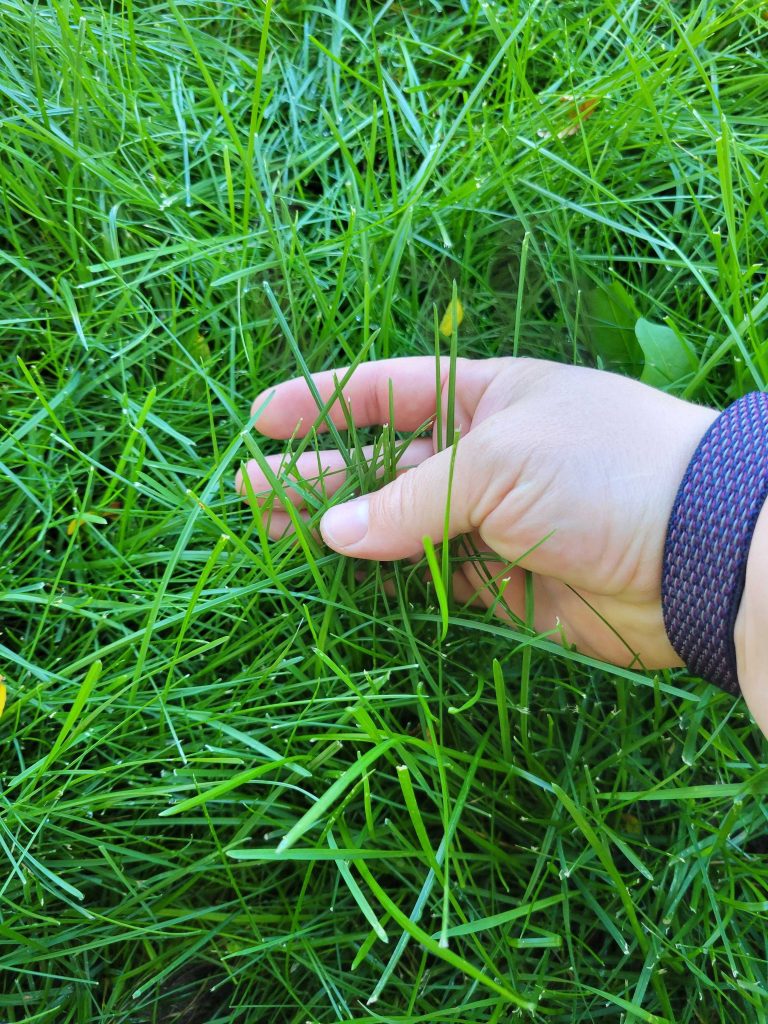
To distinguish Kentucky bluegrass from fescue, look closely at their color, blade texture, and growth patterns. Kentucky bluegrass usually has a lush, vibrant blue-green hue with fine, soft blades that form dense, spreading mats. Fescue tends to be a darker green with coarser blades and a more upright growth habit, often appearing more clumped than spreading.
In short, Kentucky bluegrass is soft, fine, and lush with a bluish tint, while fescue is darker green, coarser, and tends to grow in clumps. Recognizing these differences makes it easier to choose the right grass for your lawn or understand what’s existing there.
If you want to tell Kentucky bluegrass from fescue, focus on their color, blade texture, and how they grow. Kentucky bluegrass feels softer, looks bluer, and spreads out smoothly. Fescue is usually darker, rougher, and grows more in bunches. Knowing these key features helps you identify each grass type quickly and easily, ensuring your lawn care is spot-on.

How to Tell Kentucky Bluegrass from Fescue
Introduction to Kentucky Bluegrass and Fescue
Understanding the differences between Kentucky bluegrass and fescue is vital for choosing the right grass for your lawn. Both grasses are popular in many regions but have distinct characteristics. Knowing these details helps in proper lawn care and maintenance.
Visual Differences in Grass Appearance
A quick way to tell these grasses apart is by their appearance. Kentucky bluegrass has a fine texture with a lush, velvety feel. It features medium to dark green color and spreads evenly. Fescues tend to have a coarser texture with a more upright growth habit. They can be darker or lighter green depending on the variety.
Color and Texture Comparison
- Kentucky Bluegrass exhibits a smooth, fine leaf texture with a rich, bluish-green hue. Its blades are slender and soft to touch.
- Fescue species, like tall fescue or creeping red fescue, generally have broader blades. They often appear coarser and can have a more matte finish.
The overall look of Kentucky bluegrass is more elegant, while fescue provides a more rugged appearance.
Growth Pattern and Spreading
Kentucky bluegrass spreads through underground rhizomes, creating dense, carpet-like patches. Its growth is more uniform and smooth. Fescues grow through bunching, resulting in clumps that may require overseeding for a continuous look.
Blade Shape and Size Factors
Blade characteristics are reliable identifiers. Kentucky bluegrass blades are typically narrower, measuring about 2 to 3 millimeters wide. Fescue blades are broader, often 3 to 5 millimeters.
Blade Length and Width
- Kentucky bluegrass has narrow, fine blades that are about 2 to 4 inches long.
- Fescue blades tend to be longer and broader, often between 3 and 4 inches long.
This makes Kentucky bluegrass feel softer underfoot compared to the slightly coarse feel of fescue.
Color Variations and Shades
Color cues are often noticeable. Kentucky bluegrass maintains a vibrant, deep bluish-green shade throughout the growing season. Fescue grasses may range from medium to dark green and sometimes have a slight bluish tint.
Seasonal Color Changes
Kentucky bluegrass can lose some vibrancy during hot summer months but generally retains a bright hue. Fescue tends to stay green longer in the cooler seasons, making it ideal for shaded or cooler environments.
Environmental Preferences and Growth Conditions
Different grasses thrive under specific conditions, which can serve as clues for identification.
Sunlight and Shade Tolerance
- Kentucky bluegrass prefers full sun but can tolerate some shade. It needs around 6 hours of direct sunlight daily for optimal growth.
- Fescue varieties are more shade-tolerant and perform well in areas with less sunlight, thriving in cooler temperatures.
Soil and Water Requirements
Kentucky bluegrass prefers well-drained, fertile soils with moderate water needs. Fescue is often more drought-tolerant, capable of surviving on less water once established.
Resistance to Wear and Disease
If your lawn experiences foot traffic, these traits are important.
- Kentucky bluegrass is fairly resistant to wear and recovers quickly, making it good for high-traffic areas.
- Fescue tends to be more tolerant of shade but may not recover from heavy traffic as fast as bluegrass.
Disease resistance varies among specific varieties but generally, Kentucky bluegrass is slightly more susceptible to certain fungal diseases.
Maintenance and Mowing Practices
Knowing how each grass reacts to mowing helps distinguish them.
Mowing Height and Frequency
- Kentucky bluegrass is best kept at 2.5 to 3 inches tall. Regular mowing encourages a dense lawn.
- Fescue can be mowed slightly higher, around 3 to 4 inches, to promote deep roots and drought resistance.
Fescue lawns may require less frequent mowing compared to Kentucky bluegrass.
Fertilization Needs
Kentucky bluegrass responds well to regular fertilization, especially with higher nitrogen content. Fescue generally requires less fertilization once established.
Best Uses for Kentucky Bluegrass and Fescue
Choosing between these grasses depends on your lawn’s purpose and environment.
Ideal Environments for Kentucky Bluegrass
- Perfect for lawns with full sunlight
- Suitable for areas that receive foot traffic
- Requires consistent watering and fertilization
Best Locations for Fescue
- Great for shaded areas or cooler climates
- Suitable for low-maintenance lawns
- Can survive with less watering and fertilization
Identification Summary Table
| Feature | Kentucky Bluegrass | Fescue |
|---|---|---|
| Blade Texture | Fine, smooth | Coarser, broader |
| Color | Deep bluish-green | Medium to dark green, bluish tint |
| Growth Pattern | Spreading via rhizomes | Bunching growth |
| Preferred Climate | Warm-season, sun-loving | Cool-season, shade-tolerant |
| Mowing Height | 2.5 to 3 inches | 3 to 4 inches |
Final Tips for Identifying Kentucky Bluegrass and Fescue
Look closely at the blade shape, texture, and plant growth habits. Observe the color in different seasons and the lawn’s response to sunlight and moisture. These clues make it easier to tell these grasses apart and select the best for your lawn.
This comprehensive understanding helps you maintain a healthy, beautiful lawn tailored to your environment. Recognizing these differences allows for proper care, ensuring your grass stays lush and vibrant year-round.
Kentucky 31 Vs Tall Fescue- Know Which One Is Best
Frequently Asked Questions
What are the visual differences between Kentucky bluegrass and fescue in terms of color and texture?
Kentucky bluegrass features a fine to medium texture with a vibrant, rich green color that appears shiny and lush. Fescue, on the other hand, has a coarser texture with a slightly duller, darker green hue. The bluegrass blades tend to be smooth and soft, while fescue blades are thicker and sometimes rougher to the touch.
How can the growth patterns of Kentucky bluegrass and fescue help in distinguishing them?
Kentucky bluegrass grows in a dense, spreading mat with a rhizomatous growth habit, creating a uniform appearance. Fescue typically forms clumps or bunches that are less dense and can have a more uneven look. Bluegrass’s spreading nature results in a smoother, continuous lawn, whereas fescue may appear more patchy with distinct clumps.
What are the differences in leaf blade characteristics between Kentucky bluegrass and fescue?
The leaf blades of Kentucky bluegrass are narrow, fine, and have a smooth edge, giving a sleek appearance. Fescue has broader, coarser leaf blades with a slightly rough texture and sometimes a hint of a wave or curl. These distinctions can help you identify each grass type upon close inspection.
How does the seasonality of growth help differentiate Kentucky bluegrass from fescue?
Kentucky bluegrass tends to grow vigorously during cooler months and goes dormant in hot summer weather, turning a duller color. Tall fescue, especially its fine-leaved varieties, remains relatively green and grows well in both spring and fall, showing less dormancy. Observing the grass’s activity across seasons provides clues about its identity.
What role does the root structure play in telling Kentucky bluegrass apart from fescue?
Kentucky bluegrass develops a dense network of rhizomes, allowing it to spread quickly and fill in areas more seamlessly. Fescue primarily has a fibrous root system with clumping growth, making it less aggressive in spreading. Examining root structure, especially in areas of turf damage, can aid in identification.
Final Thoughts
To tell Kentucky bluegrass from fescue, examine their growth habits and leaf textures. Kentucky bluegrass features dense, fine-textured blades that form a lush, carpet-like appearance. Fescue, on the other hand, has coarser leaves and tends to grow in clumps.
Color also offers clues—bluegrass usually appears darker green with a bluish tint, while fescue is lighter and more muted. Understanding these differences helps you identify each type effortlessly.
In conclusion, knowing how to tell Kentucky bluegrass from fescue involves observing their color, leaf coarseness, and growth patterns. This makes identifying each grass straightforward and efficient.