Image source: Bing (Web (fair-use with source credit))
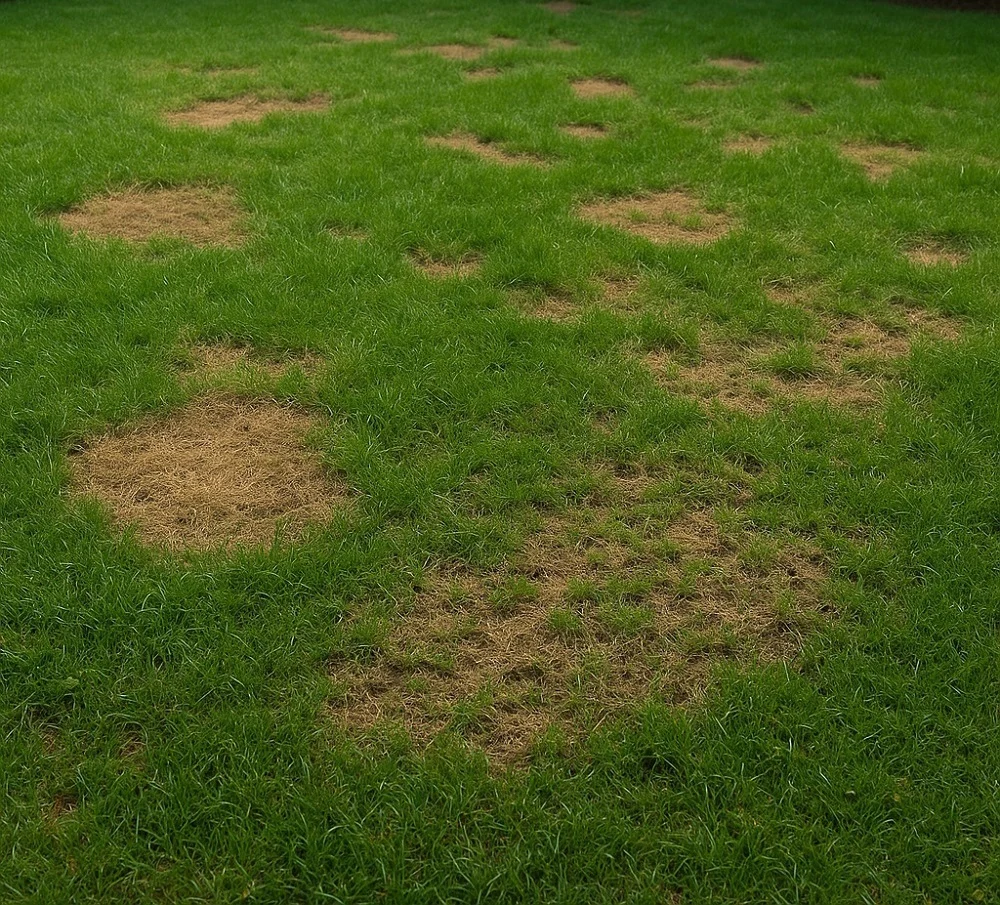
Figuring out how to tell if your lawn has grubs starts with recognizing the damage pattern. Brown, irregular patches that don't respond to watering are often the first sign something is feeding on your turf roots below the surface. White grubs, the larval stage of scarab beetles, chew through grass roots and leave your lawn looking drought-stricken even when the soil is moist.
The tricky part is that grub damage looks a lot like other common lawn problems. Before you spend money on treatment, you need to confirm what's actually going on underground. Research from university extension programs shows that most lawn damage blamed on grubs is actually caused by drought stress, fungal disease, or irrigation issues.
Let's walk through how to check properly so you know exactly what you're dealing with.
Quick Answer
To tell if your lawn has grubs, look for brown patches that feel spongy underfoot. Grab a handful of grass and pull. If it lifts easily like loose carpet, the roots are gone.
Cut a one-square-foot flap of turf and peel it back. Count the grubs you find underneath. More than five to ten per square foot means you should treat.
Why Your Lawn Is Dying — And Whether Grubs Are the Real Culprit
Your lawn can turn brown and thin out for a dozen different reasons. Grubs are just one possibility, and treating for them when they're not the problem wastes time and money. The key is learning to read the signs before you jump to conclusions.
Grub damage follows a specific pattern. The grass dies in irregular patches because the larvae are feeding on roots in concentrated areas. Unlike drought stress, which tends to show up in the hottest, driest parts of the yard first, grub damage can appear anywhere.
The affected turf often feels spongy or loose when you walk on it because the root system has been severed from the soil.
Here's where it gets confusing. Fungal diseases like brown patch and dollar spot also cause circular dead areas. Chinch bugs create yellowing patches that turn brown.
Sod webworms leave closely mowed-looking spots. Dog urine burns show up as small, round dead centers surrounded by dark green rings. Each of these problems requires a completely different solution, so misdiagnosis leads to the wrong treatment.
The most reliable way to confirm grubs is to get your hands in the soil. Visual clues above ground can point you in the direction, but nothing replaces actually finding the larvae underneath your turf. That's where the simple tests come in.
The 3-Minute Grub Check: Tug Test, Dig Test, and What the Numbers Mean
You don't need special equipment or a degree in entomology to check for grubs. Two simple tests will give you a clear answer in under five minutes.
The Tug Test
Grab a handful of grass in one of the brown patches and pull upward firmly. Healthy grass with intact roots will resist and stay anchored. If the turf lifts away easily, almost like peeling back a carpet, the roots have been chewed through.
This is a strong indicator of grub activity, though it's not definitive on its own. Severe drought can also weaken root systems enough to cause this effect.
The Dig Test
This is the gold standard for confirmation. Take a flat shovel or spade and cut a square about one foot across and two inches deep in the damaged area. Peel back the turf like a flap and examine the soil underneath.
Flip over any loose soil and look for C-shaped, cream-colored larvae with brown heads.
Count every grub you find in that square foot. Then repeat the test in two or three other spots around the damaged area to get an average. Here's what the numbers tell you:
| Grubs per Square Foot | Severity | Recommended Action |
|---|---|---|
| 0–3 | Low | Monitor, likely no treatment needed |
| 4–6 | Moderate | Consider treatment if lawn is stressed or high-value |
| 7–10 | High | Treat, especially if damage is visible |
| 10+ | Severe | Treat immediately, significant damage likely |
These thresholds come from university extension guidelines and account for the fact that a healthy, well-maintained lawn can tolerate a small grub population without showing visible damage. If your lawn is already stressed from heat, drought, or heavy use, even four or five grubs per square foot might warrant action.
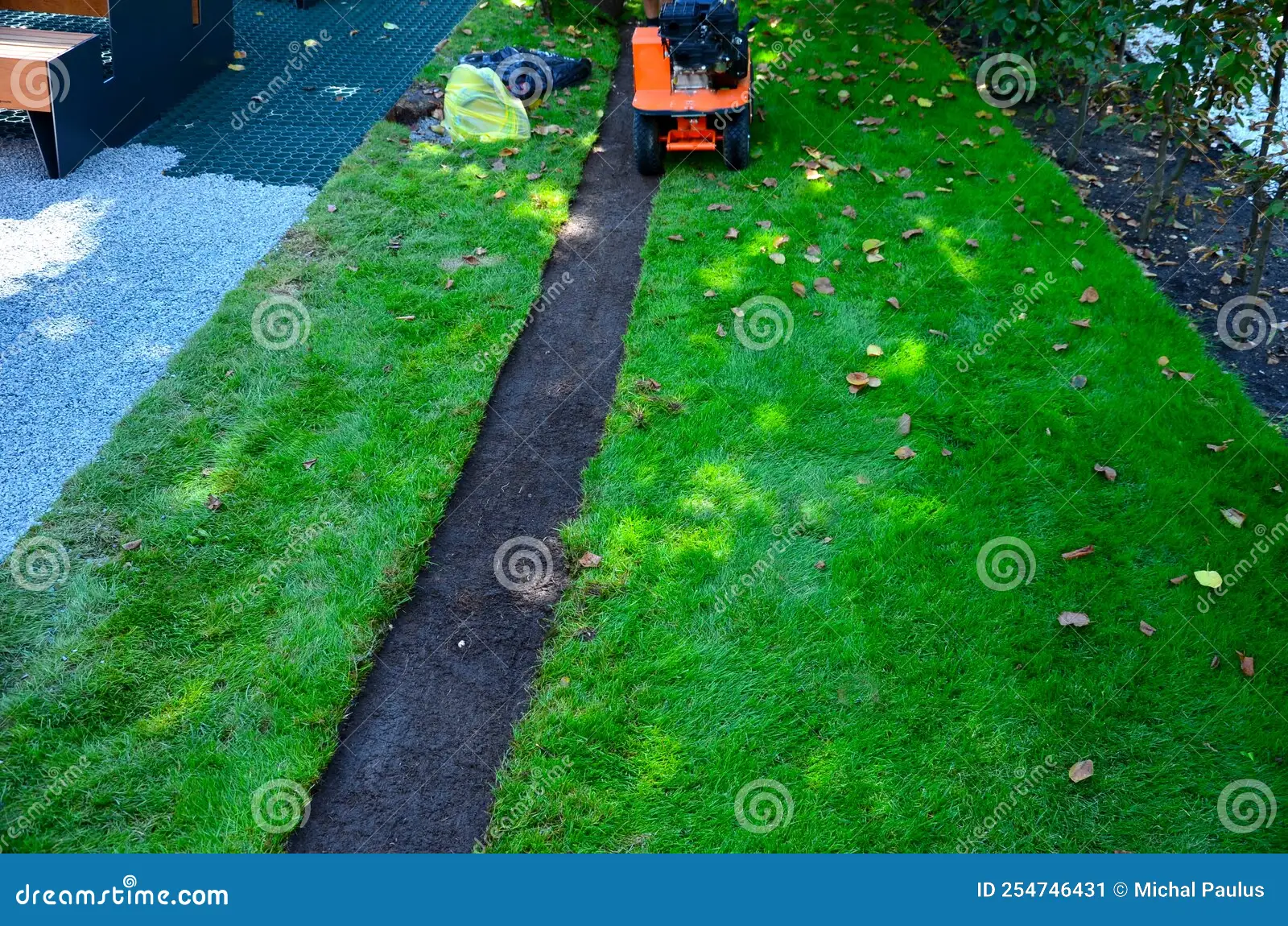
Image source: Bing (Web (fair-use with source credit))
What Grub Damage Actually Looks Like (Andused With)
Grub damage has a few telltale characteristics, but so do several other lawn problems. Learning to tell them apart saves you from treating the wrong issue.
Grub Damage vs. Drought Stress
Drought-stressed grass typically turns a uniform bluish-gray or straw-brown across large areas, especially in full sun or on slopes. The grass wilts and footprints remain visible when you walk on it. Grub damage, on the other hand, appears in irregular patches that don't correlate with sun exposure or soil type.
The grass doesn't just wilt. It dies because the roots are gone. If you water deeply and the brown patches don't green up within a week, grubs become more likely.
Grub Damage vs. Fungal Disease
Brown patch fungus creates roughly circular patches, sometimes with a darker "smoke ring" border in the early morning when dew is present. Dollar spot causes smaller, silver-dollar-sized spots. Fungal diseases often show visible fungal growth or specific patterns on individual grass blades when examined up close.
Grub damage lacks these blade-level symptoms. The grass dies from the roots up, and you won't see spotting or lesions on the leaves themselves.
Grub Damage vs. Chinch Bugs and Sod Webworms
Chinch bugs are tiny insects that suck sap from grass blades, causing yellowing that progresses to brown. They tend to show up in hot, sunny areas first, often along driveways or sidewalks. Sod webworms are caterpillars that chew grass blades at the base, creating closely cropped or thinning patches.
You might see small holes in the thatch or silken tunnels if you look closely. Both of these pests damage the above-ground portion of the plant, while grubs attack below ground.
Grub Damage vs. Dog Urine and Fertilizer Burn
Dog urine creates small, round dead spots, usually with a ring of dark green, over-fertilized grass around the edge. Fertilizer burn shows up as streaks or patches where product was applied unevenly. Both are easy to distinguish from grub damage by their size, shape, and pattern.
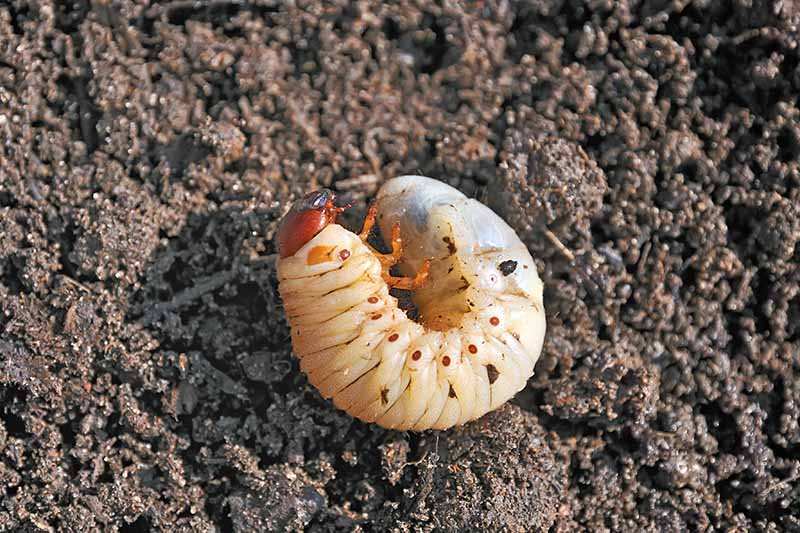
Image source: Bing (Web (fair-use with source credit))
The Animal Test: Skunks, Raccoons, and Birds Telling You Something
:max_bytes(150000):strip_icc()/GettyImages-519421062-af962e5ea5ae4b5393e9277ec69713fb.jpg)
Image source: Bing (Web (fair-use with source credit))
Sometimes the best evidence of a grub problem comes from the animals in your neighborhood. Skunks, raccoons, armadillos, and certain birds like crows and starlings all feed on white grubs, and they'll tear up your lawn to get at them.
Skunks are the most common culprits. They'll roll back small sections of turf at night, leaving behind cone-shaped holes or patches of disturbed sod. Raccoons are more destructive, peeling back larger sections in their search for larvae.
Armadillos dig deeper, messier holes. Birds pecking at your lawn can indicate grubs near the surface, though they're also after earthworms and other insects.
Animal digging is a strong secondary sign, but it's not proof on its own. Animals will dig for earthworms and other soil organisms too. Combine animal activity with the tug test and dig test for a complete picture.
If you're seeing fresh digging every morning and the tug test confirms loose turf, you've almost certainly got a grub problem worth addressing.
:max_bytes(150000):strip_icc()/GettyImages-519421062-af962e5ea5ae4b5393e9277ec69713fb.jpg)
Image source: Bing (Web (fair-use with source credit))
How to Count Grubs and Know When You've Crossed the Line
Counting grubs sounds tedious, but it's the single most important step in deciding whether to treat. A few grubs in a healthy lawn is normal and harmless. A heavy population will destroy turf fast.
After you've peeled back your one-square-foot flap of soil, count every grub in that section. Look carefully. Young grubs can be as small as a quarter inch and hide in the root zone.
Check the soil to about two inches deep, which is where actively feeding larvae will be during late summer and fall.
The general action threshold used by most university extension services is five to ten grubs per square foot for cool-season grasses like Kentucky bluegrass, fescue, and perennial ryegrass. Warm-season grasses like Bermudagrass and zoysiagrass can sometimes tolerate slightly higher numbers because of their aggressive growth habit. If your lawn is already stressed from heat, drought, or disease, even three or four grubs per square foot might be enough to push damaged areas over the edge.
Here's a practical way to think about it. If you find fewer than five grubs per square foot and your lawn looks healthy overall, you can probably monitor the situation without treating. If you're finding seven to ten, treatment is a good idea, especially if you're seeing visible damage.
Anything over ten per square foot means you should treat as soon as possible. At that density, grubs can destroy a lawn section in a matter of weeks during peak feeding season.
Repeat your counts in multiple spots. Grub populations aren't evenly distributed. One square foot might have two grubs while the next has fifteen.
Averaging across three to four samples gives you a much more accurate picture of what's happening across the whole lawn.
Identifying What You're Dealing With: Common Grub Species and Their Timing
Not all grubs are the same, and knowing which species you're dealing with helps you time treatment correctly. The most common lawn grubs in North America come from a handful of scarab beetle species, each with slightly different life cycles.
Japanese Beetle Grubs
These are the most widespread and destructive lawn grubs across much of the eastern and midwestern United States. The adult beetles are metallic green and copper, about half an inch long, and they feed on over 300 plant species above ground. The larvae are cream-colored, C-shaped, and reach about one inch when fully grown.
Japanese beetle grubs cause the most damage in late summer and fall, from August through October, with a secondary feeding period in spring.
European Chafer Grubs
Common in the Northeast and parts of the Midwest, European chafer grubs are slightly smaller than Japanese beetle grubs and have a similar appearance. They tend to hatch a bit earlier in the season, which means fall damage can start in July or August in some regions. European chafer populations can build to very high densities and cause severe turf loss.
Masked Chafer Grubs
Found throughout much of the United States, masked chafers are a bit smaller than the previous two species. They're often the culprit in lawns where damage appears in scattered, irregular patches rather than large contiguous areas. Their life cycle is similar to Japanese beetles, with peak grub feeding in late summer.
May/June Beetle Grubs
These grubs are the largest, sometimes exceeding one and a half inches in length. They have a longer life cycle, often taking two to three years to develop from egg to adult. This means you can find multiple sizes of grubs in the soil at the same time.
They're more common in southern and transition zone states.
Identifying the exact species requires examining the raster pattern, the arrangement of tiny hairs on the abdomen tip under magnification. For most homeowners, the exact species matters less than the timing. If you're finding grubs in late summer and seeing damage, you're dealing with an active feeding population that needs attention regardless of which beetle produced it.
Your Decision Tree: Should You Treat, Wait, or Call a Pro?
Once you've confirmed grubs and counted them, you need to decide what to do next. The right choice depends on how many grubs you found, what time of year it is, and how much damage your lawn is already showing.
Branch 1: Few Grubs, Healthy Lawn, Monitor
If you found fewer than five grubs per square foot and your lawn looks healthy, you can hold off on treatment. A small grub population is normal in most yards and won't cause noticeable damage to well-maintained turf. Keep an eye on the areas where you found them and recheck in four to six weeks if you're concerned.
Healthy grass with adequate water and nutrition can outgrow minor root feeding.
Branch 2: Moderate Grubs, Early Season, Preventive Plan
If you're finding five to ten grubs per square foot in spring or early summer, you're in a good position to plan a preventive approach. This is the ideal time to think about a preventive insecticide application for the following year, or to apply beneficial nematodes if you prefer a biological option. You don't need to panic, but you should act before the next generation of eggs hatches.
Branch 3: Heavy Grubs, Active Damage, Curative Treatment Now
Ten or more grubs per square foot with visible brown patches means you need a curative treatment immediately. Look for products containing trichlorfon, which works on larger, older grubs already actively feeding. Apply according to label directions and water the product into the soil thoroughly.
You should see the grubs die within a few days to a week.
Branch 4: Unsure of the Cause, Investigate Further
If your tug test is inconclusive, your grub count is borderline, and the damage pattern doesn't clearly match any of the common causes, take a step back. Check your irrigation coverage with a simple can test. Look for fungal signs on grass blades.
Consider whether recent weather, foot traffic, or chemical applications might explain what you're seeing. When in doubt, your local cooperative extension office can often help with identification from a photo or sample.
Choosing Your Treatment: Preventive vs. Curative, Chemical vs. Biological
The treatment you choose depends on timing, severity, and your comfort level with different products. Each approach has a specific window where it works best.
Preventive Grub Control
Preventive products contain active ingredients like chlorantraniliprole or imidacloprid. They work by killing young grubs shortly after they hatch, before they can cause significant damage. The application window is typically May through July, depending on your region and the product.
These treatments need to be applied before you see damage, which means they're most effective when you've had grub problems in previous years and want to stay ahead of them.
Chlorantraniliprole-based products have gained popularity because they're effective at low application rates and have a favorable environmental profile compared to older chemistry. Imidacloprid is still widely used but faces restrictions in some states due to pollinator concerns. Always check your state's regulations before purchasing.
Curative Grub Control
Curative products are designed to kill grubs that are already present and feeding. Trichlorfon is the most common curative active ingredient and works relatively fast, often killing grubs within one to three days. The curative window is late July through September, when grubs are small and vulnerable.
Once grubs grow larger in late fall, curative options become less effective.
Carbaryl is another curative option, though it's broader-spectrum and kills beneficial insects along with grubs. Use it only when necessary and follow label precautions carefully.
Biological Options: Nematodes and Milky Spore
Beneficial nematodes, specifically Heterorhabditis bacteriophora, are microscopic worms that seek out and kill grubs in the soil. They're a good option for homeowners who want to avoid chemical insecticides. Nematodes need moist soil and temperatures between 55 and 85 degrees Fahrenheit to be effective.
Apply them in the evening, water them in well, and keep the soil moist for at least a week after application.
Milky spore, caused by the bacterium Paenibacillus popilliae, targets Japanese beetle grubs specifically. It takes two to four years to establish fully in the soil, but once it does, it can provide control for a decade or more. Milky spore works best in regions where Japanese beetles are the primary grub species and soil temperatures stay above 65 degrees Fahrenheit for extended periods.
What to Do If You're Going Chemical-Free
If you prefer not to use any pesticides, focus on cultural practices that help your lawn tolerate and recover from grub feeding. Deep, infrequent watering encourages deeper root growth. Mowing at the proper height for your grass type reduces stress.
Overseeding damaged areas in early fall helps fill in bare spots. Beneficial nematodes can supplement these practices when grub pressure is moderate.
When to Treat: Timing Windows That Actually Matter
Timing is everything with grub control. Apply at the wrong time and you're wasting product and money. Here's how the calendar breaks down for most regions.
May through July: Preventive Window
This is when adult beetles are flying, mating, and laying eggs in the soil. A preventive application during this period puts the product in place before eggs hatch. Chlorantraniliprole is the go-to choice here because it has a long residual and works on newly hatched grubs.
Apply when soil temperatures reach 60 degrees Fahrenheit at a four-inch depth, which typically coincides with beetle flight activity.
Late July through September: Curative Window
Eggs hatch in mid to late summer, and the tiny grubs that emerge are most vulnerable to curative treatments. This is your window for trichlorfon applications. The grubs are small, feeding near the surface, and haven't yet caused extensive damage.
Curative treatments applied in this window stop the problem before fall feeding intensifies.
October through Spring: Limited Options
By late fall, grugs are larger and harder to kill with most products. They also begin moving deeper into the soil as temperatures drop, making them harder to reach. Spring feeding is usually less damaging than fall feeding because the grubs are preparing to pupate rather than actively growing.
If you missed the curative window, it's often better to focus on lawn recovery and plan a preventive application for the following summer.
Soil temperature is a more reliable indicator than calendar dates. Use a soil thermometer or check your local extension service's soil temperature maps. Grub activity and egg hatch are driven by soil warmth, not the date on your phone.
The Biggest Mistakes People Make When Dealing With Grubs
Even when homeowners correctly identify grubs, several common mistakes can undermine their efforts.
Treating Without Confirming
The most expensive mistake is applying grub control products without actually confirming grubs are present. If your brown patches are caused by drought, fungus, or irrigation problems, no amount of insecticide will help. Always do the dig test first.
Applying Preventive Products Too Late
Preventive insecticides need to be in the soil before eggs hatch. If you apply in August or September, the grubs are already feeding and the preventive product won't touch them. You've wasted your money and still have a grub problem.
Applying Curative Products Too Early
The opposite mistake is applying a curative product in May or June before eggs have hatched. There's nothing to kill, and the product degrades before the grubs ever appear. Curative products are designed for after hatch, not before.
Not Watering In the Treatment
Most granular grub control products need to be watered into the soil to reach the root zone where grubs are feeding. Applying to dry soil and leaving it on the surface does almost nothing. Follow the label's watering instructions carefully.
Ignoring the Rest of the Lawn
Grubs don't stay in one spot. If you find them in one area, check the rest of your lawn. Populations often spread beyond the visible damage zone, and treating only the worst spots leaves the rest vulnerable.
Overlooking Reinfestation from Neighbors
If your neighbor's lawn has grubs and they don't treat, adult beetles will emerge, fly to your property, and lay eggs. You can do everything right and still get reinfested. This doesn't mean treatment is pointless, but it does mean you may need to stay vigilant year after year in areas with high beetle pressure.
After Treatment: What to Expect and How to Help Your Lawn Recover
Once you've applied treatment, give it time to work. Curative products like trichlorfon typically kill grubs within a few days. You won't see the lawn green up immediately, though.
The existing brown grass is dead and won't recover. New growth has to fill in from the surrounding healthy turf or from seed.
Water deeply and consistently for the first two to three weeks after treatment. This encourages new root development and helps surviving grass spread into damaged areas. If the damage is extensive, consider overseeding in early fall for cool-season grasses or late spring for warm-season varieties.
Choose a seed variety that matches your existing lawn for a uniform appearance.
Avoid heavy foot traffic on recovering areas for at least a month. The soil is loose where grubs have been feeding, and new roots need time to establish without compaction. A light application of starter fertilizer at the time of overseeding can speed recovery, but don't overdo it.
Too much nitrogen on stressed turf can cause more harm than good.
When to Call a Professional Instead of Going DIY
Most grub problems are manageable on your own, but some situations warrant calling a licensed lawn care professional. If your grub count is consistently over fifteen per square foot across large portions of the lawn, a professional can apply commercial-grade products and equipment that aren't available to homeowners.
You should also consider professional help if you've treated twice and the grubs keep coming back. This might indicate a larger underlying issue, such as an unusually high beetle population in your area or soil conditions that favor grub survival. A professional can assess the full picture and recommend a long-term management plan.
If you're uncomfortable handling pesticides or have concerns about children, pets, and beneficial insects, a professional can apply targeted treatments with minimal environmental impact. Many companies now offer integrated pest management programs that combine biological controls, cultural practices, and limited chemical use.
Quick-Reference Guide: Signs, Thresholds, and Next Steps at a Glance
Here's a summary you can bookmark for the next time you spot suspicious lawn damage.
| Sign | What It Means | Next Step |
|---|---|---|
| Brown patches, spongy feel | Possible grub feeding | Do the tug test |
| Turf lifts easily like carpet | Roots are severed | Do the dig test |
| 0–3 grubs per square foot | Low population | Monitor, no treatment needed |
| 4–6 grubs per square foot | Moderate population | Consider treatment if lawn is stressed |
| 7–10 grubs per square foot | High population | Treat with curative product |
| 10+ grubs per square foot | Severe population | Treat immediately |
| Skunks or raccoons digging | Animals feeding on grubs | Confirm with dig test, then treat |
| Damage doesn't respond to watering | Likely not drought | Check for grubs or disease |
Frequently Asked Questions
What time of year is best to check for grubs?
Late August through October is the ideal window. Grubs are actively feeding near the surface and have reached a size where they're easy to spot. You can also check in spring, but the grubs are often larger and harder to kill with curative products at that point.
Can grubs kill an entire lawn?
Yes, if the population is high enough and left untreated. Severe infestations with fifteen or more grubs per square foot can destroy large sections of turf in a single fall season. The damage happens fast because the grass loses its entire root system and can't take up water or nutrients.
How long does grub treatment take to work?
Curative products like trichlorfon typically kill grubs within one to three days. Preventive products work over a longer period, killing grubs as they hatch over several weeks. Biological options like nematodes may take one to two weeks to significantly reduce grub populations.
Will my lawn recover on its own after grubs are gone?
Minor damage often recovers with proper watering and fertilization. Severe damage with large bare areas will need overseeding. The key is addressing the grub problem first, then giving the lawn the resources it needs to regrow.
Are grub control products safe for pets and children?
When applied according to the label and allowed to dry or be watered in properly, most grub control products have low risk for pets and children. Always read the product label for specific re-entry intervals and safety precautions. If you're concerned, biological options like beneficial nematodes are a chemical-free alternative.
Do I need to treat my lawn every year for grubs?
Not necessarily. If you've had grub problems in the past, a preventive application each year during the May through July window can keep populations in check. If you've never had grubs, routine treatment isn't needed.
Monitor your lawn and treat only when counts exceed the action threshold.