The quickest way to know when to mow your lawn is by observing the grass height and growth rate—if it’s about 3 inches tall and looks healthy, it’s time to cut back. Regularly checking your lawn and adjusting your mowing schedule ensures lush, vibrant grass that stays healthy all season long.
Mowing your lawn at the right time is essential for a beautiful and healthy yard. It’s easy to get caught up in the routine, but knowing the signs that indicate your grass needs a trim can save you from over- or under-mowing. Generally, when your grass reaches about 3 inches in height, it’s perfect to mow. Mowing too short can weaken the grass, while waiting too long can result in an unruly, overly tall lawn that’s hard to manage. Weather plays a role too—it’s best to mow during dry conditions and avoid cutting when the grass is wet or stressed. Paying attention to these cues helps you maintain a vibrant, healthy lawn with minimal effort.

How to Know When to Mow the Lawn
Understanding the Growth Cycle of Grass
Grass grows in predictable cycles, with periods of rapid growth followed by slower phases. Knowing these cycles helps determine the best times to mow. During active growth, grass can grow an inch or more in a week, signaling that mowing is needed. Conversely, when growth slows down, less frequent mowing is sufficient.
Measuring the Height of Your Grass
A simple way to decide if it’s time to mow is by checking the height of your grass. Generally, grass should be kept at about 2.5 to 3 inches tall. If your grass exceeds 4 inches, it’s time to cut back. Use a ruler or your hand to get an accurate measurement for better lawn care decisions.
Why Mowing Height Matters
Maintaining the proper mowing height promotes healthy roots and helps prevent weeds. Cutting grass too short can stress the plants and weaken the lawn, while leaving it too tall invites pests and diseases. Adjust your mower blade to maintain the ideal height for your specific grass type.
Best Time of Day to Mow
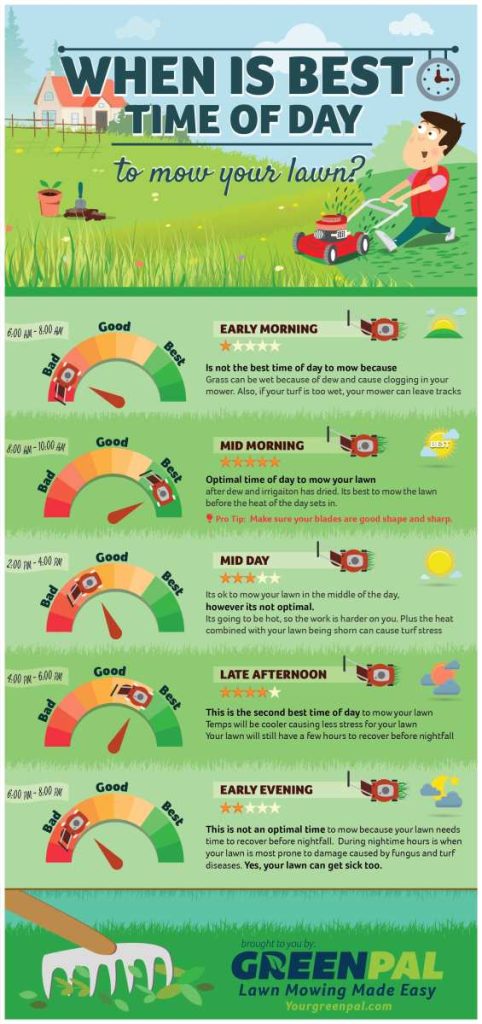
Mowing in the early morning or late afternoon prevents stress on your lawn. Avoid mowing during the hottest part of the day, as heat and direct sunlight can damage grass blades. Mowing when the grass is dry ensures a cleaner cut and reduces the risk of disease.
Weather Conditions and Mowing
Weather plays a big role in when to mow. Avoid mowing when the ground is wet from rain or dew because it can lead to uneven cuts and soil compaction. Dry, sunny days are perfect for mowing, helping your lawn stay healthy and vibrant.
Frequency of Mowing Based on Season
Different seasons require different mowing schedules. During spring and summer, grass grows rapidly and may need mowing every week. In fall and winter, growth slows, and mowing might be needed every two to three weeks or less. Adjust your schedule as seasonal growth rates change.
How to Recognize When Your Grass Needs Mowing
Beyond measuring height, look for visual cues. If the grass looks uneven or feels tall when you walk on it, mowing is needed. Also, if you notice the grass beginning to bend or look unruly, it’s time to give it a trim. Regular checks help keep your lawn neat and healthy.
Signs of Overgrown Lawn
An overgrown lawn can lead to problems like pest infestations and weed invasion. If the grass is taller than 4 inches consistently, your lawn may become prone to disease and pests. Mowing regularly prevents these issues and keeps your yard looking its best.
Tools and Techniques for Proper Mowing
Using a sharp mower blade ensures clean cuts that reduce stress on grass blades. Adjust your mower height according to the grass type and season. For uneven patches, consider using a reel mower or a rotary mower with adjustable settings for precision.
Environmental Impact of Mowing
Efficient mowing practices can minimize your environmental footprint. Avoid mowing more often than necessary, and set your mower to the highest recommended height. This encourages deeper root growth, which makes your lawn more drought-resistant and sustainable.
Tips for Mowing on a Regular Schedule
Keep a mowing schedule based on your lawn’s growth rate. Set reminders or mark your calendar for weekly or bi-weekly mowing. Consistency helps maintain a lush, healthy lawn and prevents the grass from becoming overgrown.
Related Topics to Consider
- Choosing the right mower for your lawn: Rotary, reel, or hover mowers each serve different needs.
- Proper lawn edging techniques: Creates a sharp, neat boundary between your lawn and flower beds or walkways.
- Watering and fertilizing schedules: Support healthy growth to reduce the frequency of mowing.
- Dealing with uneven lawns: Use leveling tools and soil amendments to create a uniform surface.
Common Mistakes to Avoid When Mowing
Avoid cutting more than one-third of the grass height at a time to prevent stress. Never mow when the grass is wet, as it can clog your mower and promote disease. Also, neglecting regular blade sharpening leads to ragged cuts and lawn stress.
How to Adjust Your Mowing Schedule for Special Situations
If your lawn is recovering from damage or drought, mow less frequently to allow grass to strengthen. After aeration or overseeding, wait until grass is established before mowing. Adjust your schedule based on weather events and lawn health.
Summary: Making Mowing a Part of Your Lawn Care Routine
Regular mowing at appropriate heights encourages a thick, healthy lawn and prevents weeds. Keep an eye on grass height, weather conditions, and growth patterns to determine the best times to cut. Consistency in your mowing routine leads to a beautiful, vibrant yard you can enjoy all year round.
Maintaining a healthy lawn involves more than just cutting grass—it’s about understanding your yard’s needs. With the right knowledge and timing, you can make mowing an effective part of your overall gardening plan.
How to Mow a Lawn CORRECTLY
Frequently Asked Questions
What signs indicate it’s time to mow the lawn?
When the grass reaches about 3 to 4 inches in height, it’s a good sign that mowing is needed. Additionally, if you notice the blades of grass bending easily underfoot or if the lawn begins to look uneven or overgrown, it’s time to cut back the growth to maintain a tidy appearance and promote healthy grass development.
How does grass height affect the timing of mowing?
Keeping grass at an optimal height of around 2.5 to 3 inches helps ensure a healthy root system and prevents disease. If the grass grows taller than this range, it can become more susceptible to pests and fungi, indicating that mowing should be scheduled promptly to restore the proper height and support lawn vitality.
Are there specific weather conditions that signal the need to mow?
Warm, dry weather encourages grass to grow quickly, making it necessary to mow more frequently. Conversely, after heavy rain, it’s better to wait until the lawn dries to avoid damaging the turf and creating uneven cuts. Regular observation of the weather and grass condition helps determine the right moments for mowing.
How can the growth pattern help determine when to mow?
Notice if the grass has grown unevenly, with some areas taller than others. Consistent growth patterns, such as uniform height across the lawn, make it easier to plan mowing. When patches of grass start to stand out or bend under their weight, it’s a sign to mow for a more even and healthy appearance.
Final Thoughts
Knowing when to mow the lawn depends on grass height and growth rate. Typically, if the grass reaches about 3 inches, it’s time to cut back. Avoid mowing when the grass is wet, as it can cause uneven cuts and damage.
Check the weather; dry days promote healthier grass. Regular mowing encourages a lush, even lawn.
In conclusion, to know when to mow the lawn, monitor grass height and growth speed. This ensures your lawn stays healthy and attractive.