If you've noticed brown, spongy patches in your lawn that peel back like loose carpet, you're probably dealing with grubs. Learning how to get rid of grubs organically starts with understanding that not every method works for every situation. The right approach depends on what species you're fighting, what time of year it is, and how far along the damage has progressed.
The good news is that organic grub control has come a long way. Products like beneficial nematodes and Bt galleriae can deliver real results without putting your kids, pets, or soil biology at risk. But here's the catch: most people pick the wrong method for their specific problem, apply it at the wrong time, or expect overnight results from something that needs a full season.
Let's walk through this step by step so you actually fix the problem instead of just throwing money at it.
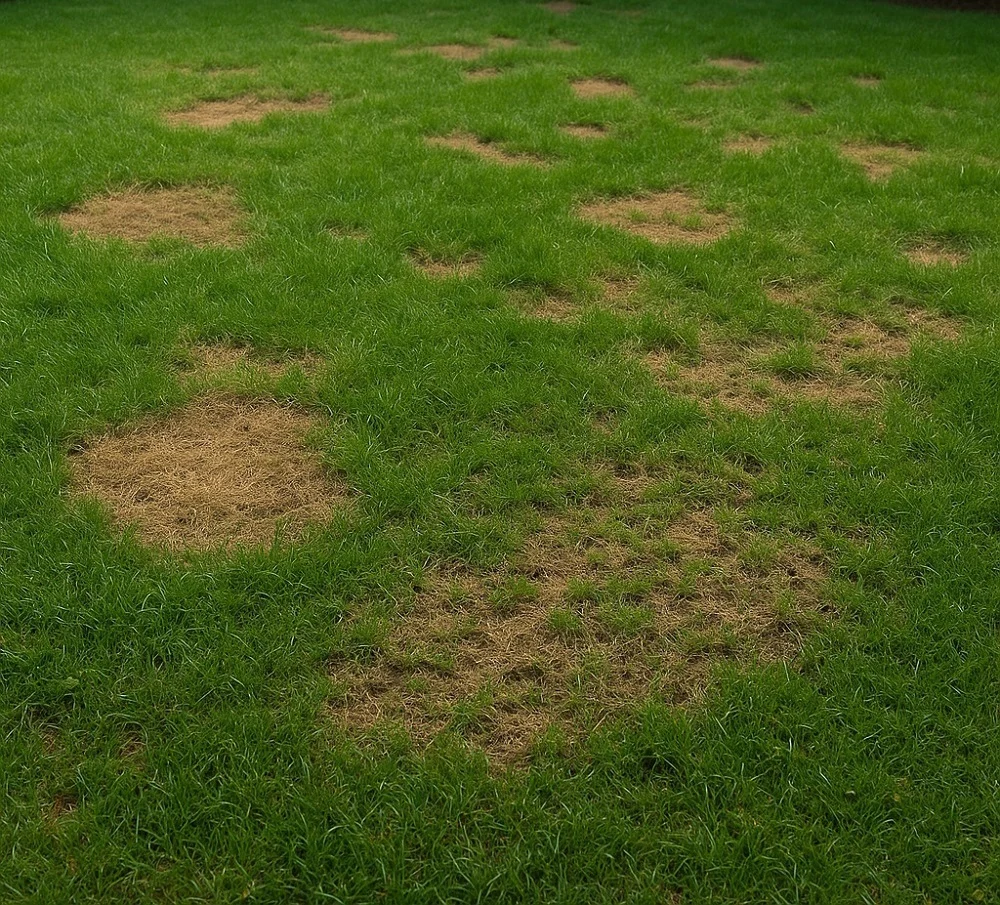
Image source: Bing (Web (fair-use with source credit))
Quick Answer
The fastest organic grub control is beneficial nematodes (Heterorhabditis bacteriophora) applied when soil temperatures are between 60°F and 85°F. For long-term Japanese beetle control, milky spore (Paenibacillus popilliae) builds in your soil over 2 to 5 years and lasts a decade or more. Bt galleriae works on multiple grub species and acts faster than milky spore.
Always identify your grub species first, because the wrong treatment is just wasted effort.
Why Your Lawn Has Grubs (And How to Confirm It's Actually Grubs)
Before you buy anything, make sure grubs are actually the problem. Brown lawn patches can come from drought stress, fungal disease, dog urine, or compacted soil. Grub damage has a telltale sign: the turf lifts up easily because the roots have been chewed away.
If you can roll back a section of sod like a rug, that's your confirmation.
Here's a simple test. Cut a 1-foot square of sod about 2 inches deep on three sides, fold it back, and count the grubs underneath. Do this in a few spots across the damaged area.
- 1 to 5 grubs per square foot: Usually not worth treating. Your lawn can tolerate this.
- 6 to 10 grubs per square foot: Treatment threshold. Start planning your approach.
- 10+ grubs per square foot: Active damage zone. Treat as soon as conditions allow.
You should also look for secondary signs. Skunks, raccoons, and birds tearing up your lawn at night or early morning are often feeding on grubs below the surface. If you see that happening alongside brown patches, the diagnosis is pretty solid.
One more thing worth checking: the grubs themselves. Pull a few out and look at their size, color, and the pattern of hairs on their underside (the raster pattern). Japanese beetle grubs have a distinctive V-shaped hair arrangement.
European chafer grubs look similar but with a Y-shaped pattern. This matters more than most people realize, because your grub species determines which organic method will actually work.
The Organic Grub Control Decision Tree: Which Method Actually Fits Your Situation
Here's where most guides fail you. They list every organic grub treatment as if they're interchangeable. They're not.
The right choice depends on a handful of variables that are specific to your yard right now.
Start with these questions:
What grub species do you have?
If you've confirmed Japanese beetle grubs, milky spore becomes a viable long-term option. If you have European chafer, black turfgrass ataenius, or another species, milky spore won't help you at all. Nematodes and Bt galleriae cover a broader range of species.
What's your soil temperature right now?
Beneficial nematodes need soil temps between 60°F and 85°F to survive and hunt effectively. If you're reading this in early spring when soil is still cold, nematodes will die before they do any work. Bt galleriae is more forgiving but still performs best in that same warm range.
How severe is the infestation?
A light grub population might respond to a single nematode application. A heavy infestation with active lawn damage may need a two-pronged approach: nematodes now for immediate knockdown, followed by milky spore or Bt galleriae for ongoing prevention.
What's your timeline?
If you need results this season, nematodes or Bt galleriae are your tools. If you're playing the long game and want years of protection, milky spore is worth the patience.
Here's a simplified decision framework:
| Your Situation | Best Organic Method | Why |
|---|---|---|
| Japanese beetle grubs, long-term prevention | Milky spore | Species-specific, lasts 10+ years once established |
| Mixed grub species, active damage now | Beneficial nematodes | Broad-spectrum, kills within 48-72 hours |
| Multiple species, moderate infestation | Bt galleriae (GrubGONE) | Targets grubs specifically, safe for beneficial insects |
| Light infestation, early season | Neem oil drench | Antifeedant and growth regulator, mild effect |
| Heavy damage, any species | Nematodes now + milky spore or Bt next season | Immediate kill plus long-term prevention |
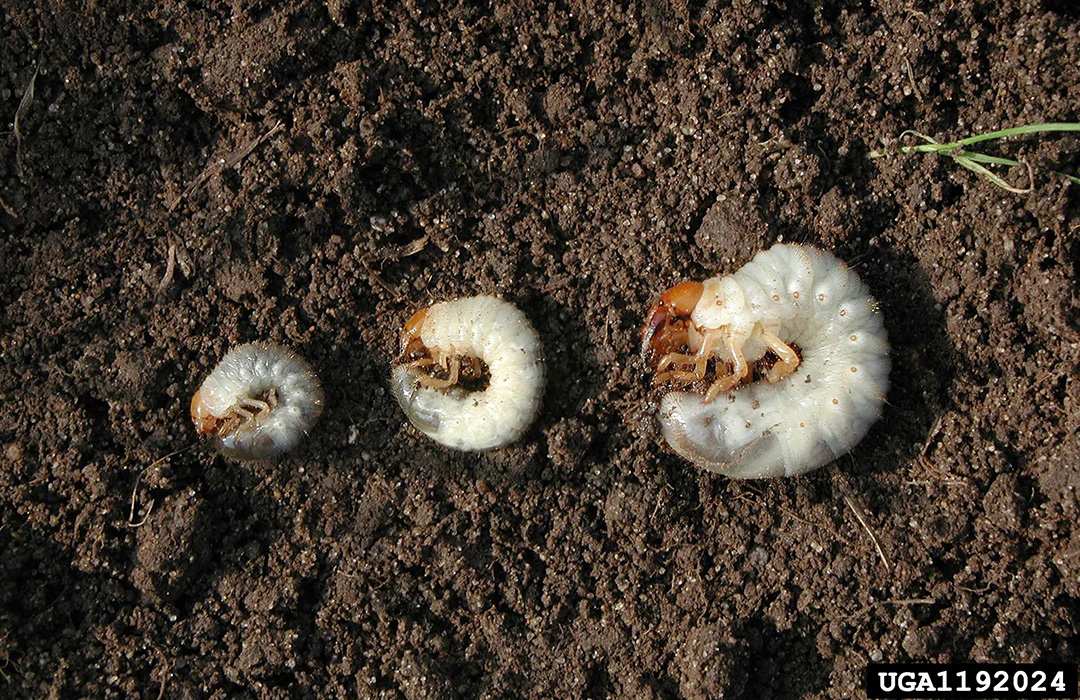
Image source: Bing (Web (fair-use with source credit))
Beneficial Nematodes: The Fastest Organic Kill — If You Get the Timing Right
Beneficial nematodes are microscopic roundworms that actively hunt grubs in the soil. The species you want is Heterorhabditis bacteriophora, often labeled as Hb nematodes. These aren't the same as the nematodes that damage plant roots.
These are predators that carry symbiotic bacteria, invade the grub's body, and kill it from the inside within 48 to 72 hours.
Here's why they're effective: they don't just sit and wait. They move through moist soil, following the chemical trails that grubs leave behind. Once they find a host, they enter through natural openings and release bacteria that shut down the grub's digestive system.
It's brutal but highly targeted.
The application process matters more than the product itself. Nematodes are living organisms, and dead nematodes don't kill anything. Follow these steps:
- Check your soil temperature. Use a soil thermometer at 2 inches depth. If it's below 60°F, wait. If it's above 90°F, wait for cooler weather. The sweet spot is 60°F to 85°F.
- Water your lawn thoroughly the day before. Nematodes need moisture to move through dry soil. Dusty, compacted ground will kill them before they reach grubs.
- Mix nematodes with cool, non-chlorinated water. Let tap water sit for 24 hours to off-gas chlorine, or use pond or well water. Follow the package instructions for dilution rates.
- Apply in early morning or late evening. UV light from direct sun kills nematodes within minutes. Overcast days work too.
- Use a sprayer or watering can without a fine filter. Nematodes will clog standard spray nozzles. Remove any mesh screens.
- Water immediately after application. This pushes the nematodes down into the root zone where grubs are feeding.
- Keep the soil moist for 2 weeks after application. Light daily watering helps nematodes survive and continue hunting.
One billion nematodes typically covers around 3,000 square feet for a standard residential lawn. Most products come in a refrigerated packet or sponge that needs to stay cool until use. Buy from a reputable supplier that ships with cold packs, and apply them the same day you receive them if possible.
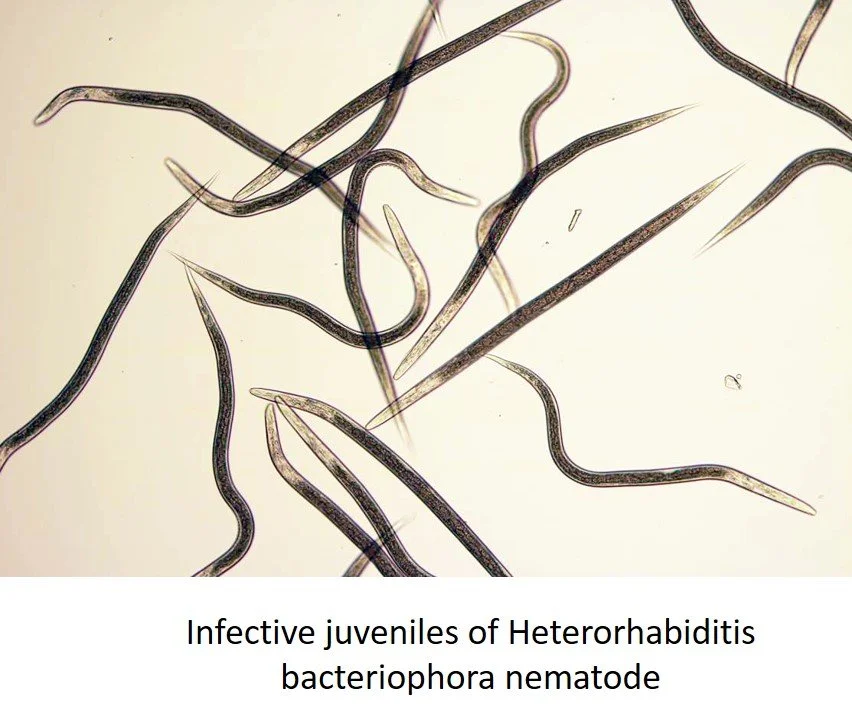
Image source: Bing (Web (fair-use with source credit))
Pros and cons of beneficial nematodes:
- Fast kill rate (48-72 hours after contact)
- Safe for people, pets, bees, and earthworms
- Actively seeks out grubs rather than waiting for contact
- Works on multiple grub species
- Must be applied within a specific temperature window
- Requires consistent soil moisture after application
- Shorter shelf life than chemical alternatives
- Higher upfront cost per application compared to some options
Milky Spore: The Long Game That Only Works for Japanese Beetles
Milky spore is the common name for Paenibacillus popilliae, a soil-dwelling bacterium that specifically targets Japanese beetle grubs. When a grub ingests the spores while feeding on roots, the bacteria multiply inside its body, turning the grub's blood milky white and eventually killing it. As the grub decomposes, it releases billions of new spores back into the soil, creating a self-reinforcing cycle.
This is not a quick fix. Milky spore takes time to establish in your soil, typically 2 to 5 years depending on grub population density and soil conditions. Once established, it can persist for 10 to 15 years or longer.
That's the trade-off: patience now for long-term protection later.
The application is straightforward but specific. Milky spore comes as a powder that you apply in a grid pattern across your lawn.
- Mark a grid pattern every 4 feet across the entire treatment area.
- Place a teaspoon of milky spore powder at each grid intersection. You can use a bulb duster or simply squeeze the powder from a measuring spoon.
- Water lightly after application to move the spores into the soil.
- Repeat annually for 2 to 3 years until the spore concentration reaches effective levels.
You don't need to treat every square inch. The spores spread naturally through the soil as infected grubs die and release more spores. Over time, the bacteria colonize the entire treated area.
Here's the critical limitation: milky spore only works on Japanese beetle grubs (Popillia japonica). If your lawn has European chafer, northern masked chafer, black turfgrass ataenius, or any other grub species, milky spore will do absolutely nothing. This is why grub identification before treatment isn't just helpful, it's essential.
Milky spore performs best in soils with a pH between 6.0 and 7.0. It's also more effective in warmer climates where Japanese beetle grubs are actively feeding for longer periods. In northern regions with shorter growing seasons, establishment can take the full 5 years.
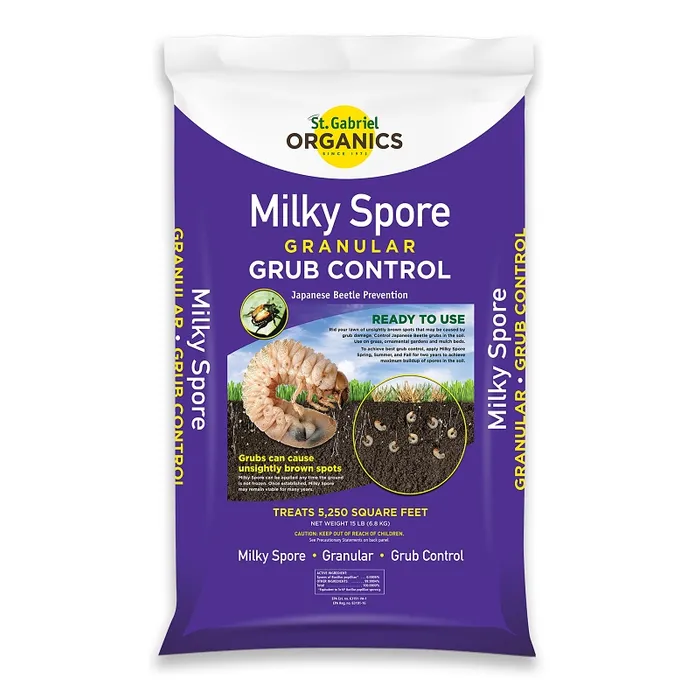
Image source: Bing (Web (fair-use with source credit))
Pros and cons of milky spore:
- Provides 10+ years of protection once established
- Self-replicating: spreads naturally through the soil
- Zero reapplication needed after establishment
- Safe for all non-target organisms
- Only effective against Japanese beetle grubs
- Takes 2 to 5 years to reach full effectiveness
- Higher upfront cost for multi-year application
- Less effective in cold climates with short growing seasons
Bt Galleriae (GrubGONE): The Middle Ground Most People Overlook
Bacillus thuringiensis galleriae, often sold under the brand name GrubGONE, is a bacterial insecticide that fills an important gap between fast-acting nematodes and long-term milky spore. It works on a broader range of grub species than milky spore, and it acts faster, typically killing grubs within 1 to 3 days of ingestion.
Bt galleriae works as a stomach toxin. Grubs consume the bacteria while feeding on roots and organic matter in the soil. Once inside the grub's gut, the bacterial proteins activate and cause feeding to stop within hours.
The grub dies from a combination of gut damage and bacterial infection.
The application is similar to other granular or spray treatments:
- Apply in late summer or early fall when grubs are small and actively feeding near the surface.
- Water the lawn before application to bring grubs closer to the root zone.
- Spread granules evenly using a broadcast spreader, or mix the liquid formulation according to label directions.
- Water thoroughly after application to move the product into the soil where grubs are feeding.
- Reapply in 7 to 14 days if grub pressure is heavy, as the bacteria don't persist as long as milky spore.
One advantage of Bt galleriae is its specificity. It targets beetle larvae (Coleoptera) without harming beneficial insects like bees, ladybugs, or earthworms. This makes it a solid choice for integrated pest management programs where you're trying to preserve beneficial insect populations while controlling grubs.
Bt galleriae is also OMRI-listed for organic production, meaning it's approved for use in certified organic farming and gardening operations. If you're maintaining an organic lawn or garden, this certification matters.
The main drawback is that Bt galleriae doesn't persist in the soil the way milky spore does. You'll need to reapply annually for prevention, which adds to the long-term cost. It's best used as either a curative treatment for active infestations or as a seasonal preventive in areas with recurring grub problems.
Pros and cons of Bt galleriae:
- Effective against multiple grub species (not just Japanese beetle)
- Kills within 1 to 3 days of ingestion
- Safe for bees, earthworms, and other beneficial organisms
- OMRI-listed for organic use
- Doesn't self-replicate or persist long-term
- Requires annual reapplication for prevention
- Needs soil moisture to activate and reach grubs
- Slightly higher cost per application than some alternatives
Neem Oil and Other Surface-Level Options: What They Can and Can't Do
Neem oil gets mentioned in almost every organic pest control conversation, and it does have a role in grub management. But it's not a standalone solution for an active infestation. Understanding its limitations will save you frustration.
Neem oil contains azadirachtin, a compound that acts as an antifeedant and growth regulator for many insect species. When grubs encounter neem-treated soil, they stop feeding and fail to molt properly. Over time, this disrupts their life cycle and reduces the population.
The effect is real but slow, and it works best as a preventive measure rather than a curative one.
To use neem oil for grub control:
- Mix cold-pressed neem oil with water at a rate of 2 tablespoons per gallon, plus a few drops of mild liquid soap as an emulsifier.
- Apply as a soil drench to affected areas, saturating the top 4 to 6 inches of soil.
- Apply in the evening to avoid rapid breakdown from UV exposure.
- Repeat every 7 to 14 days during peak grub feeding season.
The honest truth is that neem oil alone rarely eliminates a moderate to heavy grub problem. It's most useful as a supplemental treatment alongside nematodes or Bt galleriae, or as a preventive measure in areas with historically light grub pressure.
Other surface-level options like diatomaceous earth and spinosad have their place too. Food-grade diatomaceous earth can damage grubs on contact by abrading their outer cuticle, but it only works in dry soil conditions and loses effectiveness when wet. Spinosad-based products offer moderate grub control but are more commonly used for surface-feeding insects like fleas and caterpillars.
How to Apply Each Method Correctly (So You Don't Waste Your Money)
The number one reason organic grub control fails isn't the product. It's the application. Even the best biological treatment will underperform if it's applied incorrectly.
Here's a consolidated checklist that covers all the major methods.
Before any application:
- Mow your lawn to a normal height. Scalping isn't necessary and stresses the grass.
- Aerate compacted areas if possible. This helps treatments penetrate deeper into the root zone.
- Water the lawn 24 hours before treatment unless the soil is already moist.
- Check the weather forecast. Heavy rain within 24 hours of application will wash away granules and dilute liquid treatments.
During application:
- Follow label rates exactly. More product doesn't mean better results, and over-application wastes money.
- Apply nematodes and Bt galleriae in early morning or late evening to avoid UV damage.
- Use a clean sprayer that hasn't been used for herbicides. Chemical residue can kill beneficial nematodes.
- For granular products, use a broadcast spreader for even coverage. Hand-spreading often leads to clumps and bare spots.
After application:
- Water nematode and Bt treatments immediately to move them into the soil.
- Keep soil consistently moist (not waterlogged) for 10 to 14 days after nematode application.
- Avoid mowing for 3 to 5 days after treatment to let the product settle.
- Mark your calendar for follow-up applications if needed.
One mistake we see repeatedly: people apply nematodes during the heat of a summer afternoon and wonder why nothing happened. Those organisms were dead before they hit the ground. Timing and handling matter as much as the product itself.
The Seasonal Timing Map: When to Treat Based on Your Region and Grub Species
Grub life cycles follow a predictable pattern, and your treatment window depends on where you live. Adult beetles lay eggs in mid to late summer. Those eggs hatch into small grubs that feed aggressively on roots in late summer and early fall.
This is your prime treatment window.
Northern US and cooler climates (USDA zones 3-5):
- Peak grub activity: mid-August through early October
- Best nematode window: late August through mid-September
- Milky spore application: May through September, ideally in early fall
- Soil temperatures drop quickly after September, so don't wait too long
Mid-Atlantic and Midwest (USDA zones 5-7):
- Peak grub activity: August through October
- Best nematode window: mid-August through early October
- Milky spore application: April through October
- This is prime Japanese beetle territory, so milky spore is especially relevant here
Southern US (USDA zones 7-9):
- Peak grub activity: July through September
- Best nematode window: July through early September (watch for soil temps above 85°F)
- Milky spore application: March through November
- Earlier treatment windows due to warmer soil and longer growing seasons
Pacific Northwest:
- European chafer is the primary concern, not Japanese beetle
- Milky spore is less useful here unless Japanese beetle has been confirmed
- Nematodes and Bt galleriae are your primary tools
- Peak activity: August through October
The key principle across all regions: treat when grubs are small and actively feeding near the soil surface. Large, mature grubs in late fall are harder to kill because they've moved deeper into the soil and slowed their feeding.
Mistakes That Make Organic Grub Control Fail
Even with the right product and good timing, certain mistakes can sabotage your results. Here are the most common ones we've identified through research and aggregate user reports.
Applying nematodes in hot, dry conditions. Nematodes are living organisms that need moisture and moderate temperatures. Applying them during a drought or heatwave is a recipe for failure. If conditions aren't right, wait or switch to Bt galleriae.
Treating too late in the season. By the time you see significant lawn damage in October or November, grubs have already done their worst and may have moved too deep for surface-applied treatments to reach them. Early intervention is always more effective.
Confusing grub damage with other problems. Fungal diseases like brown patch and dollar spot create similar-looking brown areas. Drought stress also mimics grub damage. Always dig and confirm before treating.
Expecting milky spore to work immediately. This is a multi-year commitment. If you need results this season, pair milky spore with nematodes or Bt galleriae for immediate knockdown while the milky spore establishes.
Buying nematodes from unreliable sources. Nematodes that have been stored at room temperature or shipped without refrigeration are often dead on arrival. Buy from suppliers that guarantee live delivery and ship with cold packs.
Skipping the post-application watering. This is especially critical for nematodes. Without adequate soil moisture, they can't move through the soil profile to find grubs. A single dry day after application can significantly reduce effectiveness.
Treating the entire lawn when damage is localized. If grub damage is confined to one area, spot-treat that zone and a buffer around it rather than blanketing your entire property. This saves money and reduces unnecessary soil disturbance.
How to Tell If the Treatment Worked — And What to Do If It Didn't
You've applied your chosen treatment. Now what? Here's how to evaluate results and plan your next move.
For nematodes and Bt galleriae (fast-acting methods):
Wait 7 to 10 days after application, then dig test holes in the treated areas. You should see fewer live grubs compared to your pre-treatment count. Dead grubs will often appear discolored, limp, or mushy.
If grub counts haven't dropped significantly, a second application 7 to 14 days later may be warranted.
For milky spore (long-term method):
Don't expect to see results in the first season. Milky spore works gradually as spore concentrations build in the soil. Monitor grub populations each fall by digging test holes.
Over 2 to 3 years, you should see a steady decline in Japanese beetle grub numbers.
Signs that treatment worked:
- Brown patches stop expanding
- Turf feels firm and rooted when you tug on it
- Fewer animals (skunks, raccoons, birds) digging in your lawn
- Grub counts drop below the 5-per-square-foot threshold the following season
Signs that treatment failed:
- Damage continues to spread 4 to 6 weeks after application
- Grub counts remain high when you dig test holes
- New brown patches appear in previously unaffected areas
If your first treatment didn't work, reassess these factors: Was the soil temperature in range? Was the product stored and handled correctly? Was the grub species correctly identified?
Did you water adequately after application? Often the answer lies in one of these variables rather than the product itself.
Preventing the Next Grub Infestation Without Chemicals
Once you've gotten an infestation under control, the goal is to keep it from coming back. Organic prevention focuses on making your lawn less attractive to egg-laying beetles and building natural defenses in your soil.
Cultural practices that reduce grub pressure:
- Water deeply but infrequently. Overwatered lawns attract egg-laying beetles, which prefer moist soil for their eggs. Let the top inch of soil dry out between waterings.
- Mow at the proper height for your grass type. Taller grass (3 to 4 inches for most cool-season varieties) develops deeper roots that can tolerate some grub feeding without showing damage.
- Overseed thin areas in fall. Dense, healthy turf recovers faster from minor grub activity.
- Encourage beneficial insects. Ground beetles, parasitic wasps, and other predators naturally suppress grub populations. Avoid broad-spectrum treatments that kill these allies.
Ongoing biological prevention:
- Apply milky spore in areas with confirmed Japanese beetle activity, even after the initial establishment period. Annual light applications can boost spore concentrations.
- Use Bt galleriae as a preventive treatment in late July or early August each year if you have recurring grub problems.
- Maintain healthy soil biology through compost topdressing and organic fertilization. Diverse soil ecosystems are more resilient to pest outbreaks.
Monitoring without chemicals:
- Do a grub count each August by digging a few test holes in areas that were previously affected.
- Watch for adult beetle activity in June and July. Heavy beetle populations this year mean more grubs next year.
- Keep an eye on animal digging activity as an early warning sign.
Costs, Coverage, and Realistic Expectations for Each Method
Let's talk numbers. Organic grub control isn't always cheap, and knowing the costs upfront helps you plan realistically.
| Method | Approximate Cost (per application) | Coverage | Frequency | Long-Term Cost (3 years) |
|---|---|---|---|---|
| Beneficial nematodes | $30-$60 | ~3,000 sq ft per billion | 1-2 times per year | $60-$180 |
| Milky spore | $25-$50 | ~1,500 sq ft per box | Annually for 2-3 years, then stop | $50-$150 |
| Bt galleriae (GrubGONE) | $30-$50 | ~5,000 sq ft per container | 1-2 times per year | $90-$300 |
| Neem oil | $15-$25 | ~2,000 sq ft per gallon mix | Every 7-14 days during season | $60-$120 |
These are general ranges for average residential lawns. Costs vary by region, product brand, and lawn size. Milky spore has the best long-term value because it stops requiring reapplication after establishment.
Nematodes offer the best immediate results but need to be purchased fresh each time.
A typical quarter-acre lawn (about 10,000 square feet) will cost roughly $100 to $200 per season for nematode treatment, or $50 to $100 per season for Bt galleriae. Milky spore for the same area runs $75 to $150 per year during the 2 to 3 year establishment period, then drops to zero.
When Organic Methods Aren't Enough (And What to Do Next)
Organic grub control works well in most residential situations. But there are cases where the infestation is so severe that biological methods alone can't prevent serious lawn damage in a single season.
If you're dealing with 20+ grubs per square foot and active lawn destruction, a combined approach may make sense. Use nematodes or Bt galleriae for immediate knockdown, then follow up with milky spore or annual preventive treatments to keep populations low going forward.
In extreme cases where lawn preservation is critical (newly sodded lawns, high-visibility properties, or situations where erosion is a concern), some homeowners choose to use a synthetic curative insecticide for one season while building an organic prevention program for subsequent years. This isn't ideal from a purely organic standpoint, but it's a pragmatic option when the alternative is losing the entire lawn.
The threshold for considering this approach: if more than 50% of your lawn shows active grub damage and organic methods haven't reduced populations after two applications in a single season, it may be time to consult a professional lawn care service that offers both organic and conventional options.
Quick-Reference Decision Guide: Your Situation → Your Best Organic Method
Here's a final summary to help you choose quickly:
- Japanese beetle grubs confirmed, patient approach: Milky spore + nematodes for immediate relief
- Unknown grub species, active damage now: Beneficial nematodes (Hb strain)
- Mixed species, moderate infestation: Bt galleriae (GrubGONE)
- Light infestation, preventive focus: Neem oil soil drenches + cultural practices
- Recurring annual problem: Rotate between nematodes and Bt galleriae, add milky spore if Japanese beetle is present
- Heavy infestation, lawn at risk: Nematodes immediately, reassess in 2 weeks, consider professional consultation
Frequently Asked Questions
Can I apply nematodes and milky spore at the same time?
Yes. They work through different mechanisms and don't interfere with each other. Many lawn care professionals recommend applying both in early fall: nematodes for immediate grub kill and milky spore for long-term Japanese beetle suppression.
How long does it take for milky spore to work?
Milky spore typically takes 2 to 5 years to reach full effectiveness in your soil. The timeline depends on grub population density, soil temperature, and soil pH. Warmer climates with active grub populations see faster establishment.
Will beneficial nematodes survive winter in my soil?
Most Heterorhabditis bacteriophora nematodes will not survive freezing soil temperatures. They're a seasonal treatment applied in late summer or early fall. You'll need to reapply the following year if grub pressure persists.
Is neem oil safe for earthworms?
Yes. Neem oil has minimal impact on earthworms when used at labeled rates. It primarily affects insects that ingest treated plant material.
Earthworms process soil differently and aren't susceptible to azadirachtin in the same way.
Can I use organic grub control in vegetable gardens?
Bt galleriae and neem oil are both safe for use in vegetable gardens when applied according to label directions. Beneficial nematodes are also safe but are more commonly used in lawn settings. Always check the product label for edible crop approval.
What's the best time of day to apply nematodes?
Early morning or late evening, when UV exposure is minimal. Nematodes are highly sensitive to sunlight and will die within minutes of direct sun exposure. Overcast days work well too if you need flexibility in timing.
You've already got the full picture from the sections above. The decision guide and FAQs cover the remaining ground, so there's nothing left to add here. Go with the method that matches your grub species, your timeline, and your tolerance for patience versus immediate results.
That's the whole game.