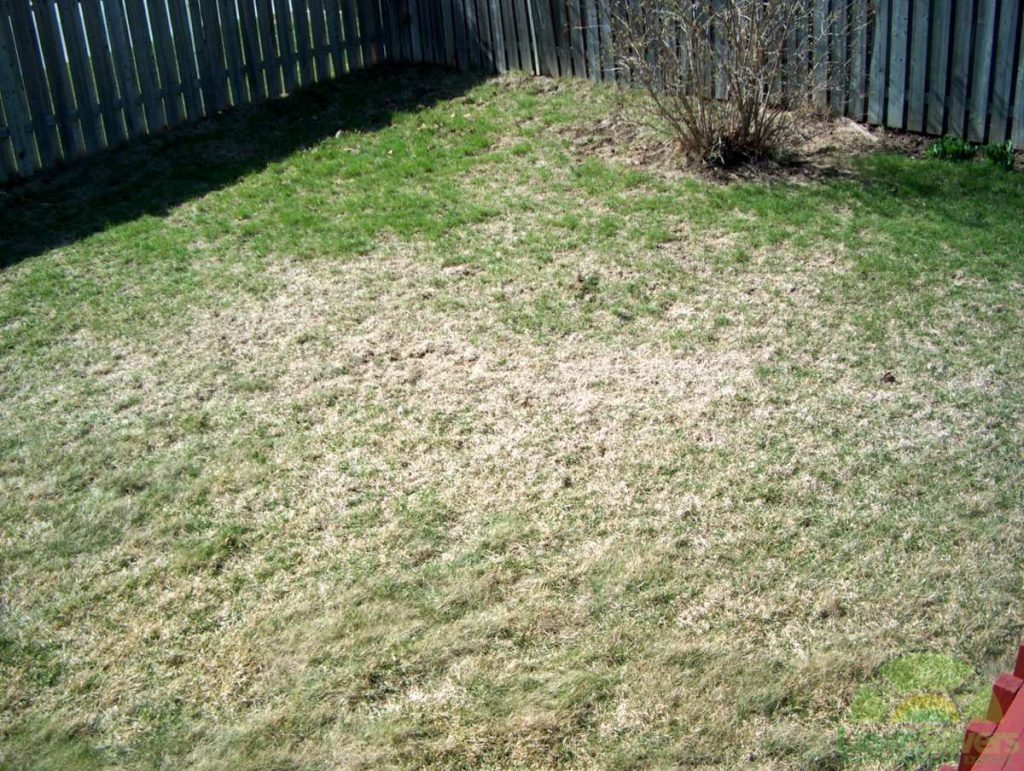
You've got brown patches in your lawn that don't respond to watering. The turf pulls up like loose carpet. Something's feeding on the roots underground, and it's probably white grubs.
Figuring out how to get rid of grubs naturally isn't as simple as dumping a product on your yard. The right approach depends on what species you're dealing with, how far along the infestation is, and what time of it is. Get those three things right, and natural methods work well.
Get them wrong, and you're throwing money into the soil.
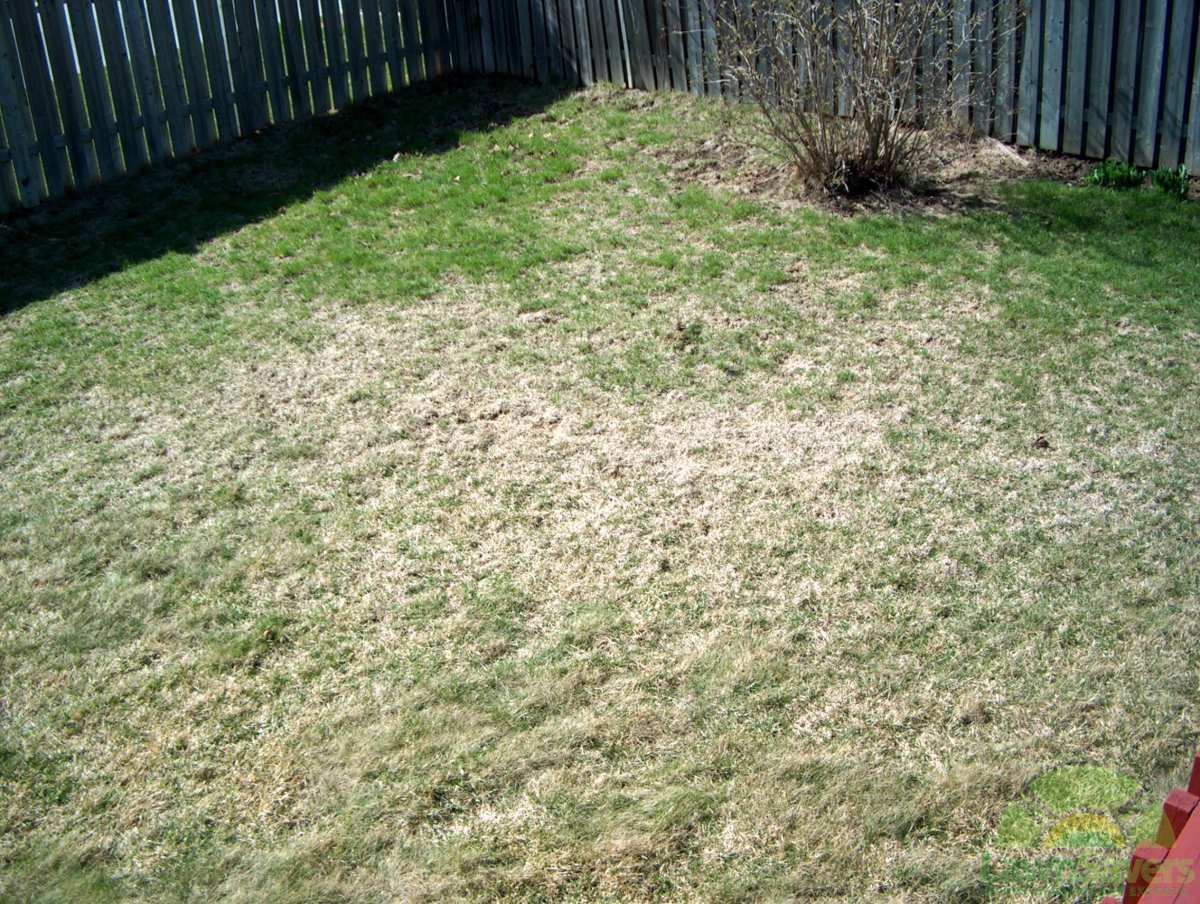
Image source: Bing (Web (fair-use with source credit))
Quick Answer
Apply beneficial nematodes (Heterorhabditis bacteriophora) in late summer when soil temperatures are between 60°F and 85°F. Use milky spore (Paenibacus popilliae) if Japanese beetle grubs are your problem and you want long-term prevention. Apply Bt galleriae for a fast-acting option on young grubs.
Always water the lawn before and after application to help the organisms move through the soil.
How to Tell If You Actually Have Grubs (And Not Something Else)
Brown, dead-looking patches in a lawn don't automatically mean grubs. Fungal diseases, dog urine, irrigation problems, and drought stress all produce similar symptoms. You need to confirm what's actually going on before you treat anything.
The simplest test is the tug test. Grab a section of brown turf and pull upward. If it lifts easily like a rug with no roots holding it down, something has been chewing through the root zone.
That's a strong indicator of grub damage.
Next, grab a shovel and cut a 1-square-foot section about 2 to 3 inches deep. Peel it back and look for C-shaped, cream-colored larvae with brown heads and six legs near the front. These are scarab beetle larvae, commonly called white grubs.
Here's what to check for:
- Grub count per square foot: Five or more grubs per square foot warrants treatment. Below that threshold, most lawns can handle the damage and recover on their own.
- Grub size: Small grubs (under half an inch) are recent hatchlings and easier to kill. Large grubs (over one inch) are harder to control and may be pupating soon.
- Damage pattern: Grub damage typically shows up in late summer or early fall. It starts as irregular yellow patches that expand and merge into larger dead areas.
- Animal activity: Skunks, raccoons, and birds tearing up your lawn at night or early morning are often after grubs. This is actually a reliable secondary sign of infestation.
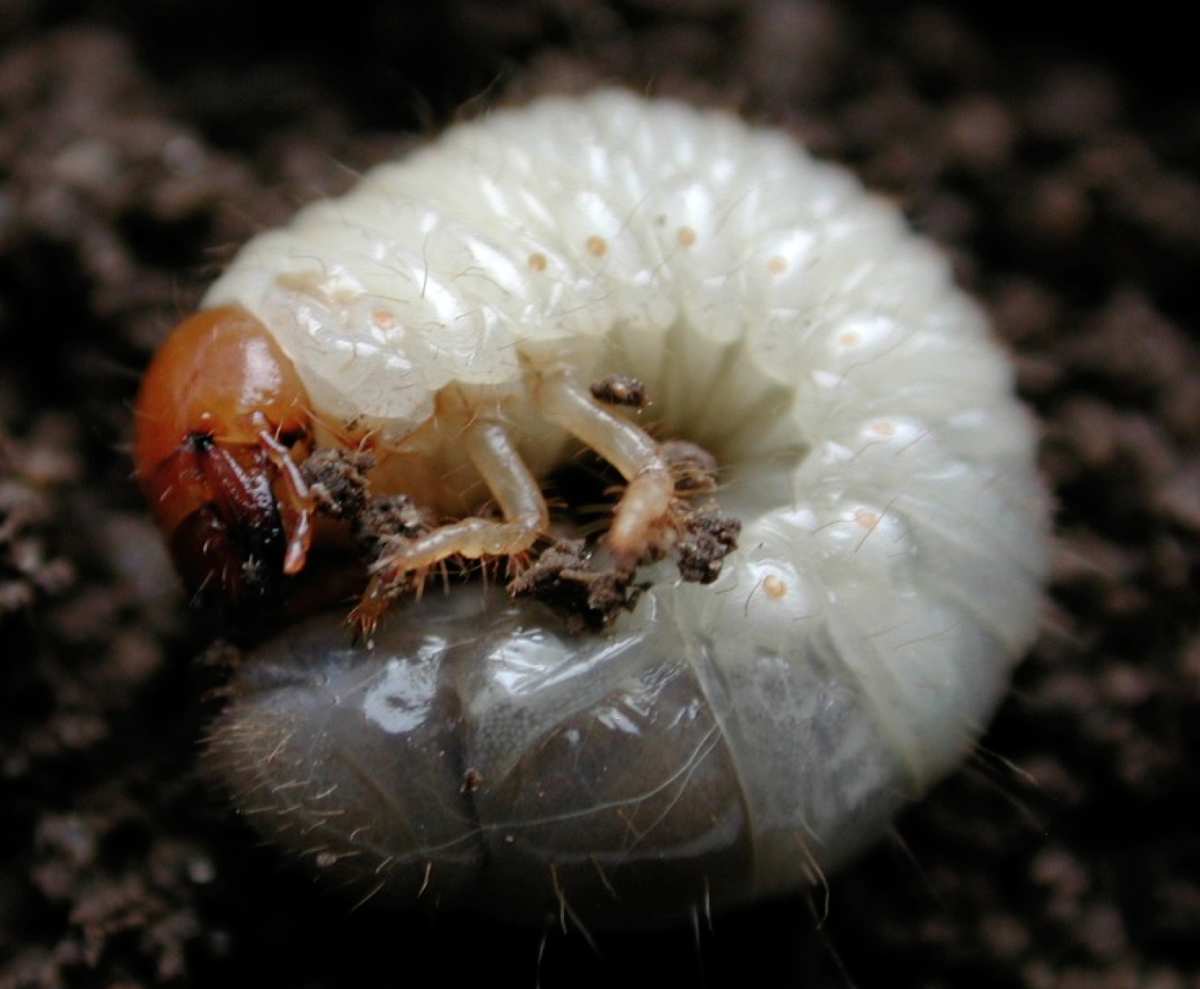
Image source: Bing (Web (fair-use with source credit))
If you're seeing loose turf, high grub counts, or heavy animal digging, you've confirmed the problem. From there, you need to know what you're dealing with.
The Grub Life Cycle: Why Timing Determines Everything
White grubs aren't just random pests floating in your soil. They're the larval stage of scarab beetles, and their life cycle dictates exactly when natural treatments will work and when they won't.
Adult beetles lay eggs in midsummer, typically July through early August in most of the United States. Those eggs hatch within two weeks, and the tiny larvae start feeding on grass roots almost immediately. This early feeding stage is when grubs are most vulnerable.
The larvae go through several growth stages called instars. First and second instar grubs are small and thin-skinned, making them easiest to kill with biological treatments. Third instar grubs are larger, tougher, and feed aggressively through late summer and fall.
As temperatures drop in autumn, grubs burrow deeper into the soil to overwinter. They become much harder to reach with surface applications. They return to the root zone briefly in spring, but by then they're preparing to pupate and transform into adult beetles by early summer.
Here's the seasonal breakdown:
| Season | What's Happening Underground | Treatment Window |
|---|---|---|
| Early summer (June–July) | Adult beetles emerging, mating, laying eggs | Prevention only, apply milky spore |
| Late summer (August–September) | Eggs hatching, young grubs feeding near surface | Best window for nematodes and Bt |
| Fall (October–November) | Grubs feeding aggressively, growing rapidly | Still treatable if grubs are small |
| Winter–Spring | Grubs deep underground or pupating | Poor window, wait until next cycle |
Understanding this cycle is the single most important factor in natural grub control. Apply nematodes or Bt in late summer when grubs are young and near the surface, and you'll get strong results. Miss that window and you're fighting an uphill battle.
Milky Spore: Best for Japanese Beetle Grubs in Warm Climates
Milky spore disease, caused by the bacterium Paenibacillus popilliae, is a long-term biological control agent. It specifically targets Japanese beetle grubs and doesn't harm beneficial insects, earthworms, pets, or people.
The way it works is straightforward. When a Japanese beet grub ingests milky spore bacteria while feeding on roots, the bacteria multiply inside the larva's blood. The grub dies within 7 to 21 days, and millions of new bacterial spores release back into the soil when the body decomposes.
This creates a self-reinforcing cycle.
Milky spore is not a quick fix. In warmer climates (USDA zones 5, 9 with consistent warmth), it takes about 2 to 5 years to establish fully across a lawn. Once established, it persists for 10 to 15 years or longer.
That's a serious long-term investment, not a one-season solution.
Key things to know about milky spore:
- Species specificity: It works almost exclusively on Japanese beetle grubs. If your problem is European chafer, masked chafer, or June beetle grubs, milky spore won't help.
- Soil temperature matters: The bacteria establish best in warm soil. In northern zones with short growing seasons, establishment can take significantly longer.
- Application pattern: Milky spore is applied in a grid pattern, with small amounts placed every 4 feet across the lawn. The bacteria then spread horizontally through the soil over time.
- No immediate visible results: Don't expect dead grubs within days. This is a multi-year process that builds effectiveness each season.
- Compatibility: Milky spore works alongside beneficial nematodes. They don't interfere with each other, so you can use both simultaneously if needed.
If Japanese beetles are a recurring problem in your area and you want a "set it and forget it" solution, milky spore is one of the best natural options available.
Beneficial Nematodes: The Broad-Spectrum Natural Option
Beneficial nematodes are microscopic roundworms that actively hunt and kill grubs in the soil. Unlike milky spore, they're not species-specific. Heterorhabditis bacteriophora is the species most effective against white grubs, and it targets Japanese beetles, European chafers, masked chafers, June beetles, and several other scarab species.
These nematodes work by entering a grub's body through natural openings. Once inside, they release symbiotic bacteria that kill the host within 24 to 48 hours. The nematodes then feed on the bacteria and reproduce, releasing a new generation that hunts for more grubs.
It's an efficient biological kill mechanism.
The catch is that nematodes are living organisms. They have storage requirements, handling protocols, and application conditions that determine whether they survive long enough to work.
Critical factors for nematode success:
- Soil temperature: Apply when soil temperatures are between 60°F and 85°F. Below 60°F, nematodes become sluggish. Above 85°F, they can die before finding hosts.
- Soil moisture: The soil needs to be moist before application and kept consistently damp for at least 7 to 10 days afterward. Dry soil kills nematodes quickly.
- UV exposure: Apply in the evening or on overcast days. Direct sunlight kills nematodes within minutes.
- Storage: Keep nematodes refrigerated until use. They have a short shelf life, typically a few weeks, so order close to your application date.
- Shelf life check: When you receive them, look for movement under magnification or signs of sluggishness. If they've been sitting in a hot delivery truck, they may already be dead.
Here's a quick comparison of the two major biological treatments:
| Factor | Milky Spore | Beneficial Nematodes |
|---|---|---|
| Target species | Japanese beetles only | Multiple scarab species |
| Time to results | 2–5 years to establish | 1–2 weeks per application |
| Duration of control | 10–15+ years | One season per application |
| Best application window | Spring or fall | Late summer (August–September) |
| Living organism | Bacteria (spore-forming) | Live nematodes requiring care |
| Cost over time | Low (one-time application) | Moderate (annual applications) |
Beneficial nematodes are your best bet if you've got a mixed grub species problem or you need results within a single season. They require more attention to detail during application, but the payoff is broad grub control without chemicals.
We've covered the two heavy hitters for natural grub control. Next, we'll walk through the step-by-step application processes, neem oil as a supplementary tool, and how to decide which method fits your specific situation.
Bt Galleriae: Fast-Acting but Timing-Sensitive
Bacillus thuringiensis galleriae is a naturally occurring soil bacterium that specifically targets beetle larvae. You might see it sold under brand names like GrubGone. It works by producing proteins that damage the grub's gut lining when ingested, causing the larva to stop feeding within hours and die within a few days.
Bt galleriae occupies a middle ground between milky spore and nematodes. It's faster acting than milky spore and easier to store than nematodes. It also doesn't require refrigeration, which removes a major logistical hurdle.
The tradeoff is that Bt galleriae only works on young, actively feeding grubs. You need to apply it when larvae are in their first or second instar stage, typically late July through early September depending on your region. Miss that window and the grubs are too large for effective control.
Key considerations for Bt galleriae:
- Storage advantage: The product sits on a shelf at room temperature. No refrigeration required.
- Shorter persistence: Unlike milky spore, Bt galleriae doesn't reproduce in the soil. It degrades over weeks, so annual reapplication is necessary.
- Rain sensitivity: Heavy irrigation or rain within 48 hours of application can wash the bacteria below the root zone where grubs are feeding.
- Compatibility: It pairs well with milky spore. Use Bt for immediate knockdown and milky spore for long-term establishment in the same season.
If you've got a confirmed grub problem right now and you're in the late summer window, Bt galleriae gives you a reliable chemical-free option. Just don't wait too long.
Neem Oil and Other Home Remedies: What Actually Works
Neem oil contains azadirachtin, a compound that disrupts insect feeding and hormone function. It's effective as a repellent against adult beetles and can suppress grub feeding when applied to the soil surface. It's not, however, a reliable standalone treatment for an established grub infestation.
Think of neem oil as a supplementary tool. It can reduce adult beetle egg-laying activity on trees and shrubs, and it has some soil-level activity against small grubs. But if you've already got 10 grubs per square foot, neem oil alone won't solve the problem.
Other commonly suggested home remedies fall into similar categories:
- Diatomaceous earth: Works on surface-dwelling insects that crawl through the powder. Grubs live underground surrounded by moist soil, which degrades diatomaceous earth's effectiveness almost immediately. It's not a practical grub treatment.
- Soap dips or dish soap solutions: These can flush grubs to the surface for manual removal in very small areas. They're impractical for anything beyond a garden bed.
- Garlic or pepper sprays: These are foliar repellents aimed at adult insects above ground. They don't penetrate soil to reach grub larvae.
The honest assessment is that neem oil has a role in an integrated approach. Apply it to reduce adult beetle activity on ornamental plants and combine it with nematodes or Bt for the soil-dwelling larvae. Don't rely on it as your primary treatment.
How to Choose the Right Natural Treatment for Your Situation
You've got several viable options. Picking the right one comes down to three factors: what grub species you have, how severe the infestation is, and what time of year it is.
Here's a practical decision framework:
- If you're in August through early September and grubs are small. Go with beneficial nematodes (Heterorhabditis bacteriophora) for broad coverage or Bt galleriae for a room-temperature storage option. Both are equally effective on young grubs.
- If Japanese beetles are your recurring problem and you want long-term prevention. Apply milky spore in spring or fall. Expect 2 to 5 years for full establishment.
- If it's late fall and grubs are large. Wait until next summer. Treatments are minimally effective on mature larvae. Focus on lawn repair instead.
- If you have a mixed species infestation. Nematodes cover the widest range of scarab beetle grubs. Milky spore won't help with non-Japanese beetle species.
- If you live in a northern climate with short growing seasons. Nematodes are your best bet. Milky spore establishment takes too long in cold soils.
The honest assessment is that you might need to combine approaches. Bt or nematodes for immediate control this season, plus milky spore if Japanese beetles are a known local problem. That layered strategy addresses both the current infestation and future prevention.
Step-by-Step: Applying Nematodes the Right Way
Beneficial nematodes are living organisms, and how you handle them determines whether they work. Follow this sequence carefully.
1. Order from a reputable supplier. Companies like Arbico Organics specialize in live biological control agents. Order close to your planned application date and select overnight or two-day shipping to minimize storage time in transit.
2. Check soil temperature. You need a minimum of 60°F in the top 3 inches of soil. A basic soil thermometer works fine.
If you're applying in late August through mid-September in most regions, you should be in range.
3. Water the lawn thoroughly the day before application. The soil needs to be consistently moist to a depth of about 4 inches. This gives nematodes a hospitable environment to move through.
4. Apply in the evening. Direct UV light kills nematodes within minutes. Evening applications give them several hours to burrow into the soil before sunrise.
5. Mix according to package directions. Most nematodes arrive on a sponge or mixed with a carrier material. Dilute them in a bucket of room-temperature water.
Chlorinated tap water can harm them, so let tap water sit for a few hours before mixing or use well water.
6. Apply with a watering can, hose-end sprayer, or pump sprayer. Remove fine mesh filters from spray equipment. Nematodes will clog them and get damaged in the process.
Even distribution matters more than precision equipment.
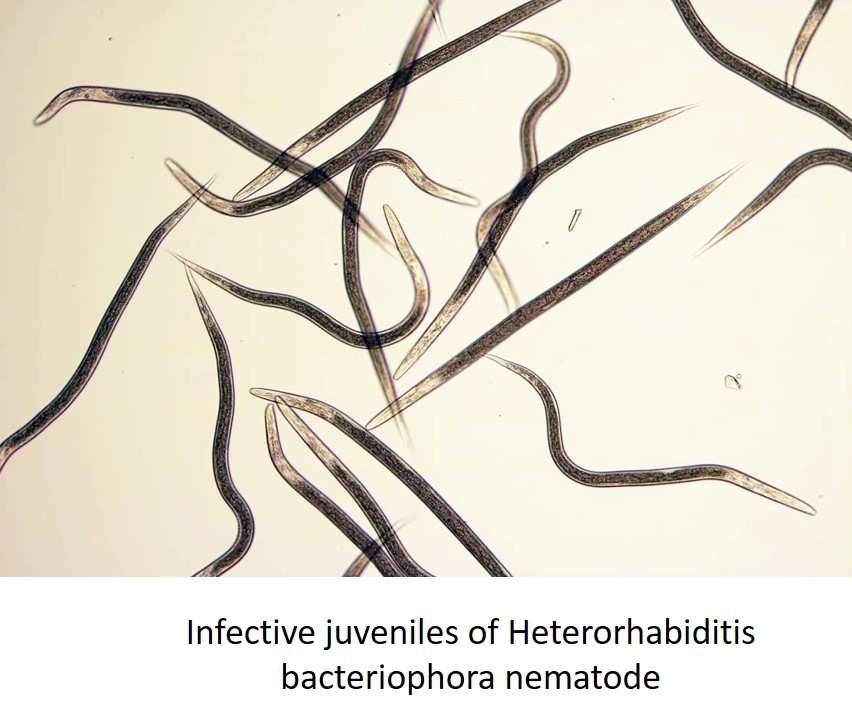
Image source: Bing (Web (fair-use with source credit))
7. Water immediately after application. This washes nematodes off grass blades and into the soil where they need to be. Apply about a quarter inch of water.
8. Keep the soil moist for 7 to 10 days. Water lightly every 1 to 2 days if there's no rainfall. Dry soil during this establishment period is the number one reason nematode applications fail.
9. Check results in 1 to 2 weeks. Dig up a test square foot in the treated area. You should see a noticeable reduction in live grub counts compared to your pre-treatment baseline.
Step-by-Step: Applying Milky Spore for Long-Term Control
Milky spore application is simpler than nematodes, but the grid pattern matters for even distribution.
1. Identify the right product. Milky spore powder (Paenibacillus popilliae) is the standard formulation. It's EPA-exempt as a minimum risk pesticide, and OMRI-listed versions exist for certified organic operations.
- Apply using the grid method. Place a small amount of powder on the soil surface every 4 feet in a checkerboard pattern across the lawn. Most products include a dispenser tool for consistent application.
3. Water lightly after application. This moves the powder off the grass surface and into the soil. You don't need heavy irrigation, just enough to settle the material.
4. Repeat annually for 2 to 3 years. Milky spore builds density in the soil over multiple applications. A single treatment won't establish the bacteria at effective levels for full grub suppression.
5. Don't expect visible results in year one. The bacteria are colonizing the soil ecosystem gradually. You may see some reduction in second-year grub counts, with significant improvement by year three.
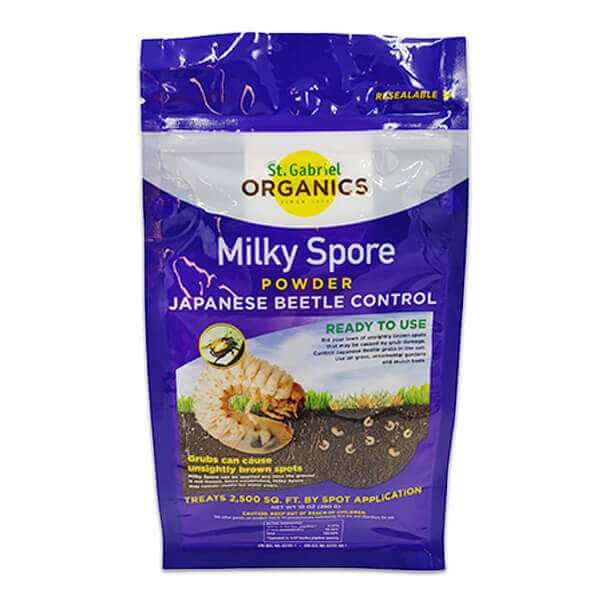
Image source: Bing (Web (fair-use with source credit))
6. Avoid applying near water bodies. While milky spore is non-toxic, standard practice calls for keeping biological treatments away from ponds, streams, and drainage areas as a general precaution.
The biggest mistake people make with milky spore is quitting after one season because they don't see results. Commit to the multi-year plan and you'll build a soil environment that suppresses Japanese beetle grubs for over a decade.
When to Treat: The Seasonal Window That Makes or Breaks Results
Timing matters more than product choice. Even the best biological treatment fails if applied when conditions aren't right.
The optimal window for nematode and Bt application runs from late July through mid-September in most temperate climates. This is when eggs have hatched, grubs are small and actively feeding near the soil surface, and soil temperatures support biological activity.
Here are the specific timing factors to watch:
- Growing degree days: Japanese beetle egg hatch typically occurs around 1,050 growing degree days (base 50°F). Your local extension office can give you regional degree day accumulations. This is more precise than following a calendar date.
- Soil warmth: Ground temperatures below 60°F slow nematode activity dramatically. Below 55°F, most nematodes go dormant.
- Rainfall patterns: A dry spell during the 7 to 10 days after nematode application can kill the treatment. Check the forecast and be prepared to irrigate if needed.
The window closes when grubs burrow deep for winter. Once soil temperatures drop below 50°F consistently, treatments become largely ineffective until the following season.
If you're reading this in October or later and you've got active grub damage, focus on lawn repair and plan your treatment for next August. You'll get far better results by waiting for the right window than by applying now and wasting the product.
How Many Grubs Are Too Many? The Treatment Threshold
Not every grub in your lawn requires action. Healthy turf can tolerate a low level of root feeding without visible damage. The generally accepted treatment threshold is 5 to 10 grubs per square foot for most cool-season grasses.
Warm-season grasses like Bermuda and zoysia can sometimes handle slightly higher counts due to their aggressive root regrowth. Kentucky bluegrass and fescue tend to show damage at lower thresholds.
If you're counting 3 or 4 grubs per square foot, monitor the situation but hold off on treatment. At 10 or more, you're looking at significant root loss and should treat promptly. Above 15 per square foot, expect visible brown patches and secondary damage from animals digging for the larvae.
What to Do If Natural Methods Aren't Enough
Sometimes the infestation is too severe for biological controls alone, or you missed the treatment window entirely. In those cases, you have a few options before resorting to synthetic chemicals.
First, consider whether the damage is actually from grubs or something else entirely. Fungal diseases like brown patch and Pythium blight produce similar symptoms. A local extension office can help confirm the cause with a soil sample.
If grubs are confirmed and natural methods failed, you may need a curative synthetic insecticide as a one-time intervention. Products containing trichlorfon are labeled for curative grub control and work on larger larvae. Use them sparingly and only when biological options have been exhausted.
After any treatment, focus on lawn recovery. Reseed damaged areas in early fall, water consistently, and fertilize to encourage new root growth. A thick, healthy lawn is naturally more resilient to future grub pressure.
Preventing the Next Grub Infestation
Once you've dealt with the current problem, keeping grubs from coming back is about building a less hospitable environment for adult beetles.
Mow your lawn at the recommended height for your grass type. Taller grass develops deeper roots that can withstand some grub feeding. Most cool-season grasses do best at 3 to 4 inches.
Water deeply but infrequently rather than light daily sprinkles. Deep watering encourages strong root systems. Shallow watering keeps the top inch of soil moist, which is exactly where beetle eggs need to be for successful hatching.
Overseed thin areas in early fall. Bare patches of soil are prime egg-laying sites for adult beetles. A dense lawn gives beetles fewer places to deposit eggs.
Finally, maintain your milky spore applications if Japanese beetles are a known issue in your area. Once established, it's the most hands-off prevention method available.
Common Mistakes That Waste Your Time and Money
The biggest mistake is treating without confirming you actually have grubs. Brown patches from drought, disease, or compaction won't respond to any grub treatment. Always dig and count before spending money on products.
Applying nematodes in hot, dry conditions is another frequent failure point. If the soil is dry and the forecast shows no rain, water thoroughly before and after application. Nematodes can't survive in dry soil.
Buying nematodes from a general retailer with unknown storage conditions is risky. These are living organisms that degrade quickly in heat. Order from a specialty biological control supplier with refrigerated shipping.
Expecting milky spore to work in a single season leads to disappointment. This is a multi-year commitment. Apply it annually for 2 to 3 years and be patient.
Finally, treating too late in the season wastes product. Once grubs are large and preparing to overwinter, even effective treatments struggle to reach them. Mark your calendar for late July to early September and plan ahead.
Quick Decision Guide: Which Natural Grub Treatment Should You Use?
Use beneficial nematodes if: You have multiple grub species, you need results within one season, and you can apply in late summer when soil temperatures are between 60°F and 85°F.
Use milky spore if: Japanese beetle grubs are your specific problem, you're in a warmer climate, and you want long-term prevention that lasts 10 to 15 years.
Use Bt galleriae if: You need a room-temperature storage option, you're treating young grubs in late summer, and you want fast knockdown without refrigeration logistics.
Use neem oil as a supplement if: You want to reduce adult beetle activity on ornamental plants alongside a primary soil treatment.
Wait and plan if: It's fall or winter, grubs are large, or you haven't confirmed the species yet. Focus on lawn repair now and treat next summer.
Frequently Asked Questions
Can I apply nematodes and milky spore at the same time?
Yes. They don't interfere with each other. Nematodes provide immediate control while milky spore builds long-term soil presence.
Many lawn care professionals recommend using both together for layered protection.
How long does it take for milky spore to work?
Expect 2 to 5 years for full establishment in warm climates. Northern regions with shorter growing seasons may take longer. Annual applications for the first 2 to 3 years speed up the process.
Will natural grub treatments harm earthworms or beneficial insects?
No. Beneficial nematodes, milky spore, and Bt galleriae are highly specific to target pests. They don't affect earthworms, pollinators, or other beneficial soil organisms when applied according to label directions.
What's the best time of day to apply nematodes?
Evening is ideal. Nematodes are killed by UV light within minutes of direct sun exposure. Applying at dusk gives them several hours to move into the soil before sunrise.
How do I know if my grub treatment worked?
Dig up a 1-square-foot section in the treated area 1 to 2 weeks after application. Compare the live grub count to your pre-treatment baseline. A 50% or greater reduction indicates the treatment was effective.
Can I use natural grub control in a vegetable garden?
Beneficial nematodes are safe for use in garden beds. Milky spore is also non-toxic but is typically used in turf areas. Avoid applying any treatment directly to edible plant parts and follow label guidelines for pre-harvest intervals.