Image source: Bing (Web (fair-use with source credit))
Learning how to fish a curly tail grub comes down to one thing most written guides skip entirely: what the rod tip is doing at the exact moment the tail kicks. You can read about retrieves all day, but until you feel that subtle pulse through the line and see how the body responds, it's hard to know if you're doing it right. The good news is this is one of the most forgiving lures in fishing, and once the motion clicks, you'll catch everything from largemouth bass to crappie to speckled trout on the same basic presentation.
A standard 4-inch curly tail grub on a 1/8 oz jighead will fall at roughly one foot per second in calm water. That fall is where most bites happen, and it's the part most beginners rush past. Let's walk through everything from picking the right setup to reading what the fish are telling you.
Image source: Bing (Web (fair-use with source credit))
Quick Answer
Rig a curly tail grub on a jighead by threading the hook point straight through the head and out the belly. Cast it out, let it fall on a semi-slack line, and watch for ticks. Lift your rod tip 6 to 12 inches to make the tail kick, then let it fall back down.
Most strikes happen on the fall, so keep the line slightly slack between hops. Adjust jighead weight to match your target depth.
What a Curly Tail Grub Actually Is (and Why It Works)
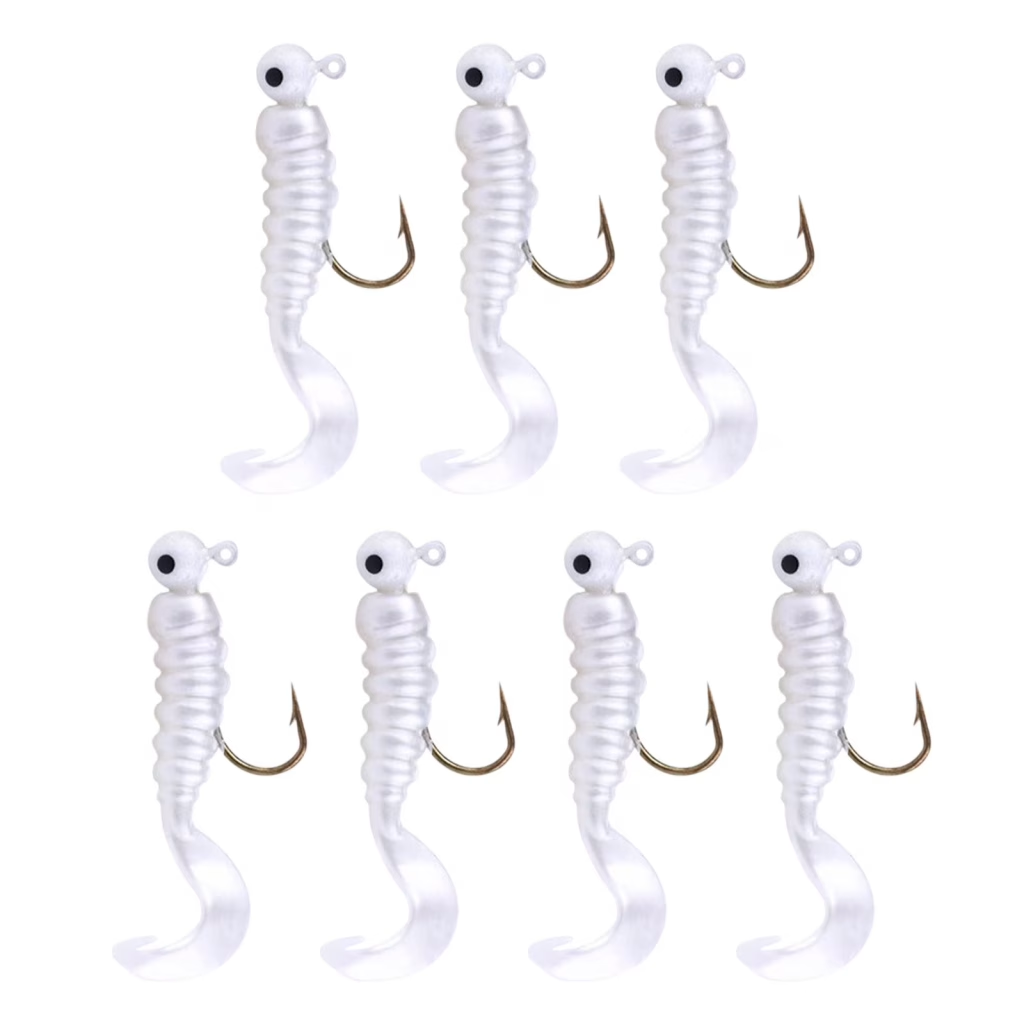
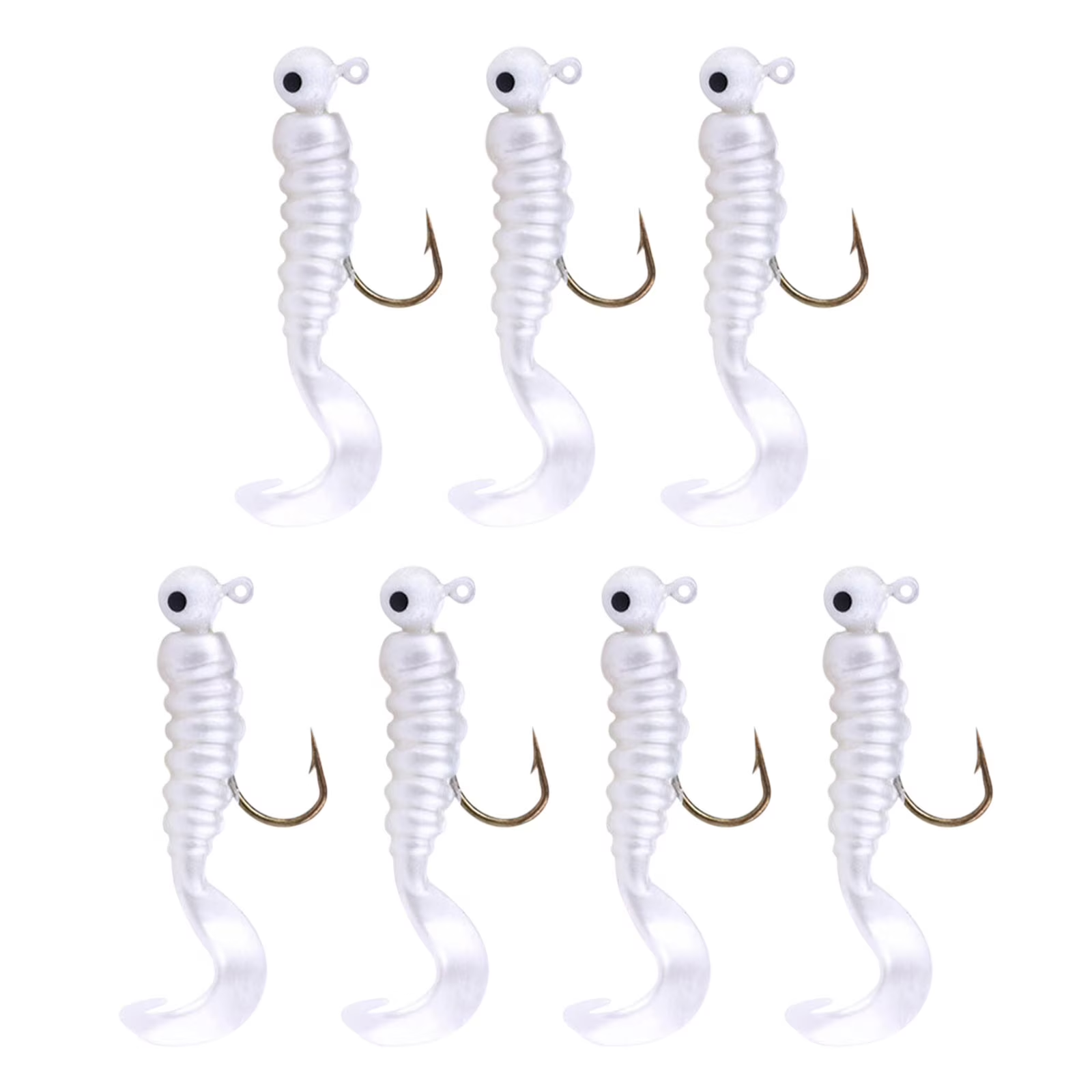
A curly tail grub is a soft plastic lure with a slender body and a tail that curls into a tight spiral. That curled tail is the whole reason the lure works. As water flows past it during a fall or retrieve, the tail kicks back and forth, creating vibration and a visual trigger that mimics small baitfish, crawfish, and injured prey.
The design has been around since the 1970s, and Mister Twister is widely credited with popularizing it. The basic concept hasn't changed much because it doesn't need to. The tail does the work.
Your job is simply to keep the lure in the strike zone and let the plastic do what it was designed to do.
What makes the curly tail grub different from a straight tail worm or a creature bait is the constant action. A straight tail worm needs more rod movement to come alive. A curly tail grub starts kicking the moment it hits the water, even on a dead fall with zero rod input.
That's why it's so effective for beginners and for fishing cold water when fish aren't chasing much.
The body is typically made from PVC or a silicone-based plastic. Some versions are salt-impregnated, which adds taste and scent that makes fish hold on longer. Brands like Berkley PowerBait and Z-Man use proprietary formulas, but the action comes from the tail shape, not the plastic recipe.
Picking the Right Grub Size, Color, and Jighead Weight
Getting the size and weight right matters more than most people think. A grub that's too big for the jighead will tear apart after a few fish. A jighead that's too heavy will kill the tail action and make the lure sink past the fish before they can react.
Here's a practical breakdown of common pairings:
| Grub Size | Jighead Weight | Best Depth Range | Primary Species |
|---|---|---|---|
| 2-inch | 1/64 oz to 1/32 oz | 1 to 5 feet | Crappie, panfish, trout |
| 3-inch | 1/16 oz to 1/8 oz | 3 to 10 feet | Crappie, smallmouth bass, walleye |
| 4-inch | 1/8 oz to 1/4 oz | 5 to 15 feet | Largemouth bass, walleye, speckled trout |
| 5-inch | 1/4 oz to 3/8 oz | 10 to 20 feet | Largemouth bass, striped bass, redfish |
| 6-inch | 3/8 oz to 1/2 oz | 15 to 30+ feet | Big bass, saltwater species |
Color selection follows a simple rule. In clear water, go with natural tones like smoke, watermelon, or green pumpkin. In stained or muddy water, bright colors like chartreuse, white, or orange get noticed faster.
Black and blue is a reliable low-light option, especially on overcast days or in the early morning.
The jighead style matters too. A round jighead is the most versatile and the easiest to rig straight. A swimming jighead has a wider profile that changes the fall rate and works well when you're retrieving steadily through open water.
A stand-up jighead holds the grub upright on the bottom, which is useful when you're fishing rocky structure or want a more subtle presentation.
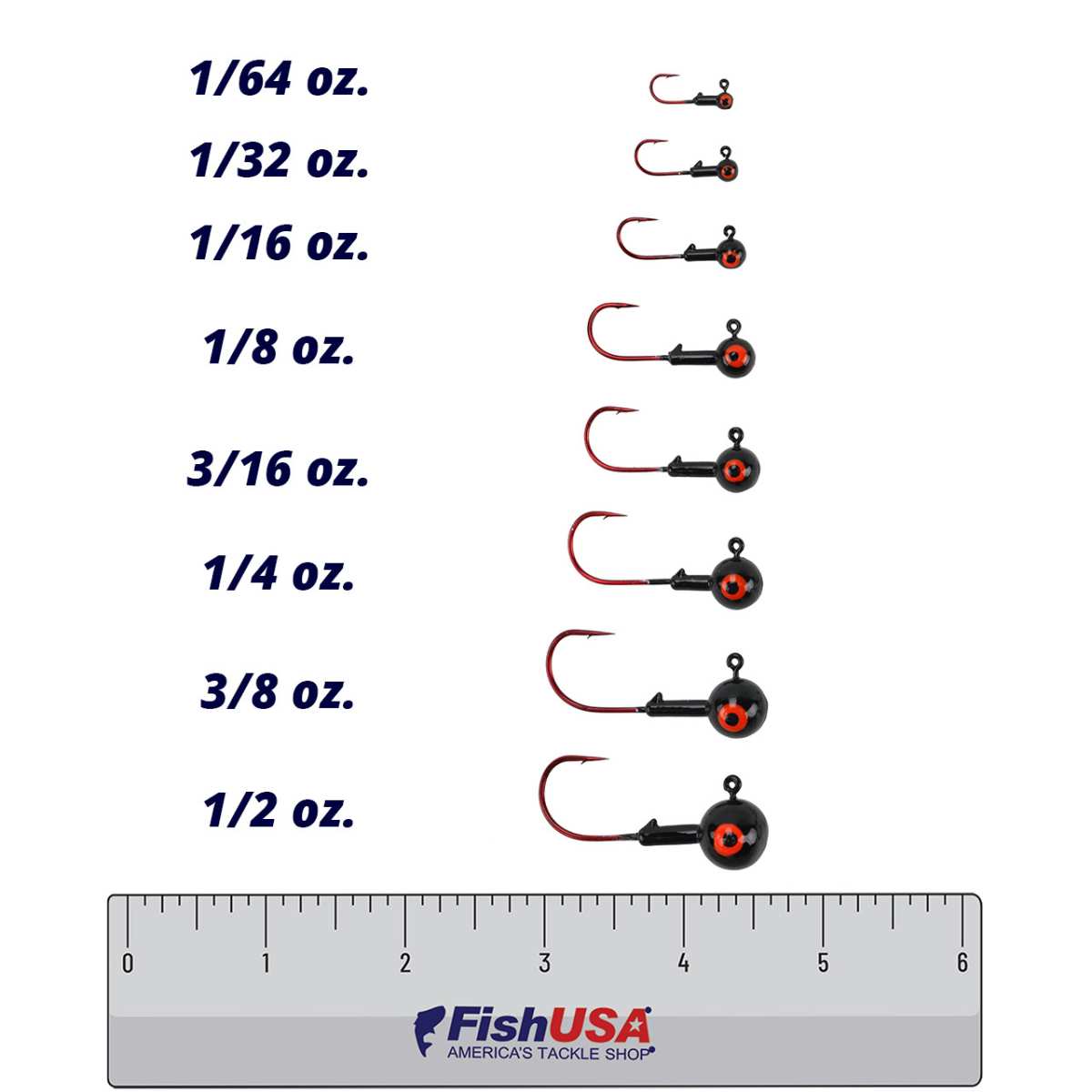
Image source: Bing (Web (fair-use with source credit))
How to Rig a Curly Tail Grub So the Tail Kicks Right
Rigging a curly tail grub sounds simple, and it is, but doing it wrong is the number one reason the tail doesn't kick properly. A crooked grub spins on the retrieve, creates line twist, and looks unnatural in the water.
Start by inserting the jighead point directly into the nose of the grub. Push it straight through the body, keeping the hook point aligned with the spine of the lure. The hook should exit the belly, not the top or bottom.
If the hook exits at an angle, the grub will track sideways instead of swimming straight.
Once the hook is through, slide the grub up the shank until the jighead collar meets the grub's head. The tail should hang freely with nothing pinching or bending it. Give it a gentle tug to make sure the hook point is seated properly and the body isn't bunched up.
The most common mistake is rushing this step and threading the hook at a slight angle. It might look fine in your hand, but in the water, that tiny misalignment causes the whole lure to spin. Take an extra five seconds to get it straight.
It makes a real difference.
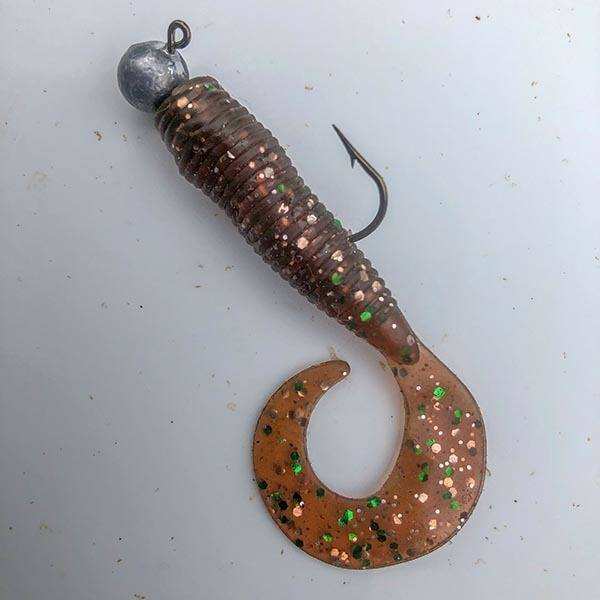
Image source: Bing (Web (fair-use with source credit))
The Core Retrieve: What Your Rod Tip Should Actually Be Doing
The basic retrieve for a curly tail grub is a lift-and-fall pattern. You lift the rod tip 6 to 12 inches, then lower it back down and reel in the slack. The lift makes the grub rise and the tail kick.
The fall is where the magic happens, because the tail continues to pulse as the lure sinks back down.
Here's the sequence step by step:
- Cast to your target area and let the grub sink to the desired depth.
- Keep your rod tip low, around the 10 o'clock position.
- Lift the rod tip smoothly to about the 1 o'clock position. Don't jerk it. A smooth lift creates a natural swimming motion.
- Lower the rod tip back down and reel in the slack line as the grub falls.
- Pause for 1 to 3 seconds before the next lift. This pause is where most strikes occur.
- Repeat the lift-and-fall pattern until the lure is back to the boat or shore.
The key is the pause. When you stop reeling and let the grub fall on a semi-slack line, the tail keeps kicking on its own. Fish often hit during this free-fall phase because the lure looks like dying prey.
If you keep reeling constantly, you skip the most productive part of the retrieve.
For a faster presentation, shorten the pause and make smaller rod lifts. This works well in warmer water when fish are active and willing to chase. In cold water or when fish are lethargic, extend the pause to 5 or even 10 seconds.
Let the grub sit still on the bottom, then give it the tiniest twitch. Sometimes that's all it takes.
Reading the Fall — How to Detect Bites You'd Otherwise Miss
Most bites on a curly tail grub don't feel like the aggressive thump you get on a crankbait. They're subtle. You might feel a light tap, a slight increase in weight, or nothing at all except your line stopping its normal descent.
Watching your line is just as important as feeling it. If your line suddenly goes slack when it shouldn't, or if it twitches sideways, a fish has likely picked up the lure. Set the hook immediately.
Don't wait for a second confirmation. By the time you feel it, the fish may already be spitting the lure.
Here are the most common bite indicators to watch for:
- Line twitch: A small sideways movement of your line during the fall. This is often a fish inhaling the lure.
- Line goes slack: Your line stops sinking. The grub is no longer falling because something is holding it up.
- Light tap: A faint tick you feel through the rod. It can feel almost like debris hitting the line.
- Pressure: The line feels heavier than normal, like the lure is dragging through something. It's often a fish holding the grub without moving.
- Rod tip loads up: The rod bends slightly more than it should during the lift. A fish is hanging on.
The best way to get better at detecting these bites is to fish with a sensitive rod and a line that transmits feel. A medium-light spinning rod with a fast tip and 8 lb fluorocarbon line is a solid starting combination. Braid with a fluorocarbon leader gives you even more sensitivity, especially in deeper water.
If you're missing fish, you're probably setting the hook too late or reeling too fast during the fall. Slow down. Let the lure do its job.
The fish will tell you when it's there, but only if you're paying attention to the line and not just going through the motions.
Adjusting Your Approach for Depth, Cover, and Water Clarity
The same curly tail grub can fish five feet of water or twenty-five feet of water. The only thing that changes is the jighead weight. A 1/16 oz head gets you into the 3 to 10 foot range.
Step up to 1/4 oz and you're fishing 10 to 15 feet comfortably. Go to 3/8 oz or heavier for anything beyond that.
In heavy cover like brush piles or laydowns, use a jighead with a wire weed guard. The guard folds back on the hook set but keeps the point from snagging on wood during the fall. Without a weed guard, you'll lose lures constantly in timber.
Flush-cut weed guards work better for open-water fishing where you want a clean hook point.
Water clarity changes your color choice and your retrieve speed. In clear water, fish can see the lure from farther away, so you can use a slower, more subtle presentation. Natural colors like smoke, watermelon, and green pumpkin blend in and look like real forage.
In stained or muddy water, you need contrast. Chartreuse, white, and bright orange stand out when visibility is limited.
Muddy water also calls for a faster retrieve. Fish are relying more on their lateral line to detect vibration, so a quicker lift-and-fall pattern puts more pressure waves in the water. Slow down again once the water clears up.
When to Slow Down, When to Speed Up, and When to Stop Entirely
Water temperature is the biggest factor in retrieve speed. Above 70 degrees Fahrenheit, bass and other warm-water species are active and willing to chase. You can use a steady swimming retrieve with consistent rod lifts and shorter pauses.
The grub moves through the water column quickly, covering ground and triggering reaction strikes.
Between 55 and 70 degrees, slow down. Extend the pause between lifts to 3 or 5 seconds. Make your rod lifts smaller, maybe 6 inches instead of 12.
The grub spends more time falling, which is when most fish in this temperature range will hit it.
Below 55 degrees, you're in cold-water mode. This is where the curly tail grub really shines compared to other soft plastics. The tail still kicks on a dead fall, even when the water is barely above freezing.
Let the grub sit on the bottom for 10 to 15 seconds. Give it the smallest twitch, just enough to make the tail flutter. Then let it sit again.
This drives warm-water anglers crazy because it feels like nothing is happening, but it's exactly what cold, lethargic fish respond to.
If you're not getting bites after 20 casts with one speed, change it. Go faster if you've been slow, or slower if you've been fast. Fish tell you what they want, but you have to give them options first.
Common Mistakes That Kill Your Grub's Action
The most frequent mistake is rigging the grub crooked on the jighead. Even a slight angle causes the lure to spin during the retrieve, which creates line twist and looks completely unnatural. Take the extra few seconds to thread the hook straight through the body.
Using too heavy a jighead is the second most common error. A heavy head kills the fall rate and dampens the tail action. The grub drops like a rock instead of fluttering down.
Match the weight to the depth you need, and err on the side of lighter when you can.
Overworking the rod is another problem. Big, aggressive rod sweeps make the grub dart unnaturally fast. Fish see it, but they don't eat it because it doesn't look like anything they recognize as food.
Small, smooth lifts are almost always more effective.
Reeling through the fall is a mistake that costs fish. When you keep the reel handle turning during the drop, the line stays tight and the grub can't fall freely. The tail barely moves.
Let the line go slack, watch for bites, and only reel in the slack once the grub has settled.
Finally, not replacing torn grubs fast enough. Once the body starts tearing near the hook point, the grub won't track straight and the tail action gets worse. Keep a fresh pack handy and swap them out after every few fish, or sooner if you're fishing rocky structure.
Curly Tail Grub vs. Other Soft Plastics — When to Reach for Each
A straight tail worm is better when you want a more subtle, finesse presentation. It doesn't have the constant vibration of a curly tail, so it works well when fish are pressured and wary. Texas-rigging a straight tail worm is also easier for weedless presentations in heavy cover.
A creature bait with multiple appendages creates more disturbance and a bigger profile. It's a good choice when you're targeting bigger bass that want a larger meal. Creature baits excel on a Carolina rig or a heavy jighead dragged along the bottom.
A paddle tail swimbait has a wider tail that pushes more water and creates a stronger thumping vibration. It's better for steady retrieves through open water and for imitating larger baitfish. Paddle tails also come in bigger sizes, which helps when you're targeting trophy fish.
The curly tail grub sits in the middle of all these options. It's more active than a straight tail worm but less bulky than a creature bait. It works at multiple depths and multiple speeds.
It's the lure you tie on when you don't know what the fish want, because it covers so many bases at once.
Real Scenarios: How I'd Fish a Curly Tail Grub on a Strange Lake
Say you pull up to a lake you've never fished before. The water is slightly stained, the temperature is around 65 degrees, and you can see rocky points dropping into deeper water. Start with a 4-inch grub in chartreuse or smoke on a 1/4 oz round jighead.
Cast toward the points and let the grub fall on a semi-slack line.
Work it back with a lift-and-fall pattern, pausing 2 to 3 seconds between hops. If you're not getting bites after covering a point, switch to a 3-inch grub on a 1/8 oz head and fish it slower. Sometimes the smaller profile is all it takes.
If the lake is clear and the fish are spooky, downsize to a 3-inch grub in green pumpkin on a 1/16 oz head. Make longer casts and let the grub fall deeper before starting your retrieve. Clear-water fish often suspend deeper, so getting the lure down to them matters more than covering water quickly.
In saltwater, a 5-inch white curly tail grub on a 1/4 oz jighead is a go-to for speckled trout and redfish on shallow flats. Use a steady swimming retrieve with small rod twitches. The key is keeping the grub in the top half of the water column where these species feed.
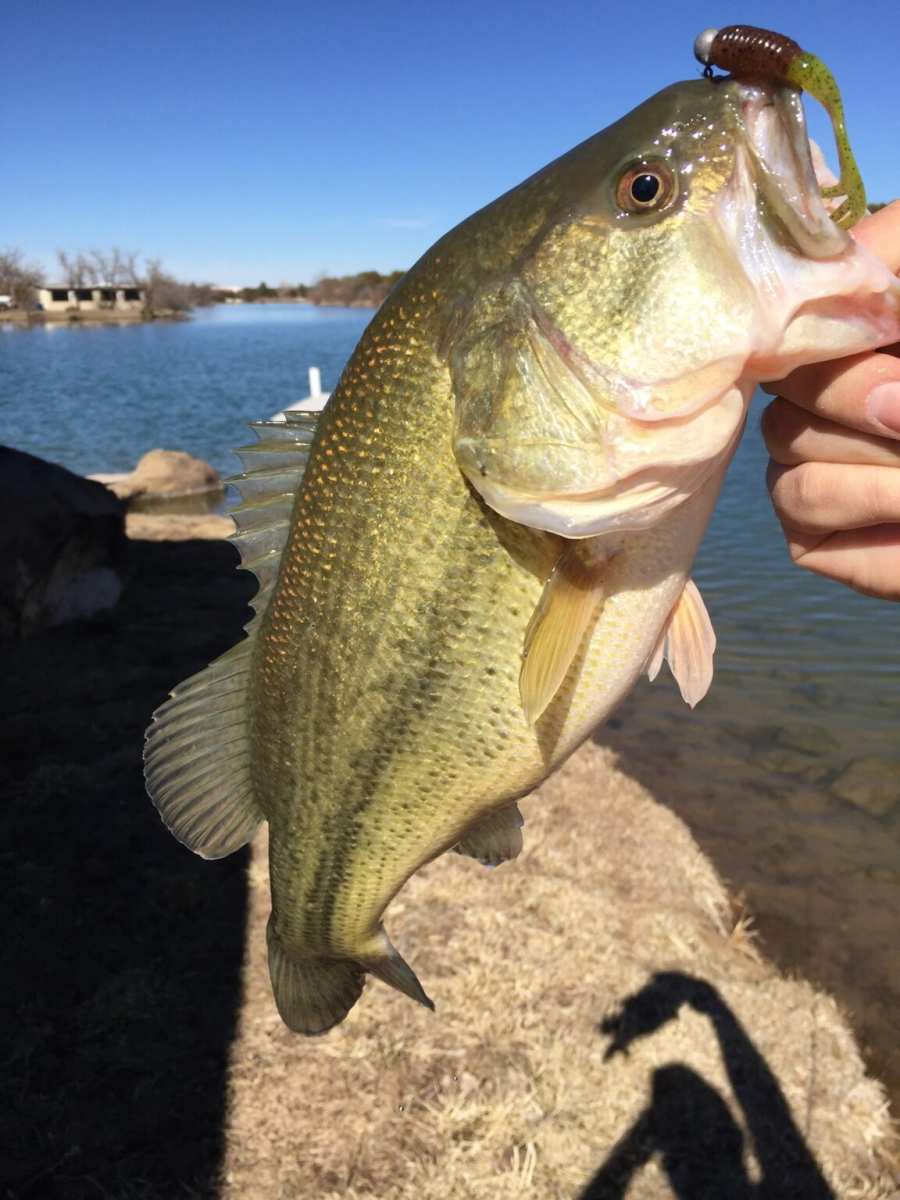
Image source: Bing (Web (fair-use with source credit))
Quick-Reference Cheat Sheet: Grub Size, Jighead Weight, and Depth Pairings
Keep this handy when you're on the water and need to make a quick decision:
- Shallow water, 1 to 5 feet: 2 to 3-inch grub, 1/64 to 1/16 oz jighead. Best for crappie, panfish, and trout.
- Medium depth, 5 to 12 feet: 3 to 4-inch grub, 1/8 to 1/4 oz jighead. Best for largemouth bass, smallmouth bass, and walleye.
- Deep water, 12 to 20 feet: 4 to 5-inch grub, 1/4 to 3/8 oz jighead. Best for suspended bass and deep structure fish.
- Very deep or heavy current, 20+ feet: 5 to 6-inch grub, 3/8 to 1/2 oz jighead. Best for big bass and saltwater species.
For color, remember: clear water gets natural tones, stained water gets bright colors, and muddy water gets dark or high-contrast patterns. When in doubt, start with chartreuse or white. Those two colors catch fish in almost every condition.
Frequently Asked Questions
What's the best line for fishing a curly tail grub?
An 8 to 10 lb fluorocarbon line is a solid all-around choice. It's nearly invisible underwater and has low stretch, which helps with hook sets. If you're fishing deep water or heavy cover, use 15 to 20 lb braid with a 2-foot fluorocarbon leader for extra sensitivity and strength.
How do I know if my grub is rigged straight?
Hold the lure up and look at it from the side. The jighead should be in line with the body, not angled up or down. The tail should hang freely without any twist.
If the grub spins during a slow retrieve, it's rigged crooked. Pull it off and rethread the hook.
Can you fish a curly tail grub in winter?
Yes, and it's one of the best winter lures you can use. The tail still kicks in cold water, even when other soft plastics go dead. Use a small 2 or 3-inch grub on a light jighead and fish it slowly with long pauses.
Let it sit on the bottom between twitches.
Do curly tail grubs work for saltwater fishing?
Absolutely. Speckled trout, redfish, flounder, and even striped bass will eat a curly tail grub. White and chartreuse are the most popular saltwater colors.
Use a 4 or 5-inch grub on a 1/4 oz jighead and fish it with a steady swimming retrieve over shallow flats.
How often should I replace my curly tail grubs?
Replace the grub whenever the body starts tearing near the hook point or the tail loses its curl. In rocky areas, that might be after just a few fish. In open water, a single grub can last for dozens of fish.
Keep a fresh pack in your tackle bag and swap them out as soon as the action starts to suffer.
Quick-Reference Cheat Sheet: Grub Size, Jighead Weight, and Depth Pairings
Keep this handy when you're on the water and need to make a quick decision:
- Shallow water, 1 to 5 feet: 2 to 3-inch grub, 1/64 to 1/16 oz jighead. Best for crappie, panfish, and trout.
- Medium depth, 5 to 12 feet: 3 to 4-inch grub, 1/8 to 1/4 oz jighead. Best for largemouth bass, smallmouth bass, and walleye.
- Deep water, 12 to 20 feet: 4 to 5-inch grub, 1/4 to 3/8 oz jighead. Best for suspended bass and deep structure fish.
- Very deep or heavy current, 20+ feet: 5 to 6-inch grub, 3/8 to 1/2 oz jighead. Best for big bass and saltwater species.
For color, remember: clear water gets natural tones, stained water gets bright colors, and muddy water gets dark or high-contrast patterns. When in doubt, start with chartreuse or white. Those two colors catch fish in almost every condition.