Lawn aeration is a vital lawn care practice that helps combat soil compaction and improve overall lawn health. By creating small holes, it allows essential elements like water, air, and nutrients to reach the grass roots, promoting deeper growth and a lusher appearance. Understanding the basics of lawn aeration will transform your yard into a vibrant oasis.
## Unlocking a Healthier Lawn: Do You Know These Basics of Lawn Aeration?
Imagine your lawn as a living, breathing entity. Just like us, it needs to breathe, drink, and be nourished. But what happens when the soil beneath its surface gets too tight, too packed? That’s where lawn aeration comes in, a superhero for your turf that often gets overlooked. It’s not just about making tiny holes; it’s about giving your grass the best possible chance to thrive.
Many homeowners assume that regular watering and mowing are enough to keep their lawns looking great. While these are certainly important, they might not be addressing the root of the problem—literally. Compacted soil can act like a wall, preventing water, air, and vital nutrients from reaching your grass’s roots. This leads to a host of issues, from weak, shallow roots to increased susceptibility to disease and pests. Learning the basics of lawn aeration can make a world of difference in the health and beauty of your yard.
### Why Does My Lawn Need Aeration? The Compaction Conundrum
So, what exactly is soil compaction, and why is it such a big deal? Think about it: over time, foot traffic, the weight of lawn equipment, and even heavy rainfall can press the soil particles closer together. This squeezes out the air pockets that are essential for healthy root development. When soil becomes compacted, it becomes dense and hard.
This density creates a barrier. Your grass roots struggle to penetrate the soil, remaining shallow and weak. This makes them more vulnerable to drought, heat stress, and disease. Furthermore, compacted soil has poor drainage. Water tends to sit on the surface, leading to soggy conditions that can encourage fungal growth and create an ideal environment for pests like lawn gnats. You might also notice a thick layer of thatch—dead grass clippings and organic matter—building up on your lawn. This thatch layer can also impede water and nutrient penetration, creating a double whammy for your grass.
### When is the Right Time to Aerate? Timing is Everything
Knowing when to aerate your lawn is crucial for maximizing its benefits. The golden rule is to aerate when your grass is actively growing. This allows the lawn to recover quickly from the process and seal up the holes. For most homeowners, this means two main windows of opportunity:
#### Cool-Season Grasses (e.g., Fescue, Ryegrass, Kentucky Bluegrass)
These grasses thrive in cooler temperatures. The ideal time to aerate them is in the **early fall** (September or October) or **early spring** (March or April). Aerating in early fall allows the grass to establish strong roots before winter sets in and gives it a head start in the spring. Aerating in early spring helps it recover from winter damage and prepare for the warmer months.
#### Warm-Season Grasses (e.g., Bermuda, Zoysia, St. Augustine)
These grasses love the heat. The best time to aerate them is in **late spring or early summer** (May or June), when the grass is actively growing and has plenty of time to recover before the heat of mid-summer or the onset of cooler fall temperatures.
Important Note: Avoid aerating when your lawn is stressed due to extreme heat, drought, or during its dormant period. This can cause more harm than good. If you’re unsure about your grass type, check out our guide on [how do I know what kind of grass I have](https://lawnhelpful.com/how-do-i-know-what-kind-of-grass-i-have/).
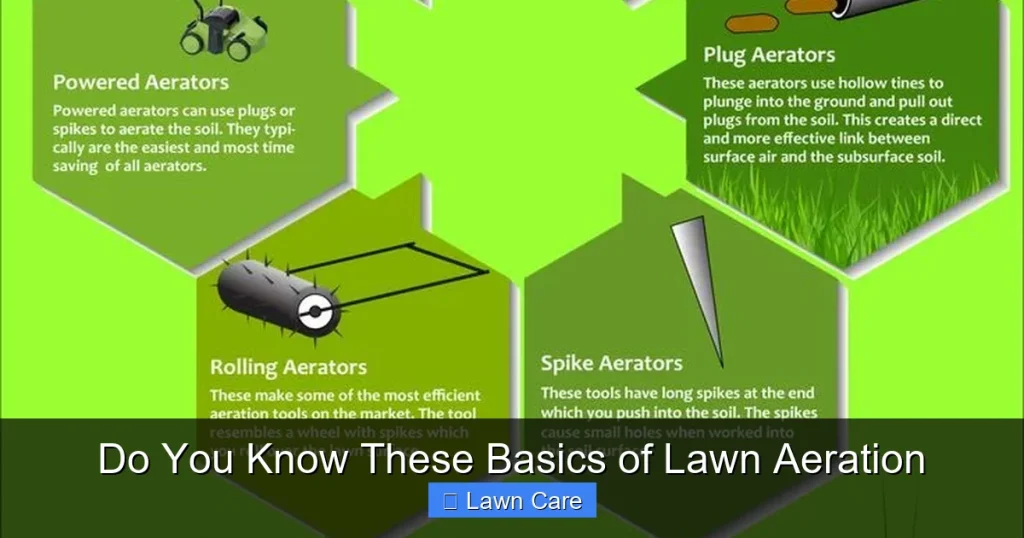
### Types of Lawn Aeration: Core vs. Spike
When you think of aeration, you might picture a machine poking holes in your lawn. There are two main types of mechanical aeration:
Core Aeration
This is the most effective method. Core aerators use hollow tines to pull out plugs of soil and thatch from the lawn. These plugs are typically about 2-4 inches deep and ½ to ¾ inch in diameter. The removed soil is left on the surface to break down naturally, returning valuable nutrients to the soil.
The benefits of core aeration are significant. It directly addresses soil compaction by creating channels that allow air, water, and nutrients to penetrate deep into the root zone. This encourages deeper root growth, leading to a more resilient and drought-tolerant lawn. It also helps reduce thatch buildup and improves soil structure. If your lawn has significant compaction issues, core aeration is the way to go.
Spike Aeration
Spike aerators work by forcing spikes into the ground, essentially punching holes. While this can loosen the soil surface to some extent, it doesn’t remove soil. The main drawback is that spike aeration can sometimes worsen compaction by compacting the soil around the holes.
Spike aeration is generally considered a less effective method for deep compaction relief. It might offer temporary surface improvement, but for true soil health benefits, core aeration is superior. It’s often more of a temporary fix rather than a long-term solution for severe compaction.
### How to Aerate Your Lawn: DIY or Hire a Pro?
Deciding whether to tackle lawn aeration yourself or hire a professional service depends on your budget, time, and comfort level with equipment.
DIY Lawn Aeration
If you have a small to medium-sized lawn and are up for a bit of physical labor, DIY aeration is a viable option. You have a few choices for equipment:
* Manual Aerators: These are hand-held tools that you push into the ground to pull out soil plugs. They are inexpensive and good for very small areas or spot treatment. However, they require a lot of effort and are time-consuming for larger lawns.
* Walk-Behind Aerators: You can rent these power-driven machines from most tool rental shops. They are more efficient than manual aerators and are suitable for average-sized yards. They use either a spike or core aeration mechanism. Be sure to choose a core aerator for the best results.
* Tow-Behind Aerators: These attach to a riding mower or tractor and are good for larger properties. Again, opt for a core aerator model if available.
Tips for DIY Aeration:
Make sure the soil is moist but not waterlogged before you start. This makes it easier for the aerator to penetrate. Overlap your passes to ensure even coverage. For core aerators, leave the soil plugs on the lawn; they will break down and enrich your soil.
Hiring a Professional Lawn Care Service
For larger lawns, those with severe compaction issues, or if you simply prefer to save time and effort, hiring a professional lawn care service is a great option. Professionals have access to high-quality, commercial-grade equipment and the expertise to do the job efficiently and effectively.
They can assess your lawn’s specific needs, recommend the best type of aeration, and schedule it at the optimal time. This ensures you get the most bang for your buck and avoid potential mistakes. If you’re looking to professionalize your lawn care efforts, exploring services might be beneficial. It’s worth noting that many lawn care businesses offer aeration as part of their regular maintenance packages.
### What to Do After Aeration: Crucial Steps for Success
Aeration is only half the battle. Proper aftercare is essential for your lawn to benefit fully from the process.
Watering
Immediately after aeration, it’s a good idea to water your lawn. This helps settle the soil plugs (if you used a core aerator) and washes any remaining soil off the grass blades. However, avoid overwatering, which can lead to the soil becoming waterlogged again. [Should you water your lawn right after aeration](https://lawnhelpful.com/should-you-water-your-lawn-right-after-aeration/) is a common question, and the answer is generally yes, but moderately.
Overseeding
Aeration creates an ideal seedbed for new grass seed. If your lawn is thin or has bare patches, fall is the perfect time to overseed after aerating. The seed can fall into the open holes, increasing germination rates and helping to fill in sparse areas. This is also a great time to introduce a more desirable grass type if needed.
Fertilizing
You can apply a starter fertilizer after aerating and overseeding. The nutrients in the fertilizer will be readily available to the new seedlings and the existing grass roots, which can now access them more easily. Be careful not to fertilize too heavily, especially if you haven’t overseeded, as it could potentially lead to issues like [how do you know you over fertilized lawn](https://lawnhelpful.com/how-do-you-know-you-over-fertilized-lawn-2/).
Traffic Management
Minimize foot traffic and heavy equipment use on your lawn for a few weeks after aeration. This gives the grass time to recover and the roots to re-establish themselves without further stressing the soil.
### Recognizing the Signs: When Your Lawn is Crying Out for Aeration
How do you know if your lawn is compacted and needs aeration? Look for these telltale signs:
* Water Pooling: If water sits on the surface of your lawn for extended periods after watering or rain, it’s a strong indicator of poor drainage due to compaction.
* Thin or Weak Grass: If your grass looks generally unhealthy, thin, or struggles to recover after mowing, it might be because the roots aren’t getting enough resources.
* Thick Thatch Layer: A thatch layer thicker than half an inch can suffocate your lawn. Aeration helps break down this layer and allows essential elements to reach the soil.
* Hard Soil: Try pushing a screwdriver or a spade into your lawn. If it’s difficult to penetrate, your soil is likely compacted.
* Increased Pests and Diseases: Stressed lawns due to compaction are more susceptible to problems like grub infestations or fungal diseases.
Addressing these issues early can prevent more serious problems down the line. Remember, a healthy lawn is built from the soil up. If your lawn is struggling with weeds like crabgrass, proper soil health through aeration can also contribute to a more robust lawn that outcompetes them. Check out our guides on [how do you know if you have crabgrass](https://lawnhelpful.com/how-do-you-know-if-you-have-crabgrass/) or [how do you kill crabgrass in your lawn](https://lawnhelpful.com/how-do-you-kill-crabgrass-in-your-lawn/) for more on weed management.
### Conclusion: Invest in Your Lawn’s Future
Lawn aeration might not be the most glamorous lawn care task, but it’s undeniably one of the most beneficial. By understanding these basics—why it’s needed, when to do it, and how to perform it effectively—you’re investing in the long-term health and vitality of your lawn. A well-aerated lawn is more resilient, better able to withstand environmental stressors, and significantly more beautiful. So, next time you’re thinking about how to care for your lawn, remember the power of aeration. It’s a simple yet profound step towards achieving that lush, green paradise you’ve always dreamed of. For a comprehensive overview of basic lawn care, our [how do you take care of a lawn for beginners](https://lawnhelpful.com/how-do-you-take-care-of-a-lawn-for-beginners/) guide can offer further insights.
Key Takeaways
- Why Aerate: Aeration combats soil compaction, which is a common problem that suffocates grass roots by limiting access to air, water, and nutrients.
- When to Aerate: The best times to aerate are during your lawn’s active growing season, typically spring for cool-season grasses and late spring/early summer for warm-season grasses.
- Types of Aeration: Core aeration (removing soil plugs) is generally more effective than spike aeration (punching holes), as it addresses compaction more thoroughly.
- Tools of the Trade: You can use manual aerators, electric/gas-powered aerators, or even hire professionals for the job.
- Aftercare is Key: Proper post-aeration care, including watering and potentially overseeding, is crucial for maximizing the benefits and aiding lawn recovery.
- Identifying the Need: Signs like water pooling on the surface, thin grass, and increased thatch indicate your lawn likely needs aeration.
Quick Answers to Common Questions
What is the main purpose of lawn aeration?
The main purpose of lawn aeration is to relieve soil compaction. By creating small holes, it allows air, water, and nutrients to penetrate the soil and reach the grass roots.
When is the best time to aerate a cool-season lawn?
For cool-season grasses, the best times to aerate are in early fall (September/October) or early spring (March/April) when the grass is actively growing.
What is the difference between core aeration and spike aeration?
Core aeration removes plugs of soil and thatch, which is more effective at relieving compaction. Spike aeration simply punches holes into the soil and can sometimes worsen compaction.
Can I aerate my lawn when it’s very dry?
No, it’s not recommended to aerate a very dry lawn. The soil should be moist but not waterlogged for the aerator to penetrate effectively and for the lawn to recover properly.
What should I do with the soil plugs left on the lawn after core aeration?
The soil plugs can be left on the lawn. They will naturally break down over a few weeks, returning valuable nutrients to the soil and improving its structure.
Frequently Asked Questions
How often should I aerate my lawn?
The frequency of aeration depends on your soil type and how heavily the lawn is used. Generally, it’s recommended to aerate once a year, or once every two years for lawns with less soil compaction.
What are the benefits of lawn aeration?
Lawn aeration improves soil structure, reduces soil compaction, enhances water and nutrient uptake, promotes deeper root growth, reduces thatch buildup, and helps control weeds and diseases by creating a healthier turf.
Is aeration necessary if I don’t have heavy foot traffic on my lawn?
Yes, soil compaction can occur from various factors beyond foot traffic, such as the weight of lawn equipment, rainfall, and the natural settling of soil over time.
What is thatch, and how does aeration help with it?
Thatch is a layer of dead and living organic matter that builds up between the grass blades and the soil surface. Aeration helps break down thatch by allowing air and beneficial microorganisms to reach it, and by incorporating soil into the thatch layer.
Can I aerate my lawn if I have weeds like crabgrass?
Yes, aeration can actually help in managing weeds like crabgrass by promoting a healthier, denser turf that can better compete with weeds. It also helps with the application of pre-emergent herbicides.
How long does it take for a lawn to recover after aeration?
Most lawns will show signs of recovery within a week or two after aeration, with the holes closing up and the grass looking healthier. Full recovery and visible improvements in turf density can take several weeks, especially if overseeding was performed.