You've noticed brown patches spreading across your lawn, and someone probably told you it's grubs. Maybe. But here's the thing: most lawn damage blamed on grubs actually isn't grub damage at all.
Learning how to check lawn for grubs properly saves you from dumping money on pesticides you don't need. More importantly, if you do have grubs, catching them early means the difference between a simple treatment and a full lawn renovation come spring.
We've broken down the exact process turf professionals use to scout for white grubs, and it's simpler than you'd think. You don't need fancy equipment. You need a shovel, a flat surface, and about ten minutes.
The general threshold extension services use is 5-10 grubs per square foot for most established cool-season lawns, but let's walk through it step by step so you know what you're actually dealing with and what to do about it.
Media Source, Bing (Web, fair-use educational use with source credit)
The 30-Second Grub Check: Quick Test You Can Do Right Now
Grab a shovel and dig up a square foot of turf, 2-4 inches deep, in a damaged area. Break apart the soil and count any C-shaped white larvae. If you find more than 10 grubs in that single square foot, treatment is worth considering.
Here's the fastest way to get a rough answer. This isn't the full inspection, but it'll tell you whether you need to dig deeper (literally).
The peel-back test: Healthy grass holds firm. Grub-damaged turf lifts off the soil like a carpet because the roots are gone. Try rolling back a flap of brown grass.
If it comes up easily and you see small white larvae in the soil underneath, you've found grubs.
If that quick test shows grubs, you'll want to do the full lawn sampling below to get accurate numbers. If you roll back turf and see no grubs, your problem is probably something else entirely. Don't treat for grubs you haven't confirmed.
What Grubs Actually Look Like (And How to Tell Them Apart from Other Pests)
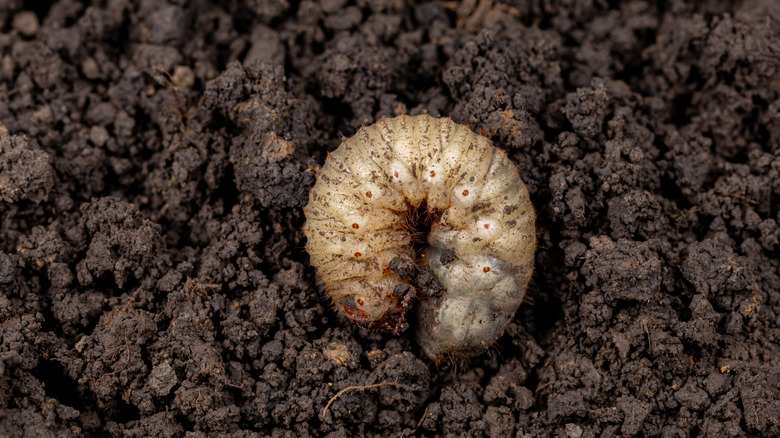
White grubs are the larval stage of scarab beetles, and several common species wreck lawns across the US. Japanese beetles, June bugs, European chafers, masked chafers, and billbugs all leave behind larvae that look similar at first glance. They're creamy white with brown heads, three pairs of legs near the thorax, and they curl into that distinctive C-shape.
Key identification features:
- C-shaped body curl when disturbed
- Brown or tan head capsule
- Three pairs of legs just behind the head
- White, cream, or grayish body
- Size ranges from ¼ inch to over 1 inch depending on species and age

Media Source, Bing (Web, fair-use educational use with source credit)
Species matters for timing, too. Japanese beetles peak in late July through August. European chafers cause earlier damage, often showing up in April and May from the previous fall's feeding.
If you're seeing damage but your grub count is low, you might be dealing with a species whose feeding window already passed.
What people confuse with grubs:
- Sod webworm larvae (smaller, brown, live in silk tunnels above ground)
- Billbug larvae (legless, larger head, found inside stems)
- Fungal mycelium (white threads in soil, not larvae)
Step-by-Step: How to Sample Your Lawn for Grubs
Where to Dig: Choosing the Right Sampling Spots
Grubs rarely spread evenly across a lawn. They cluster in areas with moist soil, morning sun, and tender turf roots. Random sampling misses them.
Focus on: Damaged areas, especially the margins between dead and healthy turf. That boundary zone often concentrates active feeding.
Also check: Low-lying moist areas. Slopes with southern exposure. Spaces near outdoor lights (adult beetles lay eggs nearby).
Irrigated zones.
Take 3-5 samples across the lawn. One sample in the middle of a brown patch tells you less than samples taken at different distances from the damage center.
The Square-Foot Method: Your Best Bet for Accurate Counting
This is the standard method extension services recommend. It takes about ten minutes and gives you an actual number to work with.
Steps for each sample location:
- Cut a 1-foot by 1-foot square of turf with a spade, going 2-4 inches deep
- Lift the sod square and place it on a flat surface (tarp or cardboard works)
- Break apart the soil by hand and count every grub you find
- Check the thatch layer and the top 2 inches of soil, where most grubs feed
- Count the grubs and record the number per square foot
- Replace the sod if you're in spring or early summer
Do this in 3-5 spots across the lawn. Calculate your average. That number is what you compare against treatment thresholds.

Media Source, Bing (Web, fair-use educational use with source credit)
Alternative: The Sponge Soak Test for Hard Soils
When the ground is dry, rocky, or compacted, pulling apart soil by hand becomes frustrating. The soak method works better here.
How it works:
- Soak a 1-square-foot area with water the evening before
- Cover it with a tarp or board overnight
- The next morning, cut your sample and lift the turb
- Grubs migrate to the surface in saturated soil, making them much easier to spot
This method works especially well in late summer and early fall when grubs are actively feeding near the root zone. In spring, some species have moved deeper, so the peel-back method still works better.
Your Grub Count: When to Treat and When to Walk Away
Treatment Thresholds by Grass Type
Not every grub needs a response. Healthy, well-maintained turf handles low populations without visible damage. Here's when it's time to act:
| Grass Type | Treatment Threshold | Notes |
|---|---|---|
| Cool-season (fescue, bluegrass, ryegrass) | 10+ grubs per sq ft | Established lawns tolerate 5-8 if well-watered |
| Warm-season (bermuda, zoysia, St. Augustine) | 5-10+ grubs per sq ft | Lower threshold due to thinner root systems |
| Newly seeded or stressed lawns | Any detectable number | Young roots can't tolerate feeding pressure |
| Organic/preventive approach | 3-5 grubs per sq ft | Lower threshold for those avoiding synthetics |
A lot of people see one or two grubs during sampling and immediately panic. That's a waste of money. A few grubs per lawn is completely normal, and predatory birds, ground beetles, and parasitic wasps handle small populations naturally.
What Your Numbers Actually Mean
0-4 grubs per square foot: No treatment needed. Your turf can handle it naturally.
5-9 grubs per square foot: Watch the area closely. If lawn is stressed, dry, or newly established, treat. Otherwise, monitor weekly.
10+ grubs per square foot: Treatment recommended for cool-season grasses. Closer to 5-8 for warm-season types.
15+ grubs per square foot: Severe infestation. Significant root damage likely. Curative treatment urgent if grubs are still actively feeding.
Timing Is Everything: When to Check and When to Treat
Best Time to Scout for Grubs
Late August through October is prime scouting time. Grubs are actively feeding near the surface and big enough to find easily. In spring, grubs are either finishing their feeding cycle or moving deeper, so sampling gives you less useful information.
Monthly timing breakdown:
- July: Early detection possible in southern regions. Eggs hatching.
- August: Curative treatment window opens. Grubs small but visible.
- September-October: Best overall scouting month in most regions.
- November onward: Grubs move too deep for reliable surface sampling.
Preventive vs. Curative: Choosing Your Window
This distinction matters enormously for product selection and effectiveness.
Preventive treatment (May-July):
Targets eggs and newly hatched larvae. Products like chlorantraniliprole (GrubEx) work best applied before grubs cause visible damage. Residual activity lasts 2-3 months.
Curative treatment (August-October):
For grubs already feeding and causing damage. Requires faster-acting products like trichlorfon (Dylox). Works best on small larvae, not on large mature grubs nearing pupation.
Getting the timing wrong wastes your money. If you apply preventive products in October when grubs are already large, you won't see results. If you apply curative products in May before eggs hatch, the active ingredient degrades before grubs even appear.

Media Source, Bing (Web, fair-use educational use with source credit)
Grub Damage Lookalikes: Don't Treat a Problem You Don't Have
This is where most people waste serious money. They see brown grass, assume grubs, and dump pesticides on a problem that isn't grubs. Several common lawn issues mimic grub damage almost perfectly.
You need to rule these out before spending a dime on treatment.
Drought Stress vs. Grub Damage
Drought-stressed turf turns brown in irregular patches, just like grub damage. But drought patterns usually follow slopes, sunny exposures, or areas beyond irrigation coverage. Grub damage shows up in moist, shaded areas first, particularly in the boundary zones between healthy and dead grass.
How to tell them apart:
- Drought stress: Footprints remain visible in the grass (turf lacks spring-back)
- Grub damage: Turf rolls back like a carpet because roots are gone
- Drought: Uniform browning across similar sun-exposed areas
- Grubs: Random patches, often near structures or lights
If your lawn is watering properly but still browning in specific zones, that points more toward pests. If the whole yard looks tired and footprints stick around, you're probably dealing with irrigation or heat stress.
Fungal Disease vs. Grub Damage
Brown patch, dollar spot, and pythium blight all cause brown patches. Fungal diseases often show distinct patterns. Brown patch creates roughly circular areas with a darker outer "smoke ring" that's visible early morning when grass is wet.
Dollar spot creates small, silver-dollar-sized spots.
Grub damage lacks these visual signatures. The turf will feel spongy underfoot because roots are severed, not just diseased. Pull on brown grass and if it lifts easily with no resistance, that's root loss from grubs, not fungal damage where roots usually remain intact.
Chinch Bugs, Billbugs, and Other Suspects
Chinch bugs love hot, dry weather and cause damage that looks exactly like drought. They're tiny, about 1/6 inch long, and typically found at the base of grass blades in sunny areas. Billbugs cause similar damage but leave hollowed-out stems.
Both require completely different treatment than grubs. Apply grub insecticide for chinch bugs and you'll kill nothing but your wallet. Check chinch bug identification guides before treating.
If You've Got Grubs: Your Treatment Options Compared
Preventive Products (For Next Year)
If you've confirmed grubs this fall, you already missed the preventive window. But planning ahead saves you headaches.
Chlorantraniliprole (GrubEx): The most common preventive product. Apply May through July before eggs hatch. Works on multiple grub species.
Requires watering in after application. Residual activity lasts approximately 2-3 months.
Imidacloprid: Older preventive option, found in many combination weed-and-feed products. Effective but faces increasing regulatory restrictions in some municipalities due to pollinator concerns.
Curative Products (For Active Infestations)
These work now, when grubs are already feeding and causing damage.
Trichlorfon (Dylox): Fast-acting curative option. Works within 1-3 days, even on larger third-instar grubs. Best applied in late summer or early fall when grubs are small but visible.
Requires watering in.
Spinosad-based products: OMRI-listed option for organic approaches. Derived from soil bacteria. Less persistent but effective on young grubs.
Multiple applications often needed.
| Product | Type | Speed | Best Timing | Pet Safe After Dry |
|---|---|---|---|---|
| GrubEx (chlorantraniliprole) | Preventive | Slow (weeks) | May-July | Yes |
| Dylox (trichlorfon) | Curative | 1-3 days | August-October | Yes |
| Spinosad concentrates | Organic curative | 3-7 days | Late summer | Yes |
| Beneficial nematodes | Biological curative | 7-14 days | Sept-Oct, soil 55-85°F | Yes |
Biological and Organic Alternatives
Beneficial nematodes, specifically Heterorhabditis bacteriophora, actively hunt and kill grubs in soil. They require moist conditions and soil temperatures between 55 and 85°F to move and feed effectively. Apply in evening since nematodes are sensitive to UV light.
Milky spore disease targets Japanese beetle grubs specifically. It takes 2-5 years to establish fully in the soil, so it's a long-term play rather than a rescue treatment. Once established, it can persist for 10-15 years.
Common Mistakes That Waste Money and Damage Your Lawn
Testing too late: Large grubs in late fall or early spring are tougher to kill with curative products. By the time you see extensive damage, they've already done their worst feeding.
Treating the whole lawn: Grubs cluster. Spot-treating damaged zones and their margins costs less and preserves beneficial insects in unaffected areas.
Ignoring soil moisture: Most granular products need watering in to reach the soil-dwelling grubs. Applying during a drought with no irrigation means the active ingredient never reaches the target.
Mixing preventive and curative products: Don't apply GrubEx and Dylox together. Preventive products work on eggs and tiny larvae; curative products need live, visible grubs to work. They're solving different lifecycle stages.
Confusing animal damage with grubs: Raccoons, skunks, and birds tear up lawns hunting for grubs. The damage you see is from digging, sometimes more destructive than the grubs themselves. If your lawn looks attacked rather than withered, that's predators targeting the grubs.
Expert Tips From the Field: What the Pros Do Differently
Professional lawn care technicians check threshold numbers in at least four spots across a property. They sample both healthy and damaged areas to map the infestation boundary. That way they know exactly where treatment is needed instead of blanketing everything.
Pros also keep records. They note grub counts by location year after year, building a history for each property. That matters because grub pressure tends to be consistent in the same spots.
Japanese beetles prefer sunny, south-facing turf with moist soil. European chafers favor low-lying areas. Knowing your property's patterns gives you a head start next season.
One thing the best professionals do is adjust their treatment threshold upward when the lawn is healthy and well-maintained. A vigorously growing fescue lawn with deep roots can tolerate 10-12 grubs per square foot without showing damage. Bumping up the threshold avoids unnecessary applications and keeps beneficial insect populations intact.
They also scout in late afternoon when grubs move closer to the surface for feeding. Morning sampling works, but you find more larvae per sample in the evening hours during peak feeding periods.
When to Call a Professional vs. DIY
DIY sampling and treatment works well for most homeowners. The square-foot method is straightforward, and curative products are available at any lawn and garden store without applicator licensing. You'll spend approximately $15-50 per application depending on lawn size.
When professional help makes sense: Severe infestations covering 50% or more of the lawn, multiple years of escalating damage despite treatment, or if you need results fast without guesswork. Commercial applicators also handle restricted-use products that aren't available to homeowners in some states.
Professional treatments typically run $75-200 per application depending on region and lawn size. The premium gets you accurate identification, proper timing, and follow-up monitoring. If you're uncertain about what you're seeing, that expertise saves money in the long run.
Per Extension Service recommendations, accurate identification before treatment prevents unnecessary pesticide use and protects beneficial insect populations in your landscape.
Frequently Asked Questions
When is the best time to check for grubs?
Late August through October gives you the most accurate results in most regions. Grubs are actively feeding near the surface but not yet mature enough to pupate. Spring checks work too, but grubs are often already finished feeding by then.
How deep do I need to dig to find grubs?
Go down 2-4 inches. Most white grubs feed in the top 2-3 inches of soil right at the root zone. Spring sampling may require going deeper, 4-6 inches, overwintering grubs move down to escape freezing temperatures.
Can I check for grubs without digging?
Not reliably. The peel-back test, rolling brown turf off the soil, tells you if roots are damaged but doesn't always expose larvae. Visual inspection alone misses low populations.
The square-foot count is the only method that gives you a threshold number for treatment decisions.
Will my lawn recover from grub damage?
If you catch it in fall, recovery is unlikely before winter. Spring recovery depends on how many roots remain. Turf with some intact root system will regrow.
Completely dead areas require overseeding or sodding, the extent of renovation usually becomes clear by late spring.
Do I need to treat my entire lawn?
Usually not. Grubs cluster in zones. Spot treatment of damaged areas plus a 3-5 foot buffer into healthy turf handles most infestations.
Full broadcast treatment makes sense only if your multi-sample counts show grubs distributed evenly across the property.
You've now got the full picture on how to check your lawn for grubs and what to do with that information. The key takeaways: sample properly using the square-foot method, compare your counts against treatment thresholds for your grass type, and time your scouting for late summer when grubs are most visible and vulnerable.
If your counts come back low, save your money and let nature handle it. If you're over threshold, match your product to the lifecycle stage you're seeing. Curative products for active infestatives, preventive products for next season's planning.
The biggest mistake we see year after year is people treating for grubs they never confirmed. Ten minutes with a spade saves you from unnecessary applications and keeps your lawn's beneficial insect population intact. That's a win for your yard and your wallet.