Aerating and overseeding your lawn is a fantastic way to revive its health and vibrancy. To aerate, you can rent a core aerator or use a spike aerator for smaller areas. Simply remove plugs of soil to allow air, water, and nutrients to penetrate deeper into the ground. Following aeration, overseed by spreading quality grass seed evenly across the lawn, ensuring good soil contact. It’s best to do this in early spring or fall for optimal results. By combining these two processes, you’re not just enhancing your lawn’s appearance, but also promoting a thicker, healthier turf. Let’s dive deeper into the step-by-step process to give your lawn the care it truly deserves!

“`html
How to Aerate and Overseed Lawn
Maintaining a lush and healthy lawn requires more than just regular mowing and watering. One essential practice that many homeowners overlook is aerating and overseeding. Both processes can significantly improve the health and appearance of your lawn. Let’s dive into how you can effectively aerate and overseed your lawn for a greener and thicker yard.
What is Lawn Aeration?
Aeration is the process of perforating the soil with holes to allow air, water, and nutrients to penetrate deep into the roots. This process helps break up compacted soil, making it easier for grass to grow.
There are two main types of aeration:
- Core Aeration: This method involves removing small plugs of soil, which allows for better airflow and nutrient absorption.
- Slicing Aeration: This involves simply slicing through the soil, creating channels for air and water without removing the soil.
Core aeration is generally considered more effective than slicing aeration. Both methods can yield great results, but core aeration allows for deeper penetration.
Why You Should Aerate Your Lawn
Aerating your lawn can provide a range of benefits, including:
- Improved air circulation in the soil
- Enhanced water absorption, reducing run-off
- Better nutrient uptake
- Reduction of thatch build-up, creating a healthier soil environment
If your lawn sees heavy foot traffic or has never been aerated, it is wise to consider this practice annually.
Signs Your Lawn Needs Aeration
Understanding when to aerate is crucial. Here are some signs that indicate your lawn may need aeration:
- Soil is compacted, making it hard and dry
- Water tends to pool on the surface instead of absorbing
- Your grass appears thin or patchy
- There is a significant build-up of thatch
Pay attention to these indicators as they help you maintain a healthy lawn.
Best Time to Aerate Your Lawn
Timing plays a critical role in the effectiveness of aeration. The best time to aerate depends on your grass type. Here’s a breakdown:
- Cool-season grasses: Early spring or early fall are ideal. Temperatures are moderate, which allows the grass to recover quickly.
- Warm-season grasses: Late spring or early summer is best. The grass is actively growing and can heal faster.
Aerating at the right time enhances the effectiveness of the process.
How to Aerate Your Lawn
To aerate your lawn effectively, follow these steps:
- Choose the right aerator: Depending on your lawn size, choose between a manual or mechanical aerator.
- Water your lawn: Ensure your lawn is moist but not soggy. This will make the aeration process easier.
- Aerate the lawn: Move the aerator across the lawn in a systematic manner. Make sure to cover every part of the lawn.
- Leave the plugs on the surface: Allow the soil plugs to break down naturally to enrich the soil.
Always follow the manufacturer’s instructions when using a mechanical aerator.
What is Overseeding?
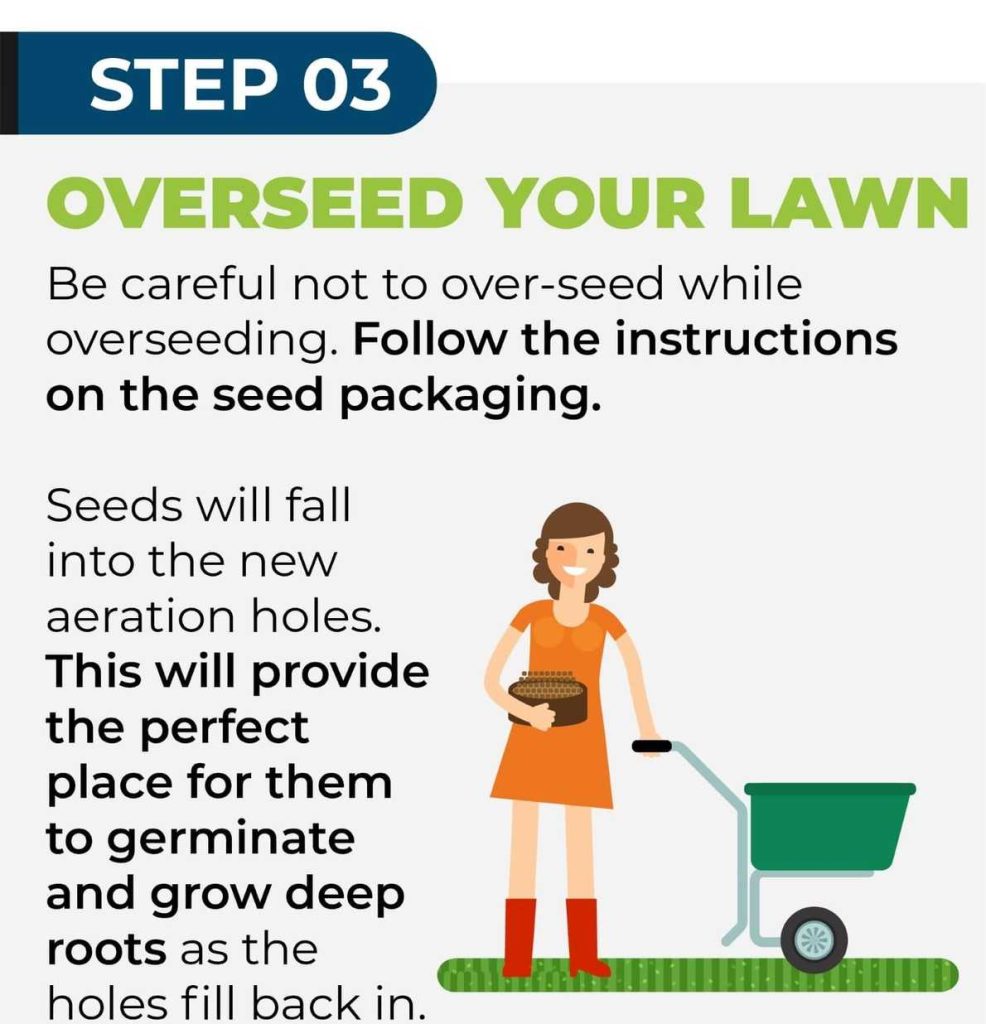
Overseeding is the process of planting grass seeds directly into existing grass without tearing up the lawn. It helps to fill in bare patches and improve the overall density of your lawn.
When done alongside aeration, overseeding can provide a robust solution to lawn problems. The newly planted seeds have a better chance of rooting due to the improved soil conditions created by aeration.
Benefits of Overseeding
There are several advantages to overseeding your lawn:
- Improves grass density, making the lawn appear fuller
- Enhances disease resistance in your lawn
- Helps prevent weeds by outcompeting them
- Promotes a more vibrant color in your lawn
These benefits can lead to a healthier and more attractive yard.
When to Overseed Your Lawn
Timing is also essential when overseeding. For most regions:
- Cool-season grasses: The ideal times are early spring and early fall, similar to aeration.
- Warm-season grasses: Late spring and early summer are the best times.
Ensure the soil temperature is conducive for seed germination.
How to Overseed Your Lawn
Here are the steps to effectively overseed your lawn:
- Aerate your lawn: As mentioned, aerating before overseeding opens up the soil for better seed contact.
- Choose the right seeds: Select seeds that match your existing grass type for the best results.
- Spread the seeds: Use a spreader for even distribution and follow the recommended seeding rate.
- Water your lawn: After overseeding, keep the soil moist to aid germination.
Following these steps can help ensure successful overseeding.
How to Care for Your Lawn Post-Aeration and Overseeding
Once you have aerated and overseeded, ongoing care is essential. Here are some tips:
- Keep the soil moist but not waterlogged.
- Avoid heavy foot traffic for a few weeks to allow new seeds to establish.
- Apply a light layer of topsoil or compost for added nutrition.
- Consider applying a starter fertilizer to help your new seeds grow.
Proper post-care enhances the potential for a successful lawn.
Common Mistakes to Avoid
While aerating and overseeding, you may run into several pitfalls. Here are some common mistakes to avoid:
- Not aerating enough: Ensure the holes are spaced correctly for maximum effectiveness.
- Choosing the wrong seed: Always match your grass type to ensure compatibility.
- Failing to water: Keep the soil moist after overseeding for better germination.
Being aware of these mistakes can save you time and effort.
Tools Needed for Aeration and Overseeding
Using the right tools makes the process much easier. Essential tools include:
- Aerator (manual or mechanical)
- Seed spreader (for even seed distribution)
- Rake (to cover seeds lightly or break up soil)
- Watering can or hose (for keeping the soil moist)
Having these tools on hand will simplify your lawn care routine.
Aerating and overseeding your lawn can significantly enhance its health and appearance. By following the outlined steps, you can enjoy a lush, vibrant yard that stands up to the elements. Remember to aerate regularly, overseed as needed, and care for your lawn diligently after these processes. With dedication and proper techniques, your lawn can become the envy of the neighborhood, providing a beautiful outdoor space for you and your family to enjoy.
“`
Aerating & Overseeding a Lawn – How To
Frequently Asked Questions
“`html
What tools do I need to aerate my lawn?
To aerate your lawn effectively, you will need a core aerator or a spike aerator. A core aerator removes small plugs of soil, allowing air, water, and nutrients to penetrate the soil more effectively. You can rent a core aerator from a local garden center if you don’t own one. Additionally, you may need a rake to level the soil after aeration and a lawn spreader for distributing seeds evenly during overseeding.
When is the best time to aerate and overseed my lawn?
The optimal time to aerate and overseed your lawn typically falls in early spring or early fall. During these seasons, the soil is warm enough for seed germination and the cooler temperatures support healthy grass growth. Avoid aerating during hot summer months or when the grass is dormant in winter to prevent stress on the lawn.
How can I ensure successful overseeding after aeration?
To achieve successful overseeding, follow these steps: First, aerate the lawn to create holes that allow the new seeds to be nestled in the soil. Next, choose a high-quality grass seed that matches your existing lawn type. Spread the seed evenly over the aerated area using a broadcast or drop lawn spreader. Finally, water the newly seeded area consistently to keep the soil moist until the seeds germinate, which usually takes about 7 to 14 days.
Should I fertilize after aerating and overseeding?
Yes, applying fertilizer after aerating and overseeding can significantly enhance the growth of the new grass. Use a starter fertilizer that is high in phosphorus to promote root establishment. Apply it according to the manufacturer’s instructions to avoid over-fertilizing, which can harm both new and existing grass.
How often should I water my lawn after overseeding?
After overseeding, water your lawn lightly but frequently to keep the top inch of soil consistently moist. Typically, you should water twice a day for the first week, then gradually reduce the frequency as the grass grows. Once the new grass reaches about 3 inches tall, you can switch to a deeper, less frequent watering schedule to encourage deeper root growth.
“`
Final Thoughts
Aerating and overseeding your lawn is a vital step for promoting healthy grass growth. Start by using a lawn aerator to create small holes in the soil, allowing air, water, and nutrients to penetrate deeper.
Next, spread high-quality grass seed evenly across the lawn to fill in bare spots and improve density. Regular watering and maintenance will support the new growth.
In summary, knowing how to aerate and overseed lawn effectively sets the stage for a lush, vibrant yard. With the right approach, your lawn can thrive for years to come.