If you've noticed brown patches pulling up like loose carpet on your lawn, grubs are probably the culprit. Figuring out how often to apply GrubEx isn't as simple as marking your calendar once a year. The right schedule depends on which formula you're using, what's happening in your soil right now, and whether you're trying to prevent an outbreak or stop one that's already underway.
Here's the thing most people miss: GrubEx isn't a one-size-fits-all product. Scotts makes two distinct formulas with completely different active ingredients and application windows. Get the timing wrong and you've wasted money and left your turf exposed.
Let's walk through exactly how to figure out the right schedule for your lawn.
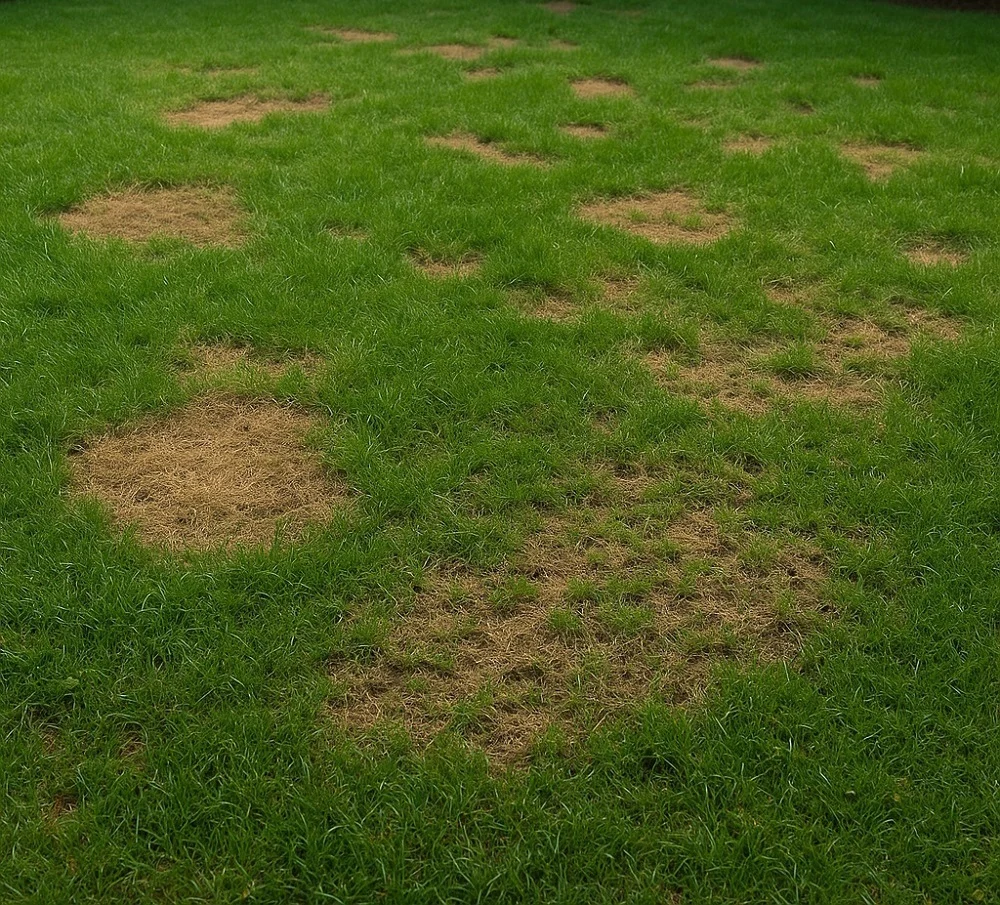
Image source: Bing (Web (fair-use with source credit))
Quick Answer
Apply preventive GrubEx once per season. The window runs from late spring through midsummer. Curative GrubEx targets active infestations in mid to late summer.
You should never apply either formula more than once per year unless the label explicitly permits a follow-up. Timing matters more than frequency with grub control.
Why Your GrubEx Timing Matters More Than You Think
Grub control lives and dies by timing. The product sitting in your garage won't help you if you spread it two months too early or three weeks too late. That's because grubs, the larval stage of beetles like Japanese beetles and European chafers, follow a predictable life cycle.
Your job is to intercept them at the right point.
Preventive GrubEx works by creating a protective zone in your soil. When grubs hatch and start feeding on roots, they ingest the active ingredient and stop feeding within hours. But this only works if the product is already in the ground when those eggs hatch.
Apply too early and the residual breaks down before the grubs show up. Apply too late and the young larvae have already done serious root damage.
Curative GrubEx takes a different approach. It kills grubs on contact and through ingestion, but it works best on young, small larvae. Once grubs reach their third instar stage in late fall, they're much harder to kill.
That's why curative applications target the July through September window when grubs are small and actively feeding near the soil surface.
The bottom line: applying GrubEx at the wrong time is almost as bad as not applying it at all.
How GrubEx Actually Works (Preventive vs. Curative)
Understanding the difference between these two approaches is the key to getting your timing right.
Preventive GrubEx uses chlorantraniliprole as its active ingredient. This compound has low water solubility, which means it binds to soil organic matter and stays put. It doesn't need to move through the soil profile.
It just needs to be there when newly hatched grubs start feeding. One application provides season-long protection because the compound remains active in the root zone for months.
Curative GrubEx uses trichlorfon, a fast-acting organophosphate. This compound works quickly but breaks down faster in soil. It's designed to knock down an active infestation, not provide months of residual protection.
You apply it when you see damage or confirm grub presence, and it kills existing larvae within days.
Here's a simple way to think about it. Preventive GrubEx is like putting up a fence before the deer arrive. Curative GrubEx is like chasing the deer out after they've already eaten your garden.
| Feature | Preventive GrubEx | Curative GrubEx |
|---|---|---|
| Active ingredient | Chlorantraniliprole | Trichlorfon |
| Speed of action | Slow (stops feeding over hours to days) | Fast (kills within 1-3 days) |
| Residual protection | Season-long (4-6 months) | Short (days to weeks) |
| Best application window | April through August | July through September |
| Target grub stage | Newly hatched larvae | Young, actively feeding larvae |
| Application frequency | Once per year | Once per year (follow-up rare) |
The Two GrubEx Formulas and When Each One Makes Sense
Scotts currently markets two main GrubEx products, and choosing the wrong one for your situation is the most common mistake homeowners make.
GrubEx Season-Long Grub Control (the preventive formula) contains chlorantraniliprole. This is the one most homeowners should reach for. You apply it once during the spring or summer, water it in, and you're covered for the entire grub season.
It targets Japanese beetle grubs, European chafer grubs, and several other common species. The key is applying it before eggs hatch, which in most of the US means getting it down between April and August depending on your region.
GrubEx2 (the curative formula) contains trichlorfon. This is your rescue product. You use it when you've already found grubs in your lawn or noticed the telltale signs of damage.
It works fast but doesn't stick around. If you apply this in spring, you'll have no protection by the time grubs actually hatch in midsummer. That's why curative formulas are strictly a mid to late summer play.
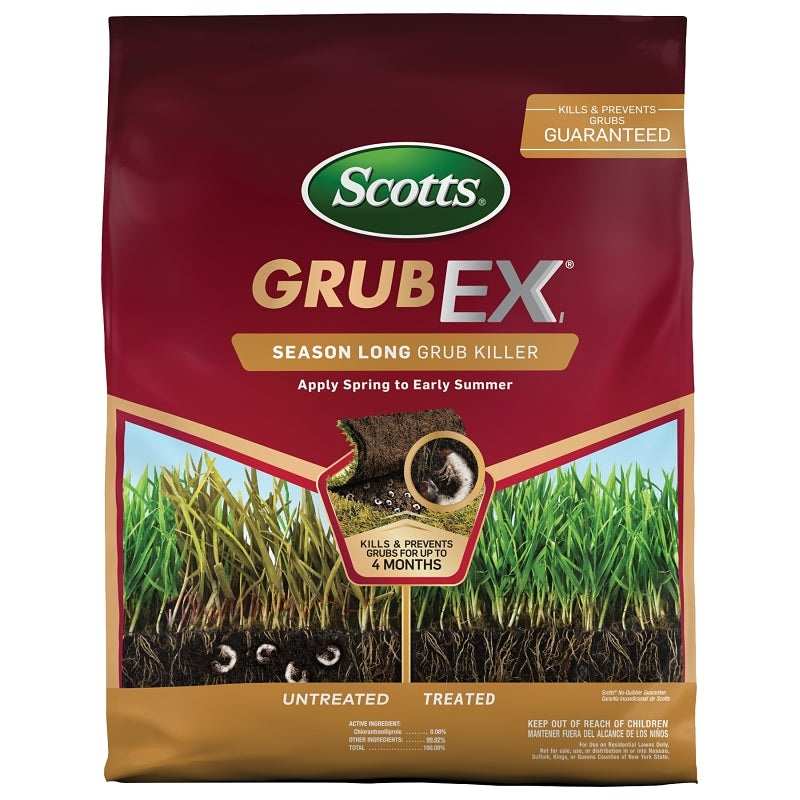
Image source: Bing (Web (fair-use with source credit))
A common scenario: a homeowner sees grub damage in September, buys preventive GrubEx, and applies it. The product sits in the soil all winter doing nothing because there are no active grubs to target. By the following summer, the residual has degraded.
The grubs come back. Now the homeowner thinks the product doesn't work. The product was fine.
The timing was wrong.
Decision Tree: Which Formula and What Timing for Your Lawn
Let's cut through the confusion with a straightforward decision process. Answer these three questions and you'll know exactly what to do.
Step 1: Are You Preventing or Treating?
If you had grubs last year or your neighbor's lawn got hit, you're in prevention mode. Grab preventive GrubEx and apply it during the spring or summer window. If you're currently seeing brown patches that peel back easily, or you've dug up a square foot of turf and found more than 5-10 grubs, you need curative GrubEx right now.
Step 2: What's Your Region and Grass Type?
Your location determines when beetles lay eggs and when those eggs hatch. In the northern US and cool-season grass regions, Japanese beetles typically lay eggs in July and August. That means preventive GrubEx should go down in June or July before hatch.
In the southern US with warm-season grasses, the cycle shifts earlier. You may need to apply as early as April or May.
University extension programs across the country publish local grub emergence calendars. Check your state's extension website for specific timing recommendations based on the beetle species in your area.
Step 3: What Time of Year Is It Right Now?
This is where most people either nail it or miss completely.
- Spring (March through May): Apply preventive GrubEx if you're in the South or transition zone. Northern lawns can wait another month or two.
- Early summer (June through July): Prime time for preventive application across most of the US. Get it down and watered in before peak egg hatch.
- Midsummer through early fall (August through September): If you missed the preventive window, switch to curative GrubEx. Look for active damage and treat immediately.
- Late fall through winter (October through February): Don't apply anything. Grubs have moved deep into the soil and neither formula will be effective. Mark your calendar for next spring.
The simplest rule: if you're going to use preventive GrubEx, one application between April and August is all you need. If you're using curative GrubEx, one application between July and September handles the active infestation. Never apply more than once per year unless the product label specifically allows a second treatment.
The Grub Life Cycle and Why It Dictates Your Schedule
Everything comes back to the grub life cycle. If you understand when eggs hatch, when larvae feed, and when they burrow deep for winter, the right application timing becomes obvious.
Adult beetles emerge from soil in early summer. Japanese beetles typically appear in June and July across the Midwest and Northeast. European chafers show up around the same time.
These adults feed on trees and shrubs for a few weeks, then females burrow into moist turf to lay eggs. A single female can lay 40 to 60 eggs in her lifetime.
Those eggs hatch within two to three weeks. The tiny larvae, called first instar grubs, immediately start feeding on grass roots near the soil surface. This is the vulnerable stage.
They're small, they're close to the surface, and they're actively ingesting whatever is in the root zone. This is exactly when preventive GrubEx does its job.
Grubs go through three growth stages over the summer. By late August and September, they're larger and feeding more aggressively. This is when visible damage appears.
Brown patches spread. The turf feels spongy underfoot. Animals like skunks and raccoons start tearing up the lawn overnight to feed on the grubs.

Image source: Bing (Web (fair-use with source credit))
Once soil temperatures drop below 50°F, grubs burrow several inches deep to overwinter. They're essentially unreachable at this point. They return to the root zone the following spring, feed briefly, then pupate and emerge as adult beetles.
The cycle repeats.
This is why preventive GrubEx needs to go down before egg hatch. The product has to be waiting in the soil when those first instar grubs start feeding. If you apply in spring, the residual is in place by the time beetles lay eggs in early summer.
If you wait until fall, you've missed the window entirely.
How to Apply GrubEx Correctly (So It Actually Works)
Getting the product on your lawn is straightforward. Getting it right takes a few specific steps.
First, mow your lawn a day or two before application. You want the grass short enough that the granules reach the soil surface rather than getting trapped in tall turf. Bag the clippings or rake them up so nothing blocks the granules from reaching the ground.
Next, check your spreader setting. Scotts products are designed to work with Scotts spreaders, and the label provides specific settings for each model. If you're using a generic broadcast or drop spreader, start with a low setting and do a test pass on your driveway or a sidewalk.
You want even coverage with no heavy streaks or bare spots.
Apply the granules in a crisscross pattern. Make one pass across the lawn horizontally, then a second pass vertically. This gives you the most even distribution.
Overlapping too much in some areas and skipping others leads to patchy results.
The most critical step comes after spreading. You need to water the lawn with a quarter to half inch of water within 24 hours of application. This activates the granules and moves the active ingredient into the top inch of soil where grubs feed.
Without this watering step, the product just sits on the surface and degrades in sunlight.
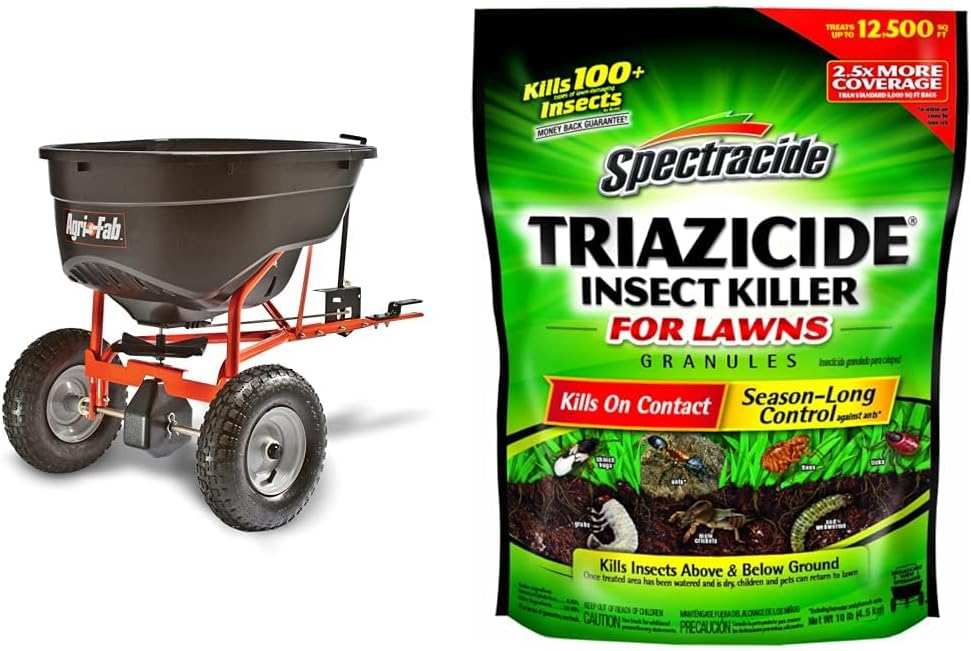
Image source: Bing (Web (fair-use with source credit))
Don't apply GrubEx right before a heavy rainstorm. A downpour can wash granules off the lawn into storm drains and waterways. This is both wasteful and environmentally problematic, especially with products containing chlorantraniliprole.
Check the forecast and aim for a calm day where you can control the watering yourself.
One more thing: don't apply to frozen or saturated ground. The granules need to reach soil, not ice or standing water. If your lawn is waterlogged from spring rains, wait a day or two for things to dry out.
Common Mistakes That Waste Your Time and Money
Even when homeowners buy the right product, several mistakes can sabotage the results.
Applying preventive GrubEx in fall. This is the single most common error. By September or October, grubs are large and have already caused damage. Preventive formula won't kill established larvae effectively.
You've spent money on a product that can't do what you need right now.
Skipping the watering step. Granules left on the surface lose effectiveness fast. UV exposure breaks down the active ingredient. Without water to move it into the soil, you're getting maybe half the labeled performance.
Some homeowners spread the product and forget to water entirely. Others water too lightly, barely dampening the surface.
Using curative GrubEx as a preventive. Trichlorfon breaks down in soil within days to weeks. If you apply curative GrubEx in May, there's nothing left by July when grubs actually hatch. You've got no protection during the critical window.
Applying too much product. More is not better. Over-application doesn't improve control. It increases cost and raises the risk of runoff into waterways.
Follow the labeled rate for your lawn size.
Treating the whole lawn when only part has grubs. If you've confirmed grub damage in one area, you can spot-treat rather than blanketing the entire property. This saves money and reduces the total chemical load on your property.
Ignoring the label instructions. The product label is a legal document. It specifies application rates, timing, safety precautions, and environmental restrictions. Some states have additional regulations on certain active ingredients.
Always read the full label before opening the bag.
GrubEx vs. Other Grub Control Options
GrubEx isn't the only game in town. Depending on your situation, other products or methods might make more sense.
Merit (imidacloprid) works similarly to preventive GrubEx. It's a neonicotinoid that provides season-long control when applied before egg hatch. However, imidacloprid faces increasing restrictions due to concerns about pollinator exposure.
Several states have limited or banned its use on residential lawns. Chlorantraniliprole in GrubEx has a more favorable environmental profile in comparison.
Dylox (trichlorfon) is the same active ingredient found in curative GrubEx. Professional lawn care companies often use it for fast knockdown of active infestations. The main difference is availability.
Dylox is sometimes sold in higher concentration formulations for commercial use.
Beneficial nematodes offer a biological control option. These microscopic worms seek out grubs in the soil and release bacteria that kill them. They work best on young grubs in late summer.
The downside is they require careful handling, proper soil moisture, and precise timing. They're also more expensive per application than chemical options.
Milky spore disease targets Japanese beetle grubs specifically. It's a bacterium that infects and kills larvae, then spreads through the soil over time. The catch is it takes two to five years to establish fully.
It's a long-term investment, not a quick fix.
Acelepryn (chlorantraniliprole) is the same active ingredient as preventive GrubEx, often sold under professional brand names. If you're hiring a lawn care service, this is likely what they're applying.
For most homeowners dealing with common white grub species, preventive GrubEx offers the best balance of effectiveness, ease of use, and cost. The one-application-per-season simplicity is hard to beat.
Real Scenarios: What to Do Based on Your Lawn Right Now
Let's put this into practice with a few common situations.
Scenario 1: You had grubs last year and want to prevent them this year. Apply preventive GrubEx in June or July. Water it in thoroughly. You're covered for the season.
No second application needed.
Scenario 2: You're seeing brown patches in August and find 8 grubs per square foot when you dig. This is an active infestation. Apply curative GrubEx immediately. Water it in.
You should see reduced feeding within a few days. Mark your calendar to apply preventive GrubEx next June to break the cycle.
Scenario 3: Your lawn looks fine but your neighbor's yard got destroyed by grubs last summer. You're in prevention mode. Apply preventive GrubEx during the summer window for your region. Don't wait for damage to appear.
By the time you see brown patches, the grubs have been feeding for weeks.
Scenario 4: It's October and you just discovered grubs. Don't apply anything now. Grubs are preparing to overwinter deep in the soil. Neither formula will be effective.
Note the problem and plan a preventive application for next summer. If damage is severe, consider reseeding bare areas in early spring.
Scenario 5: You applied preventive GrubEx in July but still see some damage in September. Check your application. Did you water it in properly? Did you use the correct spreader setting?
If the application was done correctly, a few grubs may have survived. Light damage doesn't always require treatment. Monitor the lawn and plan another preventive application next year.
Costs, Coverage, and What to Expect
A standard bag of preventive GrubEx covers roughly 5,000 square feet. Larger bags extend that to 7,500 square feet or more. Most bags retail between $15 and $25 depending on size and retailer.
That works out to a few cents per square foot for season-long protection.
Curative GrubEx pricing is similar. The cost difference between formulas is minimal. The real savings come from preventing damage rather than repairing it.
Resodding a grub-damaged lawn can run several dollars per square foot. Prevention is dramatically cheaper than replacement.
After applying preventive GrubEx, you won't see immediate results because there's nothing visible to stop. The product works quietly in the soil. With curative GrubEx, you should notice reduced grub activity within a few days.
Dead grubs may appear near the surface. Animal digging should taper off within a week.
When to Call in a Pro Instead
If your grub count exceeds 15 per square foot across large areas, a professional lawn care service may be warranted. They have access to commercial-grade products and equipment for more thorough coverage. Pros can also identify grub species and tailor treatment accordingly.
Professional applications typically cost $50 to $100 per treatment depending on lawn size and location. For severe infestations or large properties, this can be worth the investment.
Frequently Asked Questions
Can I apply GrubEx twice in one year?
The label generally permits one application per year for preventive GrubEx. Curative formulas may allow a second treatment in severe cases, but always follow the specific product label. Over-application wastes money and increases environmental risk.
What happens if I apply GrubEx too early?
If you apply preventive GrubEx in early spring, the residual may degrade before peak egg hatch in midsummer. You could lose protection during the critical window. Aim for late spring or early summer for best results.
Will GrubEx kill earthworms?
Chlorantraniliprole has low toxicity to earthworms compared to older insecticides. Trichlorfon is more broad-spectrum and may impact earthworm populations. If earthworm preservation is a priority, preventive GrubEx is the better choice.
Can I apply GrubEx before rain?
Light rain after application is fine and actually helps water the product in. Heavy rain can cause runoff and waste product. Check the forecast and avoid application if heavy storms are expected within 24 hours.
How long does GrubEx stay in the soil?
Chlorantraniliprole provides season-long residual activity, typically four to six months. Trichlorfon breaks down much faster, often within days to weeks. This is why preventive and curative formulas serve different purposes.
Your GrubEx Decision Guide: A Quick Reference
If you're preventing grubs and it's spring or summer, grab preventive GrubEx and apply once. Water it in. You're done for the year.
If you're treating active damage in mid to late summer, use curative GrubEx. Apply immediately, water thoroughly, and plan a preventive application next year to break the cycle.
If it's fall or winter, don't apply anything. Mark your calendar and handle it next spring.
The right product at the right time, applied correctly, keeps your lawn healthy and grub-free without unnecessary treatments or expense.