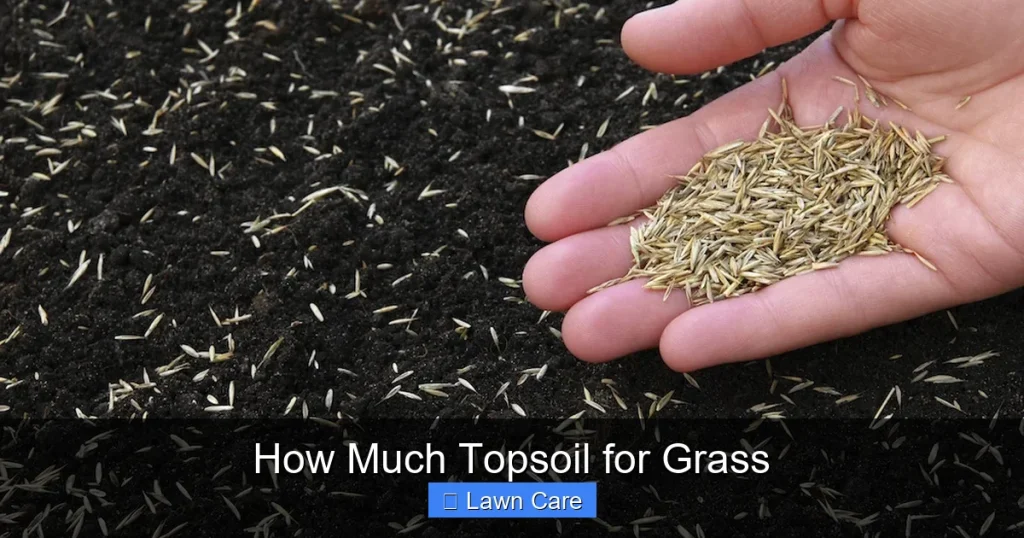
Determining the right amount of topsoil for your grass is crucial for a healthy, vibrant lawn. This guide breaks down how to calculate your needs based on area and desired depth, explains the best ways to apply it, and offers tips for success. By following these steps, you’ll ensure your grass has the ideal foundation for growth.
How Much Topsoil for Grass
Welcome to your comprehensive guide on how much topsoil you need for your grass! A lush, green lawn doesn’t just happen by magic. It starts from the ground up, and that ground needs to be the right kind of foundation. Topsoil is the lifeblood of a healthy lawn, providing essential nutrients, moisture retention, and a stable base for grass roots to thrive.
Whether you’re starting a new lawn from scratch, reviving a struggling patch, or simply leveling out some uneven areas, knowing how much topsoil to buy is a common question. Too little, and your grass might suffer. Too much, and you’ve wasted money and effort. This guide will walk you through everything you need to know, from calculating your needs to applying it correctly.
By the end of this article, you’ll be equipped to:
- Understand why topsoil is crucial for grass growth.
- Accurately measure your lawn area and determine the necessary depth of topsoil.
- Calculate the exact volume of topsoil you need in cubic yards.
- Learn the best practices for applying topsoil to your lawn.
- Get tips for choosing the right type of topsoil for your needs.
Let’s get started on creating the best possible environment for your lawn to flourish!
- Accurate Measurement is Key: Always measure your lawn’s area (length x width) and decide on the desired topsoil depth (typically 2-6 inches) to calculate the total volume needed.
- Understand Volume Calculations: Topsoil is sold by cubic yards, so convert your measurements (in feet) to cubic yards using the formula: (Length x Width x Depth) / 27.
- Consider Existing Soil Conditions: If you’re amending poor soil, you might need more topsoil than if you’re simply leveling a small area. Addressing existing soil issues is vital for new grass seed success.
- Topsoil Quality Matters: Opt for high-quality, screened topsoil that is free of rocks and debris for optimal drainage and nutrient content.
- Application Techniques: Spread topsoil evenly using a shovel and rake, or use a wheelbarrow and tarp for larger areas. Avoid piling it too high against tree trunks or house foundations.
- Allow for Settling: Topsoil will settle over time. Account for this by adding a little extra, or be prepared to top up after the initial settling period.
- Proper Watering is Essential: Once topsoil is applied, keep it consistently moist until grass is established, as discussed in guides on how to maintain soil moisture for healthy grass.
Why Topsoil is Essential for a Healthy Lawn
Before we dive into calculations, let’s quickly touch on why topsoil is so important. Think of it as the pantry and foundation for your grass.
- Nutrient Rich: Topsoil is the uppermost layer of soil, rich in organic matter and essential nutrients that grass needs to grow strong and healthy.
- Moisture Retention: Good topsoil holds moisture, preventing your lawn from drying out too quickly, especially during hot weather. This is crucial for grass survival, as inconsistent watering can lead to stress.
- Root Development: It provides a loose, friable medium for grass roots to penetrate deeply, anchoring the plant and allowing it to access water and nutrients more effectively.
- Drainage: While it retains moisture, quality topsoil also allows for proper drainage, preventing waterlogged conditions that can kill grass and encourage disease.
- Leveling and Soil Amendment: Topsoil is used to fill in low spots, smooth out bumps, and improve the overall quality of existing soil, especially if you have poor clay or sandy soil. If you have sandy soil, understanding how much topsoil over sand to grow grass is particularly important.
Step 1: Measure Your Lawn Area
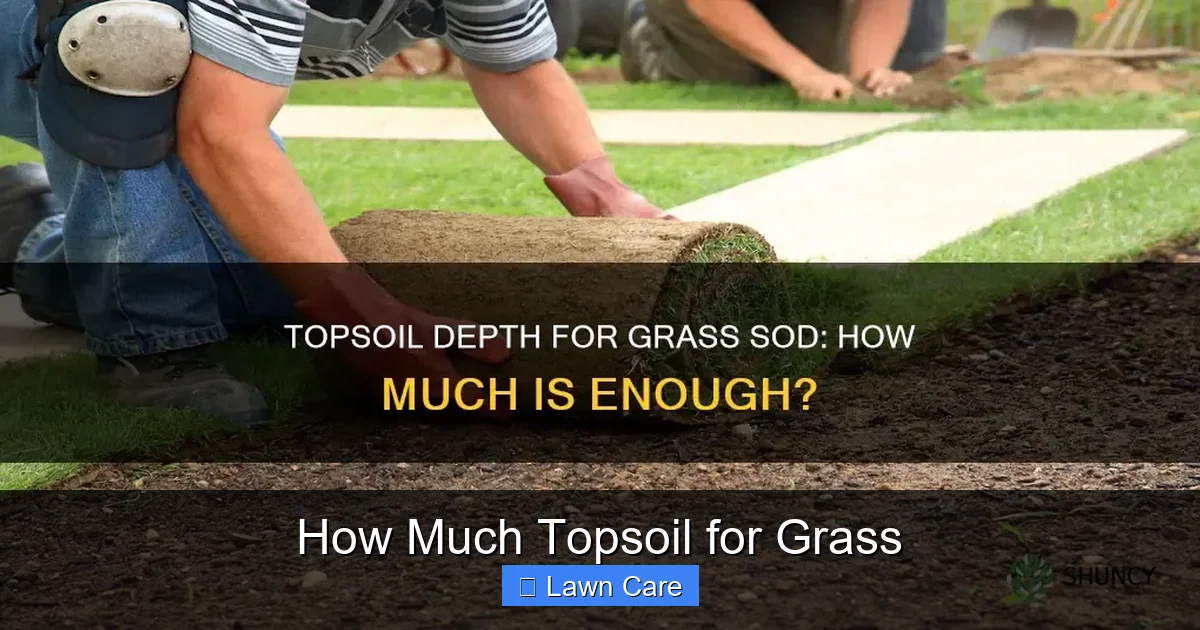
Visual guide about How Much Topsoil for Grass
Image source: shuncy.com
The first step to determining how much topsoil you need is to know the size of the area you’ll be covering.
Calculate Square Footage
This is a straightforward process for most rectangular or square lawns.
- Measure the Length: Use a tape measure to find the longest side of your lawn area.
- Measure the Width: Measure the shorter side of your lawn area.
- Multiply: Multiply the length by the width to get the total square footage.
Formula: Length (feet) x Width (feet) = Square Footage
Example: If your lawn area is 50 feet long and 30 feet wide, its square footage is 50 x 30 = 1500 square feet.
Irregularly Shaped Areas
If your lawn has curves or is an unusual shape, you can break it down into smaller, more manageable geometric shapes (rectangles, squares, triangles, circles) and calculate the area of each. Then, add all the individual areas together. For very complex shapes, you can use online area calculators or apps that allow you to draw the shape on a map.
Step 2: Determine the Desired Topsoil Depth
Visual guide about How Much Topsoil for Grass
Image source: springbridge.co.uk
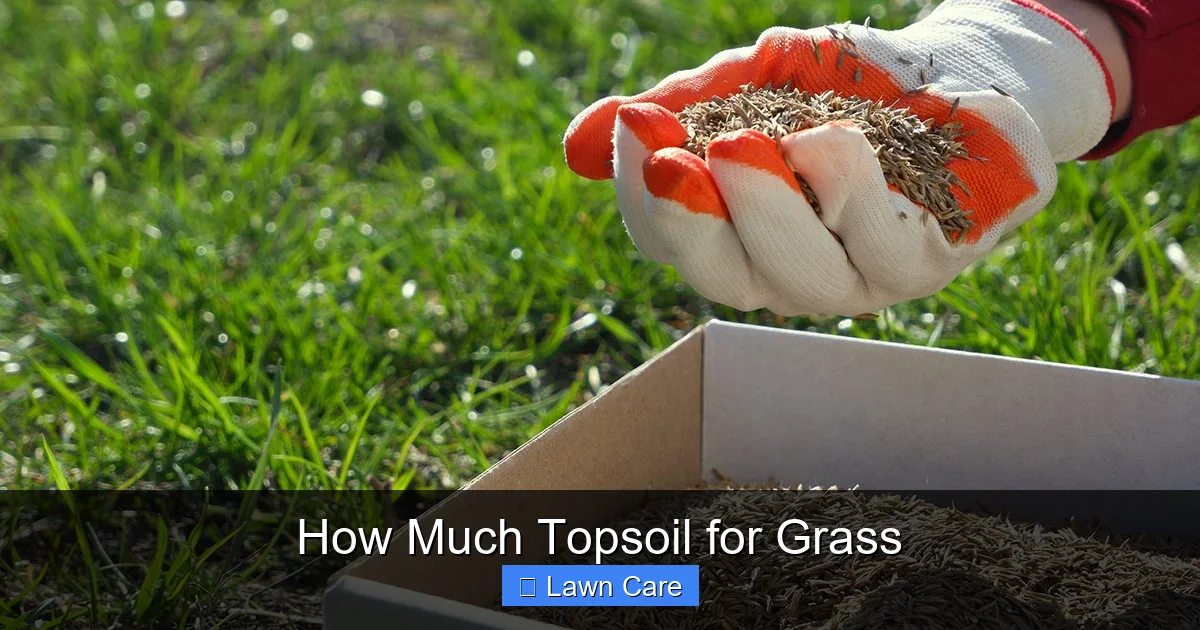
The next crucial factor is how deep you want or need to apply the topsoil. This depends on your goal.
Typical Depth Recommendations
- New Lawn Seeding: For new grass seed, a depth of 2 to 6 inches is generally recommended. This provides ample room for root establishment and nutrient availability. A good starting point is often 4 inches.
- Overseeding: If you’re overseeding an existing lawn and the primary goal is to improve the soil surface and fill in bare patches, a thinner layer of 1 to 2 inches might suffice.
- Leveling Uneven Areas: For minor leveling, you might only need a very thin layer (less than an inch) in certain spots. For significant unevenness, you might need several inches in some areas and less in others.
- Amending Poor Soil: If you have very poor soil (e.g., heavy clay or pure sand), you might aim for a deeper application, up to 6 inches or more, to significantly improve the soil structure. Check out resources on how to improve clay soil for better grass growth for specific advice.
Important Consideration: Always aim for a depth that will be absorbed by the existing soil or that you can effectively rake and level. Extremely deep applications can sometimes lead to drainage issues if not managed properly.
Step 3: Calculate the Volume of Topsoil Needed
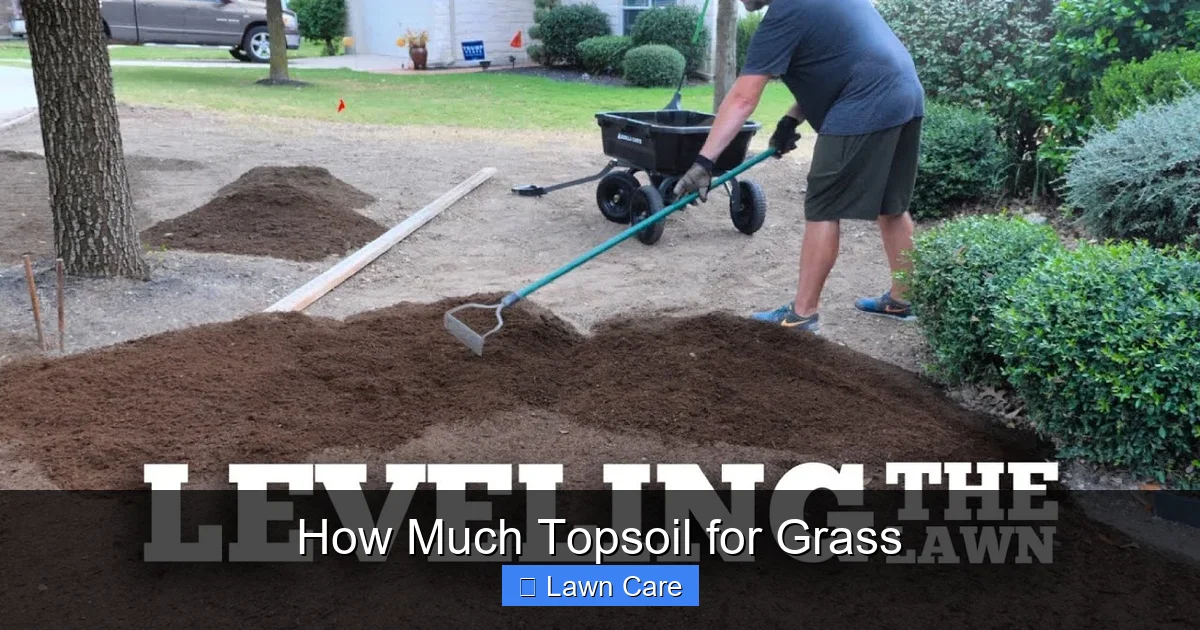
Visual guide about How Much Topsoil for Grass
Image source: i.ytimg.com
Now that you have your square footage and desired depth, you can calculate the total volume of topsoil required. Topsoil is typically sold by the cubic yard.
Convert Depth to Feet
Your depth measurement will likely be in inches. You need to convert this to feet before calculating volume.
Formula: Depth (inches) / 12 = Depth (feet)
Example: For a 4-inch depth: 4 inches / 12 = 0.33 feet.
Calculate Cubic Feet
Now, multiply your square footage by your depth in feet to get the total volume in cubic feet.
Formula: Square Footage x Depth (feet) = Cubic Feet
Example: Using our previous example of 1500 square feet and a 4-inch (0.33 feet) depth: 1500 sq ft x 0.33 ft = 495 cubic feet.
Convert Cubic Feet to Cubic Yards
Since topsoil is sold by the cubic yard, you need to convert your cubic feet measurement. There are 27 cubic feet in 1 cubic yard.
Formula: Cubic Feet / 27 = Cubic Yards
Example: Continuing with our 495 cubic feet: 495 cubic feet / 27 = 18.33 cubic yards.
So, for a 1500 square foot area requiring a 4-inch topsoil depth, you would need approximately 18.33 cubic yards of topsoil.
Step 4: Consider Waste and Settling
It’s always a good idea to order a little more topsoil than your exact calculation. This accounts for several factors:
- Settling: Topsoil, especially if it’s rich in organic matter, will settle and compact over time. You might lose 10-20% of the volume due to settling.
- Spillage and Waste: Some soil might spill during transport or application.
- Uneven Spreading: It’s hard to spread perfectly evenly across a large area.
Recommendation: Add an extra 10-15% to your calculated volume.
Example: If you calculated you need 18.33 cubic yards, add 10%: 18.33 x 0.10 = 1.83 cubic yards.
Total needed: 18.33 + 1.83 = 20.16 cubic yards.
Round this up to 20.5 or 21 cubic yards for good measure.
Step 5: Choosing the Right Topsoil
Not all topsoil is created equal. The type you choose can significantly impact your lawn’s success.
Types of Topsoil
- Screened Topsoil: This is the most common type. It has been put through a screen to remove large rocks, debris, and clumps, providing a finer, more workable texture.
- Unscreened Topsoil: This is less common and usually cheaper but contains more rocks and debris. It’s generally not recommended for lawns unless you plan to screen it yourself or have very specific soil amendment needs.
- Composted Topsoil: This topsoil has a high percentage of compost mixed in, making it extremely rich in organic matter and nutrients. It’s excellent for improving soil structure and fertility.
What to Look For
- Texture: It should be dark brown and crumbly, not compacted or overly sandy/gritty.
- Odor: It should smell earthy, not sour or foul.
- Absence of Weeds/Pests: Ensure it looks clean and free from obvious weed seeds or signs of pests.
- Local Sourcing: Topsoil sourced locally is often best as it’s already adapted to your climate and soil conditions.
When in doubt, ask your supplier about the composition of their topsoil and its intended use. If you’re starting a new lawn, consider resources on how to choose the right soil for new grass seed.
Step 6: Applying Topsoil to Your Lawn
Once you have your topsoil delivered, it’s time to spread it. The method will depend on the quantity and your equipment.
For Smaller Quantities (Under 1 Cubic Yard)
- Tarp Method: Have the topsoil dumped onto a large tarp. You can then easily drag the tarp to where you need it or use a wheelbarrow to scoop from the tarp.
- Wheelbarrow and Shovel: Use a wheelbarrow to transport the topsoil and a shovel to spread it evenly.
For Larger Quantities (1+ Cubic Yard)
- Wheelbarrow and Shovel: This is still feasible but will take more time and effort.
- Dump Trailer or Truck: If you have access to a dump trailer or truck, you can get closer to the application area.
- Professional Delivery: Many suppliers offer bulk delivery and can place the topsoil where you request it, though it’s still your responsibility to spread it.
Spreading Techniques
- Start from the Edges: Begin spreading from the perimeter of the area and work your way inward.
- Use a Rake: A landscaping rake (a heavy-duty rake with a wide head) is ideal for spreading topsoil evenly. Work in short, overlapping strokes.
- Leveling: Aim for a consistent depth across the entire area. Fill in low spots and gently grade down any high spots. Avoid creating steep slopes.
- Avoid Piling: Do not pile topsoil against tree trunks, shrubs, or your house foundation. This can cause rot and other damage. Leave a few inches of breathing room.
- Smooth the Surface: Once the bulk of spreading is done, use the flat side of your rake to gently smooth the surface, creating a uniform layer ready for seeding or sodding.
Step 7: Post-Application Care
After the topsoil is spread, your job isn’t quite done. Proper care will ensure your new or improved soil supports healthy grass.
Watering is Crucial
Keep the topsoil consistently moist until grass is established. This is vital for seed germination and root growth. If you’re using seed, the soil surface should never dry out completely. For established grass, maintaining optimal soil moisture prevents drought stress. You can learn more about how to maintain soil moisture for healthy grass to ensure long-term success.
Seeding or Sodding
If you’re planting new grass, now is the time to sow your grass seed or lay sod. Follow best practices for your chosen method. Remember that different grass types have different needs; for example, understanding how much water for Bermuda grass is needed can be specific to the variety.
Compaction
Lightly roll the area if you are seeding to ensure good seed-to-soil contact. Avoid heavy compaction, which can hinder root growth.
Troubleshooting Common Topsoil Issues
Even with careful planning, you might encounter a few issues.
Problem: Topsoil is Too Wet and Clumpy
Solution: If you can, let it dry out a bit before spreading. If it’s already delivered and very wet, it will be harder to spread evenly but not impossible. A heavier rake might be needed.
Problem: Topsoil is Too Dry and Dusty
Solution: Lightly mist it with water as you spread it to control dust and help it settle. Be careful not to make it muddy.
Problem: Topsoil Settles Significantly, Revealing Low Spots
Solution: This is expected to some degree. You may need to do a light top-dressing of additional topsoil or a quality soil amendment in the areas that have sunk considerably after a few weeks.
Problem: Uneven Spreading (High and Low Spots)
Solution: Use your rake to carefully redistribute the topsoil, moving it from high spots to low spots. This might take a few passes.
Conclusion
Calculating how much topsoil for grass you need might seem daunting at first, but by breaking it down into simple steps – measuring, determining depth, calculating volume, and accounting for waste – it becomes a manageable task. The investment in the right amount of quality topsoil will pay dividends in the health, appearance, and resilience of your lawn.
Remember, a well-prepared soil base is the foundation for everything else. Whether you’re sowing grass seed, laying sod, or simply improving your existing lawn, the correct application of topsoil sets the stage for success. Don’t underestimate the power of good soil! Happy lawn care!