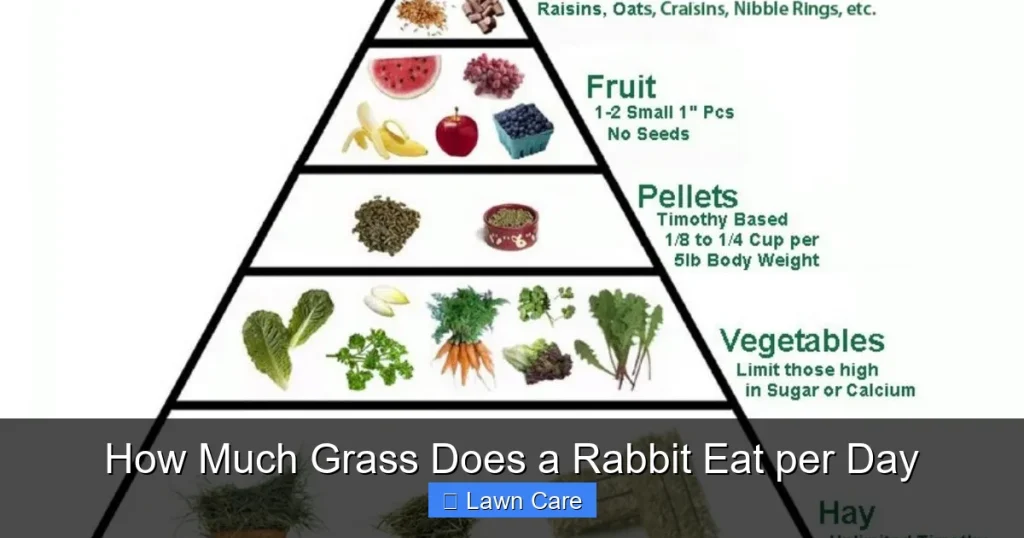
Understanding a rabbit’s daily grass consumption is vital for their health. Rabbits are herbivores, and grass forms the bulk of their diet. This guide explains the factors influencing how much grass a rabbit eats, providing essential insights for pet owners. Proper nutrition leads to a happy, healthy rabbit.
# How Much Grass Does a Rabbit Eat Per Day?
As loving pet owners, we want to provide our furry companions with the best possible care. One of the most fundamental aspects of rabbit ownership is understanding their diet. Many people wonder, “How much grass does a rabbit eat per day?” This is a fantastic question, as grass and hay are the cornerstones of a healthy rabbit diet.
In this comprehensive guide, we’ll delve deep into the dietary needs of rabbits, focusing specifically on grass consumption. We’ll explore why grass is so important, the factors that influence how much a rabbit eats, and practical advice for feeding your bunny the right amount. By the end of this article, you’ll have a clear understanding of how to ensure your rabbit is getting the proper nutrition from grass.
## Understanding a Rabbit’s Digestive System
Before we dive into quantities, it’s crucial to understand why grass is so important for rabbits. Rabbits are herbivores with a unique digestive system designed to process large amounts of fibrous plant matter. Their gastrointestinal tract is sensitive, and it relies on a constant supply of fiber to function correctly.
### The Importance of Fiber
Fiber is the unsung hero of a rabbit’s diet. It aids in digestion, helps prevent common health issues like GI stasis (a serious slowdown of the digestive system), and keeps their teeth worn down. Grass and hay are packed with the type of fiber rabbits need. Without enough fiber, rabbits can suffer from digestive upset, dental problems, and a host of other health concerns.
### Cecotrophy: A Special Digestive Process
Rabbits also practice something called cecotrophy. This is where they produce special droppings called cecotropes, which are rich in nutrients. They then re-ingest these cecotropes, effectively getting a second pass at extracting nutrients from their food. A diet high in fiber is essential for this process to work efficiently.
## How Much Grass is Enough? The General Guideline
So, how much grass does a rabbit actually eat per day? The most important thing to remember is that grass, and by extension, hay, should form the vast majority of your rabbit’s diet.
### The 80-90% Rule
Veterinarians and rabbit nutrition experts generally recommend that about 80-90% of a rabbit’s diet should consist of grass-based foods. This means unlimited access to good quality hay and a generous portion of fresh grass if you are offering it.
### Hay is King
For most rabbit owners, especially those with indoor rabbits, providing unlimited access to hay is the most practical and safe way to meet their grass-based dietary needs. This includes varieties like Timothy hay, orchard grass, or oat hay. Alfalfa hay is higher in calcium and protein and is typically recommended for young, growing rabbits, but not for adult rabbits as their primary hay source.
### Fresh Grass: A Supplement, Not a Replacement
If you have a safe, pesticide-free area of your yard, you can offer your rabbit fresh grass. However, this should be done with caution and is often more of a supplement than the primary source, especially for domesticated rabbits. It’s essential to ensure the grass is free from any chemicals, pesticides, or fertilizers that could be harmful.
## Factors Influencing Grass Consumption
The exact amount of grass a rabbit eats per day isn’t a fixed number. Several factors come into play, making each rabbit’s needs slightly different.
### Age and Life Stage
* **Kittens (under 6 months):** Young rabbits still growing need a balanced diet. While hay should be available, they also benefit from alfalfa hay (higher in protein and calcium) and a good quality rabbit pellet. Their grass consumption will increase as they grow.
* **Adults (over 6 months):** Adult rabbits should primarily be on a diet of unlimited grass hay, fresh leafy greens, and a limited amount of pellets. Their intake of grass (hay) will be substantial.
* **Seniors:** Older rabbits may have slightly different needs, and their appetite might fluctuate. It’s always best to consult a vet for specific dietary recommendations for senior rabbits.
### Weight and Size
Larger breeds or heavier rabbits will naturally consume more food than smaller breeds or lighter rabbits. A general guideline for hay is that a rabbit should eat a pile of hay roughly the size of their own body every day. This is a visual cue rather than a precise measurement, but it gives a good indication of the volume of fibrous food they need.
### Activity Level
Just like humans, more active rabbits burn more calories and will likely have a larger appetite for grass and hay. Rabbits that have plenty of space to run, jump, and play will generally eat more than sedentary rabbits.
### Breed and Genetics
Different rabbit breeds have varying metabolisms and sizes, which can influence their food intake. A giant Flemish Giant will eat significantly more than a Netherland Dwarf.
### Health Status
A healthy rabbit will have a consistent appetite. If your rabbit’s eating habits change suddenly – eating significantly less or more – it could be a sign of a health problem. This is especially true if they stop eating altogether, which can quickly lead to GI stasis.
## Practical Feeding Guidelines for Grass
Understanding the ideal diet is one thing, but putting it into practice is another. Here’s how to ensure your rabbit gets enough grass.
### Step 1: Provide Unlimited Hay
This is the most critical step. Ensure your rabbit always has access to fresh, good-quality grass hay.
* **Type of Hay:** Timothy hay is the gold standard for adult rabbits. Orchard grass and oat hay are also good options.
* **Storage:** Hay should be stored in a dry, well-ventilated place to prevent mold.
* **Presentation:** Use a hay rack, a clean litter box corner, or a simple pile in their enclosure. Many rabbits enjoy eating hay while they toilet, so placing some in or near their litter box is common.
### Step 2: Offer Fresh Greens Daily
In addition to unlimited hay, adult rabbits should be offered a variety of fresh, leafy greens daily. The recommended portion is about one packed cup of greens per two pounds of body weight per day.
* **Variety is Key:** Offer a mix of at least three different types of greens daily. This ensures a broader range of nutrients and helps prevent digestive upset.
* **Safe Greens:** Good options include romaine lettuce, parsley, cilantro, dill, basil, mint, dandelion greens (ensure they are pesticide-free), carrot tops, and bok choy.
* **Limit High-Calcium Greens:** Spinach, kale, and collard greens are nutritious but should be offered in moderation due to their high calcium content.
* **Introduce New Greens Slowly:** When introducing any new food, do so in small amounts to see how your rabbit’s digestive system reacts. Watch for any changes in droppings.
### Step 3: Introduce Fresh Grass Safely (Optional)
If you have access to a safe, untreated lawn, you can offer fresh grass.
* **Pesticide-Free Zone:** This is non-negotiable. Never feed grass that has been treated with chemicals.
* **Gradual Introduction:** Start with very small amounts, perhaps a small handful, and gradually increase the quantity over several days or weeks.
* **Observe Your Rabbit:** Monitor for any signs of digestive upset, such as soft stools or diarrhea. If you notice any problems, discontinue offering fresh grass.
* **Young, Tender Grass:** It’s generally best to offer young, tender grass rather than mature, tough grass.
* **Avoid Certain Plants:** Be aware of toxic plants in your yard. If you’re unsure, it’s best to avoid feeding it.
### Step 4: Limit Pellets
While often seen as a staple, rabbit pellets should be a supplement, not the main food source, for adult rabbits.
* **Adult Rabbits:** About 1/4 cup of high-quality, high-fiber Timothy-based pellets per 5 pounds of body weight per day is usually sufficient.
* **Young Rabbits:** Growing rabbits (under 6-7 months) can have more pellets, and alfalfa-based pellets are often recommended.
* **Quality Matters:** Choose pellets with at least 18-20% fiber and not too much protein or calcium.
### Step 5: Provide Constant Access to Fresh Water
Water is crucial for digestion and overall health. Always ensure your rabbit has access to plenty of fresh, clean water in a heavy ceramic bowl or a sipper bottle. A bowl is generally preferred as it allows for a more natural drinking posture and encourages higher water intake.
## How to Monitor Your Rabbit’s Intake
The best way to know if your rabbit is eating enough grass (hay) is to observe them and their environment.
### The Hay Pile Test
As mentioned, a good visual is the “body-sized hay pile.” If you replenish their hay rack or pile daily and it’s consistently eaten down, they are likely consuming enough. You should see a steady consumption of hay throughout the day.
### Droppings as Indicators
A healthy rabbit produces numerous, round, firm droppings. If your rabbit’s droppings become small, misshapen, or stop altogether, this is a serious sign that their digestive system is not functioning correctly, often due to a lack of fiber or other dietary issues. This is a veterinary emergency. Conversely, very large or loose droppings might indicate too much of certain greens or a dietary imbalance.
### Body Condition
Regularly feel your rabbit’s spine and ribs. You should be able to feel them easily, but they shouldn’t be sharply protruding (underweight) or difficult to feel at all (overweight). A healthy body condition indicates they are eating appropriately.
## Troubleshooting Common Issues
Sometimes, despite best efforts, owners encounter issues related to their rabbit’s diet.
### My Rabbit Isn’t Eating Enough Hay
* **Freshness:** Is the hay fresh? Old, dusty, or moldy hay can be unappetizing.
* **Variety:** Have you tried different types of grass hay? Some rabbits have preferences.
* **Presentation:** Is the hay easily accessible? Try a different hay feeder or a simple pile.
* **Too Many Pellets/Treats:** Are you overfeeding pellets or giving too many treats? This can reduce their appetite for hay.
* **Underlying Health Issue:** If a rabbit refuses to eat hay, it’s crucial to rule out any dental problems or GI issues with a veterinarian.
### My Rabbit is Eating Too Much (Appears Overweight)
* **Pellets:** Reduce the amount of pellets offered.
* **Treats:** Eliminate or severely limit treats.
* **Greens:** Ensure you are offering the correct portion of greens (1 cup per 2 lbs body weight) and not too many calorie-dense or sugary options.
* **Exercise:** Increase opportunities for exercise.
### My Rabbit Has Soft Stools or Diarrhea
This can be a sign of an imbalance in the diet, often too many treats, too many certain types of greens, or a sudden dietary change.
* **Review Diet:** Immediately reduce or eliminate treats. Review the types and quantities of greens offered.
* **Increase Hay:** Ensure unlimited access to fresh hay.
* **Consult Vet:** If the problem persists or is severe, seek veterinary advice immediately, as it could indicate GI stasis or another serious condition.
## Conclusion
Understanding how much grass a rabbit eats per day is about appreciating the critical role of fibrous foods, primarily hay, in their diet. For a healthy adult rabbit, this means unlimited access to high-quality grass hay, supplemented with a variety of fresh leafy greens daily. While fresh grass can be a safe treat from a pristine source, hay remains the consistent and reliable foundation. By following these guidelines, observing your rabbit’s habits, and consulting with a rabbit-savvy veterinarian when needed, you can ensure your bunny thrives on a diet that perfectly supports their unique digestive needs. A well-fed rabbit is a happy, active, and healthy companion for years to come.
- Dietary Staple: Grass, particularly Timothy hay and fresh grasses, should make up the majority of a rabbit’s diet, ideally around 80-90%.
- Quantity Varies: The exact amount of grass a rabbit eats per day depends on factors like age, weight, activity level, and breed.
- Hay is Essential: Timothy hay is a crucial component, providing necessary fiber for digestive health.
- Fresh Grass vs. Hay: While fresh grass can be offered, it should be introduced gradually and be free from pesticides and harmful chemicals. Hay is a safer, year-round option.
- Portioning is Key: A good rule of thumb is that a rabbit should have access to unlimited hay, and a portion of fresh greens equivalent to their body size daily.
- Monitor and Adjust: Observe your rabbit’s eating habits and adjust their diet as needed, consulting a veterinarian if you have concerns.
- Hydration Matters: Always ensure fresh, clean water is available alongside their grass intake for proper digestion.