You planted a plum tree and now you're staring at branches, waiting. The short answer to how long for plum tree to bear fruit is: it depends on what you planted, how you planted it, and whether its pollinator partner is nearby. A grafted dwarf from a nursery can start producing in as little as two years.
A tree grown from a pit? You might wait a decade and still get nothing worth eating.
The timeline ranges from 2 to 10-plus years, and the deciding factors are rootstock type, variety, pollination access, and your pruning habits. Let's walk through each one so you can figure out exactly where your tree falls.
Quick Answer
A grafted dwarf plum tree typically fruits in 2 to 3 years. A semi-dwarf takes 3 to 4 years. Standard trees need 4 to 6 years.
Seed-grown trees from pits can take 7 to 10 years or never fruit at all.
Why Your Plum Tree Might Take 2 Years or 10
The single biggest factor is whether your tree was grafted onto rootstock at a nursery or grown from seed. Everything else, including climate, pollination, and pruning, matters too. But this first distinction sets the baseline.
Grafted Nursery Tree vs. Seed-Grown from a Pit
A grafted plum tree has a fruiting variety (called the scion) joined to a selected rootstock. Nurseries choose rootstocks that control size and speed up fruiting. That's why a grafted tree from a garden center is your fastest path to fruit.
A seed-grown tree, the kind you'd get from planting a pit off your dinner plate, is a genetic gamble. The fruit will almost never match the parent, and the tree goes through a long juvenile phase before it's mature enough to bloom. We're talking 7 to 10 years minimum, and many never fruit reliably.
If you bought a named variety like 'Santa Rosa' or 'Stanley' in a pot or as bare-root stock, you're in the grafted category. If you planted a pit from a grocery store plum, reset your expectations.
Rootstock Size Class: Dwarf, Semi-Dwarf, or Standard
The rootstock determines how fast the tree reaches fruiting maturity and how big it gets. Here's the breakdown:
| Rootstock Type | Common Rootstocks | Tree Height at Maturity | Years to First Fruit |
|---|---|---|---|
| Dwarfing | Pixy, St. Julien A (dwarf selections) | 8–10 ft | 2–3 |
| Semi-dwarfing | St. Julien A, GF 8-1 | 12–15 ft | 3–4 |
| Vigorous (standard) | Myrobalan, Brompton | 18–25 ft | 4–6 |
Dwarfing rootstocks like Pixy keep the tree small and push it into fruiting earlier. Vigorous rootstocks like Myrobalan produce a bigger tree but take longer to settle into bearing. If speed matters to you, a dwarf or semi-dwarf on a precocious rootstock is the way to go.
European, Japanese, or American Hybrid — Does Variety Matter?
Yes, but less than rootstock does. The three main plum groups have slightly different timelines and climate needs.
European plums (Prunus domestica): Varieties like 'Stanley', 'Italian Prune', and 'Damson'. These tend to be self-fertile and bear on short spurs. Expect 3 to 5 years on semi-dwarf rootstock. They handle cold winters well, thriving in USDA Zones 4 through 7.
Japanese plums (Prunus salicina): Varieties like 'Santa Rosa', 'Methley', and 'Satsuma'. These bloom earlier in spring and are more susceptible to frost damage at bloom time. Most need a pollinator partner. On grafted rootstock, they often fruit in 2 to 4 years. Best in Zones 5 through 9.
American hybrid plums (Prunus americana crosses): Varieties like 'Toka', 'Pipestone', and 'Superior'. Bred for cold hardiness down to Zone 4. These are often grafted onto vigorous rootstock and take 3 to 5 years. Many are partially self-fertile but set better with a partner.
'Methley' is one of the earliest to bear among Japanese plums and is self-fertile, which is why it's a favorite for backyard growers who want fruit fast with just one tree.
The Decision Tree: How to Estimate Your Plum Tree's Fruiting Timeline
Here's where we put it all together. Walk through these four questions and you'll land on a realistic estimate for your specific tree.
Step 1: What Did You Plant?
- Grafted nursery tree → go to Step 2.
- Seed-grown from a pit → expect 7 to 10+ years, and the fruit may be poor. Consider grafting a known variety onto it or starting fresh with nursery stock.
Step 2: Is There a Pollinator Within 50 Feet?
- Self-fertile variety (e.g., 'Stanley', 'Methley', 'Italian') → pollination is not a barrier. Go to Step 3.
- Self-sterile variety (e.g., 'Santa Rosa', 'Satsuma', 'Burbank') → you need a compatible plum tree blooming at the same time within 50 feet. If one isn't present, your tree will flower but set little to no fruit. Plant a pollinator or graft a compatible branch.
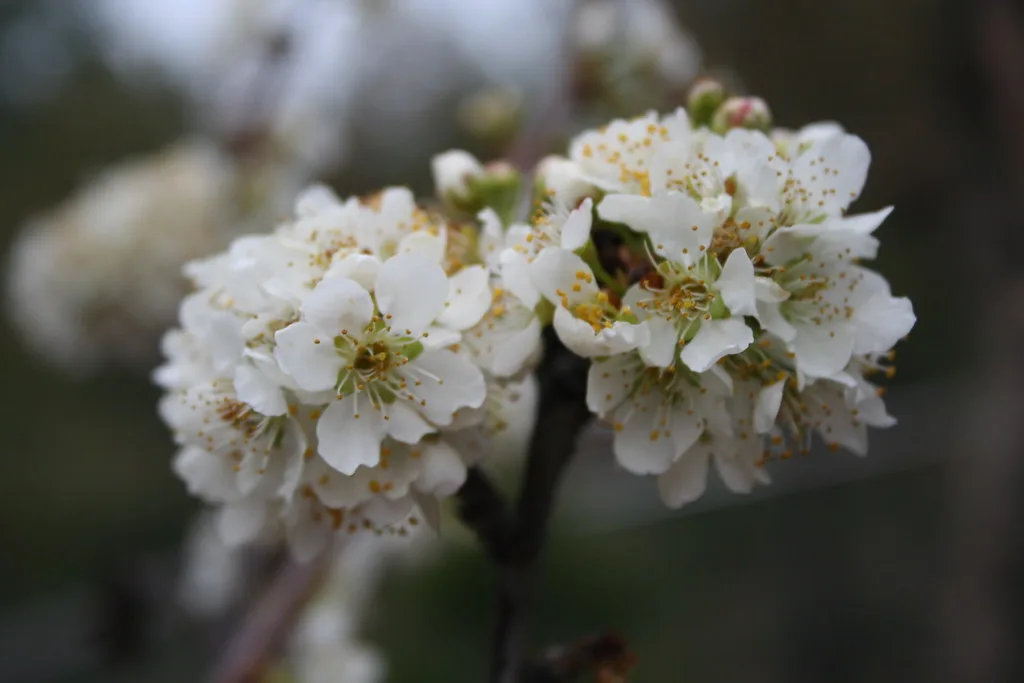
Image source: Openverse / cogdogblog
Step 3: Are You Meeting the Chill Hour Requirement?
Plums need a certain number of hours below 45°F (7°C) during dormancy to break bud and flower properly. This is called the chill hour requirement, and it varies by variety.
- Low-chill varieties (300 to 400 hours): Needed in Zones 8 and 9. Look at 'Gulf Gold', 'Gulf Ruby', or 'Ozark Premier'.
- Moderate-chill varieties (400 to 600 hours): Work well in Zones 6 and 7. Most European and Japanese plums fall here.
- High-chill varieties (700 to 800+ hours): Required in Zones 4 and 5. Many American hybrids and European types fit this group.
If your variety needs 700 chill hours and your area only gets 400, the tree will struggle to bloom on schedule every year. It might leaf out late, flower sporadically, or skip fruiting entirely. Check your variety's requirement against your local chill hour data from your university extension service.
Step 4: What's Your Care and Pruning Routine?
Even with the right tree and the right pollinator, poor care delays fruiting.
- Over-fertilizing with nitrogen pushes leafy growth at the expense of fruit. Skip high-nitrogen fertilizers in the first two years.
- Wrong pruning removes fruiting spurs. European plums fruit on short spurs that live for years. Cut those off in winter and you're cutting off this year's crop.
- Planting too deep stresses the tree and slows establishment. The graft union should sit 2 to 3 inches above the soil line.
- Insufficient water in the first two years limits root development. Deep water weekly during dry spells.
If you've checked all four steps and everything lines up, your tree should hit the early end of its expected timeline. If something's off, that's usually the reason for the delay.
Realistic Timelines by Tree Type
Here's a clear breakdown of what to expect, assuming decent care and proper pollination.
Grafted Dwarf on Precocious Rootstock
- Years 1, 2: Establishment phase. Remove any flowers or fruitlets so the tree puts energy into roots and structure.
- Year 2, 3: First real fruit crop. Expect a small handful of plums, maybe a dozen.
- Year 4, 5: Production ramps up. You might get 1 to 2 bushels.
Grafted Semi-Dwarf
- Years 1, 3: Establishment and structural growth. Thin off any early fruitlets.
- Year 3, 4: First meaningful harvest.
- Year 6, 8: Full production at 2 to 4 bushels per year.
Grafted Standard
- Years 1, 4: The tree is building a large frame. Be patient.
- Year 4, 6: First fruit.
- Year 8, 10: Full bearing, potentially 4 to 6 bushels.
Seed-Grown from Pit
- Years 1, 5: Pure vegetative growth. The tree is juvenile and physiologically incapable of flowering.
- Year 7, 10+: Possible first bloom, but fruit quality is unpredictable.
- Reality check: Many seed-grown plums produce small, sour, or bland fruit. If you want reliable harvests, graft a named variety onto your seedling or replace it with nursery stock.
The Most Common Reasons a Plum Tree Won't Fruit on Schedule
Your tree looks healthy, it's been a few years, and still nothing. Here's what's usually going on.
Over-Fertilizing with Nitrogen
This is the number one mistake we see. You feed the tree to "help it grow" and it responds with a flush of leaves and shoots. No flowers.
No fruit. In the first two years, skip fertilizer entirely unless a soil test shows a specific deficiency. If you do feed, use a balanced formula or one slightly higher in phosphorus, not nitrogen.
No Pollinator Partner Nearby
Many Japanese plums and some European varieties are self-sterile. They need pollen from a different plum variety that blooms at the same time. If your nearest neighbor doesn't have a plum, apple, or ornamental plum tree within about 50 feet, pollinators may not be visiting your blossoms in sufficient numbers.
The fix is planting a second variety or grafting a pollinator branch onto your existing tree.
Pruning at the Wrong Time (and Cutting Off Fruiting Spurs)
European plums fruit on short spurs that persist for 5 to 8 years. If you do heavy winter pruning that removes two-year-old wood, you're removing the spurs that would have fruited this season. Japanese plums fruit more on one-year-old shoots, so they tolerate harder pruning, but timing still matters.
The general rule: do structural pruning in late winter, and do light summer pruning to manage size without sacrificing next year's fruit wood.
Insufficient Chill Hours
If your variety needs more chill hours than your climate delivers, bud break is uneven. Some branches leaf out late, flowers are sporadic, and fruit set is poor. This is a variety selection problem, not a care problem.
The only real fix is switching to a variety matched to your zone.
Planting Too Deep or in Poor Drainage
Plum roots hate sitting in water. Heavy clay or a low spot that collects runoff leads to root rot, slow establishment, and a tree that never thrives enough to fruit. The graft union should be visible above the soil line.
If you planted in heavy clay, consider mounding or raised beds for better drainage.
How to Encourage Earlier Fruiting
You can't cheat biology, but you can remove the obstacles that slow things down.
Right Variety, Right Rootstock
If you haven't planted yet, choose a self-fertile variety on a dwarfing rootstock. 'Methley' on Pixy rootstock in Zone 6 is about as fast and reliable as it gets. You could see fruit in year two with minimal fuss.
If you're in a warm climate, skip European plums entirely. Go with a low-chill Japanese variety like 'Gulf Gold' bred for your region. Matching the variety to your zone prevents the chill hour mismatch that causes so many "my tree won't fruit" headaches.
First-Year Priorities: Root Establishment Over Fruit
That's right. Pluck off any flowers or tiny fruitlets in the first year. It feels wrong, but the tree needs to put all its energy into building a strong root system.
A young tree that fruits too early becomes stunted. It'll produce less over its entire lifespan.
Water deeply once a week during dry spells in the first two years. Mulch with 3 to 4 inches of wood chips, keeping the mulch a few inches away from the trunk. This retains moisture, moderates soil temperature, and suppresses competing weeds.
Summer Pruning vs. Winter Pruning
Winter pruning shapes the tree and encourages structural growth. Summer pruning controls size and lets light into the canopy, which helps fruit bud formation. If your tree is all leaves and no fruit, shift your pruning balance.
Do the heavy structural work in late winter, then tip back vigorous summer shoots in July and August.
Thinning Fruitlets in the First Bearing Year
When your tree finally does set fruit, thin the fruitlets to 4 to 6 inches apart when they're marble-sized. This prevents branch breakage and keeps the young tree from exhausting itself. A small harvest in year two or three sets up a much bigger harvest in year four and five.
Plum vs. Other Stone Fruits: How Long Each Takes
Plums sit in the middle of the pack. Peaches are faster. Cherries are slower.
Here's how the common stone fruits compare:
| Fruit Tree | Years to First Fruit (Grafted, Semi-Dwarf) | Self-Fertile Varieties Available? |
|---|---|---|
| Peach / Nectarine | 2–3 | Yes (most) |
| Plum (dwarf) | 2–3 | Some |
| Plum (semi-dwarf) | 3–4 | Some |
| Cherry (sweet) | 4–7 | Few |
| Cherry (sour) | 3–5 | Yes (most) |
| Apricot | 3–4 | Some |
Peaches are the speed demons of the stone fruit world. They fruit fast but have a shorter productive lifespan, often declining after 10 to 12 years. Plums give you a better balance of speed and longevity, with healthy trees producing for 15 to 25 years under good management.
When to Worry and When to Wait
If your grafted plum tree hasn't fruited by year four on a dwarf or year five on a semi-dwarf, something is wrong. Start checking the basics: pollination partner, chill hours, nitrogen levels, and drainage.
If the tree is healthy, growing well, and flowering but not setting fruit, the issue is almost always pollination. If it's not flowering at all, look at chill hours or over-fertilization. If it's flowering but the blossoms brown off overnight, that's late frost damage on early-blooming varieties like Japanese plums.
A seed-grown tree at year three with no flowers? That's completely normal. Don't panic.
Just don't expect much before year seven.
Frequently Asked Questions
Can a plum tree fruit in the first year?
Nursery trees sometimes bloom in year one, but you should remove any flowers or fruitlets. Let the tree focus on root development. Fruiting too early weakens the tree long term.
Why is my plum tree flowering but no fruit?
The most likely cause is a missing pollinator partner for self-sterile varieties. Late frost killing blossoms is another common culprit, especially with early-blooming Japanese plums. Poor pollinator activity during cold, rainy bloom periods also causes this.
What is the fastest fruiting plum variety?
'Methley' is among the fastest. It's self-fertile, blooms early, and often sets fruit in year two on dwarf rootstock in suitable climates. 'Santa Rosa' is fast too but needs a pollinator.
Should I remove fruit from a young plum tree?
Yes, in the first and second bearing years. Thin heavily or remove entirely. The tree needs to establish structure and roots before supporting a full crop.
This pays off with bigger harvests later.
Do plum trees bear fruit every year?
Most plum trees benefit from a tendency called biennial bearing, meaning they produce heavily one year and lightly the next. Consistent thinning during heavy years helps even out production. Young trees establishing their structure are more prone to this pattern.