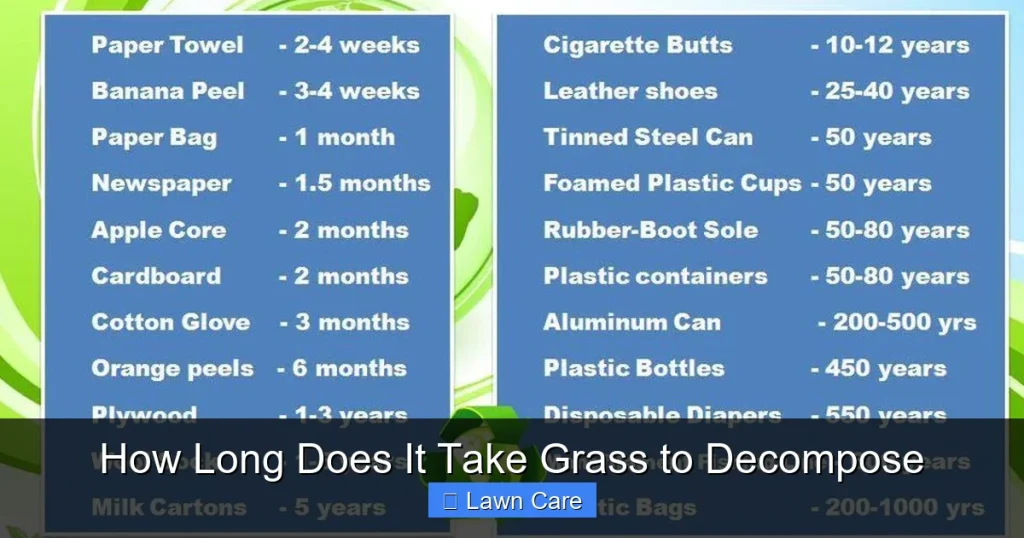
Understanding how long it takes grass to decompose is crucial for effective lawn care. Factors like moisture, temperature, and grass type significantly impact this process. This guide explains the science behind grass decomposition, providing actionable tips to accelerate it for nutrient-rich soil and a healthier, greener lawn.
Welcome, lawn enthusiasts! Ever wondered what happens to all that grass you mow? Or perhaps you’re trying to speed up the process of turning clippings into valuable soil nutrients. Understanding how long it takes grass to decompose is key to mastering your lawn’s ecosystem. You’ll learn about the natural decomposition process, the critical factors that influence it, and practical ways to either speed it up or manage it effectively. By the end of this guide, you’ll have a clear picture of grass decomposition and how to leverage it for a healthier, more vibrant lawn.
## Understanding Grass Decomposition
Decomposition is nature’s way of recycling. When grass clippings are left on the lawn or added to a compost pile, they don’t just disappear. They are broken down by a complex community of microorganisms, including bacteria, fungi, and even tiny invertebrates like earthworms. These organisms consume the organic matter in the grass, releasing essential nutrients back into the soil. This nutrient-rich material is invaluable for your lawn’s health, acting as a natural fertilizer.
### The Role of Microorganisms
Imagine a microscopic cleanup crew working tirelessly on your lawn. That’s essentially what decomposers are. Bacteria are the workhorses, breaking down the simpler compounds in grass. Fungi come in to tackle tougher materials like cellulose. Earthworms and other invertebrates help aerate the decomposing matter and mix it with the soil. Without these diligent workers, grass clippings would just sit there, eventually turning brown and unsightly.
### What Grass is Made Of
Grass is primarily composed of organic materials like carbon, nitrogen, water, and various minerals. The ratio of carbon to nitrogen (C:N ratio) is particularly important for decomposition. Grass clippings tend to have a good C:N ratio, often leaning towards the nitrogen-rich side, which is ideal for rapid breakdown. This is why grass clippings are a fantastic addition to compost piles.
## Factors Affecting Decomposition Speed
So, how long does it *actually* take for grass to decompose? The truth is, there’s no single answer. It’s a dynamic process influenced by a variety of factors, each playing a vital role.
### Moisture Levels: The Essential Ingredient
Water is life for decomposers. Microorganisms need moisture to survive and function.
* Too Dry: If grass clippings or your lawn are too dry, the microorganisms become dormant, and decomposition grinds to a halt. This is why during hot, dry spells, the grass on your lawn might appear to just sit there, browning but not truly breaking down.
* Just Right: A consistently moist environment, like a damp sponge, is ideal. This allows the microbes to thrive and work efficiently.
* Too Wet: Excessive water can lead to anaerobic conditions. This means decomposition happens without oxygen. While it still occurs, it’s much slower and often results in unpleasant smells like ammonia or rotten eggs, as different types of bacteria take over. This is common in waterlogged compost piles or very dense, wet grass clippings left in a thick layer.
### Temperature: The Great Accelerator (or Decelerator)
Temperature has a profound impact on microbial activity.
* Warmth is Good: Generally, warmer temperatures between 60°F and 140°F (15°C and 60°C) are optimal for decomposition. In the summer, when temperatures are high, grass clippings left on the lawn can break down in as little as a week or two. Compost piles can heat up significantly due to microbial activity, further accelerating the process.
* Cold Slows Things Down: As temperatures drop, microbial activity slows dramatically. In winter, decomposition can almost completely stop. You might notice that grass clippings or compost piles that were actively breaking down in the fall become dormant and resume their activity when warmer weather returns in the spring.
### Grass Type and Condition: Nature’s Recipe
Not all grass is created equal when it comes to decomposition.
* Young, Green Grass: Freshly cut, green grass clippings are rich in nitrogen and water. These are the easiest for microorganisms to break down. This type of grass can decompose very quickly.
* Mature, Dry Grass: Older, drier grass, or grass that has been allowed to grow very long and become somewhat woody, contains more cellulose and lignin. These are tougher materials that take longer for fungi and bacteria to break down.
* Diseased or Damaged Grass: While it might seem counterintuitive, grass affected by certain diseases or that has been heavily treated with chemicals might decompose differently or even slower, as the chemical residues can inhibit microbial activity.
### Aeration: Giving the Microbes Room to Breathe
Microorganisms need access to oxygen, especially the aerobic bacteria that are most efficient at decomposition.
* Compacted Clippings: If grass clippings are left in a thick, matted layer, they can become compacted. This reduces airflow, pushing the process towards slower, anaerobic decomposition and potential foul odors.
* Turning and Mixing: For compost piles, regularly turning the material is crucial. This introduces oxygen, mixes the ingredients, and helps maintain optimal moisture and temperature. Even on your lawn, if you’re intentionally leaving clippings, spreading them out thinly allows for better airflow.
### Particle Size: Smaller is Quicker
The smaller the pieces of grass, the greater the surface area available for microorganisms to attack.
* Fine Mulching: Mowers with mulching capabilities chop grass clippings into very fine pieces. These small fragments break down much faster than larger clumps.
* Larger Pieces: If you’re using a bagger and then composting the clippings, larger pieces will naturally take longer to decompose in the pile.
## How Long Does It Take Grass to Decompose?
Now, let’s get to the heart of the matter. Based on the factors above, we can provide some general timelines.
### 1. Grass Clippings Left on the Lawn (Mulching)
This is perhaps the most common scenario for homeowners. When you mow and choose to leave the clippings behind (mulch mowing), the goal is for them to decompose quickly and return nutrients to the soil.
* Typical Timeline: Under ideal conditions (warm weather, sufficient moisture, and finely chopped clippings), grass clippings left on the lawn can decompose within **3 to 7 days**.
* Factors at Play:
* Mower Type: A mulching mower is essential for breaking clippings small enough.
* Clipping Volume: Don’t let the grass get too long between mows. Thick layers of long clippings can mat down, preventing decomposition and potentially harming the lawn underneath.
* Weather: Warm, humid weather speeds this up. Dry, cool weather slows it down.
* When it Works Best: Regularly mowing your lawn throughout the growing season, allowing the mower to cut only the top third of the grass blade, and using a mulching mower.
### 2. Grass Clippings in a Compost Pile
Composting is a managed way to accelerate decomposition. By providing the right mix of “greens” (like grass clippings) and “browns” (like dry leaves or cardboard), along with moisture and air, you can create a hot, fast composting system.
* Typical Timeline: A well-managed compost pile with a good mix of grass clippings and carbon-rich materials can decompose grass into usable compost in as little as **4 to 8 weeks**.
* Factors at Play:
* C:N Ratio: A balanced ratio of carbon (browns) to nitrogen (greens) is critical. Too much grass (greens) can lead to a slimy, smelly pile. Too many browns will slow decomposition.
* Moisture: The pile should feel like a damp sponge.
* Aeration: Turning the pile regularly (every 1-2 weeks) is key.
* Temperature: Hot composting requires the pile to reach internal temperatures of 130-160°F (54-71°C).
* When it Works Best: Actively managing your compost bin, ensuring the right ingredients, turning it, and maintaining moisture.
### 3. Grass Clippings Left Unmanaged (e.g., in a pile)
If you rake grass clippings and leave them in a large, unmanaged pile, the process will be slower and less predictable than in a managed compost bin.
* Typical Timeline: This can take anywhere from **several weeks to a few months**.
* Factors at Play:
* Compaction: Large piles often become compacted, leading to anaerobic conditions and slow decomposition.
* Moisture: The outer layers might dry out, while the inner layers remain too wet.
* Lack of Turning: Without turning, oxygen doesn’t reach the center of the pile, significantly slowing down the aerobic decomposition process.
* When it Occurs: This happens when homeowners rake clippings and leave them in a corner of the yard, or when large amounts are generated after a major cleanup.
### 4. Grass in Natural Settings (e.g., Forest Floor)
Grass in natural, unmanaged environments decomposes at a slower rate, especially if it’s not mixed with other organic matter and experiences seasonal changes.
* Typical Timeline: This can take **several months to a year or more**, depending on climate and other plant material.
* Factors at Play:
* Climate: Colder climates with less rainfall will see much slower decomposition.
* Competition: Other plant matter and soil conditions will influence the rate.
* Lack of Management: No turning, controlled moisture, or added nutrients means it relies solely on natural processes.
## Practical Tips to Influence Grass Decomposition
Whether you want your clippings to vanish quickly on the lawn or become rich compost, here’s how to influence the process:
### To Speed Up Decomposition (for Mulching or Composting)
1. Mow Frequently and Short: This ensures clippings are small and don’t form thick mats.
2. Use a Mulching Mower: The fine chop is crucial for quick breakdown.
3. Maintain Optimal Moisture:
* On the Lawn: Water your lawn as needed. A slightly damp lawn helps clippings decompose.
* In the Compost: Ensure your compost pile is as moist as a wrung-out sponge. Water it if it feels dry.
4. Aerate Your Lawn: Regular aeration helps air penetrate the soil, which benefits the decomposition of any clippings left behind.
5. Add Nitrogen-Rich Materials to Compost: If your compost pile is mostly “browns” (like dry leaves), adding grass clippings (greens) provides the necessary nitrogen to heat things up and speed up decomposition.
6. Turn Your Compost Pile: This is non-negotiable for fast composting. Aim to turn it at least weekly.
7. Chop Larger Materials: If you’re composting larger amounts of grass or other yard waste, consider chopping it up before adding it to the pile.
### To Slow Down Decomposition (or Manage Large Amounts)
1. Bag Your Clippings: If you have excessive grass growth or want to avoid the risk of matting and anaerobic decomposition, bagging is a good option. You can then use these clippings for compost or dispose of them.
2. Let Clippings Dry Slightly: For composting, allowing grass clippings to dry out for a day or two before adding them can help prevent a wet, matted mess, but don’t let them get bone dry.
3. Create a Thinner Compost Layer: If adding grass to a compost pile, spread it in thin layers, alternating with brown materials, rather than dumping large amounts all at once.
## Troubleshooting Common Decomposition Issues
Sometimes, the process doesn’t go as planned. Here are a few common problems and solutions:
### Issue: Foul Odors from Grass Clippings (On Lawn or in Pile)
* Cause: Anaerobic decomposition due to lack of oxygen and/or excessive moisture.
* Solution:
* On the Lawn: Rake up the thick, matted clippings. Spread them thinly or add them to a compost pile.
* In the Compost Pile: Turn the pile thoroughly to introduce oxygen. Add dry, carbon-rich materials like shredded newspaper, cardboard, or dry leaves to absorb excess moisture and balance the C:N ratio.
### Issue: Grass Clippings Not Breaking Down on the Lawn
* Cause: The lawn is too dry, or the weather is too cold.
* Solution: Wait for rain or water the lawn. If it’s cold, decomposition will naturally be slow until warmer weather arrives. Ensure you’re mulching and not leaving excessively thick layers.
### Issue: Compost Pile is Slimy and Smelly
* Cause: Too much “green” material (grass clippings) and not enough “brown” material, leading to a high nitrogen content and insufficient carbon.
* Solution: Add more carbon-rich materials (browns) like dry leaves, straw, shredded cardboard, or wood chips. Turn the pile to aerate and mix.
## Conclusion
So, how long does it take grass to decompose? The answer is a range, from a few days for finely mulched clippings on a warm, moist lawn to several months or more for grass in less-than-ideal conditions. The key takeaway is that decomposition is a natural, beneficial process driven by moisture, temperature, microbial activity, and aeration. By understanding these factors, you can manage your lawn clippings effectively, whether you want them to disappear quickly, enriching your soil, or to be transformed into valuable compost. A well-maintained lawn relies on a healthy cycle of growth and decomposition, and now you have the knowledge to make that cycle work for you!
If you’re interested in learning more about specific grass types, you might find our articles on [how long does it take to grow bermuda grass] or [how long does it take bermuda grass seed to grow] helpful for understanding the timelines involved in establishing a healthy lawn.
Key Takeaways
- Grass decomposition is a natural process driven by microorganisms. The rate at which grass breaks down depends on several environmental and biological factors.
- Moisture is a key ingredient for decomposition. Too dry, and the process slows down; too wet, and it can lead to anaerobic conditions and foul odors.
- Temperature plays a significant role. Warmer temperatures generally accelerate decomposition, while cold weather slows it considerably.
- The type of grass and its condition matter. Thicker, greener grass with more nitrogen decomposes faster than dry, woody material.
- Aeration and particle size influence speed. Breaking down grass clippings into smaller pieces and ensuring good airflow speeds up the breakdown.
- Composting can significantly reduce decomposition time. By creating ideal conditions, grass can break down into usable compost in weeks rather than months.
- Leaving grass clippings on the lawn (mulching) is generally fast. These clippings can break down within days to a couple of weeks.