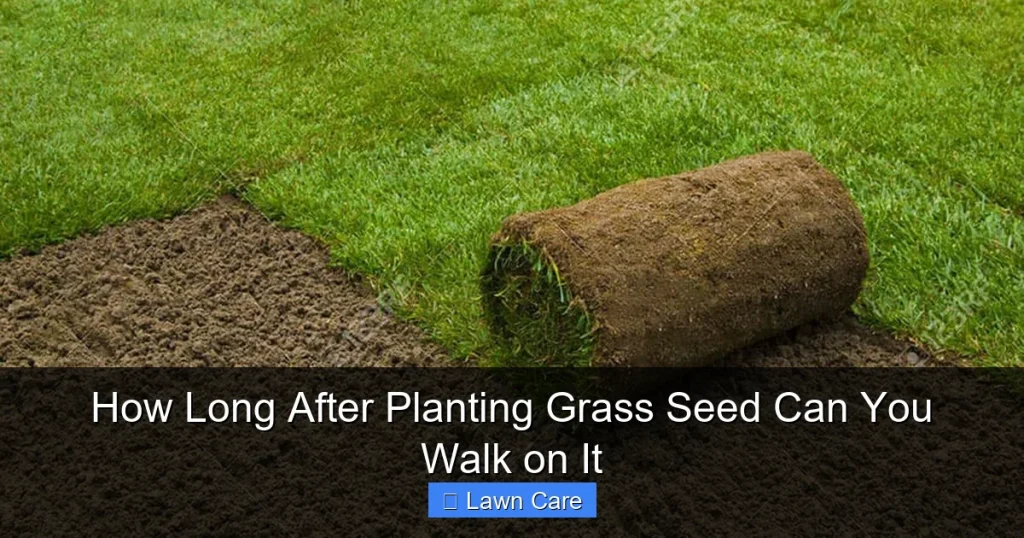
Walking on newly planted grass seed too soon can damage delicate sprouts and delay growth. This guide explains the safe waiting period based on grass type, weather, and lawn use, plus expert care tips to ensure strong, even germination.
Key Takeaways
- Avoid walking on grass seed for at least 7–14 days after planting. This gives seeds time to germinate without disturbance.
- Wait until grass reaches 3–4 inches tall before regular foot traffic. Light walking may be okay earlier, but heavy use should wait.
- Grass type affects recovery time. Cool-season grasses like Kentucky bluegrass grow slower than warm-season types like Bermuda.
- Keep the soil consistently moist during germination. Water lightly 1–2 times daily to prevent drying out.
- Use a light mulch or straw to protect seeds from birds and erosion. This also helps retain moisture and speed up sprouting.
- First mowing should happen when grass is about 4 inches tall. Never mow below one-third of the blade height to avoid stress.
- Fertilize lightly after germination, not before planting. Too much nitrogen early can burn young roots.
How Long After Planting Grass Seed Can You Walk on It?
So you’ve just planted grass seed—maybe to patch a bare spot, overseed your lawn, or start fresh on a new yard. Now you’re wondering: when can you walk on it? The short answer? Wait at least 7 to 14 days before light foot traffic, and avoid heavy use until the grass is well established—usually 6 to 8 weeks.
But the real story is more nuanced. The exact timing depends on several factors: the type of grass seed, weather conditions, soil quality, and how well you care for the new seedlings. In this guide, we’ll walk you through everything you need to know to protect your new lawn and ensure it grows thick, healthy, and resilient.
Why You Shouldn’t Walk on New Grass Seed Right Away
Visual guide about How Long After Planting Grass Seed Can You Walk on It
Image source: growyouryard.com
Grass seeds are tiny and fragile. Once planted, they begin a delicate process of absorbing water, swelling, and sprouting roots and shoots. This is called germination, and it’s the most vulnerable stage of a plant’s life.
Walking on newly planted seed can:
- Crush or displace seeds before they take root
- Compact the soil, reducing oxygen and water flow
- Uproot emerging seedlings with shallow roots
- Create uneven patches where grass fails to grow
Even light footsteps can cause damage if the soil is wet or the seeds haven’t anchored yet. Think of it like walking on wet concrete—your footprint stays. The same goes for tender grass sprouts.
Step-by-Step: When and How to Safely Walk on New Grass
Step 1: Wait for Germination (7–14 Days)
The first critical phase is germination. Most grass seeds sprout within 7 to 14 days, but this varies by type:
- Ryegrass: 5–10 days
- Tall fescue: 7–14 days
- Kentucky bluegrass: 14–30 days (slower!)
- Bermuda grass: 10–14 days
During this time, avoid all foot traffic. If you must cross the area, use a board or plank to distribute your weight and minimize soil compaction.
Step 2: Monitor Seedling Growth (2–4 Weeks)
Once you see green sprouts—usually 1/4 to 1/2 inch tall—your grass is emerging. At this stage, the roots are still shallow and easily disturbed.
Light walking (like checking on the lawn) may be okay after 2 weeks, but only if:
- The soil isn’t soggy
- You step carefully and avoid repeated paths
- The grass is at least 1 inch tall
Avoid running, playing, or placing heavy objects (like furniture or grills) on the area.
Step 3: Allow Grass to Establish (4–8 Weeks)
After 4 to 6 weeks, most grasses will be 2–3 inches tall and developing deeper roots. This is when you can begin light, occasional walking—like mowing or light yard work.
But wait until the grass reaches 3–4 inches tall before regular foot traffic. This usually takes 6 to 8 weeks, depending on growth rate and care.
Step 4: Mow for the First Time (When Grass Is 4 Inches Tall)
Your first mow is a milestone. It signals that the grass is strong enough to handle stress. But don’t cut too short!
Follow the one-third rule: Never remove more than one-third of the blade height in a single mowing. For example, if your grass is 4 inches tall, mow down to 2.5–3 inches.
Use a sharp mower blade to avoid tearing young grass. Dull blades rip the grass, leaving it vulnerable to disease.
Step 5: Resume Normal Use (8–12 Weeks)
After 8 to 12 weeks, your lawn should be thick, green, and well-rooted. You can now walk, play, and use the lawn normally—just avoid excessive wear during extreme heat or drought.
Factors That Affect How Soon You Can Walk on New Grass
Visual guide about How Long After Planting Grass Seed Can You Walk on It
Image source: beezzly.com
Not all lawns are the same. Here’s what influences the timeline:
Grass Type
Different grasses grow at different speeds. For example:
- Bermuda grass germinates quickly (10–14 days) and handles foot traffic sooner—often by week 6.
- Kentucky bluegrass takes longer to sprout (up to 30 days) and needs more protection.
If you’re planting a mix, go by the slowest-growing type. For more on Bermuda grass growth, check out How Long Does It Take For Bermuda Grass Seed To Grow.
Weather and Climate
Warm, moist conditions speed up germination. Cool or dry weather slows it down.
- In spring or fall (ideal planting times), grass grows faster.
- In summer heat, seeds may dry out unless watered frequently.
- In cold climates, germination can take twice as long.
Always check the forecast before planting. Avoid seeding just before heavy rain or a cold snap.
Soil Preparation
Well-prepared soil helps seeds establish faster. Loose, aerated soil allows roots to grow deep and resist foot traffic.
Before planting:
- Remove weeds and debris
- Rake to loosen the top 2–3 inches
- Add compost or topsoil if needed
- Level the area to prevent puddling
For tips on planting in tough soil, see How To Plant Grass Seed On Hard Dirt.
Watering Routine
Consistent moisture is key. New seeds need to stay damp—but not soaked—until they sprout.
- Water lightly 1–2 times per day (morning and early evening)
- Use a fine spray to avoid washing away seeds
- Reduce frequency once grass is 2 inches tall
Overwatering can drown seeds or promote fungus. Underwatering dries them out. For a detailed schedule, visit How Often Do You Water Grass Seed.
Troubleshooting Common Problems
Bare Patches After 2 Weeks?
If some areas aren’t sprouting:
- Seeds may have been washed away by rain
- Birds or insects could have eaten them
- The soil might be too compacted
Solution: Lightly reseed the patch and cover with a thin layer of straw to protect it.
Grass Growing Unevenly?
This often happens when some seeds get more water or sunlight. Try to water evenly and avoid shading the area with tools or tarps.
Footprints Still Visible After Walking?
That’s a sign the soil is too soft or the grass isn’t ready. Wait another week before walking again.
Pro Tips for a Strong, Walkable Lawn
- Use a starter fertilizer at planting time to boost early growth—but avoid high-nitrogen formulas that can burn seedlings.
- Cover seeds with straw or mulch to retain moisture and deter birds. Use about 1 bale per 1,000 square feet.
- Mark the seeded area with stakes or flags so family and pets avoid it.
- Keep pets off the lawn until grass is 3 inches tall. Dogs can dig up seeds or compact soil with their paws.
- Aerate lightly after 6 weeks if the soil feels hard—this helps roots grow deeper.
Conclusion
So, how long after planting grass seed can you walk on it? Wait at least 7–14 days for germination, avoid heavy traffic until grass is 3–4 inches tall, and give your lawn 6–8 weeks to fully establish. Rushing this process risks damaging your investment and creating patchy, weak grass.
By following proper care steps—consistent watering, gentle treatment, and patience—you’ll grow a lush, durable lawn that’s ready for play, picnics, and everyday enjoyment. Remember: good lawns take time, but the wait is worth it.
Whether you’re planting cool-season fescue or fast-growing Bermuda, treating your new grass with care now means a stronger, greener yard later.