You've got brown patches spreading across your lawn and you're wondering: how do you know if you have grubs? The honest answer is that most people guess wrong at first. Drought stress, fungal disease, and even your sprinkler system can mimic grub damage almost perfectly.
The good news is you don't need a lab test or a pricey lawn service to figure it out. A simple physical check of your turf will tell you in under two minutes whether grubs are actually the problem. Research from university extension programs consistently shows that the turf tug test catches the majority of real grub infestations before you ever need to dig.

Image source: Wikimedia Commons / Сарапулов (CC BY)
Quick Answer
You know you have grubs when brown patches of turf lift easily off the soil like loose carpet. Cut a one-square-foot flap and count the C-shaped white larvae underneath. More than five to ten grubs per square foot means you've crossed the action threshold.
Fewer than that, and your lawn will likely recover on its own without treatment.
Why Your Lawn Is Dying — And Why It Might Not Be Grubs
Brown, dying grass doesn't automatically mean grubs. That's the single biggest misconception homeowners run into every late summer. Your lawn can turn brown for a dozen different reasons, and treating for grubs when you actually have a fungal issue is a waste of money and product.
Here's what commonly gets mistaken for grub damage:
- Drought dormancy: Cool-season grasses go brown during heat waves even with healthy roots. The turf looks dead but the crowns are still alive.
- Brown patch disease: This fungal infection creates circular patches with a darker "smoke ring" border in the early morning. It thrives in humid conditions.
- Sod webworms: These caterpillars chew grass blades at the base, creating thinning patches that look similar from a distance.
- Dog urine spots: Concentrated nitrogen burns create small dead circles with a dark green ring around the edge.
- Irrigation failure: A broken sprinkler head or clogged nozzle leaves a dead zone that follows no biological pattern.
The key difference is what's happening below the surface. Grubs eat roots. Everything else attacks blades, crowns, or soil moisture.
That distinction is what makes the tug test so reliable.
The 60-Second Turf Tug Test: Your First Real Answer
Before you grab a shovel, try this. Walk to the edge of a brown patch and grab a handful of grass. Pull upward with moderate, steady pressure.
If the turf lifts easily, almost like peeling back a rug, you've lost root structure. That's your first real signal. Healthy grass, even when brown from drought, holds firm because the roots are still intact.
Grub-damaged turf separates from the soil with almost no resistance.
Here's what the results tell you:
- Turf holds firm: Grubs are unlikely the cause. Look at irrigation, disease, or heat stress first.
- Turf lifts loosely: You've got root damage. Grubs are a strong candidate, but you'll need to confirm.
- Turf lifts and you see grubs immediately on the underside: Confirmed. Move straight to counting.
One important caveat. If your lawn has been completely dry for weeks, even healthy turf can feel a bit loose. Water the area lightly the evening before and test again in the morning.
That removes drought as a variable and gives you a clean read.
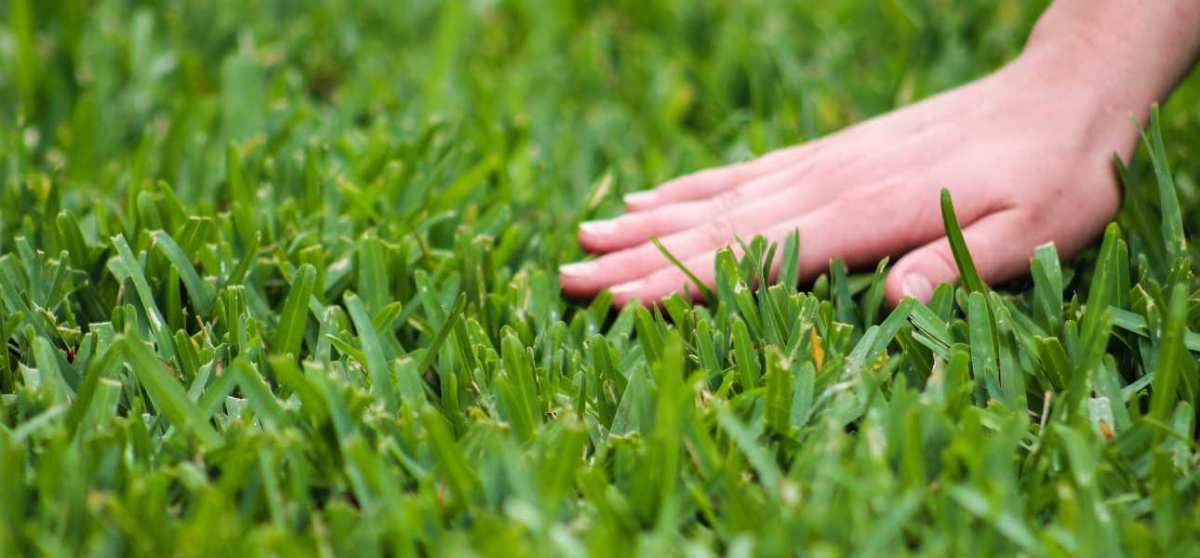
Image source: Bing (Web (fair-use with source credit))
What Grub Damage Actually Looks Like (vs. Everything Else)
Grub damage follows a specific pattern once you know what to look for. The patches tend to start small in mid-to-late August and expand into irregular brown zones by September. Unlike disease circles, the edges are uneven and the damage spreads outward from multiple starting points.
The turf often feels spongy or soft underfoot before it turns brown. That's because the grubs have been tunneling through the root zone, loosening the soil structure. If you step on a suspect area and it feels like walking on a mattress, pay attention.
Here's a quick comparison to help you narrow things down:
| Sign | Grubs | Brown Patch Disease | Drought |
|---|---|---|---|
| Turf lifts easily | Yes | No | No |
| Spongy underfoot | Yes | No | No |
| Pattern | Irregular, spreading | Circular with smoke ring | Uniform across dry zones |
| Timing | Late August through October | Summer, humid periods | Mid-summer heat |
| Wildlife digging | Common | Rare | Never |
| Response to watering | None | May slow spread | Greens up within days |
The wildlife clue matters more than people realize. Skunks, raccoons, and crows will tear up a lawn at night feeding on grubs. If you're finding patches of disturbed sod each morning, something is attracting animals to that spot.
That's a strong secondary indicator even before you dig.
The Square-Foot Inspection: How to Confirm Grubs for Sure
The tug test tells you something is wrong. The square-foot inspection tells you exactly what. Grab a flat shovel or a sturdy knife and cut three sides of a one-foot square in the damaged turf, right at the edge where brown meets green.
Peel it back like a flap and look at the soil underneath.
White grubs are C-shaped, creamy white with a brownish head and three pairs of legs near the front. They range from about half an inch to over an inch long depending on the species and time of year. You'll typically find them in the top two to three inches of soil.
Count every grub you see in that square foot. Then repeat the process in two or three other spots around the damaged area. Grubs cluster, so one square might have fifteen while the next has two.
Averaging across multiple samples gives you an accurate picture.

Image source: Wikimedia Commons / David Grandison Fairchild
After counting, press the flap back into place and water it thoroughly. The turf will re-root within a week or two if the damage isn't too severe. You haven't hurt anything by checking.
How Many Grubs Is Too Many? The Action Threshold Explained
Finding a few grubs doesn't mean you need to treat. Healthy turf with a decent root system can tolerate a low grub population without visible damage. The action threshold most university extension programs use is five to ten grubs per square foot for cool-season grasses.
Here's how to interpret your count:
- 0 to 4 grubs per square foot: Below threshold. Your lawn will almost certainly recover on its own. No treatment needed.
- 5 to 10 grubs per square foot: Moderate infestation. Treatment is recommended, especially if you've had grub problems in previous years.
- 11 to 15 grubs per square foot: Heavy infestation. Treat as soon as possible. Visible damage is likely already occurring.
- 15+ grubs per square foot: Severe. Expect significant turf loss without immediate curative treatment.
These thresholds assume normal growing conditions. If your lawn is already stressed from drought, heavy shade, or poor soil, even three or four grubs per square foot can push it over the edge. Use your judgment based on the overall health of the turf, not just the number on a chart.
One more thing worth noting. Different grub species cause different levels of damage at the same population. Japanese beetle grubs tend to be more destructive than masked chafers at equivalent counts.
If you're seeing damage at lower numbers, species identification can help you decide whether to treat this season or wait.
Grub Damage vs. Brown Patch vs. Drought: Telling Them Apart
You've done the tug test and found grubs. But here's where it gets tricky. Sometimes grubs and disease are happening in the same lawn at the same time, and treating one won't fix the other.
Knowing which culprit is doing the heavy lifting saves you from applying the wrong solution.
Brown patch disease, caused by Rhizoctonia solani fungus, produces circular patches ranging from a few inches to several feet across. The telltale sign is a dark grayish-brown border, sometimes called a smoke ring, visible on the grass blades in early morning when dew is present. Grub patches have no such border.
They're irregular and ragged-edged.
Drought dormancy is the easiest to rule out. Water a brown patch deeply and wait 48 hours. Drought-stressed turf greens up noticeably.
Grub-damaged turf stays brown because the roots are gone. Brown patch disease may slow its spread with improved airflow and reduced watering, but it won't green up from a single watering.
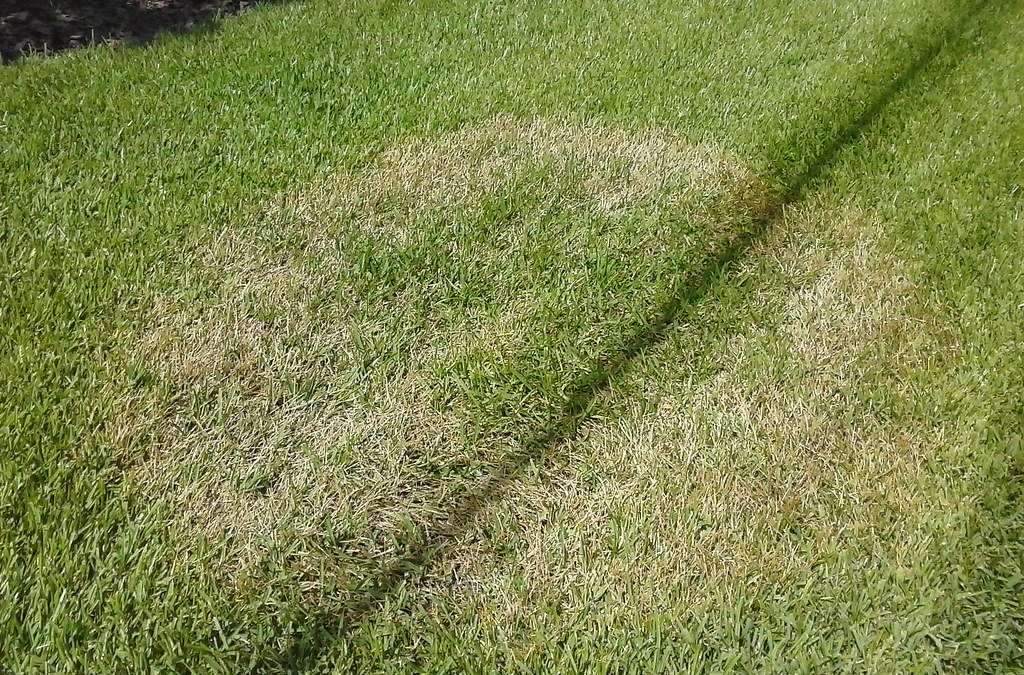
Image source: Openverse / Plant pests and diseases
The timing each year also gives you a clue. Grub damage peaks in late August through October when larvae are largest and feeding aggressively. Brown patch hits hardest in July and August during hot, humid stretches.
Drought shows up when rainfall drops off, regardless of month. If your brown patches appeared in September after a wet summer, grubs are the far more likely cause.
Why Skunks and Raccoons Are Digging Up Your Yard
Nighttime digging is one of the most overlooked grub indicators. Skunks, raccoons, and crows all feed on white grubs, and they'll tear up sections of turf to get at them. If you're waking up to sod peeled back or small cone-shaped holes across the lawn, something is hunting below the surface.
Skunks create shallow, peeled-back patches about the size of a dinner plate. Raccoons are messier. They roll back larger sections of sod and can destroy a surprising amount of turf in a single night.
Crows leave small, probe-style holes where they've stabbed their beaks into the soil.
Animal activity doesn't just confirm grubs. It adds a second layer of damage on top of what the grubs are already doing. At that point, even a moderate grub population becomes worth treating because the compounding destruction accelerates quickly.
The animal damage itself can also mimic grub damage visually. A torn-up lawn looks brown and patchy regardless of why the sod was disturbed. Always inspect underneath the flipped sections for actual grubs before deciding on treatment.
Animals sometimes dig in areas where grubs aren't present, especially if they hit a pocket and moved on.
When to Treat: Preventive vs. Curative Timing That Actually Works
Timing is everything with grub control. Apply at the wrong moment and you've spent money for almost no result. There are two distinct windows, and choosing the right one depends on whether you already have grubs or you're trying to prevent them.
Preventive application: This targets eggs and newly hatched larvae before they can do meaningful root damage. The ideal window runs from mid-June through mid-July in most northern regions. Products containing imidacloprid, chlorantraniliprole, or thiamethoxam work here.
They need to be watered into the soil where adult beetles are laying eggs, creating a toxic zone the larvae encounter almost immediately after hatching.
Curative application: This is what you do if you've already confirmed grubs in late summer. The window runs from late July through October, with sweet spot being August and early September when larvae are small, near the surface, and most vulnerable. Carbaryl and trichlorfon are the standard curative active ingredients.
These work fast but have a short residual, so timing within the hatch window matters.
Applying a preventive product in September is largely pointless. The eggs have already hatched and the larvae are feeding. The opposite mistake is applying a curative product in June.
It'll degrade before grubs are even present. Match your product to your timing and you'll see dramatically better results.
Choosing the Right Treatment Based on What You Found
Your inspection results should drive this decision, not a generic product recommendation from the garden center shelf.
If your count is below five grubs per square foot: Skip treatment entirely. Focus on lawn health instead. Deep watering, proper fertilization, and core aeration will help your turf outgrow minor root feeding.
If your count is five to ten grubs per square foot: You have options. A curative insecticide applied in late summer will knock the population down. Beneficial nematodes, specifically Heterorhabditis bacteriophora, are a biological alternative that works well in moist soil conditions.
Apply nematodes in the evening and keep the soil damp for a week afterward. They won't survive in dry, sun-baked turf.
If your count exceeds ten grubs per square foot: Go with a fast-acting curative insecticide. Look for products listing carbaryl or trichlorfon as the active ingredient. Apply according to the label, water in thoroughly, and keep foot traffic off treated areas until the product has fully absorbed.
Milky spore disease, caused by Paenibacillus popilliae, is worth mentioning but with a reality check. It specifically targets Japanese beetle grubs and takes two to three years to establish in the soil. It's a long-term play, not a rescue treatment.
If you have European chafer or masked chafer grubs, milky spore will do almost nothing. Confirm your grub species before investing in it.
The Biggest Mistakes People Make When Dealing With Grubs
The most common error is treating without confirming. People see brown grass, assume grubs, and apply curative products across the entire lawn. Half the time, the real cause is something entirely different, and they've introduced unnecessary chemicals into their yard for no reason.
The second mistake is treating too late in the season. By November, full-size grubs have moved deep into the soil profile where surface-applied products can't reach them. They're also less actively feeding, which reduces ingestion of treated soil.
Curative products lose most of their effectiveness once soil temperatures drop below about 50°F.
Overwatering after application is another frequent misstep. A good watering moves the product into the root zone. Soaking the lawn for hours creates runoff and carries active ingredients away from the target zone.
Follow the label's water-in instructions precisely, usually about a quarter inch of irrigation.
Finally, neglecting follow-up. Grub damage doesn't disappear after treatment. The dead patches need reseeding or sodding the following spring.
The grubs are gone but the bare spots remain, and weeds will colonize them quickly if you don't act.
When to Call in a Professional vs. Handling It Yourself
Most grub situations are absolutely manageable on your own. If you've confirmed the count, identified your timing window, and matched a product to the situation, you're equipped to handle it. DIY curative treatment for a typical residential lawn runs about $30 to $60 in materials.
That said, there are situations where professional help makes sense. If your property is over half an acre, the product cost and equipment needs start tipping the math. Lawn care companies have commercial-grade spreaders and sprayers that cover large areas more evenly and quickly.
Also consider calling a pro if you've had recurring grub damage three or more years in a row despite treatment. That pattern suggests a deeper issue, maybe a large breeding population nearby or soil conditions that favor repeated infestation. A licensed applicator can evaluate the broader landscape, not just the affected patches.
Finally, if wildlife damage has gotten severe, a professional can coordinate grub treatment with deterrent strategies like temporary fencing or repellent applications. Tackling one without the other often just moves the problem around.
Frequently Asked Questions
Can my lawn recover from grub damage on its own?
Yes, if the grub count stays below about five per square foot and you keep the lawn watered and fertilized. The grass can regenerate roots and fill in naturally. Once counts exceed that threshold, the damage usually outpaces recovery without intervention.
What time of year should I check for grubs?
Late August through early October is the prime window. Larvae are large enough to see, active enough to be near the surface, and causing visible damage. Spring inspections tend to be less useful because grubs have either already pupated or moved too deep to find easily.
Do grub treatments harm bees and other beneficial insects?
Preventive neonicotinoid products are a concern if applied while flowering plants are in bloom nearby, since bees can encounter treated pollen. Chlorantraniliprole-based products show much lower toxicity to pollinators. Always follow label restrictions regarding bloom timing and buffer zones around flowering plants.
Beneficial nematodes have zero impact on bees.
Is milky spore a good option for immediate grub control?
No. Milky spore takes two to three years to build effective populations in the soil and only targets Japanese beetle grubs specifically. It's a long-term preventive strategy, not a curative treatment.
If you're dealing with an active infestation right now, milky spore won't help this season.
How long after treatment will the grubs die?
Curative insecticides typically kill grubs within 24 to 72 hours depending on the product and soil temperature. Beneficial nematodes take slightly longer, usually five to seven days, because they need to enter the grub's body and release bacteria. You can confirm effectiveness by doing another square-foot inspection a week after application.
Can I apply grub prevention and fertilizer at the same time?
Yes, and many homeowners do exactly that in late June or early July. Just use a separate spreader for the insecticide product to ensure even coverage, or apply them sequentially on the same day. Water everything in thoroughly after both applications.
Check product labels for any specific compatibility warnings, but most common grub preventatives play well with standard granular fertilizers.