
Tired of wavy, uneven lawn edges? This guide will show you exactly how to create and maintain crisp, straight borders for a beautifully manicured lawn. We cover everything from essential tools to proven techniques for achieving professional-looking results that will make your yard stand out.
A well-defined lawn edge is like the perfect frame for a beautiful picture. It separates your lawn from walkways, flower beds, and driveways, giving your yard a clean, polished, and professional look. But achieving those sharp, straight lines can be a challenge. If your lawn edges tend to be wavy, uneven, or just plain messy, you’ve come to the right place. This comprehensive guide will walk you through everything you need to know to create and maintain perfectly straight lawn edges, transforming your yard from ordinary to extraordinary. We’ll cover the best tools, proven techniques, and essential maintenance tips.
- Choose the right tools: Selecting appropriate edging tools, like spades, edgers, or string trimmers, is crucial for achieving clean lines.
- Establish a guide: Using a straight object, string, or hose as a guide ensures consistent straightness along your lawn’s perimeter.
- Master the technique: Employ a consistent cutting motion, whether with a spade, edger, or trimmer, to create a precise and even edge.
- Maintain regularly: Frequent, light edging is easier and more effective than infrequent, deep cuts for keeping lawn edges straight.
- Consider your lawn type: Different grass types and soil conditions may require slight adjustments to your edging approach.
- Prevent weed encroachment: Regular edging helps maintain a physical barrier, which is key to keeping your lawn weed-free.
Why Straight Lawn Edges Matter
Before we dive into the “how-to,” let’s briefly touch on why perfectly straight lawn edges are so desirable.
- Aesthetics: Straight edges create a sense of order and neatness. They give your lawn a crisp, finished appearance that significantly boosts curb appeal.
- Definition: They clearly define the boundaries of your lawn, separating it from garden beds, pathways, and hardscapes, making your landscape design look intentional and well-planned.
- Preventing Overgrowth: Straight edges act as a natural barrier, preventing grass from creeping into unwanted areas like flower beds or driveways. This also helps in maintaining your lawn edges and borders effectively.
- Professional Finish: Immaculately edged lawns are often associated with meticulous care and a higher standard of property maintenance.
Choosing the Right Tools for the Job
The first step to straight lawn edges is having the right equipment. The tool you choose will depend on your preference, the type of edging you’re doing, and the size of your lawn.
Manual Edging Tools
These are great for smaller areas, precision work, or if you prefer a more hands-on approach.
- Half-Moon Edger/Edging Spade: This is a classic tool with a long handle and a flat, semi-circular blade. It’s excellent for cutting clean trenches along borders. It requires some physical effort but offers excellent control for creating sharp lines.
- Flat Spade: While not specifically designed for edging, a sharp flat spade can be used to create straight cuts. You’ll need to be more careful with your angles and depth.
Powered Edging Tools
These tools speed up the process significantly and are ideal for larger lawns or for those who want a quicker, less physically demanding solution.
- String Trimmer with Edging Capability: Many electric and gas string trimmers have a shaft that can be rotated 90 degrees to act as an edger. This is a versatile tool that can also be used for trimming grass around obstacles.
- Dedicated Lawn Edger: These are machines specifically designed for creating lawn edges. They come in various types, including wheeled models that you push and walk-behind versions. Some are electric, while others are gas-powered. They offer more power and precision than a string trimmer used in edging mode.
Guides and Measuring Tools
These aren’t cutting tools, but they are essential for ensuring straightness.
- Garden Hose: A flexible garden hose can be laid out along your desired edge to create a visual guide.
- String and Stakes: For very precise lines, a taut string tied between stakes can serve as an excellent straight guide.
- Chalk Line: Similar to using string, a chalk line can mark a temporary, straight line on the ground.
Step-by-Step Guide to Creating Straight Lawn Edges
Now that you have your tools, let’s get to the actual process of creating those perfect straight edges.
Step 1: Plan Your Edge Line
Before you pick up any tool, decide exactly where you want your lawn edge to be.
- Identify the boundary: Is it a straight line along a driveway, a curved line around a flower bed, or a border between two lawn sections?
- Mark the line: For straight lines, this is where your guide comes in handy. Lay out your garden hose, string, or chalk line to represent your desired edge. If you’re edging along a hard surface like a driveway or sidewalk, the existing surface provides a natural straight line.
Step 2: Prepare the Area
Clear the area along your planned edge.
- Remove debris: Pick up any rocks, sticks, leaves, or other debris that might be in your way or damage your tools.
- Wet the soil (optional but recommended): Slightly moist soil is much easier to cut than dry, hard soil. If your soil is dry, water the area lightly a few hours before you plan to edge.
Step 3: Establish a Consistent Guide
This is the most critical step for achieving straightness.
Using a String and Stakes
This method offers the most precision for perfectly straight lines.
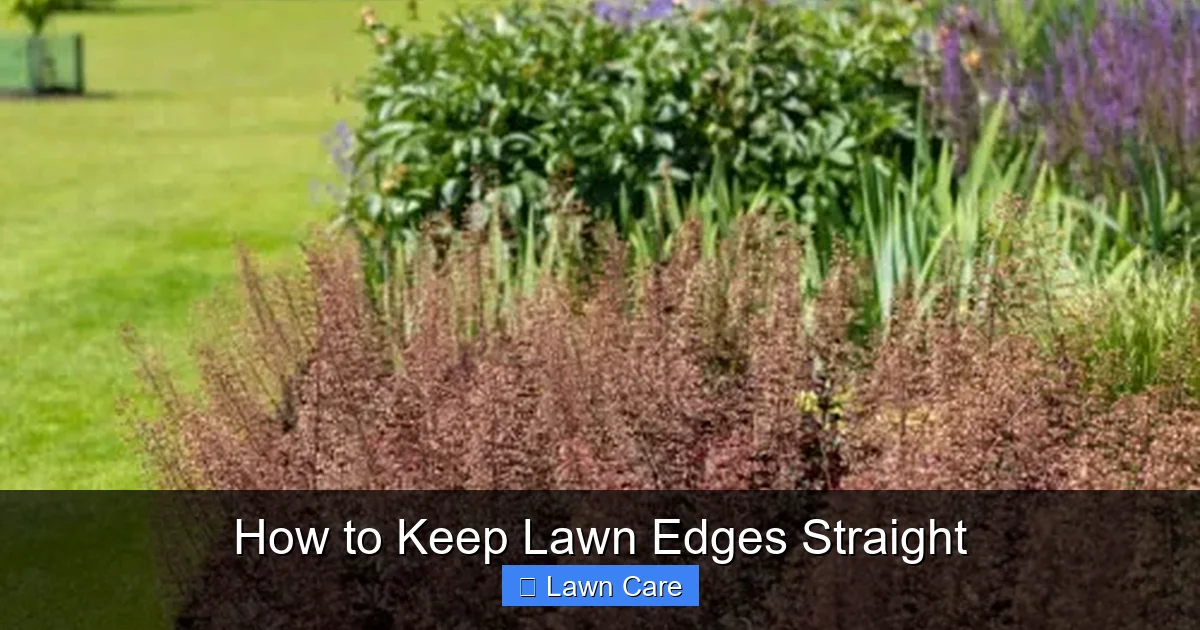
Visual guide about How to Keep Lawn Edges Straight
Image source: i0.wp.com
- Drive stakes: Hammer two stakes into the ground at the start and end points of your desired edge. Ensure they are firmly in place.
- Tie the string: Tie a piece of strong, non-stretchy string tightly between the two stakes. Make sure the string is pulled taut, as any slack will result in a wavy line.
- Adjust for desired depth: The string should represent the top edge of your lawn.
Using a Garden Hose
A garden hose is a flexible and readily available option for a visual guide.
- Lay out the hose: Position the hose along your intended edge. Adjust it until you’re happy with the line’s straightness and position.
- Secure the hose (if needed): For longer runs or windy days, you might want to place heavy objects like rocks or bricks on the hose to keep it in place while you work.
Using a Hard Surface as a Guide
When edging alongside a driveway, sidewalk, or patio, the edge of that surface provides a perfect straight line.
- Align your tool: Simply position your edger or spade directly against the hard surface and move along it.
Step 4: Execute the Cut
Now it’s time to make the cut. The technique will vary slightly depending on your tool.
Using a Half-Moon Edger or Spade
This method creates a defined trench and lifts the sod.
- Position the edger: Place the blade of your edger or spade along your guide line.
- Push down firmly: Apply steady downward pressure to cut into the soil. You may need to rock the tool back and forth slightly to help it cut.
- Work in sections: Make a series of cuts, following your guide. For a deep cut, you might need to go over the same line multiple times.
- Remove the sod: Once you’ve cut along the entire line, use the edger or spade to lift and remove the cut sod. Dispose of it or use it elsewhere in your garden.
- Refine the edge: Step back and look. If any parts are uneven, make small adjustments with your tool.
Using a String Trimmer with Edging Capability
This is a quick method for creating a clean line.
- Set the trimmer to edger mode: Rotate the shaft so the cutting line is perpendicular to the ground.
- Position the guide wheel: Most edger attachments have a wheel. Align this wheel along your desired edge (or the guide you’ve set up). For a straight line along a hard surface, place the wheel directly on the pavement.
- Start the trimmer: Engage the trimmer at a moderate speed.
- Move steadily: Guide the trimmer along your line, letting the wheel maintain consistent contact with your guide. Avoid digging too deep, which can cause the trimmer to bog down or create an uneven cut.
- Maintain a steady pace: Move slowly and consistently to ensure a uniform depth and width of the cut.
Using a Dedicated Lawn Edger
These machines are designed for efficiency and precision.
- Follow the manufacturer’s instructions: Each edger is slightly different. Read your manual carefully.
- Position the edger: Align the blade with your guide line or hard surface.
- Engage the blade: Start the engine or motor.
- Push or guide the edger: Move the edger steadily along your guide line. Many wheeled edgers have a guide that should run along the edge of your lawn or a hard surface.
- Control the speed: Don’t rush. A steady pace will result in a cleaner, straighter cut.
Step 5: Clean Up and Maintain
Once the edging is done, a little cleanup goes a long way.
- Remove grass clippings: Blow or sweep away any grass clippings that have fallen onto the sidewalk, driveway, or into garden beds.
- Inspect your work: Walk along your newly edged borders. Touch up any spots that look uneven or missed.
- Water the lawn: Lightly water the lawn and the newly edged areas. This helps the grass settle and recover.
Maintaining Straight Lawn Edges
Creating straight edges is only half the battle. Regular maintenance is key to keeping them looking sharp.
Frequent, Light Edging
It’s much easier to maintain a straight edge with frequent, light trimming than to try and correct a severely overgrown one. Aim to edge your lawn every 2-4 weeks, depending on your grass growth rate.
Consistent Depth
Try to maintain a consistent depth for your edging. A common depth is about 1-2 inches, but this can vary based on your preference and lawn type.
Deal with Overgrowth Promptly
If you notice grass starting to creep over the edge or the line becoming less defined, tackle it immediately with a quick pass of your chosen edging tool.
Edge After Mowing
For many people, edging after mowing is a good routine. It ensures that the lawn is at its regular height, making it easier to see and maintain the straight edge.
Consider a Permanent Edging Solution
For a truly maintenance-free, straight edge, consider installing physical edging materials. Options include plastic, metal, stone, or brick edging. These create a permanent barrier that grass has a harder time growing over.
Troubleshooting Common Edging Problems
Even with the best intentions, you might run into a few snags.
Problem: Wavy or Uneven Lines
Solution: This usually stems from an inconsistent guide or a lack of steady hand. Ensure your string or hose is taut and truly straight. When using a powered tool, move at a consistent speed and let the guide wheel do the work. For manual tools, try to make deeper, more deliberate cuts rather than shallow, hesitant ones.
Problem: Grass is too tough to cut
Solution: The soil might be too dry. Water the area lightly a few hours before you plan to edge. Ensure your cutting blades or string trimmer line are sharp and in good condition. Dull blades or lines will struggle to cut effectively.
Problem: Edging is too deep or too shallow
Solution: Adjust your technique or your tool settings. With a string trimmer, pay close attention to the guide wheel. With a manual edger, you might need to apply more or less pressure, or adjust how deep you plunge the blade. Aim for a consistent depth each time.
Problem: Grass clippings are everywhere
Solution: This is common. A leaf blower or a stiff broom can quickly clean up stray clippings. You can also try to minimize the amount of grass that flies off by adjusting your trimmer’s angle or speed slightly.
Conclusion
Achieving and maintaining straight lawn edges is a rewarding task that significantly enhances the appearance of your property. By selecting the right tools, using a reliable guide, mastering the cutting technique, and committing to regular maintenance, you can transform your lawn into a picture of perfection. Remember, patience and consistency are key. With a little practice, those crisp, clean lines will become second nature, and your lawn will have the polished, manicured look you’ve always desired. A well-edged lawn is a sign of a proud homeowner, and it’s a simple yet impactful way to boost your home’s curb appeal. Embrace the process, and enjoy the stunning results of your straight lawn edges!