If you're dealing with brown, dying patches in your lawn, you're probably wondering how do I remove grub before they destroy the whole thing. The good news is that grub removal is straightforward once you confirm what you're dealing with and pick the right treatment for the season.
White grubs, which are the larval stage of beetles like Japanese beetles and June bugs, feed on turfgrass roots just below the surface. The general treatment threshold is around 10 grubs per square foot, according to turfgrass extension programs, meaning you don't always need to treat if the numbers are low. Let's walk through exactly how to figure out what's going on under your sod and what to do about it.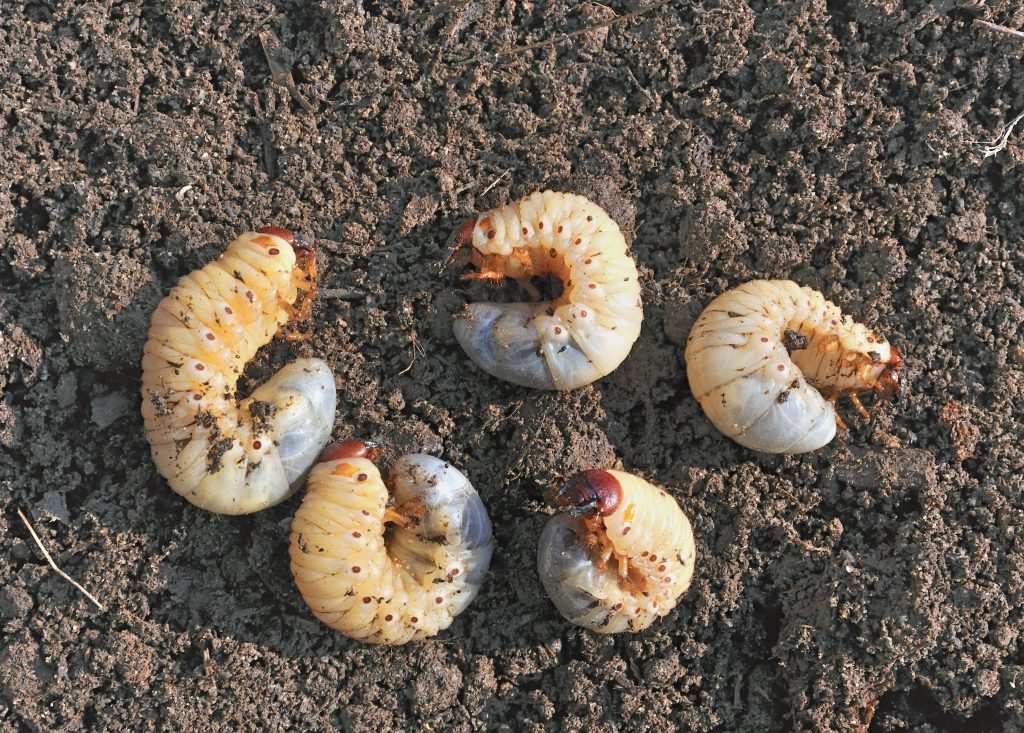
Image source: Bing (Web (fair-use with source credit))
Quick Answer
White grubs are beetle larvae that eat grass roots. Confirm you have them by cutting a one-square-foot section and counting. If you find more than ten grubs, treat your lawn.
Use beneficial nematodes or milky spore for long-term biological control. Apply chemical insecticides like trichlorfon for fast curative results. Timing matters more than product choice.
Why Your Lawn Is Dying (And How to Confirm It's Actually Grubs)
That brown patch in your yard might look like drought stress or disease, but there's a good chance grubs are the real culprit. The tricky part is that the visible damage often shows up weeks or even months after the grubs have been feeding, so by the time you notice, they've already done serious harm to the root system.
The hallmark sign of a grub infestation is sod that peels back like a carpet. Since the roots have been chewed away, the turf literally lifts right off the soil with almost no resistance. If you've ever gone to walk on a brown patch and the whole section came up in your hand, that's classic grub damage.
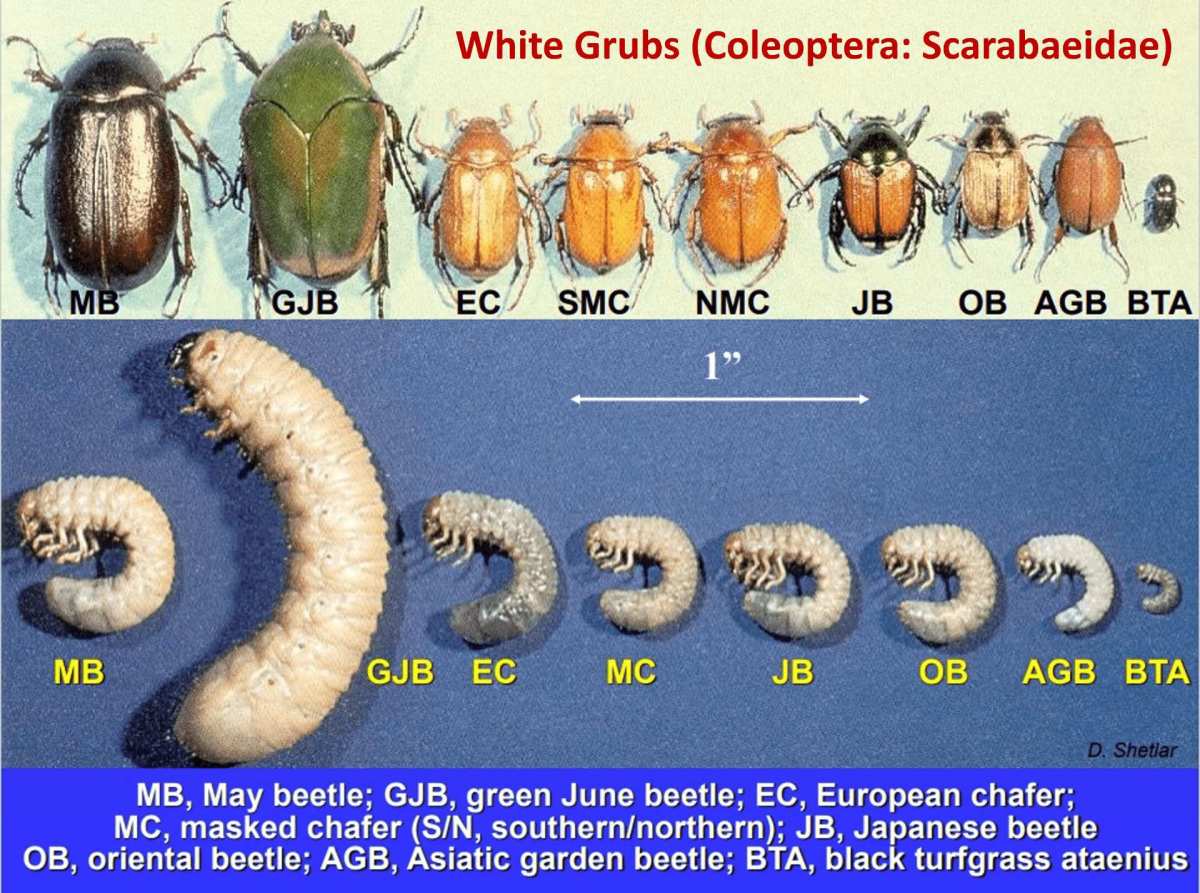
Image source: Bing (Web (fair-use with source credit))
But here's the thing: drought, fungal diseases, chinch bugs, and even dog urine can cause similar-looking damage. You don't want to spend time and money on grub control if grubs aren't actually the problem. So before you buy any product, you need to confirm what you're dealing with.
White grubs are the larvae of scarab beetles. They're C-shaped, creamy white with a brown head capsule, and they have three pairs of legs near the head. Most species range from about a quarter inch to over an inch long depending on their age and species.
Japanese beetle grubs tend to be the most damaging and widespread across the eastern and midwestern United States.
Here's what to watch for beyond the peeling sod:
- Irregular brown patches that start small and expand over weeks
- Increased bird activity on your lawn (they're feeding on the grubs)
- Skunks or raccoats tearing up sections of sod at night
- Spongy feel when you walk on affected areas
- Damage that worsens during dry weather because the grass can't access water without intact roots
If you're seeing a combination of these signs, it's time to do some digging. Literally.
How to Check Your Grub Count Before You Waste Money on Treatment
This is the step most people skip, and it's the biggest mistake in grub management. Not every lawn with brown spots needs treatment. Sometimes the damage is old, sometimes the grub count is low enough that natural predators have things under control, and sometimes it's not grubs at all.
There are two reliable ways to check your grub population.
The Dig Test
This is the most straightforward method and the one extension services recommend. Take a sharp shovel or spade and cut a square section of sod about 12 inches by 12 inches and 2 to 3 inches deep. Flip it over and examine the soil and thatch layer inside that square foot.
Count every white grub you find in that sample.
Here's the key number: if you count 10 or more grubs in that single square foot, treatment is generally warranted. Below that threshold, your turf can usually tolerate the damage, especially if it's healthy and well-watered.
For a more accurate picture, take samples from several spots around your lawn, especially in the damaged areas and the borders between healthy and dying grass.
The Soap Flush Test
This method is useful if you want to see grubs in action without digging. Mix about two tablespoons of liquid dish soap in a gallon of water. Mark off a square yard of damaged lawn and pour the soapy water evenly over that area.
Wait about 10 minutes. The soap irritates the grubs and drives them up to the surface, where you can see them. This works best when the soil is moist and the grubs are actively feeding near the surface, typically in late summer or early fall.
The downside is that the soap flush isn't as accurate for counting since not all grubs will come up. It's better as a confirmation tool than a precise measurement.
When to Check
Timing matters for checking. Late July through September is the sweet spot for most regions, because that's when the current season's grubs are actively feeding and large enough to find easily. By the time fall turns to winter, many grubs have burrowed deeper into the soil to overwinter and become much harder to sample.
If you're checking in spring, you're looking at grubs from the previous year that are maturing and about to pupate. Spring damage tends to be less severe since the grubs are finishing their feeding cycle rather than starting it.
Choosing Between Biological and Chemical Grub Control Methods
Once you've confirmed you have a grub problem, you're facing a decision: biological control or chemical insecticides. Each approach has real tradeoffs, and the right choice depends on your priorities, timeline, and how severe the infestation is.
Biological Controls
Biological methods use living organisms to kill grubs, and they're the go-to choice for homeowners who want an earth-friendly approach, especially if kids and pets use the lawn heavily.
Milky spore disease is caused by a naturally occurring bacterium called Paenibacillus popilliae. It specifically targets Japanese beetle grubs. Once established in your soil, it can remain effective for 10 to 15 years.
The catch is that it takes one to three years to fully establish and spread through your lawn. It's a long game, not a quick fix.
Beneficial nematodes, specifically Heterorhabditis bacteriophora species, are microscopic worms that actively seek out grubs in the soil and kill them from the inside. They're arguably the best biological option because they work faster than milky spore, typically showing results within a few weeks of application. You apply them to moist soil in the evening since they're sensitive to UV light.
Soil temperatures between 55 and 85 degrees Fahrenheit give you the best results.
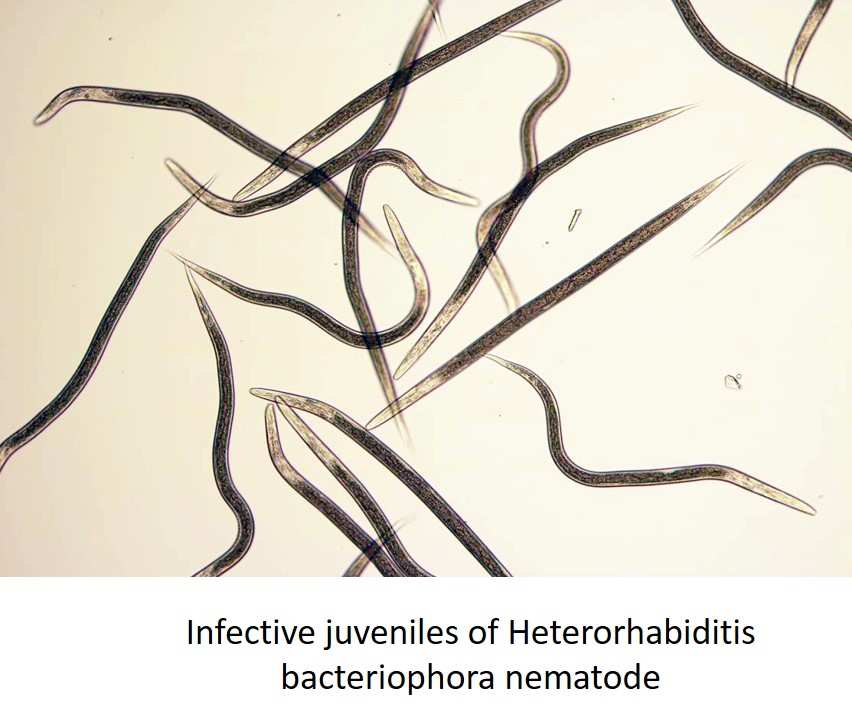
Image source: Bing (Web (fair-use with source credit))
Chemical Insecticides
Chemical products fall into two categories: preventive and curative. Mixing these up is the most common reason people fail at grub control.
Preventive insecticides like chlorantriliprole are applied in late spring or early summer before grubs hatch. The product works systemically through the turf and is most effective when applied before you see damage. If you're using a preventive, apply it between May and early June in most regions.
Curative insecticides like trichlorfon are designed to kill existing grubs that are actively feeding. These work fast, sometimes within days. You apply them in late summer or early fall when you've confirmed grubs are present and causing damage.
| Method | Timing | Speed of Results | Longevity |
|---|---|---|---|
| Milky spore | Spring or fall | Slow (1-3 years) | Decades |
| Beneficial nematodes | Spring or fall | Weeks | One season |
| Preventive chemical (chlorantraniliprole) | Late spring | N/A (prevents damage) | Through season |
| Curative chemical (trichlorfon) | Late summer/fall | Days | Short residual |
Which One Should You Pick?
Here's a simple way to think about it through a decision tree:
- Grub count is high right now, and you need results this season. Go with a curative chemical like trichlorfon, or apply beneficial nematodes if you prefer biological control and can keep the soil consistently moist.
- You had a problem last year and want to prevent one this year. A preventive application in late spring is your best bet.
- You're playing the long game and want sustainable, earth-friendly control. Invest in milky spore and beneficial nematodes. Accept that it'll take time but the payoff lasts years.
- You're on the fence and don't want to overspend. Start with nematodes. They're moderately priced, effective within a reasonable timeframe, and won't harm beneficial insects.
The Step-by-Step Grub Removal Process for Each Season
Grub removal isn't a one-and-done deal. The approach you take should shift depending on what time of year you're dealing with the problem. Here's a practical breakdown of what to do and when.
Late Summer Through Fall (Late July to October)
This is when most homeowners first notice damage, and it's the prime window for curative action. The grubs are small, actively feeding, and vulnerable to treatment.
Step 1: Confirm the problem. Do your dig test or soap flush. Count the grubs. If you're above 10 per square foot, proceed with treatment.
Step 2: Choose your product. For biological control, apply beneficial nematodes in the evening. For chemical control, use a curative product like trichlorfon. Don't fall for preventive products at this point.
They won't kill existing grubs effectively.
Step 3: Apply according to label directions. Read the product label carefully. Apply the correct rate for your square footage. More is not better.
Over-applying wastes money and can harm the environment.
Step 4: Water the treatment in. Most granular products need irrigation to move the active ingredient down into the root zone where grubs are feeding. Water lightly after application. For nematodes, keep the soil consistently moist for at least two weeks after application so the organisms can move through the soil and find grubs.
Step 5: Wait and monitor. With curical chemical insecticides, you should see grub die-off within a few days. Nematodes take a couple of weeks. Give it time before deciding if you need a second application.
Spring (March to May)
Spring grub activity varies by region. In warmer climates, grubs may still be feeding near the surface. In cooler regions, last year's grubs are pupating and turning into beetles.
Step 1: Assess last year's damage. If you had heavy grub damage in the fall, you may need to overseed or patch bare areas. Grubs from the previous year are unlikely to still be feeding significantly.
Step 2: Apply preventive treatment if needed. If you had a confirmed infestation last year and want to prevent repeat damage, apply a preventive product like chlorantriniliprole in late spring before the new generation of eggs hatch. This stops the next wave before it starts.
Step 3: Start building biological controls. Apply milky spore in spring or fall to begin the colonization process. Apply beneficial nematodes if soil temperatures are above 55 degrees.
Summer (June to Mid-July)
This is mostly a monitoring period. Keep an eye out for early signs of damage and note where problems are developing.
Step 1: Watch for adult beetle activity. Japanese beetles typically emerge in early summer. If you see heavy beetle feeding on your garden plants, expect grubs in those areas later.
Step 2: Note problem areas. Mark spots where you had issues last year. These are likely to be hotspots again.
Step 3: Prepare for late-summer treatment. If you plan to do curative treatment, have your products on hand so you can act quickly once damage becomes visible.
Winter (November Through February)
Grubs burrow deep into the soil during winter and are essentially dormant. There's no effective treatment during this period for most regions.
Step 1: Plan your approach for spring and fall. Winter is a good time to research products and decide on your strategy for the coming year.
Step 2: Service your spreader and equipment. If you're going to apply granular products yourself, make sure your spreader is calibrated and working properly so you're ready when application season arrives.
Preventive vs. Curative Treatment: Why Timing Makes or Breaks Your Results
Most grub control failures come down to using the wrong product at the time wrong time. Preventive and curative treatments work in completely different ways, and mixing them up is the fastest way to waste money and still have a damaged lawn.
Preventive products like chlorantraniliprole (commonly sold as GrubEx) are systemic. They get taken up by the turf roots and sit there waiting for tiny grubs to take their first bite. That means you need to apply them in late spring or early summer, before the current year's eggs hatch and start feeding.
Once you see brown patches in August, a preventive product won't help you.
Curative products like trichlorfon (sold as Dylox) are designed to kill grubs that are already feeding and causing damage. These work fast, often within a few days, but they break down quickly in the soil too. You apply them when you've confirmed grubs are present and actively damaging your lawn, typically from late summer through early fall.
Here's the rule of thumb. If you had grubs last year and want to stop them this year, go preventive in late spring. If you're staring at damaged sod right now and you've confirmed grubs are the cause, go curative immediately.
What Works, What Doesn't, and What Just Makes Things Worse
The grub control market is full of products that promise miracles and deliver disappointment. Let's cut through what actually works and what you should skip.
What works:
- Beneficial nematodes (Heterorhabditis bacteriophora): Proven to reduce grub populations when applied correctly to moist soil at the right temperature
- Milky spore: Effective long-term biological control for Japanese beetle grubs specifically, once established
- Trichlorfon: Fast-acting curative chemical that kills existing grubs within days
- Chlorantraniliprole: Reliable preventive when applied in late spring before grubs hatch
What doesn't work as advertised:
- "All-natural" grub repellents with unlisted active ingredients: Many products sold as natural or organic don't have peer-reviewed research backing their effectiveness. If the label doesn't list a specific active ingredient with a mode of action, be skeptical.
- Neem oil as a primary control: Neem has some insect growth regulator properties, and it can deter feeding. Research on neem-based products for grub control shows mixed and generally weak results as a standalone treatment.
- Soap or dawn soap as a treatment: The soap flush is a diagnostic tool, not a control method. It brings grubs to the surface for counting but doesn't kill enough of them to matter.
What can make things worse:
- Over-applying broad-spectrum insecticides: Products like carbaryl kill beneficial organisms that naturally keep grub populations in check. Ground beetles, parasitic wasps, and birds all help control grubs for free. Nuking your lawn with harsh chemicals can actually lead to worse problems later.
- Applying nematodes in direct sunlight or dry soil: Nematodes are living organisms. They die in UV light and desiccate in dry conditions. Applying them at noon on a sunny day is essentially pouring money onto the ground.
The Best Products for Every Situation (DIY, Organic, and Professional)
Your product choice should match your specific situation. There's no single best product for grub control. There's only the best product for your lawn, your timeline, and your comfort level with different approaches.
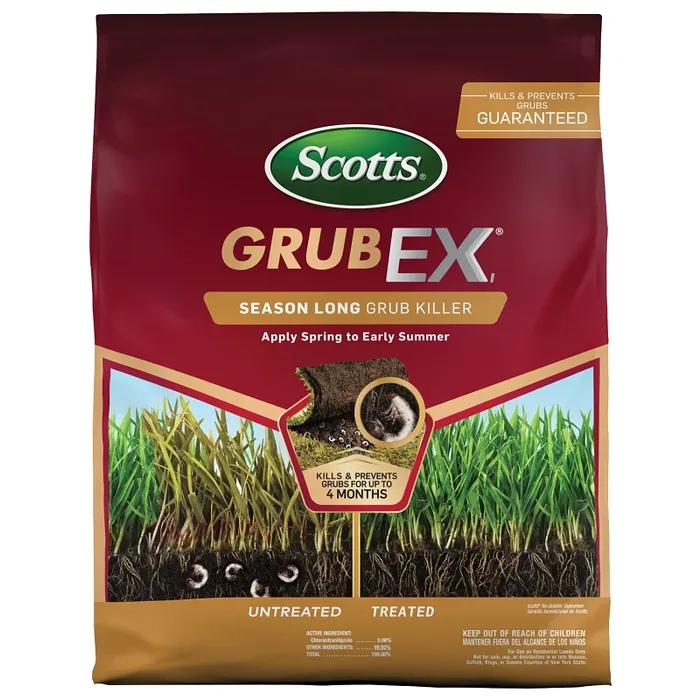
Image source: Bing (Web (fair-use with source credit))
| Product Type | Examples | Best For | Approximate Cost |
|---|---|---|---|
| Biological (slow build) | Milky spore powder | Long-term prevention, organic lawns | $25-50 per 3,500 sq ft |
| Biological (fast acting) | Heterorhabditis nematodes | Curative organic control, moderate infestations | $30-60 per 1,000 sq ft |
| Preventive chemical | Chlorantriliprole granules | Stopping next season's damage | $25-40 per 5,000 sq ft |
| Curative chemical | trichlorfon granules | Emergency control of active infestation | $30-50 per 5,000 sq ft |
| Professional service | Custom application by lawn care company | Hands-off approach, large lawns | $300-500+ per application |
For most homeowners dealing with their first grub infestation, beneficial nematodes offer the best balance of effectiveness and environmental safety. They're available at most garden centers and online retailers. Apply them according to package directions, keep the soil moist, and you should see meaningful results within two to three weeks.
If you're dealing with a severe infestation where large sections of lawn are already dead or dying, a curative chemical like trichlorfon gives you the fastest results. You can follow up with nematodes or milky spore later for longer-term prevention.
Secondary Damage: When Skunks and Raccoons Make the Problem Worse
The grubs themselves are only part of the problem. Skunks, raccoons, and birds love to feast on them, and the damage these animals cause to your lawn is often worse than the grubs themselves. Skunks dig conical holes, about 3 to 4 inches across, as they nose through the turf searching for grubs.
Raccoons peel back larger sections of sod with their dexterous paws, often doing more destruction in one night than grubs do in a month.
How to Stop the Digging
The only real solution to animal damage is to eliminate their food source. Once you've treated the grubs and the population drops, the animals will move on to other food sources.
Some additional tactics can help in the meantime:
- Ammonia-soaked rags placed in active digging areas can deter skunks with the smell. Replace them every few days.
- Motion-activated sprinklers startle raccoons and skunks without harming them.
- Chicken wire or netting laid over heavily damaged areas can prevent digging while grass recovers.
- Keep outdoor lights off at night if possible, since they can attract raccoons to your yard.
Avoid mothballs, chemical repellents not labeled for animal control, or anything that could harm wildlife or contaminate your soil. The goal is to solve the grub problem and let nature take its course from there.
When to Call a Professional vs. Handling It Yourself
Most grub control is well within reach of a handy homeowner. But there are situations where calling a licensed lawn care professional makes more sense.
DIY approach works best when:
- You've confirmed the problem and have a moderate infestation (under 20 grubs per square foot)
- Your lawn is under 5,000 square feet, making granular application manageable with a basic spreader
- You're comfortable reading and following product label instructions
- You're willing to time your application correctly and monitor results
Call a professional when:
- Your lawn exceeds 10,000 square feet and you can't justify buying a spreader
- You're dealing with recurring annual grub problems that haven't responded to DIY treatment
- You have a severe infestation covering most of your lawn and need immediate results
- You're uncomfortable handling chemical pesticides, especially near vegetable gardens or water features
- You've had trouble identifying the pest and want expert diagnosis
Licensed lawn care companies have access to professional-grade products and equipment that aren't available to consumers. They also know the specific grub species common in your region and the optimal timing for your area.
Building a Long-Term Grub Prevention Plan for Your Lawn
A single treatment won't keep grubs away forever. The most effective approach is a prevention plan that combines cultural practices with strategic treatments over multiple seasons.
Start by identifying which species you're dealing with. Japanese beetle grubs, June bug grubs, and European chafer grubs all have slightly different life cycles and peak activity periods. Your local cooperative extension service is an excellent resource for grub species identification.
They also offer region-specific timing recommendations that generic product labels can't match.
Here's a practical annual rhythm that works for most cool-season turfgrass lawns in the eastern and midwestern US:
- Late spring (May to early June): Apply preventive treatment if you had problems last year. This is your single most important application window.
- Late summer (August to early September): Sample your lawn. Check grub counts in damaged areas. Apply curative treatment if counts exceed 10 per square foot.
- Fall: Apply milky spore to begin long-term biological control establishment. Apply beneficial nematodes if you missed earlier windows.
- Winter: Note problem areas for next year. Service your spreader and order products for spring.
- Ongoing: Maintain healthy turf through proper mowing, watering, and fertilization. Thick, healthy grass tolerates minor grub feeding much better than stressed turf.
Consistent monitoring is what separates lawns that stay healthy from those that get hammered year after year. Spend 15 minutes checking your grub count each August. That small investment of time saves you from expensive lawn renovation later.
Frequently Asked Questions
Can I apply grub killer and fertilizer at the same time?
Yes, many grub control products can be applied simultaneously with fertilizer. Use a spreader that can handle both products, and check product labels for any specific compatibility notes.
How do I know if grubs came back after treatment?
Sample your lawn four to six weeks after application using the dig test. A successful treatment should reduce grub counts well below the 10 per square foot threshold.
Do I need to treat my whole lawn or just damaged areas?
Spot treatment works if the infestation is limited to defined areas. Treat a buffer zone beyond visible damage since grubs often spread outward from initial hotspots.
Is it too late to treat grubs in October?
In most regions, it's getting late by October. Grubs begin moving deeper into the soil as temperatures drop. You can still treat successfully if grubs are still active in the upper soil layer, but your window is closing fast.
Will grub damage repair itself without treatment?
Mild grub damage often recovers with proper watering and fertilization. Severely damaged areas where sod peels away will not recover on their own and require overseeding or sodding.
Are there any grub-resistant grass varieties?
No turfgrass variety is truly grub-resistant. Tall fescue and perennial ryegrass tend to tolerate minor grub feeding better than Kentucky bluegrass due to deeper, more robust root systems.