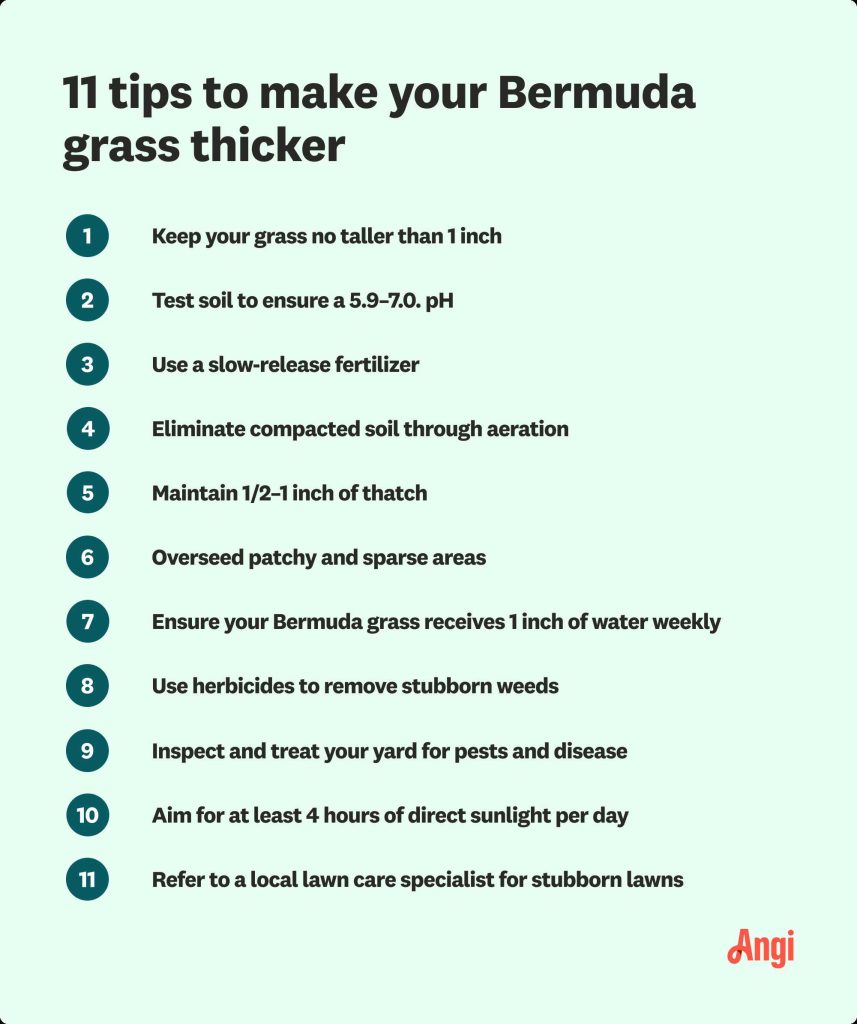
To make your Bermuda grass thicker and greener, start by ensuring proper fertilization, regular watering, and aeration. Overseeding and controlling weeds also play a crucial role in achieving a lush, healthy lawn. With consistent care and attention to soil health, you’ll see your Bermuda grass transform into a dense, vibrant carpet in no time.
Getting your Bermuda grass to thrive into a thick, green landscape is all about the right balance of care and maintenance. It’s a grass that loves warmth and sunshine but needs tailored attention to reach its full potential. Proper watering, fertilization, aeration, and weed control work together to promote dense growth and vibrant color. Whether you’re preparing your lawn for summer or just want to boost its health, understanding these key practices can make all the difference. Keep reading to discover practical tips and tricks that will turn your lawn into a lush, inviting space you’ll be proud of.

How do I make my Bermuda grass thicker and greener?
Understanding Bermuda Grass Growth
Bermuda grass is a warm-season grass known for its durability and quick recovery from damage. To make it thicker and greener, you need to understand how it grows. It spreads through both above-ground runners called stolons and underground roots called rhizomes. Proper care encourages these to spread more densely, filling in bare spots.
Healthy Bermuda grass has a deep green color and a thick, lush appearance. Its growth depends on factors like soil health, water, sunlight, and nutrients. Recognizing these elements helps you create the perfect environment for it to thrive.
Optimal Watering Practices for Lush Bermuda
Adequate watering is essential for vibrant, thick Bermuda grass. It prefers deep, infrequent watering that penetrates the soil to encourage deep root growth.
- Water deeply once or twice a week, depending on weather conditions.
- Aim to provide about 1 to 1.5 inches of water each time.
- Ensure the soil remains moist but not waterlogged to prevent root rot.
- Adjust watering frequency during rainy seasons or extreme heat.
Consistent moisture helps the grass develop strong roots, making it more resistant to drought and disease. Proper watering also enhances the grass’s natural color, turning it a rich, vibrant green.
Fertilization for a Thicker, Greener Lawn
Feeding Bermuda grass with the right nutrients is key to increasing thickness and color. Use a balanced fertilizer formulated for warm-season grasses that contains nitrogen, phosphorus, and potassium.
Timing Your Fertilizer
Fertilize during the active growing season, typically from late spring to late summer. Avoid fertilizing in winter when the grass goes dormant.
How to Fertilize Effectively
- Apply fertilizer evenly across the lawn using a broadcast spreader.
- Follow recommended application rates to avoid overfeeding, which can cause disease.
- Water immediately after fertilizing to help nutrients penetrate the soil.
Using slow-release nitrogen fertilizers promotes steady growth and a consistent green color. Regular feeding, approximately every six to eight weeks, maintains optimal lawn health.
Proper Mowing for Thicker Bermudagrass
Mowing practices greatly influence the density of Bermuda grass. Cutting too short can stress the grass, while mowing too high may result in a sparse appearance.
Ideal Mowing Height
Maintain Bermuda grass at a height of about 1.5 to 2.5 inches. This height promotes healthy tiller production and prevents weeds from invading.
Tips for Healthy Mowing
- Mow in different directions to prevent soil compaction and thatch buildup.
- Sharpen mower blades regularly to ensure clean cuts that reduce stress.
- Never cut more than one-third of the grass height at once to avoid damaging the turf.
Consistent mowing encourages dense growth by stimulating the grass to produce new shoots, making your lawn appear thicker and greener.
Aeration and Dethatching for Soil Health
Compacted soil and thatch buildup can impede water, air, and nutrient penetration, leading to thin, weak turf. Aeration and dethatching improve soil conditions and promote healthier growth.
Why Aerate?
Aeration involves creating small holes in the soil to relieve compaction, allow roots to grow deeper, and improve nutrient uptake.
How to Aerate
- Use a spike or plug aerator to perforate the soil thoroughly.
- Aerate at least once a year or more in high-traffic areas.
- Follow aeration with overseeding for better density.
Understanding Thatch and Dethatching
Thatch is a layer of dead grass and roots that accumulates between the soil and live grass. Excess thatch inhibits water and nutrient absorption.
- Remove thatch using a dethatching rake or a power dethatcher.
- Dethatch when thatch exceeds half an inch thick.
- Follow up with overseeding to fill in thin areas.
Regular aeration and dethatching help Bermuda grass grow more densely, resulting in a thicker, greener lawn.
Overseeding and Patch Repair
Overseeding introduces new grass seed into sparse or bare areas, making your Bermuda lawn thicker and more uniform.
Best Time to Overseed
Perform overseeding in late spring or early summer when soil temperatures are warm enough for seed germination.
Steps for Successful Overseeding
- Prepare the soil by mowing the grass short and raking away debris.
- Spread high-quality Bermuda seed evenly across the lawn.
- Lightly rake the seed into the soil for good seed-to-soil contact.
- Water regularly to keep the soil moist during germination.
Consistently overseeding helps fill in thin spots and enhances overall turf density, resulting in a thicker appearance.
Controlling Weeds and Pests
Weeds and pests can compete with Bermuda grass for nutrients and water, leading to thinner, unhealthy areas. Effective control measures keep your lawn lush and vibrant.
Weed Management
Apply pre-emergent herbicides in early spring to prevent weed seeds from sprouting.
- Use post-emergent herbicides for existing weeds, following label instructions.
- Regularly inspect your lawn and remove weeds manually if possible.
Pest Prevention
Maintain a healthy lawn through proper watering, fertilization, and mowing, which makes it less attractive to pests.
- Address pest infestations promptly with appropriate insecticides.
- Encourage beneficial insects like ladybugs that feed on harmful pests.
Healthy Bermuda grass resists weeds and pests better, keeping it thick and green all season long.
Climate and Environmental Factors
Understanding your local climate helps you tailor your lawn care routine. Bermuda grass prefers warm, sunny conditions and well-drained soil.
Sunlight Requirements
Ensure your Bermuda lawn gets at least six hours of direct sunlight daily for optimal growth.
Soil Conditions
Test your soil regularly to monitor pH levels, aiming for a pH of 6.0 to 7.0. Amend soil with lime or sulfur as needed to keep it in the ideal range.
Temperature Range
Bermuda grass thrives in temperatures between 75°F and 95°F. Protect it during cooler months or consider overseeding with other grasses for year-round greenery.
Regular Maintenance and Monitoring
Consistent care keeps your Bermuda grass healthy and vibrant.
- Monitor for signs of disease, pests, or nutrient deficiencies.
- Adjust watering, fertilization, and mowing as needed based on seasonal changes.
- Keep debris off the lawn to prevent disease and promote even growth.
Maintaining a routine and paying close attention to your lawn’s needs ensures it remains thick and green.
By combining these practices—proper watering, fertilization, mowing, aeration, overseeding, weed and pest control, and environmental management—you can significantly improve the thickness and color of your Bermuda grass. Regular attention and adjustments give your lawn an attractive, lush appearance that stands out in your yard. Remember, patience and consistency are key to achieving the best results for a vibrant, dense Bermuda grass lawn.
Bermuda Lawn Care – 5 Basics – For A Nice Green Lawn – Beginners Start Here!
Frequently Asked Questions
What watering practices help improve the thickness and color of Bermuda grass?
Consistent watering encourages healthy root growth, which leads to thicker and greener Bermuda grass. Water early in the morning to allow excess moisture to evaporate and prevent diseases. Ensure the soil remains evenly moist but not waterlogged. Deep, infrequent watering promotes deeper roots and a more resilient lawn.
How can fertilization impact the density and hue of Bermuda grass?
Applying the right type and amount of fertilizer significantly enhances both the density and color of Bermuda grass. Use a nitrogen-rich fertilizer during the active growing season, following recommended application rates. Avoid over-fertilizing, which can cause thatch buildup and other problems. Regular feeding helps maintain vigorous growth and vibrant green color.
In what ways does mowing height influence the grass’s thickness and appearance?
Keeping Bermuda grass mowed at the proper height, around 1 to 1.5 inches, promotes a dense turf by encouraging lateral growth and reducing weed invasion. Mow regularly to prevent the grass from becoming too tall, which can shade lower blades and weaken the overall health of the lawn. Proper mowing practices help produce a lush, even lawn.
What soil treatments can contribute to a healthier, thicker Bermuda grass lawn?
Testing your soil and adjusting pH levels as needed creates an optimal environment for Bermuda grass. Incorporate soil amendments like organic matter or compost to improve drainage and nutrient availability. Aerating the soil also alleviates compaction, allowing roots to grow deeper and support a thicker turf.
How does addressing pest and weed issues support a richer Bermuda grass surface?
Controlling pests and weeds prevents competition for nutrients and water, enabling your Bermuda grass to grow more vigorously. Use appropriate herbicides and pest control methods responsibly, following label instructions. Maintaining a healthy lawn through proper care and preventative measures supports the development of a thicker, greener turf.
Final Thoughts
To make your Bermuda grass thicker and greener, start by maintaining proper mowing height and avoiding cutting too short. Apply a balanced fertilizer regularly to provide essential nutrients. Aerate the soil to improve water and nutrient absorption, promoting healthy growth.
Water your lawn deeply but infrequently to encourage deep root growth. Overseed bare areas to fill in thin patches, ensuring a dense turf.
How do I make my Bermuda grass thicker and greener? Consistent care and proper practices lead to a lush, vibrant yard.