Rear-wheel drive (RWD) mowers offer better traction and control on uneven terrain, making them ideal for sloped or rocky lawns. While not perfect for every situation, they outperform front-wheel drive models in challenging conditions. Choosing the right mower depends on your lawn’s specific needs and your mowing preferences.
Key Takeaways
- Rear-wheel drive improves traction: RWD mowers push themselves forward using rear wheels, providing better grip on slopes and loose soil compared to front-wheel drive models.
- Better control on uneven ground: The weight distribution of RWD mowers helps maintain stability when navigating bumps, dips, and rocky patches.
- Reduced risk of scalping: With more weight at the rear, RWD mowers are less likely to lift over tall grass or uneven spots, preventing scalping.
- Not ideal for tight spaces: RWD mowers can be harder to maneuver in small or cluttered areas due to their turning radius.
- Requires proper maintenance: Drive belts and rear wheels need regular inspection to ensure smooth operation on challenging terrain.
- Consider terrain type: For flat, open lawns, front-wheel drive may suffice, but RWD excels on hilly or rough landscapes.
- Self-propelled vs. push models: Self-propelled RWD mowers reduce physical strain on uneven ground, making them a smart investment for difficult yards.
Quick Answers to Common Questions
Is rear-wheel drive better for hills?
Yes, rear-wheel drive mowers are better for hills because the rear wheels provide more traction and push the mower upward, reducing slipping and improving control.
Can a rear-wheel drive mower get stuck on soft ground?
While rear-wheel drive improves traction, very soft or muddy ground can still cause problems. Choose a mower with deep-tread tires for better grip.
Do rear-wheel drive mowers require more maintenance?
Yes, the drive belt and rear wheels need regular inspection and maintenance to ensure smooth operation, especially on uneven terrain.
Are rear-wheel drive mowers heavier?
Generally, yes. The added weight at the rear improves stability but can make the mower harder to push on flat, even ground.
Can I use a rear-wheel drive mower on a flat lawn?
Yes, but it may be overkill. Front-wheel drive or push mowers are lighter and more maneuverable on flat lawns, offering better fuel efficiency.
📑 Table of Contents
- Introduction: Mowing on Rough Terrain
- How Rear-Wheel Drive Works
- Advantages of Rear-Wheel Drive on Uneven Ground
- Limitations of Rear-Wheel Drive Mowers
- When to Choose a Rear-Wheel Drive Mower
- Tips for Mowing Uneven Ground with a Rear-Wheel Drive Mower
- Alternatives to Rear-Wheel Drive
- Conclusion: Is a Rear-Wheel Drive Mower Better for Uneven Ground?
Introduction: Mowing on Rough Terrain
Mowing your lawn shouldn’t feel like a workout—or worse, a safety hazard. If your yard has slopes, rocks, or uneven patches, choosing the right mower becomes critical. One of the most debated topics among lawn care enthusiasts is whether a rear-wheel drive mower is better for uneven ground. The answer isn’t simple, but understanding how rear-wheel drive works can help you decide what’s best for your lawn.
Rear-wheel drive (RWD) mowers push themselves forward using their rear wheels, which increases traction and control. This design shines on hilly, rocky, or bumpy terrain where front-wheel drive models might struggle. But is RWD always the superior choice? Let’s explore the advantages, limitations, and real-world performance of rear-wheel drive mowers on uneven ground.
How Rear-Wheel Drive Works

Visual guide about Is a Rear-wheel Drive Mower Better for Uneven Ground?
Image source: easylawnmowing.co.uk
Unlike front-wheel drive mowers that pull themselves forward, rear-wheel drive mowers use their back wheels to push the machine. This creates more contact with the ground, especially on slopes or loose soil. The engine powers the rear wheels through a drive belt, transferring force directly to the ground beneath.
This design gives RWD mowers a mechanical edge on challenging terrain. Because the rear wheels do the pushing, they maintain better grip and reduce slipping. This is particularly useful on hills or wet ground where traction is limited. Additionally, the weight of the mower is concentrated toward the back, which helps keep the front blades stable and prevents scalping.
Advantages of Rear-Wheel Drive on Uneven Ground

Visual guide about Is a Rear-wheel Drive Mower Better for Uneven Ground?
Image source: threetwohome.com
1. Superior Traction and Stability
One of the biggest benefits of rear-wheel drive is improved traction. When you’re mowing a slope or a patch with rocks, the rear wheels grip the ground better, reducing the chance of the mower sliding or losing control. This stability is essential for both safety and consistent cutting.
For example, imagine mowing a steep hill. A front-wheel drive mower might struggle to climb, while a rear-wheel drive model pushes its way up with confidence. The rear wheels anchor the machine, making it easier to navigate without tipping or skidding.
2. Reduced Scalping on Bumps
Scalping—when the mower blade cuts too low—happens when the front of the mower lifts over uneven spots. On a rear-wheel drive mower, the heavier rear end keeps the front blades closer to the ground. This prevents the mower from bouncing or lifting, ensuring a cleaner, even cut.
This is especially helpful on lawns with molehills, tree roots, or compacted soil. Instead of cutting into the dirt, the mower glides over obstacles with minimal disruption.
3. Better Performance on Wet or Soft Ground
Wet lawns are tricky for any mower. Front-wheel drive models can sink or slip because the front wheels don’t provide enough push. Rear-wheel drive mowers, however, use their back wheels to move forward, reducing the risk of getting stuck. The added weight at the rear also helps the mower stay grounded on soft soil.
Limitations of Rear-Wheel Drive Mowers
Visual guide about Is a Rear-wheel Drive Mower Better for Uneven Ground?
Image source: m.media-amazon.com
1. Tight Spaces Are a Challenge
While RWD mowers excel on open, uneven terrain, they struggle in confined areas. Their turning radius is wider than front-wheel drive models, making it hard to navigate narrow paths or around garden beds. If your lawn has a lot of obstacles or small zones, a front-wheel drive mower might be more practical.
2. Higher Maintenance Needs
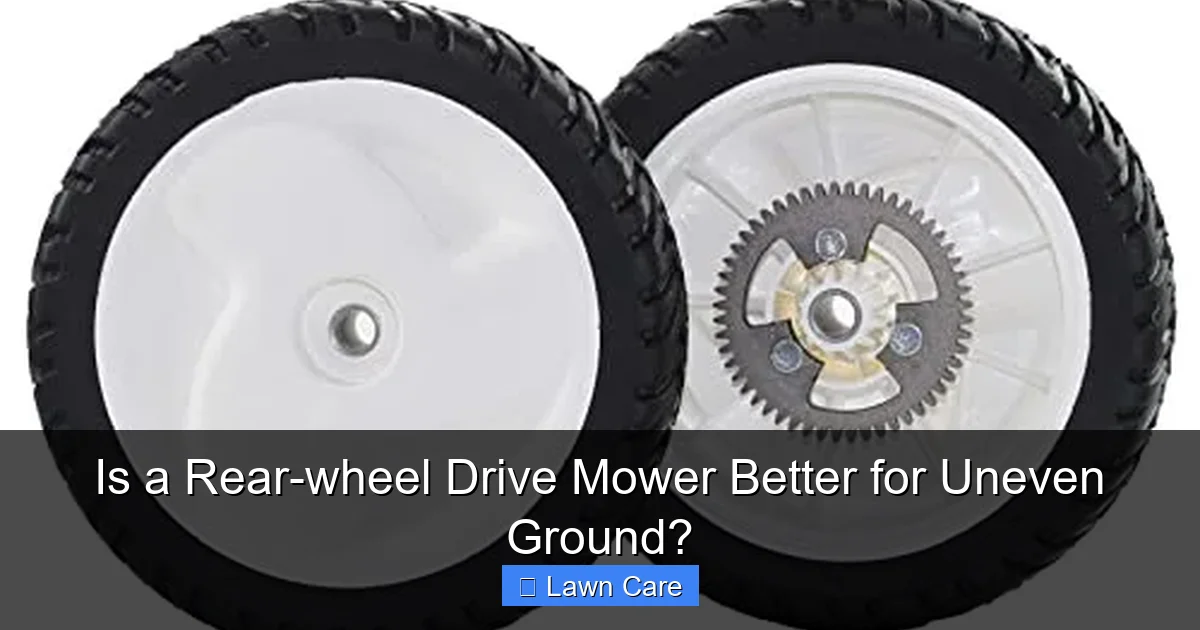
The drive system in a rear-wheel drive mower includes belts, pulleys, and rear wheels that require regular maintenance. If the drive belt wears out or the rear wheels become misaligned, the mower may lose power or traction. This means more frequent check-ups compared to simpler push mowers.
3. Not Ideal for Flat, Open Lawns
If your lawn is mostly flat and smooth, a rear-wheel drive mower might be overkill. Front-wheel drive models are lighter, easier to push, and more maneuverable in such conditions. You’d get better fuel efficiency and less wear on the drive components.
When to Choose a Rear-Wheel Drive Mower
Hilly or Sloped Lawns
If your yard has inclines or multiple slopes, a rear-wheel drive mower is a smart choice. The added traction helps prevent slipping and makes mowing safer and more efficient. For homeowners with steep backyards, RWD mowers reduce the physical effort needed to push the machine uphill.
Rocky or Uneven Terrain
Lawns with rocks, roots, or raised mounds benefit from the stability of rear-wheel drive. The mower’s weight distribution prevents scalping and reduces the chance of the blades hitting hard objects. This protects both the mower and your lawn from damage.
Large Yards with Obstacles
In big yards with trees, flower beds, or fences, a self-propelled rear-wheel drive mower can save time and energy. The motorized drive reduces strain, especially when crossing uneven patches. You’ll spend less time pushing and more time enjoying a perfectly cut lawn.
Tips for Mowing Uneven Ground with a Rear-Wheel Drive Mower
Adjust the Wheel Height
Most rear-wheel drive mowers allow you to adjust the height of the rear wheels. Set them slightly higher on uneven ground to improve balance and reduce the risk of tipping. This simple tweak can make a big difference in stability.
Use the Right Blade Setting
Keep your blades sharp and set them to the appropriate height. On uneven ground, a slightly higher cut helps prevent scalping. Avoid going too low, especially over bumps or wet grass.
Take Your Time
Don’t rush. Mowing uneven terrain requires patience. Move slowly and steady, especially on slopes. This gives the mower time to adjust and reduces the chance of accidents.
Inspect the Drive System Regularly
Check the drive belt and rear wheels before each use. Replace worn parts promptly to maintain traction and performance. A well-maintained mower handles rough ground better and lasts longer.
Alternatives to Rear-Wheel Drive
Front-Wheel Drive Mowers
Front-wheel drive mowers are lighter and easier to maneuver in small spaces. They work well on flat, even lawns but may slip on slopes or soft ground. If your yard is mostly level, this type of mower could be a cost-effective option.
All-Wheel Drive (AWD) Mowers
All-wheel drive mowers use power on both front and rear wheels, offering the best of both worlds. They provide excellent traction and control on uneven ground but are more expensive and complex to maintain. These are ideal for very challenging landscapes.
Self-Propelled vs. Push Mowers
Whether a mower is self-propelled or push doesn’t depend on drive type—it’s about how it moves. Self-propelled mowers, including RWD models, reduce physical effort by using motors to move forward. Push mowers require you to do all the work, which can be tough on steep or rough terrain.
Conclusion: Is a Rear-Wheel Drive Mower Better for Uneven Ground?
So, is a rear-wheel drive mower better for uneven ground? The answer is yes—but with conditions. RWD mowers offer superior traction, stability, and control on slopes, rocks, and soft soil. They reduce scalping and make mowing safer and more efficient in challenging environments. However, they may be less practical in tight spaces or flat, open lawns.
If your yard has uneven terrain, a self-propelled rear-wheel drive mower is worth considering. Just remember to maintain the drive system and adjust settings for optimal performance. For more tips on choosing the right mower for your lawn, check out our guide on the best lawn mower for uneven ground.
Ultimately, the best mower is the one that fits your lawn’s needs and your lifestyle. With the right tool, even the trickiest terrain becomes manageable.
Frequently Asked Questions
Is a rear-wheel drive mower better for rocky lawns?
Yes, rear-wheel drive mowers provide better stability and reduce scalping on rocky or uneven surfaces due to their weight distribution and traction.
How do I maintain a rear-wheel drive mower?
Regularly inspect the drive belt, rear wheels, and pulleys. Replace worn parts and keep the mower clean to ensure smooth performance.
Can I convert a front-wheel drive mower to rear-wheel drive?
No, the drive system is built into the mower’s design. Converting one type to another isn’t practical or safe.
Are self-propelled mowers better for uneven ground?
Yes, self-propelled mowers—especially rear-wheel drive models—reduce physical effort and improve control on slopes and rough terrain.
What type of mower is best for steep hills?
A self-propelled rear-wheel drive mower is ideal for steep hills because it offers strong traction and prevents slipping.
Can a rear-wheel drive mower handle wet grass?
Yes, the rear wheels provide better push and grip on wet ground, reducing the chance of slipping compared to front-wheel drive models.