Quick Answer: Yes, you can get rid of crabgrass! Crabgrass can be a pesky weed that invades lawns and gardens, but with the right approach, you can effectively control and eliminate it. In this article, we will explore various methods and strategies to help you tackle the problem of crabgrass and reclaim the beauty of your outdoor space.
Introduction:
Welcome to our blog article on the age-old query, “can you get rid of crabgrass?” If you’ve ever battled with this persistent weed, you know how frustrating it can be. The sight of crabgrass infiltrating your once-pristine lawn can make any homeowner cringe. But fear not, for we are here to guide you through the process of eliminating this unwanted intruder.
Crabgrass, scientifically known as Digitaria, is an annual weed that thrives in warm, sunny environments. It spreads rapidly and can quickly take over your lawn, leaving it looking unsightly and patchy. However, with a combination of effective techniques and a little bit of patience, you can regain control over your turf and restore its lush green beauty.
In this comprehensive article, we will delve into various methods to combat crabgrass. We will explore both natural and chemical approaches, providing you with a range of options to suit your preferences and circumstances. So, get ready to bid farewell to crabgrass and say hello to a healthier, weed-free lawn!

Can You Get Rid of Crabgrass?
Crabgrass is a common problem that many homeowners face in their lawns. It spreads quickly, chokes out desirable grass species, and can make a once lush and green lawn appear unkempt and unsightly. But can you really get rid of crabgrass? In this article, we will delve into the different methods and strategies you can employ to effectively eliminate crabgrass from your lawn.
The Anatomy of Crabgrass
Before diving into the removal techniques, it’s important to understand what crabgrass is and how it grows. Crabgrass, scientifically known as Digitaria spp., is an annual weed that sprouts from seeds each spring. It thrives in warmer climates and tends to invade thin or bare spots in lawns. Identifying crabgrass is relatively easy, as it features broad, finger-like blades and grows in dense clusters.
Preventing Crabgrass
Prevention is key when it comes to dealing with crabgrass. By implementing proactive measures, you can reduce the likelihood of a crabgrass invasion in your lawn. Here are some preventive steps you can take:
- Maintain a healthy lawn: A thick and vigorous lawn will naturally suppress the growth of crabgrass. Regularly fertilize, aerate, and overseed your lawn to keep it strong and healthy.
- Mow at the appropriate height: Set your lawnmower to a height of around 3 inches. Taller grass shades the soil, making it less suitable for crabgrass to germinate.
- Water deeply but infrequently: Deep watering encourages deeper root growth in your lawn, making it more resilient against crabgrass invasion.
- Avoid overwatering: Excessive watering not only weakens your lawn but also creates favorable conditions for crabgrass to thrive.
- Use a pre-emergent herbicide: Applying a pre-emergent herbicide in early spring can prevent crabgrass seeds from germinating. Follow the instructions carefully and apply at the recommended times.
Removing Crabgrass
If crabgrass has already invaded your lawn, there are several methods you can use to effectively remove it. Depending on the severity of the infestation, you may need to employ a combination of these methods:
Hand Pulling
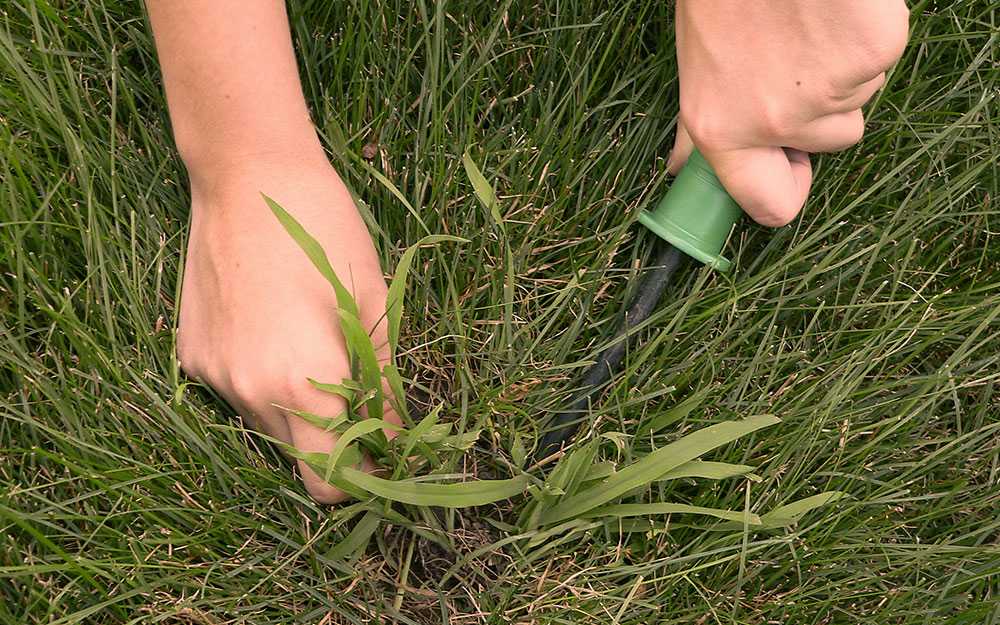
For smaller areas or isolated patches of crabgrass, hand pulling can be an effective method of removal. Here’s how to do it:
- Wet the soil: Water the area thoroughly to make it easier to remove the crabgrass.
- Gently pull: Grasp the crabgrass at its base and gently pull it out, ensuring you remove the entire plant, including the roots.
- Dispose of the crabgrass: Bag and discard the crabgrass to prevent any seeds from spreading.
- Fill the gap: Immediately fill the gap left by the removed crabgrass with soil and grass seed or plug to prevent new weeds from taking its place.
Chemical Control
In cases of larger crabgrass infestations, chemical control methods may be necessary. Here are two common options:
- Post-emergent herbicides: These herbicides are designed to kill actively growing crabgrass. Ensure you choose a selective herbicide that won’t harm your desirable grass species, and follow the instructions carefully when applying.
- Non-selective herbicides: These herbicides kill any plant they come into contact with, so they should be used selectively and with caution. They are most effective for spot treatments or when renovating an entire lawn.
Cultural Practices
In addition to the above methods, adopting certain cultural practices can help control crabgrass:
- Regular and proper mowing: By removing the seed heads of crabgrass before they mature, you can prevent further seed dispersal.
- Follow a proper watering schedule: Consistent and appropriate watering will encourage the growth of your desirable grass species, making it harder for crabgrass to establish.
- Overseed your lawn: By overseeding your lawn with desirable grass species, you can crowd out crabgrass and help fill in thin or bare spots.
- Maintain healthy soil: Conduct a soil test to determine if any nutrients or pH adjustments are needed. Healthy soil promotes a strong and resilient lawn.
Staying Vigilant
Crabgrass can be persistent, and even with proper removal techniques, it may attempt to make a comeback. Regularly inspect your lawn for any signs of crabgrass resurgence and take prompt action to eliminate it. Remember, prevention and maintenance are key to keeping crabgrass at bay and maintaining a beautiful, weed-free lawn.
By implementing a combination of preventive measures, removal techniques, and cultural practices, you can effectively get rid of crabgrass and ensure a healthy, green lawn for years to come. Stay vigilant, be proactive, and enjoy the benefits of a well-maintained lawn.
How to Get Rid of Crabgrass (4 Easy Steps)
Frequently Asked Questions
How can I effectively get rid of crabgrass?
Crabgrass can be a persistent and troublesome weed to eliminate from your lawn or garden. Here are some methods you can try to effectively get rid of crabgrass:
What is the best way to prevent crabgrass from growing?
Prevention is key when it comes to crabgrass. Here are a few steps you can take to prevent the growth of crabgrass:
Is it possible to remove crabgrass manually?
Yes, it is possible to remove crabgrass manually. However, this method is most effective when combined with other control measures. Here’s how you can manually remove crabgrass:
Are there any herbicides specifically designed to target crabgrass?
Yes, there are herbicides available that specifically target crabgrass. When using herbicides, it’s important to follow the instructions carefully to ensure effective control. Here are a few common crabgrass herbicides:
Can I use natural methods to get rid of crabgrass?
Yes, there are natural methods you can use to control and get rid of crabgrass. These methods are often safer for the environment and can be just as effective. Here are a few natural options you can try:
Final Thoughts
In conclusion, getting rid of crabgrass can be a challenging task. However, with proper knowledge and consistent efforts, it is possible to eliminate this stubborn weed from your lawn. Regular mowing, hand pulling, and using herbicides selectively are effective methods to control crabgrass. It is essential to address the root cause, which is often poor lawn maintenance and soil conditions. By improving soil health, promoting a thick and healthy lawn, and implementing preventive measures, such as proper watering and fertilization, you can significantly reduce the occurrence of crabgrass. So, can you get rid of crabgrass? Absolutely, by adopting these strategies and staying vigilant in your lawn care routine.