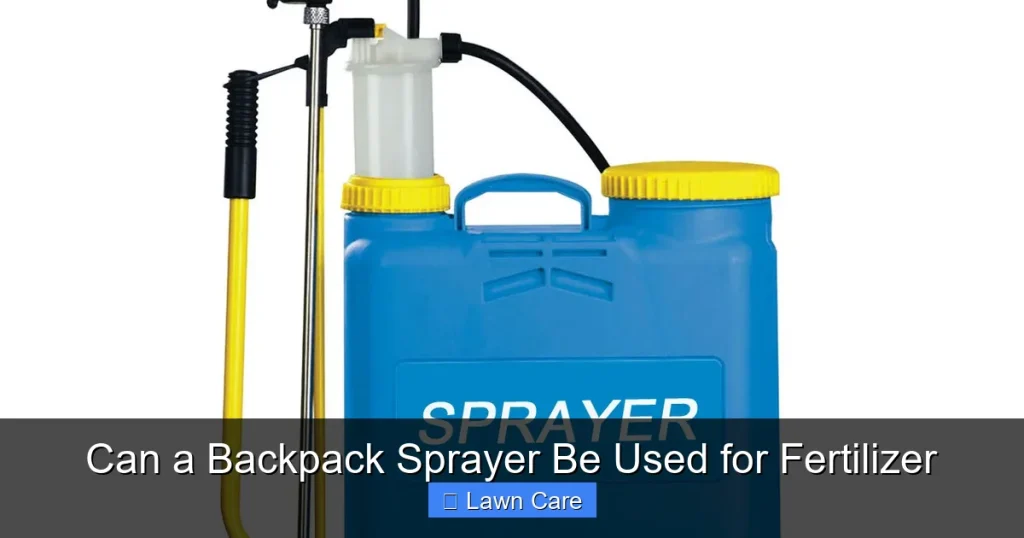
Yes, a backpack sprayer can absolutely be used for fertilizer! This guide will walk you through the process, from choosing the right fertilizer to safely applying it for a thriving lawn. We’ll cover everything you need to know to get the best results from your backpack sprayer, ensuring your plants get the nutrients they need.
Can a Backpack Sprayer Be Used for Fertilizer
Tired of struggling with cumbersome watering cans or uneven broadcast spreaders? You might be wondering if your trusty backpack sprayer, usually reserved for pesticides or herbicides, can lend a hand in feeding your lawn. The good news is, yes, a backpack sprayer can absolutely be used for fertilizer! In fact, it’s a fantastic tool for delivering liquid nutrients directly to your plants, promoting a greener, healthier lawn with less effort.
This comprehensive guide will equip you with all the knowledge you need to confidently use your backpack sprayer for fertilizer application. We’ll cover everything from selecting the right fertilizer to safely and effectively applying it, ensuring your lawn thrives. Get ready to transform your lawn care routine!
Key Takeaways
- Backpack sprayers are versatile tools that can effectively apply liquid fertilizers to lawns and gardens, providing even coverage and precise application.
- Always read and follow the fertilizer label instructions for dilution ratios and application rates to avoid damaging your plants or the sprayer.
- Thoroughly clean your backpack sprayer after each use to prevent clogs, corrosion, and cross-contamination with other lawn care products.
- Choose liquid fertilizers designed for sprayer application and consider their nutrient analysis and any specific needs of your plants.
- Proper safety gear is essential, including gloves, eye protection, and long sleeves, to protect yourself from potential skin irritation or inhalation.
- Regular maintenance of your backpack sprayer, such as checking seals and the pump mechanism, will ensure its longevity and efficient performance.
Understanding Liquid Fertilizers and Backpack Sprayers
Before we dive into the “how-to,” let’s briefly touch upon why this combination works so well.
What are Liquid Fertilizers?
Liquid fertilizers are plant nutrients dissolved in water. This makes them readily available for plant roots to absorb quickly. They are often formulated for specific plant types or to address particular nutrient deficiencies. Applying them via a sprayer ensures an even distribution, allowing each plant to receive a consistent dose of food.
The Advantages of Using a Backpack Sprayer for Fertilizer
Backpack sprayers offer several advantages when it comes to fertilizing:
- Even Coverage: Sprayers create a fine mist that distributes the fertilizer evenly across the target area, preventing missed spots or over-application.
- Precision: You have more control over where and how much fertilizer is applied, which is especially useful for targeted feeding or in areas with mixed plant types.
- Efficiency: For larger lawns, a backpack sprayer is much faster and less physically demanding than using a watering can or a hand-held spreader.
- Faster Nutrient Uptake: When sprayed directly onto the foliage, some nutrients can be absorbed through the leaves (foliar feeding), providing a quick boost.
Step-by-Step Guide: Using Your Backpack Sprayer for Fertilizer
Now, let’s get down to business. Here’s how to effectively use your backpack sprayer for fertilizer application.
Step 1: Choose the Right Fertilizer
Not all fertilizers are created equal, and not all are suitable for sprayer application.
Selecting a Sprayer-Friendly Fertilizer
Look for liquid fertilizers specifically labeled for use in sprayers or those that clearly state they are water-soluble. These are designed to mix easily with water and pass through the sprayer’s nozzle without clogging. Avoid granular fertilizers unless they are specifically designed to be dissolved in water for spraying.
Understanding Fertilizer Ratios
Fertilizers are often described by three numbers, like 10-10-10 or 20-5-10. These represent Nitrogen (N), Phosphorus (P), and Potassium (K), respectively. Nitrogen promotes leaf growth, Phosphorus aids in root development, and Potassium supports overall plant health and disease resistance. The best ratio for your lawn depends on the season, grass type, and soil condition. For example, a spring application might benefit from a higher nitrogen content for green growth. If you’re unsure about the specific needs of your lawn, consider getting a soil test. For general purposes, a balanced fertilizer like 10-10-10 is often a good starting point. You can find some excellent options when exploring the best fertilizer for Bermuda grass or understanding the benefits of slow release fertilizer for Bermuda grass.
Step 2: Prepare Your Sprayer
A clean and well-maintained sprayer is crucial for successful application.
Clean Your Sprayer Thoroughly
If you’ve recently used your sprayer for herbicides or pesticides, it is absolutely essential to clean it thoroughly before using it for fertilizer. Even a tiny residue of chemicals can harm your plants.
- Rinse thoroughly with clean water multiple times.
- Mix a cleaning solution (e.g., commercial sprayer cleaner or a solution of 1 cup of household ammonia per gallon of water, or a strong detergent solution).
- Agitate the solution in the sprayer for at least 15-20 minutes.
- Pump the solution through the wand and nozzle to ensure all internal parts are cleaned.
- Empty the sprayer and rinse again with clean water until no suds or residue remain.
This cleaning process is vital to prevent cross-contamination and ensure the longevity of your sprayer. If you’re looking for the best sprayer for backpack use, ensure it’s designed for durability and ease of cleaning.
Inspect Your Sprayer
Before mixing any product, check that all seals are intact, the pump is functioning correctly, and the nozzle is clear and undamaged. A faulty seal can lead to leaks, and a clogged nozzle will result in uneven application.
Step 3: Mix the Fertilizer Solution
Follow the label instructions precisely.
Dilution Ratios are Key
The fertilizer packaging will provide specific instructions on how much product to mix with water for a given area. This is critical! Too strong a solution can burn your lawn, while too weak a solution will be ineffective. For example, a label might say “1 ounce of product per gallon of water for 100 sq ft.”
Measure Accurately
Use measuring cups and spoons for accuracy. Don’t eyeball it! Add the recommended amount of fertilizer to the sprayer tank first, then add the specified amount of water.
Mix Well
Close the lid securely and agitate the sprayer to ensure the fertilizer is completely dissolved and mixed evenly with the water. Some fertilizers might require a bit more shaking or pumping to ensure full dissolution.
Step 4: Application Time!
Timing and technique matter for optimal results.
Choose the Right Time
The best time to apply liquid fertilizer is when your lawn is actively growing, but not under extreme stress from heat or drought. Early morning or late afternoon is generally ideal. Avoid applying when rain is imminent, as it could wash away the fertilizer before it’s absorbed. Also, ensure the grass is dry to prevent the fertilizer from sticking unevenly to wet blades.
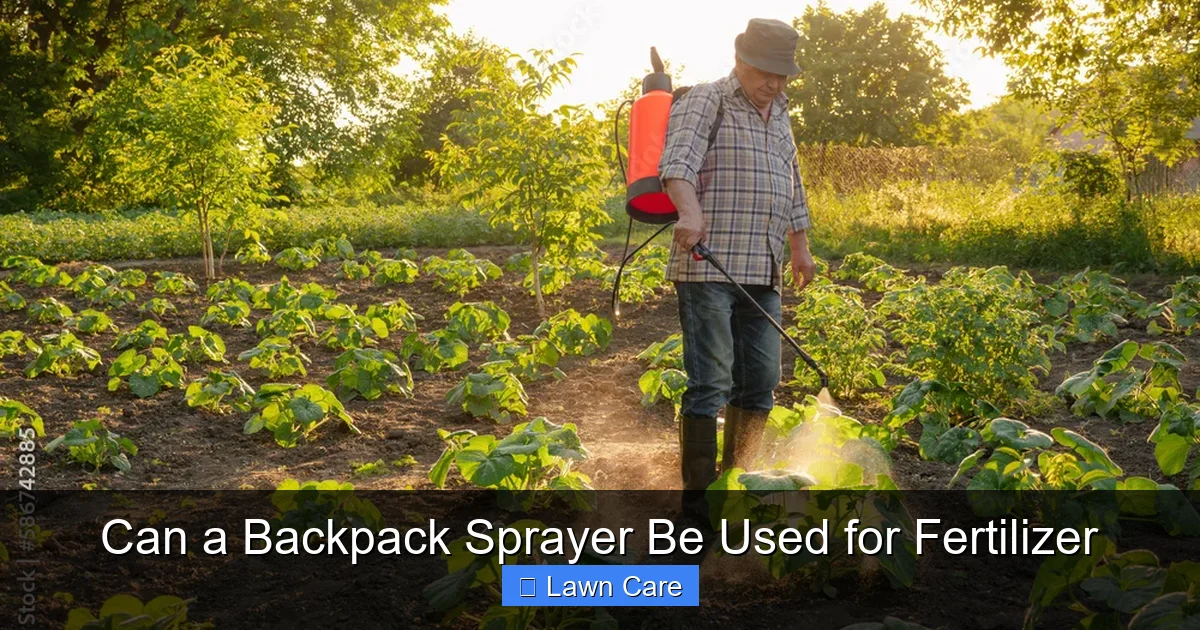
Visual guide about Can a Backpack Sprayer Be Used for Fertilizer
Image source: as1.ftcdn.net
Consider the weather forecast. A very hot day can increase the risk of fertilizer burn, even with proper dilution. If you’re unsure about the best feeding schedule for your grass type, articles on the best fertilizers for specific grasses, like what is the best fertilizer for Bermuda grass, can offer valuable insights.
Apply Evenly
Walk at a steady, consistent pace. Overlap your spray passes slightly to ensure complete coverage. Think of it like painting a wall – you want to avoid streaks and missed patches. Hold the wand at a consistent height. Some sprayers come with adjustable nozzles, allowing you to control the spray pattern. A fan spray pattern is generally best for lawn application.
Application Rates
Pay attention to the recommended application rate per square foot. Many liquid fertilizers come with charts or guidelines for this. For example, you might need to cover 1000 sq ft with a specific amount of diluted solution. Work out how much solution your sprayer holds and how much area you can cover with one tank.
Step 5: Post-Application and Cleanup
This is as important as the application itself!
Rinse Your Sprayer Immediately
As soon as you’ve finished applying fertilizer, rinse your sprayer with clean water. This prevents fertilizer residue from drying and clogging the system or corroding the tank and pump. Pump the rinse water through the wand and nozzle.
Clean Your Safety Gear
Wash any gloves or clothing that came into contact with the fertilizer solution.
Store Properly
Store your clean backpack sprayer in a dry, protected area, away from extreme temperatures.
Tips for Success
Here are some extra tips to make your fertilizer application even better:
- Start Small: If you’re new to using a backpack sprayer for fertilizer, try fertilizing a small section of your lawn first to get a feel for the process and your sprayer’s output.
- Adjust Your Pace: You may need to adjust your walking speed based on the fertilizer’s coverage rate and the nozzle’s output. Experiment in a non-critical area if possible.
- Consider Foliar Feeding: Some fertilizers are specifically designed for foliar feeding, meaning they are absorbed through the leaves. This can provide a quick green-up for your lawn. Ensure the fertilizer is labeled for this purpose.
- Fertilize When Grass is Dormant (with caution): For some grass types, like dormant Bermudagrass in winter, applying a slow-release fertilizer can be beneficial. However, always check the specific recommendations for your grass type.
- Combine with Other Treatments (Carefully): Some products are “weed and feed” formulas. You can sometimes combine these with your existing fertilizer strategy, but be cautious and never mix different chemical products without verifying their compatibility. Understanding if you can combine summer weed and feed with fertilizer is key.
Troubleshooting Common Issues
Even with the best intentions, you might encounter a few hiccups.
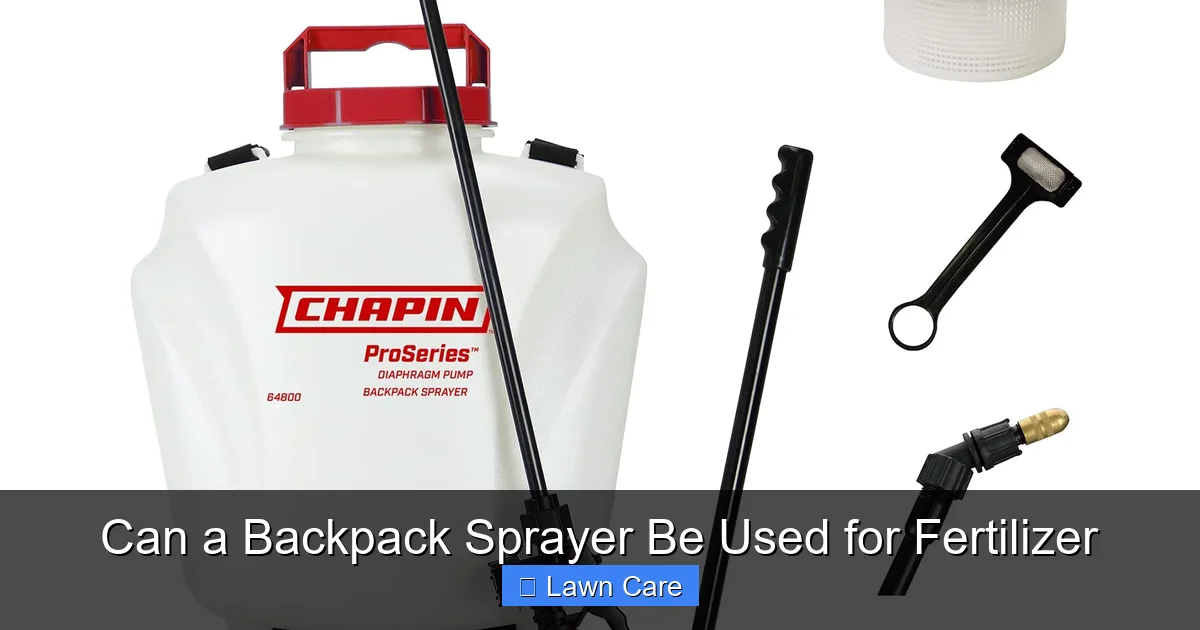
Clogged Nozzle
Problem: The spray stops or becomes a dribble.
Visual guide about Can a Backpack Sprayer Be Used for Fertilizer
Image source: m.media-amazon.com
Visual guide about Can a Backpack Sprayer Be Used for Fertilizer
Image source: dh1muyqdu88ie.cloudfront.net
Solution: This is usually due to undissolved fertilizer particles or debris. Clean the nozzle thoroughly. If the fertilizer didn’t mix well, you might need to re-mix the solution. Ensure you’re using a sprayer-friendly fertilizer and that it’s fully dissolved.
Uneven Application
Problem: Streaks of darker green or yellow patches on your lawn.
Solution: This is often caused by inconsistent walking speed or overlapping spray passes. Try to maintain a steady pace and slightly overlap your passes on subsequent rows. Make sure the sprayer is producing a consistent mist.
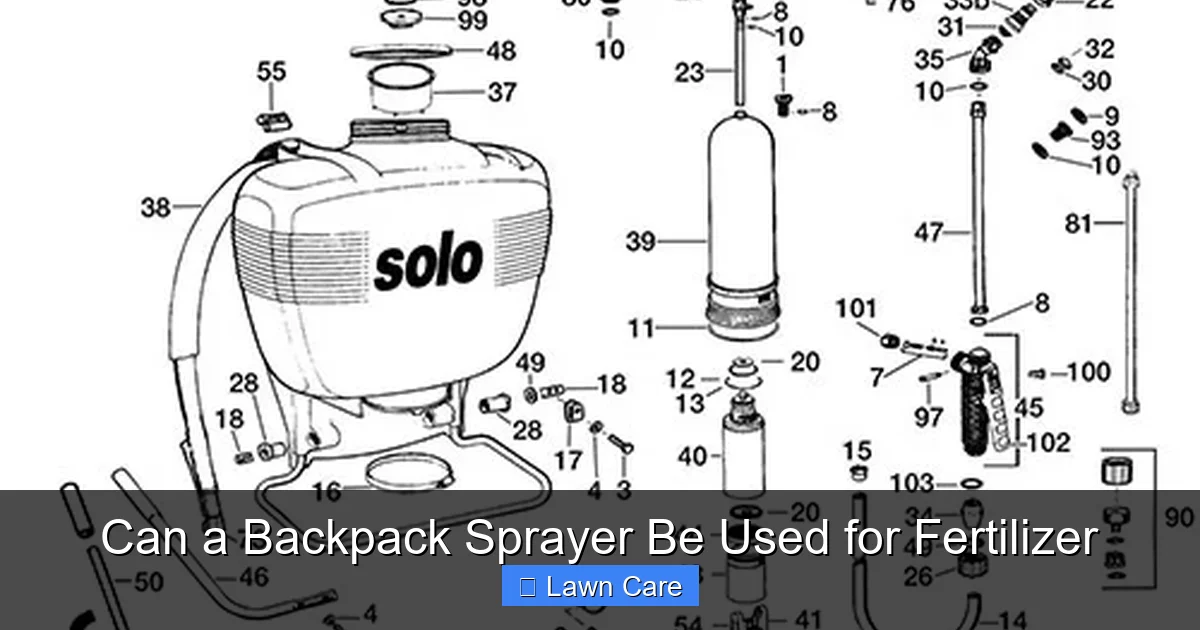
Leaking Sprayer
Problem: Liquid is dripping from the tank or wand.
Solution: Check all seals and connections. Tighten any loose fittings. If a seal is cracked or worn, it may need to be replaced. This is a good time to check out resources on the best sprayer for backpack use to see if a new model might be a better fit.
Damage to Plants (Burn)
Problem: Brown or yellowing patches that look “scorched.”
Solution: This almost always means the fertilizer solution was too concentrated. Dilute it more next time, and always follow the label instructions precisely. Water the affected area thoroughly to help flush out excess fertilizer.
Safety First!
When working with fertilizers, even those designed for home use, always prioritize safety.
- Wear Protective Gear: Always wear chemical-resistant gloves, eye protection (safety glasses or goggles), and long-sleeved shirts and long pants to prevent skin contact.
- Avoid Inhalation: Do not inhale the spray mist. Try to spray with the wind at your back, but be mindful of where the mist is drifting.
- Read the Label: This is your most important safety tool. Follow all instructions and warnings on the fertilizer product and your sprayer manual.
- Keep Children and Pets Away: Ensure children and pets are out of the area while you are spraying and until the fertilizer has dried and is no longer a hazard. Some fertilizers are safer for pets, so check product labels for information on what is the safest summer fertilizer for pets.
Conclusion
Using a backpack sprayer for fertilizer application is a smart and efficient way to nourish your lawn. By understanding the types of fertilizers available, preparing your equipment properly, and following safe application practices, you can achieve a lush, healthy lawn with greater ease. Remember to always read and follow product labels, clean your equipment diligently, and prioritize your safety. With a little practice, your backpack sprayer will become an indispensable tool in your lawn care arsenal, helping you maintain a beautiful and vibrant outdoor space. So, go ahead and fill up that tank – your lawn will thank you for it!