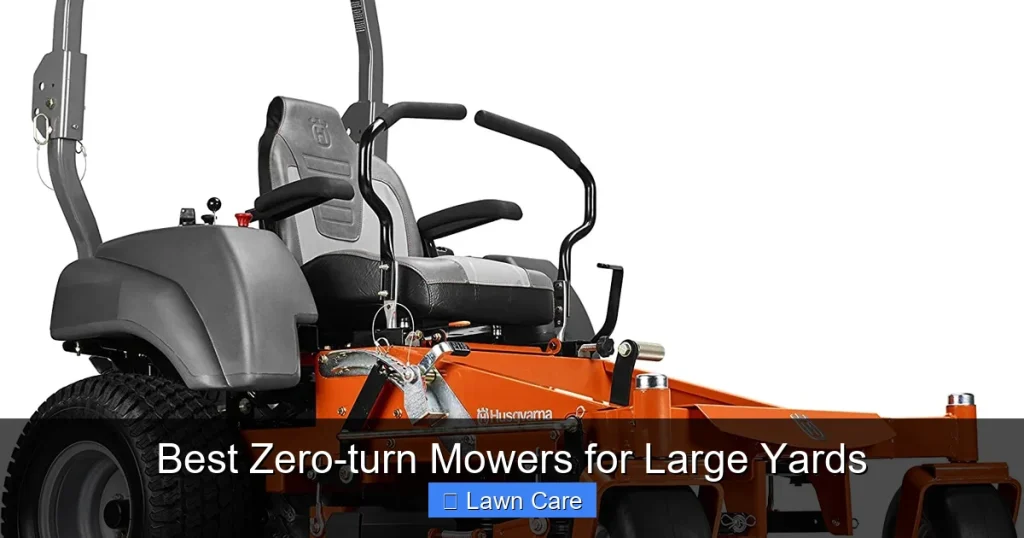
Zero-turn mowers are the ultimate solution for maintaining large yards quickly and efficiently. These powerful machines offer unmatched maneuverability, reducing mowing time by up to 50% compared to traditional riding mowers. Whether you have a 1-acre estate or a sprawling suburban lot, the right zero-turn can save you hours of labor while giving your lawn a professional finish.
If you’ve got a big yard—say, more than half an acre—you know the struggle: mowing takes forever, you end up circling the same patch over and over, and by the time it’s done, you’re tired and frustrated. Enter the best zero-turn mowers for large yards. These aren’t just any riding mowers—they’re precision-engineered machines designed to cut wide paths, turn on a dime, and get the job done in record time.
Unlike traditional lawn tractors that pivot around a single rear axle, zero-turn mowers use two independent drive wheels controlled by levers. This allows each side to move independently, giving you the ability to “turn in place” and slice through corners like a race car. The result? Fewer passes, less overlap, and a beautifully manicured lawn in half the time.
Whether you’re tackling flat pastures or gently rolling hills, a quality zero-turn mower can handle it all. But with so many models out there—gas, electric, deck sizes, engine types—how do you pick the right one?
In this guide, we’ll walk you through everything you need to know about choosing and using the best zero-turn mowers for large yards, including top recommendations, key features to watch for, and pro tips to keep your machine running smoothly year after year.
Key Takeaways
- Zero-turn mowers excel on large lawns due to their ability to cut wide swaths and navigate tight spaces without turning around.
- Maneuverability is key—zero-turn mowers pivot on the spot, allowing precise cuts around trees, flower beds, and obstacles.
- Speed and efficiency make them ideal for yards over half an acre; you’ll spend less time mowing and more time enjoying your lawn.
- Engine power matters; look for models with at least 20–25 HP engines for tough grass and hilly terrain.
- Cutting width affects performance; wider decks (54–60 inches) cover more ground faster but require more storage space.
- Fuel type influences maintenance; gas-powered mowers offer more power, while electric models are quieter and eco-friendly.
- Invest in comfort features like adjustable seats, ergonomic controls, and suspension systems for long-term usability.
Quick Answers to Common Questions
What makes a zero-turn mower better than a regular riding mower?
Zero-turn mowers steer by independently controlling each rear wheel, allowing instant, precise turns without turning the entire machine. This reduces mowing time and improves edge definition—ideal for large, complex lawns.
Can electric zero-turn mowers handle large yards?
Yes, newer electric models with high-capacity batteries (like 80V or higher) can easily manage half-acre to one-acre lawns. Just ensure you have enough runtime or plan for charging breaks.
How often should I service my zero-turn mower?
Perform basic maintenance every 25–50 hours of use. This includes oil changes, air filter checks, blade sharpening, and cleaning the deck. Annual professional servicing is recommended for optimal performance.
Are wider decks always better?
Not necessarily. While wider decks (54″+) cut faster, they’re harder to maneuver in tight spaces. Match the deck size to your yard layout—narrower decks offer better control around obstacles.
Do zero-turn mowers work well on slopes?
They can handle gentle slopes if the model has a low center of gravity and anti-tip design. Avoid steep grades above 15 degrees, and always mow across the slope, not up and down.
📑 Table of Contents
- Why Zero-Turn Mowers Are Ideal for Large Yards
- Top Features to Look for in a Zero-Turn Mower
- Best Gas-Powered Zero-Turn Mowers for Large Yards
- Top Electric Zero-Turn Mowers for Eco-Conscious Homeowners
- Maintenance Tips for Long-Lasting Performance
- How to Choose the Right Size Mower for Your Yard
- Final Thoughts: Is a Zero-Turn Worth It for Large Yards?
Why Zero-Turn Mowers Are Ideal for Large Yards
Let’s face it: mowing a large lawn shouldn’t feel like running a marathon. That’s where zero-turn mowers shine. Their unique steering system means you don’t have to waste time making U-turns or backing up. Instead, you can glide from one edge to the next, trimming close to fences, flower beds, and trees without leaving ragged edges.
For example, imagine mowing a rectangular yard that’s 300 feet long and 200 feet wide. A traditional riding mower might take 90 minutes because you’re constantly turning around. A zero-turn mower, however, can complete the same job in under 45 minutes—thanks to its ability to cut diagonal lines and spiral from the perimeter inward.
Plus, these mowers typically come with wide cutting decks—ranging from 48 to 72 inches—so you cover more ground with every pass. And because they’re built for speed and agility, you’ll reduce fuel consumption and wear on the engine compared to slower, less efficient models.
Top Features to Look for in a Zero-Turn Mower
Visual guide about Best Zero-turn Mowers for Large Yards
Image source: bhg.com
Not all zero-turn mowers are created equal. When shopping for the best model for your large yard, keep these essential features in mind:
Engine Power and Type
The engine is the heart of your mower. For large yards, especially those with thick grass or inclines, you’ll want a robust engine. Most high-performance zero-turns use either gasoline or battery power:
– Gasoline engines (typically 20–30 HP) offer maximum power and runtime, ideal for heavy-duty use.
– Battery-powered models are gaining popularity—they’re quiet, emission-free, and increasingly powerful thanks to lithium-ion technology. Just watch out for runtime limitations on very large lawns.
For most homeowners with half-acre to three-acre properties, a 22–25 HP gas engine strikes the perfect balance between power and cost.
Cutting Width and Deck Design
Wider decks mean fewer passes. A 54-inch deck can cut a swath nearly 5 feet across—perfect for large open areas. However, wider decks can be harder to maneuver in tight spots. Many premium models feature adjustable decks or triple-blade designs that improve mulching and bagging performance.
Pro tip: If your yard has narrow lanes or lots of landscaping, consider a 48- to 52-inch deck for better control.
Maneuverability and Steering
This is what sets zero-turn mowers apart. Look for models with smooth hydrostatic transmissions and responsive levers. Some advanced systems even include anti-scalp wheels and deck lift mechanisms that adjust height on uneven terrain.
For sloped yards, choose a mower with a low center of gravity and good weight distribution to prevent tipping.
Comfort and Ergonomics
Mowing large areas can be physically demanding. Seek out models with:
– Adjustable high-back seats
– Smooth suspension systems
– Easy-to-reach controls
– Cup holders and phone mounts
Long mowing sessions should feel like cruising, not working.
Battery Life and Charging (for Electric Models)
If you’re going electric, check the battery runtime. Most modern lithium batteries last 2–3 hours per charge. For very large lawns, consider dual-battery systems or models compatible with extended-life packs.
Also, look for fast-charging options and onboard charging indicators.
Best Gas-Powered Zero-Turn Mowers for Large Yards
Visual guide about Best Zero-turn Mowers for Large Yards
Image source: ztmdeals.com
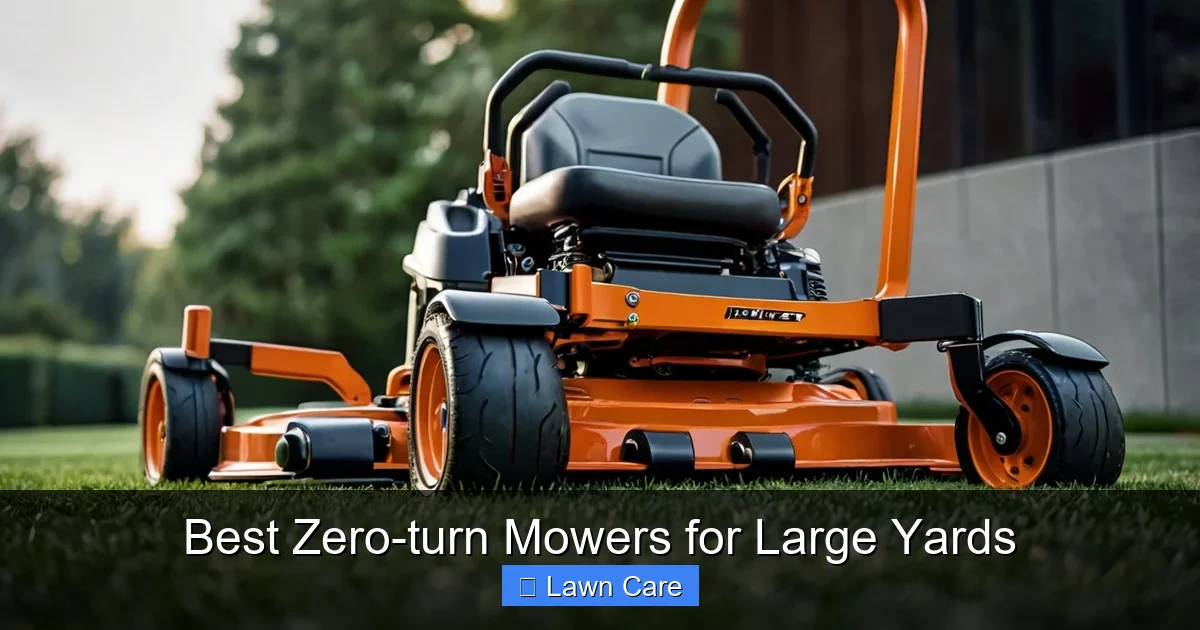
Gas engines remain the gold standard for power and reliability. Here are three standout models proven to handle big jobs:
Troy-Bilt ZTR 6000
With a 24 HP Kawasaki engine and a 60-inch cutting deck, the Troy-Bilt ZTR 6000 is built for serious turf work. It features Turf Command steering for smooth turns and a rugged frame that handles rough terrain. At around $3,500, it’s a great mid-range option with excellent customer support.
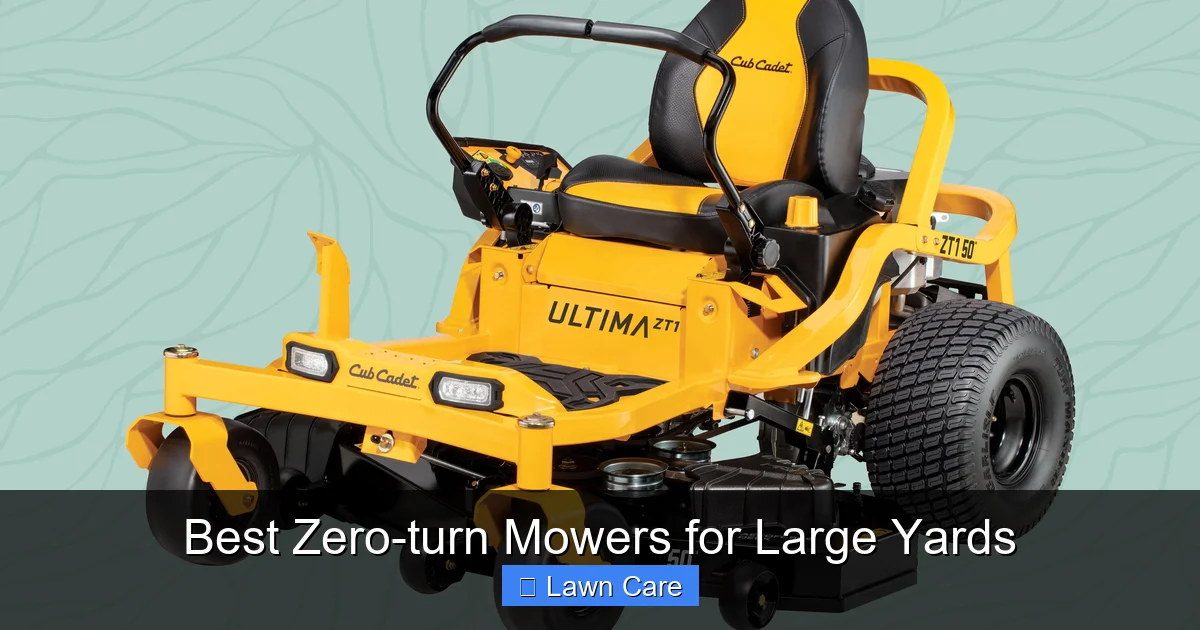
Cub Cadet ZT1 Series
Cub Cadet’s ZT1 line offers outstanding value. The ZT1 50 (22 HP, 50-inch deck) includes a hydro-gear transmission and a high-back seat for comfort. It’s ideal for homeowners who want professional-grade performance without breaking the bank—starting at under $3,000.
John Deere Z345R
If budget isn’t a concern, the John Deere Z345R delivers luxury and durability. With a 22 HP Kawasaki engine, 50-inch deck, and John Deere’s exclusive ComfortView suspension, this mower feels like driving a tractor. It’s pricier—over $6,000—but worth it for estates and commercial users.
Top Electric Zero-Turn Mowers for Eco-Conscious Homeowners
Visual guide about Best Zero-turn Mowers for Large Yards
Image source: outdoorpowercentre.com
Electric zero-turns are no longer just for small yards. Advances in battery tech have made them viable for larger lawns—especially if you prioritize quiet operation and zero emissions.
Husqvarna Z248E
Powered by a 48V lithium-ion battery, the Husqvarna Z248E offers up to 1.5 acres per charge. It features a 48-inch deck and ZTR steering for tight turns. While runtime is shorter than gas models, it’s perfect for suburban homes with moderate-sized lawns.
Greenworks 80V 60-Inch Zero Turn
This beast delivers up to 45 minutes of continuous mowing on a single charge. With a 60-inch deck and brushless motor, it competes directly with gas models in power and width. Plus, it comes with a fast charger and weather-resistant battery.
Snapper XR 1000
Known for affordability, the Snapper XR 1000 offers a 48-inch deck and 40V battery. It’s lighter and easier to store, making it a smart choice for those who want electric convenience without the premium price tag.
Maintenance Tips for Long-Lasting Performance
Even the best zero-turn mowers need care. Follow these simple steps to keep yours running like new:
– Change oil regularly: Every 50 hours or once a season for gas models.
– Clean the deck after each use to prevent grass buildup.
– Check tire pressure monthly—underinflated tires reduce traction and increase wear.
– Lubricate moving parts as recommended in the manual.
– Store properly: Cover or store indoors to protect from rain and debris.
Pro tip: Schedule annual servicing with a certified technician to catch issues early.
How to Choose the Right Size Mower for Your Yard
Size matters—both for the mower and your property. Consider these guidelines:
– Half-acre to 1 acre: 48- to 54-inch deck, 20–23 HP
– 1 to 2 acres: 54- to 60-inch deck, 24+ HP
– Over 2 acres: 60+ inch deck, heavy-duty frame, possibly tow-behind attachments
Also, think about storage. Wide decks take up more space in garages or sheds. If you lack room, consider a folding or compact design.
Final Thoughts: Is a Zero-Turn Worth It for Large Yards?
Absolutely. If you’re spending hours—or days—mowing your lawn, a quality zero-turn mower is an investment that pays for itself. Not only will you save time, but you’ll also achieve a cleaner, more consistent cut. Plus, the joy of seeing your perfectly groomed yard unfold beneath your feet is unmatched.
When choosing the best zero-turn mowers for large yards, focus on engine power, cutting width, comfort, and terrain adaptability. Whether you go gas or electric, stick with trusted brands and prioritize features that match your yard’s size and shape.
And remember: a well-maintained mower lasts longer, performs better, and saves you money down the road.
Now grab those levers, fire up your machine, and enjoy the freedom that comes with owning the right tool for the job.
Frequently Asked Questions
What is the average lifespan of a zero-turn mower?
With proper care, a well-maintained zero-turn mower can last 10–15 years. Regular oil changes, blade sharpening, and seasonal tune-ups significantly extend its life.
Can I use a zero-turn mower on bumpy terrain?
Most models handle slightly uneven ground, but avoid deep ruts or rocky areas. Look for mowers with suspension systems or adjustable decks for improved ride quality on rough patches.
Is it hard to learn how to operate a zero-turn mower?
It takes a few practice sessions to get comfortable with the steering levers, but most homeowners master basic maneuvers within an hour. Start slow and always read the safety manual first.
Should I buy a used zero-turn mower?
Only if it’s been well cared for. Check the engine hours, blade condition, and transmission smoothness. Avoid units with excessive rust or poor maintenance records.
Can I attach accessories like baggers or spreaders?
Yes, most zero-turn mowers support optional attachments such as mulching kits, baggers, and tow-behind spreaders. Check compatibility before purchasing.
Are zero-turn mowers noisy?
Gas models are louder than electric ones, but still quieter than many riding mowers. Electric zero-turns operate near whisper-quiet levels, making them ideal for noise-sensitive neighborhoods.