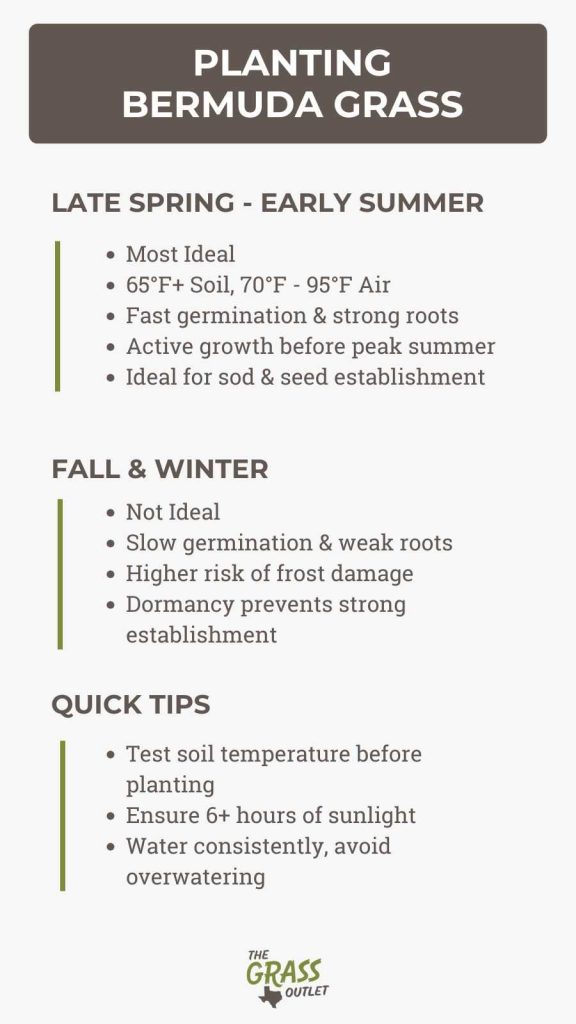
The ideal time to plant Bermuda grass in Texas is during late spring to early summer, when soil temperatures are warm enough to promote healthy growth. Planting during this period ensures your lawn establishes quickly and thrives throughout the hot Texas summers. For the best results, wait until nighttime temperatures consistently stay above 65°F and daytime temperatures hit between 80°F and 95°F.
In short, the best time to plant Bermuda grass in Texas is from late April to early June. Planting during this window takes advantage of warm soil and weather conditions that help the grass root deeply and grow vigorously. Proper timing is key to a lush, green lawn that withstands the heat and droughts typical of Texas summers.
Getting your Bermuda grass off to a strong start begins with choosing the right planting window. Texas’s climate can be tricky, with hot summers and occasional cold snaps, but by planting at the right time, you give your new lawn the best chance to flourish. Late spring offers optimal soil warmth and weather stability, creating ideal conditions for seed germination or sod establishment. Planning ahead and planting when conditions are just right ensures your Bermuda lawn will become a beautiful, resilient landscape that lasts through Texas’s seasonal extremes.

Best Time to Plant Bermuda Grass in Texas
Understanding the best time to plant Bermuda grass in Texas is key to a lush, healthy lawn. The climate variations across Texas influence the ideal planting period. Knowing the right time helps ensure the grass establishes well and thrives throughout the year.
Climate and Weather Factors Affecting Planting in Texas
Texas has diverse weather patterns, from hot, dry summers to mild winters in some regions. These variations determine the optimal planting window for Bermuda grass. Generally, warmer temperatures and adequate rainfall are necessary for successful growth.
Temperature Requirements for Bermuda Grass
Bermuda grass loves warm conditions. The soil temperature should be at least 65°F to 70°F for seed germination. Optimal growth occurs when air temperatures are between 85°F and 95°F.
Importance of Soil Temperature
Soil temperature is crucial for seed germination. Using a soil thermometer can help determine when conditions are right. Planting too early in cold soil can lead to poor germination and weak grass.
Ideal Seasons for Planting Bermuda Grass in Texas
In Texas, the ideal seasons for planting Bermuda grass are spring and early summer. These periods provide the warm temperatures necessary for quick germination and healthy growth.
Spring Planting: March to May
Spring is a popular time because soil temperatures rise steadily. However, planting should be done after the last frost date in your area. This typically occurs from late March to early April in most Texas regions.
Early Summer Planting: June
June offers consistently warm weather, perfect for Bermuda grass. Ensure the soil is warm enough before planting to avoid poor germination. Summer planting can accelerate establishment if conditions are right.
Why Timing Matters for Bermuda Grass Growth
Timing impacts seed germination, root development, and overall lawn health. Planting too early risks frost damage and slow growth. Too late, and the grass may not establish before extreme heat or cold.
Germination Period
Bermuda grass seed typically germinates within 7 to 14 days in warm soil. For quick establishment, planting during optimal temperatures ensures rapid germination.
Establishment and Maturity
Proper timing allows the grass to establish strong roots before summer’s peak heat or winter’s cold. Early planting gives the grass a head start for dense, drought-tolerant turf.
Preparing Your Lawn for Planting
Before planting Bermuda grass, proper preparation improves success rates. Clear debris, till the soil, and correct pH levels to create the best growing environment.
Soil Preparation
Loosen the soil to a depth of at least 6 inches. Amend with organic matter if soil is poor. Aim for a soil pH between 6.0 and 7.0 for optimal growth.
Grass Seed Selection
Choose high-quality Bermuda seed suited for Texas climates. Some popular varieties include Tifway, TifTuf, and Celebration. Use certified seeds for best results.
Planting Methods and Timing Tips
There are different ways to plant Bermuda grass—sod, plugs, or seed. Each method has specific timing considerations to ensure success.
Seed Planting Timeline
- Check soil temperature with a thermometer.
- Prepare the soil at least two weeks before planting.
- Plant after the soil reaches at least 65°F.
- Water thoroughly after planting to aid germination.
Sod and Plugs Timing
Sod and plugs can be laid anytime soil and weather conditions are suitable. Spring and summer are preferred for quicker root establishment.
Monitoring Weather Conditions for Optimal Planting
Always keep an eye on local weather forecasts before planting. Avoid planting during a cold snap or extended periods of drought.
Frost-Free Periods
Frost can damage young Bermuda grass. Make sure all danger of frost has passed in your area before planting in spring.
Rainfall and Irrigation
Consistent moisture is needed during germination. Plan to irrigate regularly if rainfall is insufficient, especially during dry spells.
Related Topics to Consider
- Best Fertilization Schedules for Bermuda Grass in Texas
- Watering Techniques for Young Bermuda Grass
- Common Problems When Planting Bermuda Grass and How to Avoid Them
- Maintaining Your Bermuda Lawn Throughout the Year
Extra Tips for Successful Planting in Texas
- Avoid planting during extreme temperatures—wait until soil is warm and weather forecast predicts stable temperatures.
- Seed in the early morning or late afternoon to prevent the heat from damaging young seedlings.
- Use proper watering techniques—keep soil moist but not waterlogged.
- Follow local agricultural extension recommendations for specific timing based on your city or region within Texas.
Planting Bermuda grass at the right time in Texas sets the stage for a resilient, attractive lawn. Paying attention to soil temperature, weather conditions, and proper preparation ensures your grass grows strong and lush throughout the year. Timing your planting carefully will save you time, effort, and money while giving you a beautiful yard to enjoy.
When to Seed Bermuda Grass?
Frequently Asked Questions
What are the optimal months for planting Bermuda grass in Texas?
The best months to plant Bermuda grass in Texas are late spring through early summer, typically from late April to early July. During this period, the soil warms up sufficiently, promoting healthy germination and growth. Avoid planting too early in spring when soil temperatures are still cool, as this can hinder establishment. Similarly, planting in late summer or fall can lead to poor root development before winter arrives.
How does soil temperature influence the timing of Bermuda grass planting in Texas?
Soil temperature plays a critical role in Bermuda grass growth. For successful establishment, soil temperatures should be consistently above 65°F (18°C). Waiting until soil warms up ensures quicker germination and stronger root development. Monitoring local soil temperatures helps determine the most suitable planting window, reducing the risk of poor germination or disease.
Is it better to plant Bermuda grass during the rainy season in Texas?
Planting Bermuda grass during the rainy season can be beneficial, as natural rainfall provides adequate moisture for seed germination and early growth. In Texas, this typically corresponds to late spring and early summer months. However, ensure that drainage is adequate to prevent waterlogging, which can damage young grass. Proper timing with rainfall enhances establishment success without the need for excessive supplemental watering.
What should I consider about the weather when timing my Bermuda grass planting in Texas?
It’s important to plant Bermuda grass when daytime temperatures are consistently warm, ideally between 80°F and 95°F (27°C to 35°C). Avoid planting during periods of extreme heat or unexpected cold snaps, as these conditions can stress new plants. Checking local weather forecasts helps you choose a period with stable warm conditions and minimal risk of frost or heavy rains.
How does the type of Bermuda grass influence when I should plant it in Texas?
Different Bermuda grass varieties may have slightly different optimal planting times depending on their growth habits. For example, hybrid varieties tend to establish faster and may tolerate warmer conditions sooner, while common types might need a slightly later start. Always refer to the specific variety’s guidelines and select a planting window that aligns with regional climate patterns to ensure optimal growth.
Final Thoughts
The best time to plant bermuda grass in texas is late spring or early summer when temperatures are consistently warm. This ensures optimal growth and establishment. Planting during this period gives the grass enough time to root before the cooler months arrive. By choosing the right time, homeowners can enjoy a lush, healthy lawn.