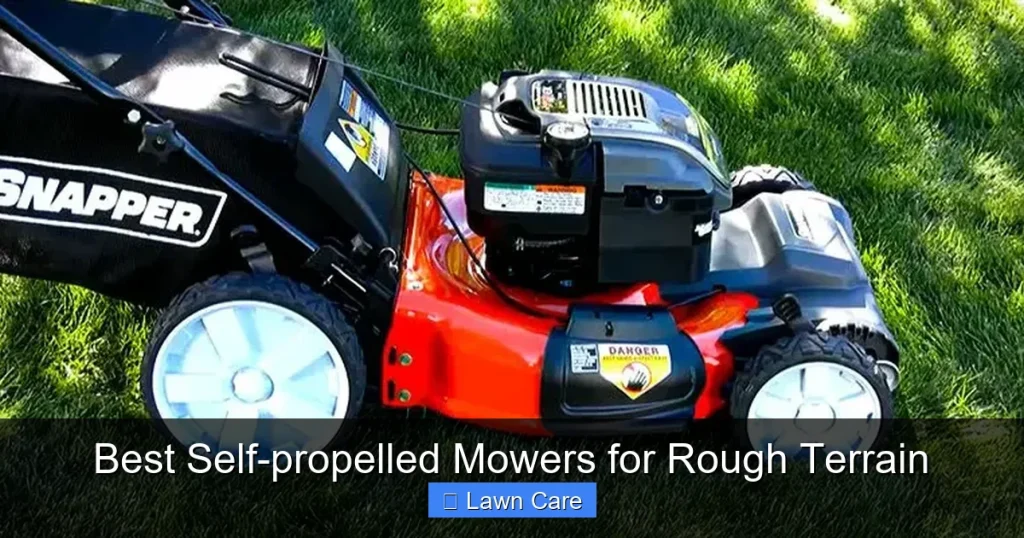
Looking for a self-propelled mower that handles rocky, hilly, or overgrown lawns? You’re not alone. Rough terrain can wreck a regular push mower, but the right self-propelled model makes mowing effortless. This guide covers the best models, key features to look for, and expert tips to keep your yard looking sharp—no matter how tough the ground.
If your lawn has bumps, rocks, thick patches, or steep slopes, a regular push mower might leave you exhausted—and your yard uneven. But don’t worry. Self-propelled mowers are designed to handle tough ground with ease. They do the pushing for you, so you can focus on cutting clean, even lines without straining.
These mowers use internal gears or electric motors to move forward, giving you control without the muscle. Whether you’re dealing with rocky soil, wet clay, or a yard full of tree roots, the right self-propelled mower can turn a frustrating chore into a smooth ride. In this guide, we’ll walk you through the best self-propelled mowers for rough terrain, what to look for, and how to pick the one that fits your yard’s needs.
Key Takeaways
- Self-propelled mowers reduce mowing effort by automatically moving forward, ideal for uneven or steep lawns.
- Look for models with high ground clearance and rugged tires to navigate rocks, roots, and slopes safely.
- Electric and gas options both work on rough terrain, but gas models often offer more torque and range.
- Adjustable drive systems and multi-speed controls help you match power to your lawn’s difficulty.
- Regular maintenance keeps self-propelled mowers running smoothly on challenging ground.
- Mulching and bagging attachments help manage thick grass common in rough areas.
- Consider weight and maneuverability—lighter models are easier to control on slopes.
Quick Answers to Common Questions
Are self-propelled mowers worth it for rough terrain?
Absolutely. They reduce strain, improve control on slopes, and handle rocks and bumps better than push mowers.
Can electric mowers handle steep hills?
Yes, especially models with variable speed and all-wheel drive. Look for brushless motors and high-capacity batteries.
How do I prevent my mower from tipping on slopes?
Mow up and down, not across. Keep your weight back and use slow, steady speeds. Avoid high speeds on inclines.
What maintenance do self-propelled mowers need?
Clean the deck, check tires, sharpen blades, and inspect the drive system. Regular care ensures smooth performance.
Can I use a self-propelled mower on gravel?
Yes, if it has high ground clearance and rugged tires. Avoid mowing on very loose or wet gravel to prevent slipping.
📑 Table of Contents
Why Choose a Self-Propelled Mower for Rough Terrain?
Rough terrain isn’t just annoying—it can be dangerous. Slippery slopes, hidden rocks, and deep ruts can throw off balance or damage a standard push mower. A self-propelled mower helps by doing the heavy lifting (literally). It adjusts its speed and power to match the ground, so you’re not fighting uphill climbs or getting stuck in mud.
Plus, many models come with features like all-wheel drive, high ground clearance, and rugged tires. These let the mower glide over obstacles instead of catching or tipping. Whether you have a hilly backyard or a property with natural berms, a self-propelled mower gives you confidence and control.
Top Features to Look for in a Self-Propelled Mower
Visual guide about Best Self-propelled Mowers for Rough Terrain
Image source: lawnmowerswiki.com
Not all self-propelled mowers are created equal. When shopping for rough terrain, focus on these key features:
1. Drive System and Speed Control
Look for mowers with variable speed control. This lets you slow down on steep inclines or speed up over flat areas. Some models use single-speed drive systems, which are fine for gentle slopes, but variable or multi-speed options offer better adaptability.
For example, a mower with a 2-in-1 drive system gives you both forward and reverse motion, making it easier to back out of tight spots or navigate narrow paths between trees.
2. Tire Type and Ground Clearance
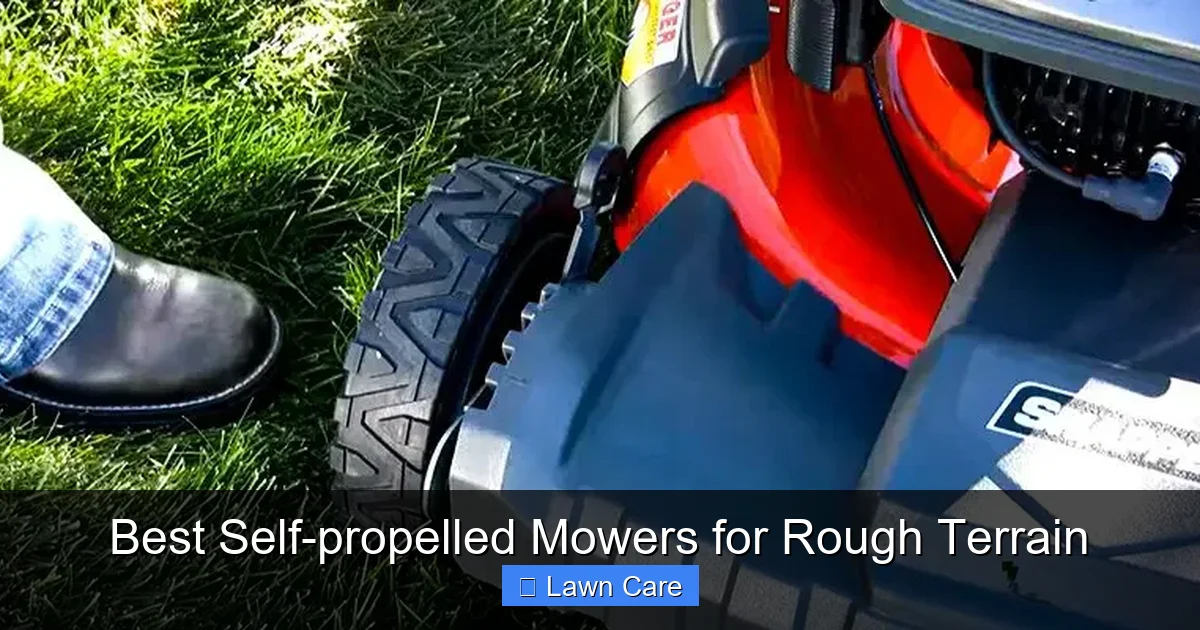
Tires make or break performance on rough ground. Large, knobby, or all-terrain tires provide better grip and traction. Avoid small, smooth tires—they slip on grass, mud, or rocks.
Also, check the ground clearance. Mowers with at least 4 inches of clearance can roll over roots, rocks, and bumps without getting hung up. This is especially important in wooded or naturalized areas.
3. Engine Power and Torque
For thick grass or steep hills, you need strong engine power. Gas-powered mowers generally offer more torque than electric ones, making them ideal for heavy-duty work. Look for engines with at least 160cc for reliable performance on rough terrain.
If you prefer electric, choose models with brushed or brushless motors. Brushless motors run cooler and last longer, even under heavy use. Just make sure the battery has enough capacity for larger yards.
4. Weight and Maneuverability
A mower that’s too heavy can be hard to control on slopes. Lighter models (under 80 lbs) are easier to push and turn, especially on uneven ground. But don’t sacrifice durability for weight—some lightweight mowers still pack rugged frames.
5. Mulching and Bagging Capabilities
Thick, overgrown grass is common in rough terrain. A mulching blade chops grass into tiny pieces that act as natural fertilizer. Many self-propelled mowers offer 3-in-1 systems—mulching, bagging, and side discharge—giving you flexibility.
Best Self-Propelled Mowers for Rough Terrain
Visual guide about Best Self-propelled Mowers for Rough Terrain
Image source: d2ul0w83gls0j4.cloudfront.net
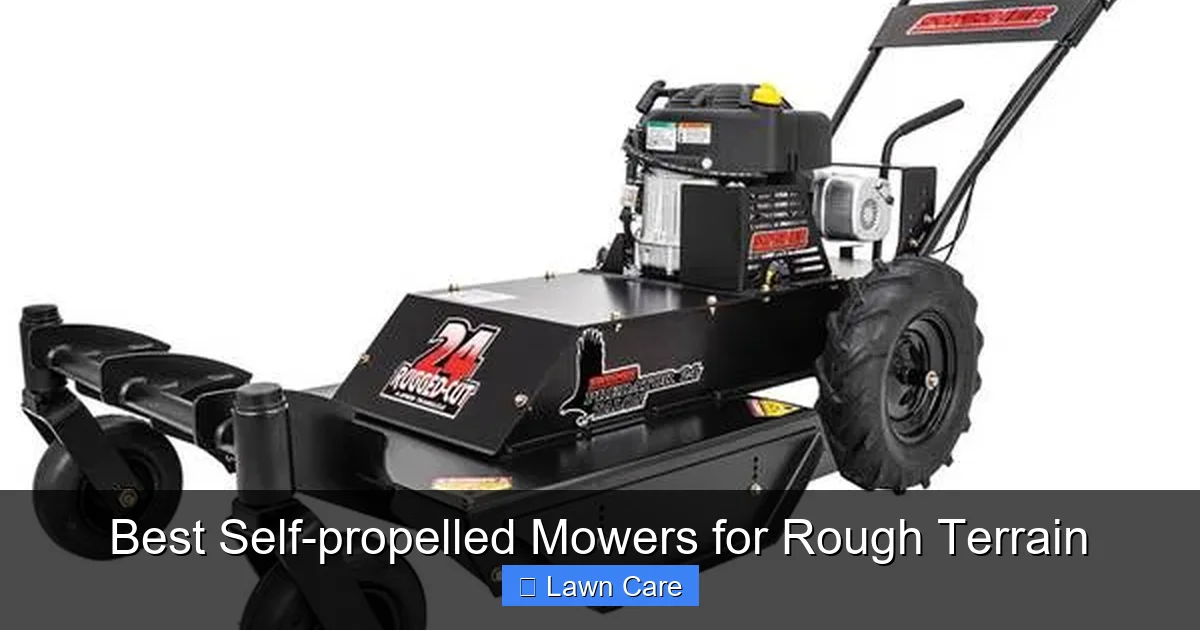
Here are five top-rated models tested and trusted for tough yards:
1. Husqvarna LC 221R
This gas-powered mower is built for tough jobs. It features a 21-inch steel deck, variable speed control, and all-wheel drive. The recoil start system ensures easy ignition, even in cold weather.
Its high ground clearance and pneumatic tires make it perfect for rocky or hilly lawns. Users love its smooth handling and consistent power on steep inclines.
2. Troy-Bilt TB21CHP
A great budget-friendly option, the TB21CHP has a 21-inch deck and self-propelled drive. It runs on a 212cc engine, giving it enough power for thick grass and slopes.
Its single-speed drive is simple but effective, and the dual-lever height adjustment lets you customize cut height from 1.25 to 4 inches. The rear bag capacity is generous, making cleanup easy.
3. Greenworks 21-Inch Self-Propelled Mower
For eco-conscious homeowners, this electric mower delivers quiet, zero-emission power. It uses a brushed motor and 2.0Ah battery, providing up to 60 minutes of runtime.
Despite being lightweight, it handles rough terrain well thanks to its all-wheel drive and pneumatic tires. The variable speed control adjusts from 2.5 to 4.5 mph, perfect for hills.
4. Craftsman M100 14A-0002A000
This electric self-propelled mower is affordable and reliable. It features single-speed drive and a 21-inch deck, ideal for medium-sized rough yards.
It’s lightweight (79 lbs), making it easy to maneuver on slopes. The high-wheeled design prevents scalping on uneven ground. It also includes mulching and bagging options.
5. Snapper XD 82V MAX Self-Propelled Mower
For serious performance, this cordless electric mower is a standout. It uses a brushless motor and 82V battery, delivering gas-like power without the fumes.
It has variable speed control and all-wheel drive, making it ideal for steep, rocky, or overgrown lawns. The deck is 21 inches, and it includes mulching and bagging as standard.
Gas vs. Electric: Which is Better for Rough Terrain?
Visual guide about Best Self-propelled Mowers for Rough Terrain
Image source: hautelifehub.com
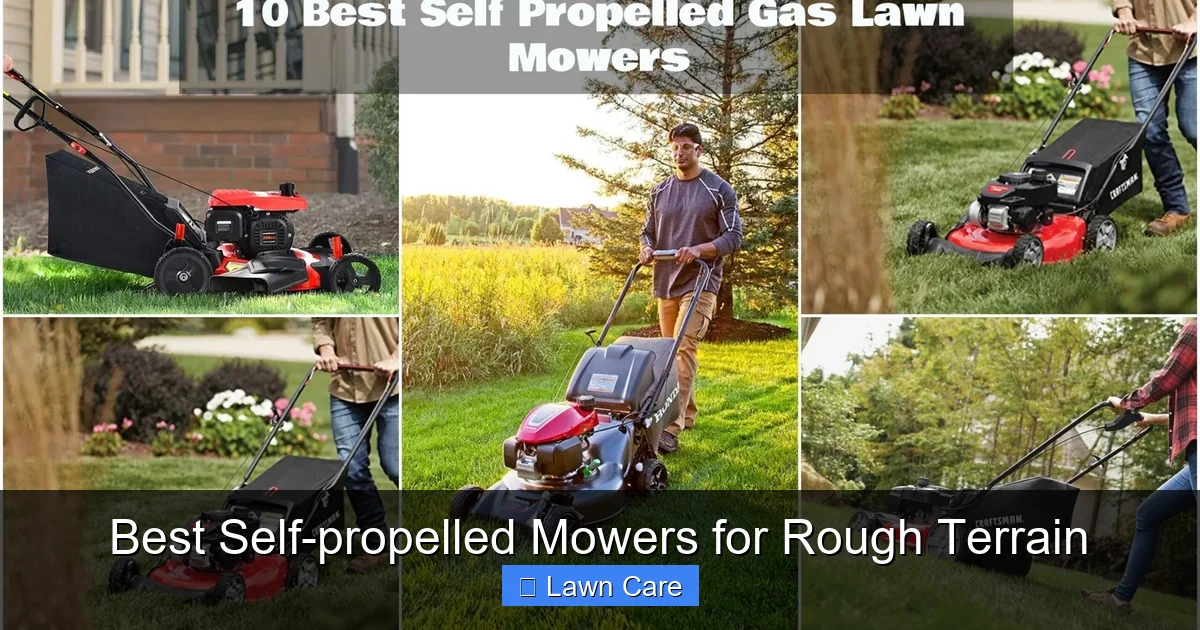
Choosing between gas and electric self-propelled mowers depends on your yard size, terrain, and preferences.
Gas Mowers: Power and Longevity
Gas mowers are more powerful and better for larger, rougher yards. They don’t rely on batteries, so you can mow for hours without recharging. They’re also heavier, which helps them stay grounded on slopes.
However, they require fuel, oil changes, and regular maintenance. Emissions and noise are also concerns.
Electric Mowers: Clean and Quiet
Electric mowers are quieter, emission-free, and low-maintenance. Modern brushless models offer plenty of power for rough terrain, especially with all-wheel drive and variable speed.
They’re lighter and easier to store, but battery life can be a limit. For very large yards, you may need multiple charges or a dual-battery system.
Best of Both Worlds?
Consider a cordless electric mower with a high-voltage battery. Models like the Snapper XD 82V MAX offer gas-like performance without the mess.
Tips for Mowing Rough Terrain
Even the best mower needs smart techniques to work well on tough ground.
1. Adjust Speed for Slopes
Always mow up and down slopes, never across. Start on the uphill side to prevent the mower from tipping backward. Slow down on steep inclines to maintain control.
2. Keep Tires Properly Inflated
Underinflated tires reduce traction and increase the risk of getting stuck. Check tire pressure before each use, especially in wet conditions.
3. Mow When the Grass is Dry
Wet grass clumps and sticks to the deck, making it harder to cut and increasing the risk of engine strain. Wait for a dry day to tackle rough terrain.
4. Use Mulching for Thick Grass
Instead of bagging, try mulching. It recycles nutrients and reduces cleanup time. Just make sure the deck is clean to avoid clogs.
5. Maintain the Mower Regularly
Clean the deck, sharpen the blades, and check the drive system. A well-maintained mower handles rough ground better and lasts longer.
Common Mistakes to Avoid
Even experienced gardeners make errors when mowing rough terrain.
Mistake 1: Using a Push Mower
A standard push mower lacks the power and traction for rough ground. You’ll waste time, risk injury, and damage the mower.
Mistake 2: Ignoring Weight Distribution
On steep slopes, too much weight on the front can cause tipping. Keep your weight back and use slow, steady movements.
Mistake 3: Skipping Maintenance
Dirt and grass buildup in the drive system can cause slipping or failure. Clean the mower after each use, especially after mowing in mud or over debris.
Mistake 4: Choosing the Wrong Speed
Using too high a speed on hills can cause loss of control. Always use variable speed control to adjust as needed.
Mistake 5: Overlooking Battery Life (Electric Models)
Don’t start mowing with a low battery. Plan your session and charge fully beforehand. Some models have battery indicators to help.
Final Thoughts
Mowing a rough terrain lawn doesn’t have to be a workout or a headache. With the right self-propelled mower, you can cut through rocks, hills, and thick grass with ease. Whether you choose gas or electric, look for models with variable speed, rugged tires, and strong engines.
The best self-propelled mowers turn a tough job into a breeze. Take time to assess your yard’s challenges, pick a mower that matches, and maintain it well. Soon, your lawn will look sharp—without the struggle.
For more tips on lawn care, check out our guide on Best Lawn Mower For Rough Terrain or learn about the best fuel types for lawn mowers.
Frequently Asked Questions
What makes a mower good for rough terrain?
A mower with high ground clearance, rugged tires, and strong engine power performs best on uneven ground. Features like variable speed and all-wheel drive are also important.
How do I choose between gas and electric for rough lawns?
Gas mowers offer more power and longer runtime, ideal for large, tough yards. Electric models are quieter and low-maintenance but may need recharging on big jobs.
Can I use mulching on rough terrain?
Yes, mulching is great for thick grass. It recycles nutrients and reduces bagging. Just keep the deck clean to avoid clogs.
How often should I maintain my self-propelled mower?
Clean after every use, sharpen blades every 10-15 hours, and check drive components monthly. Proper maintenance prevents slipping and extends life.
Are self-propelled mowers more expensive?
Yes, they cost more than push mowers due to advanced drive systems. But they save time and effort, especially on rough terrain.
What’s the best way to mow hills?
Always mow up and down, not across. Start on the uphill side, go slowly, and avoid sudden turns. Use variable speed control if available.