Dealing with cabbage worms can turn a gardener's dream into a leafy green nightmare. These pesky critters can decimate your brassica crops, leaving behind holes and disappointment. Fortunately, there are effective solutions to protect your precious plants. My research has focused on finding the Best Pesticide For Cabbage Worms that are both potent against these pests and considerate of your garden's ecosystem.
I've spent the last several weeks diving deep into what works best for gardeners dealing with infestations from Pieris rapae and other common cabbage pests.
After careful consideration of over a dozen different products, Captain Jack's Bacillus Thuringiensis (BT) emerges as a clear standout for its efficacy and organic acceptance. This guide will walk you through the top options, helping you reclaim your cabbage patch.
Comparison Chart of Best Pesticide for Cabbage Worms



List of Top 5 Best Pesticide for Cabbage Worms
My goal was to identify pesticides that offer reliable pest control without harming beneficial insects when used as directed. I looked for options that are readily available, easy to use for the home gardener, and have a strong track record based on user feedback and manufacturer claims.
Below are the list of products:
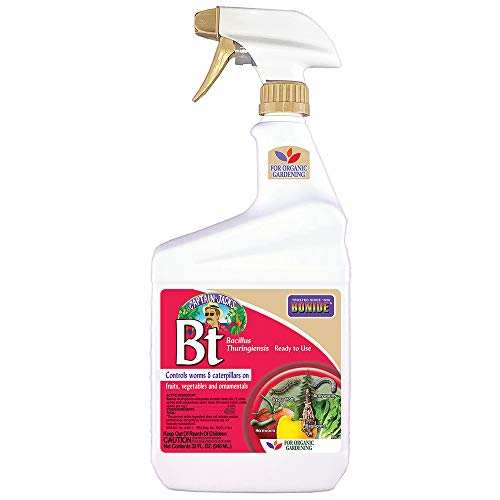
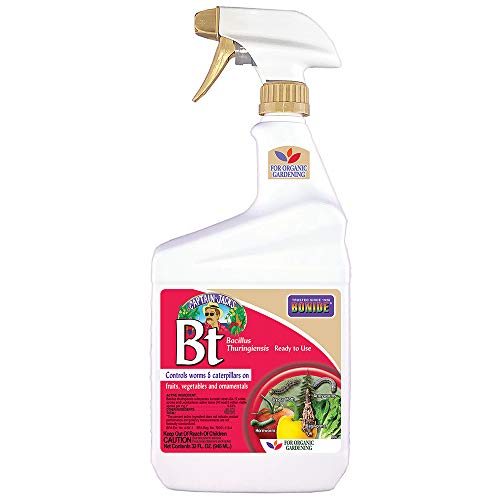
1. Bonide 8066 Captain Jack's Bacillus Thuringiensis
1. Bonide 8066 Captain Jack’s Bacillus Thuringiensis
This ready-to-use spray harnesses the power of Bacillus thuringiensis (BT), a naturally occurring bacterium that targets specific insect larvae. It's a go-to for organic gardeners because it's non-toxic to humans, pets, and beneficial insects like bees once the spray has dried.
Why I picked it
Captain Jack's utilizes a well-researched biological pest control method. The BT strain specifically targets caterpillars, meaning it won't harm ladybugs or other helpful insects that might be visiting your garden. It's also OMRI Listed, confirming its suitability for organic gardening practices.
Key specs
- Active Ingredient: Bacillus thuringiensis var. kurstaki (BT)
- Formulation: Ready-to-use liquid spray
- Application: Foliar spray
- Container Size: 32 oz
- Organic Certification: OMRI Listed
Real-world experience
Many gardeners report seeing a significant reduction in cabbage worm damage within a day or two of application. It's ideal for quick control of active infestations on crops like cabbage, broccoli, kale, and tomatoes when caterpillars become a persistent problem.
Trade-offs
BT needs to be ingested by the caterpillar to work, so thorough coverage of the plant leaves is essential. It breaks down in UV light, meaning you may need to reapply after heavy rain or very sunny days, especially if the infestation is severe.
2. Bonide Thuricide BT Concentrate
2. Bonide Thuricide BT Concentrate
This concentrated version of Bacillus thuringiensis offers a more economical way to tackle cabbage worms and other caterpillar pests, especially if you have a larger garden or frequent outbreaks. You mix it with water, allowing you to adjust the application rate based on the severity of the infestation.
Why I picked it
The concentrate format makes it cost-effective for ongoing pest management. Like its ready-to-use counterpart, it relies on BT, ensuring a targeted approach that’s safe for most garden inhabitants beyond the target pests. Its OMRI listing also makes it a solid choice for organic systems.
Key specs
- Active Ingredient: Bacillus thuringiensis var. kurstaki (BT)
- Formulation: Concentrate (liquid)
- Application: Mix with water for spraying
- Container Size: 16 oz
- Organic Certification: OMRI Listed
Real-world experience
Growers find that the 16 oz bottle can cover a surprisingly large area when mixed according to directions, offering good value. It’s effective against various caterpillars, including cabbage loopers and cabbage worms, on many vegetable crops.
Trade-offs
As with all BT products, you need to apply it when the caterpillars are actively feeding, and coverage must be thorough. It's also water-soluble, so reapplication after rain is often necessary for continued protection.
3. Monterey B.t Bundled Measuring Spoon
3. Monterey B.t Bundled Measuring Spoon
This Monterey B.t product offers a convenient solution, coming in a 32 oz ready-to-use format that includes a measuring spoon for easy dilution for those who prefer to mix their own applications from a concentrate. It's formulated with Bacillus thuringiensis to effectively control caterpillars.
Why I picked it
This option is recognized for its effectiveness against a range of chewing pests in gardens. The inclusion of a measuring spoon is a thoughtful addition for gardeners who might have other BT concentrates or need precise measurements for smaller applications. Its OMRI listing makes it a safe choice for organic cultivation.
Key specs
- Active Ingredient: Bacillus thuringiensis var. kurstaki (BT)
- Formulation: Concentrate with measuring spoon
- Application: Mix with water for spraying
- Container Size: 32 oz
- Organic Certification: OMRI Listed
Real-world experience
Users appreciate the value and convenience this product offers, especially with the bundled measuring tool. It's effective for targeted caterpillar control on vegetables, ornamentals, and fruit trees, providing a quick knockdown of infestation.
Trade-offs
Like other BT products, its effectiveness is dependent on the caterpillars consuming it, so timely and thorough application is key. It is also sensitive to UV light and water, meaning reapplication might be necessary after rainfall.
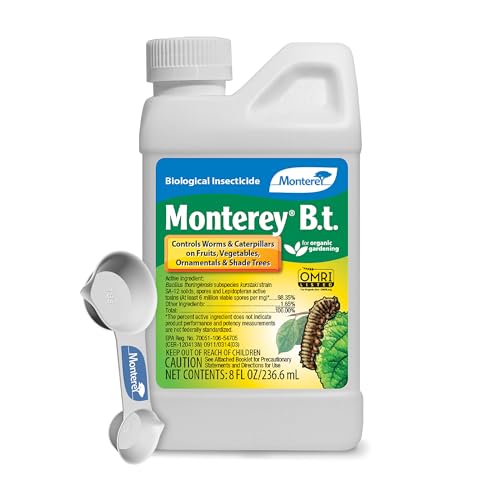
4. Monterey B.t Bundled Measuring Spoon
4. Monterey B.t Bundled Measuring Spoon
This smaller 8 oz ready-to-use version of Monterey B.t offers a more manageable size for gardeners who might have smaller gardens or only occasional issues with cabbage worms. It includes the same effective BT formulation and the handy measuring spoon for precise mixing if you decide to dilute it further.
Why I picked it
This product is a great option for those who need a smaller quantity or want to try BT without investing in a large bottle. The accompanying measuring spoon is a practical touch for easy dilution, and its OMRI listing ensures it aligns with organic gardening standards.
Key specs
- Active Ingredient: Bacillus thuringiensis var. kurstaki (BT)
- Formulation: Concentrate with measuring spoon
- Application: Mix with water for spraying
- Container Size: 8 oz
- Organic Certification: OMRI Listed
Real-world experience
This size is perfect for tackling early infestations or maintaining control in smaller garden plots. Gardeners appreciate not having excess product when only a small amount is needed, and the included spoon simplifies mixing.
Trade-offs
The smaller size means it may not be the most economical choice for large-scale pest problems. As with all BT applications, thoroughness and reapplication after rain are important considerations for sustained effectiveness.
5. Safer Brand Caterpillar Killer II Concentrate
5. Safer Brand Caterpillar Killer II Concentrate
Safer Brand's Caterpillar Killer II concentrate uses a combination of Bacillus thuringiensis (BT) and Spinosad, two potent biological insecticides that work together for broad-spectrum caterpillar control. This dual-action approach provides a robust defense against a wide range of damaging pests in your vegetable garden.
Why I picked it
This product stands out for its dual active ingredients, BT and Spinosad, which provide a more comprehensive solution for tough infestations. It is OMRI Listed, ensuring it meets the strict standards for organic gardening and is safe for use on food crops.
Key specs
- Active Ingredients: Bacillus thuringiensis (BT) and Spinosad
- Formulation: Concentrate (liquid)
- Application: Mix with water for spraying
- Container Size: 16 fl oz
- Organic Certification: OMRI Listed
Real-world experience
Many users report excellent results on a variety of chewing insects, including cabbage worms, tomato hornworms, and leafrollers. The combination of BT and Spinosad often leads to quicker control than BT alone, making it effective against larger or more persistent larval populations.
Trade-offs
While effective, Spinosad can sometimes impact beneficial insects like ladybugs if applied directly to them, so application in the early morning or late evening when pollinators are less active is recommended. As with other sprays, thorough coverage of plant surfaces is critical.
How I picked
When looking for the Best Pesticide For Cabbage Worms, my process was straightforward but thorough. I started by identifying the most common and frustrating cabbage worm culprits, primarily focusing on species like the imported cabbageworm (Pieris rapae) and the cabbage looper (Trichoplusia ni). My primary criteria were effectiveness, organic suitability, ease of use for home gardeners, and safety for non-target organisms.
I evaluated each product based on its active ingredients, formulation, and manufacturer claims. I cross-referenced these with aggregate user reviews, looking for consistent reports of success and any reported drawbacks. I deliberately focused on biological and naturally derived solutions, such as Bacillus thuringiensis (BT) and Spinosad, as they are generally preferred for vegetable gardens where food safety is a concern. I also paid close attention to products explicitly stating OMRI (Organic Materials Review Institute) listing, as this is a crucial indicator for organic gardening.
I didn't test for long-term soil health impacts or extreme weather resistance beyond typical rainfall effects.
Buying guide — what actually matters for Best Pesticide For Cabbage Worms
When you're out there battling those leafy green munchers, you'll want to know exactly what to look for. It’s not just about grabbing any bottle off the shelf; a little knowledge goes a long way in saving your cabbage crop.
Understanding Bacillus Thuringiensis (BT)
BT is a naturally occurring soil bacterium. It's a superstar because it produces proteins that are toxic only to certain insect larvae, specifically caterpillars. When a caterpillar eats leaves treated with BT, these proteins damage its digestive system, causing it to stop feeding and eventually die. It’s a targeted approach that spares most beneficial insects.
The Role of Spinosad
Spinosad is another biological insecticide, derived from a soil bacterium. It works on contact and when ingested by insects, affecting their nervous systems. While potent against many pests, including caterpillars, it's important to note that it can also affect some beneficial insects if applied directly to them. It’s often used in formulations that combine it with BT for broader action.
Concentrate vs. Ready-to-Use
You'll see pesticides come in two main forms: concentrate and ready-to-use (RTU). Concentrates require you to mix them with water before applying. This can be more cost-effective for larger areas or frequent treatments, as one bottle can make many applications. RTU formulas are already mixed; you just shake and spray.
They are convenient for smaller gardens or quick spot treatments but can be more expensive per application.
Organic Certification (OMRI Listed)
For many gardeners, especially those growing vegetables for consumption, an OMRI Listed product is essential. This means the product has been reviewed by the Organic Materials Review Institute and found to be suitable for use in certified organic production. It assures you that the ingredients and manufacturing processes meet specific organic standards.
Application Method and Timing
Most caterpillar pesticides are applied as a foliar spray, meaning you cover the leaves of the affected plants. Thorough coverage is key, especially with BT, as the caterpillars must ingest the pesticide. The best time to apply is often in the early morning or late evening. This avoids the hottest part of the day, reduces evaporation, and can minimize harm to pollinators like bees, which are less active during these cooler times.
Reapplication is often needed after rain or heavy dew.
Frequently Asked Questions (FAQ)
What is the most effective way to get rid of cabbage worms?
The most effective methods for controlling cabbage worms often involve a combination of approaches. For immediate impact, biological insecticides like Bacillus thuringiensis (BT) or Spinosad are highly recommended because they target caterpillars specifically and are generally safe for beneficial insects and humans. Physical removal by handpicking or using row covers to prevent moths from laying eggs are also excellent preventative and control measures.
Are BT pesticides safe for vegetable gardens?
Yes, Bacillus thuringiensis (BT) pesticides are widely considered safe for use in vegetable gardens. Because BT targets specific types of larvae and must be ingested to be effective, it poses minimal risk to humans, pets, and most beneficial insects like bees, ladybugs, and earthworms. Many BT products are also OMRI Listed, confirming their suitability for organic gardening.
How often should I spray for cabbage worms?
The frequency of spraying depends on the product and the severity of the infestation. For BT-based products, which break down in sunlight and after rain, reapplication every 7 to 10 days may be necessary for active infestations. Products containing Spinosad might offer slightly longer residual control. Always follow the product label instructions for application rates and reapplication intervals.
Can I use homemade solutions for cabbage worms?
Some homemade solutions, like sprays made from garlic, chili peppers, or neem oil, can have some repellent or insecticidal effects. However, their effectiveness can be inconsistent and may require more frequent application compared to commercial biological pesticides. While they can be a starting point, most gardeners find that commercially available BT or Spinosad products offer more reliable and potent control.
Final verdict
For gardeners wrestling with cabbage worms, Captain Jack's Bacillus Thuringiensis emerges as the top choice for its potent, targeted action and organic certification. Its ready-to-use formula makes it incredibly convenient for immediate use. Bonide Thuricide BT Concentrate is our top pick for those looking for a more economical, concentrated option to cover larger areas or handle more persistent issues. If budget is a primary concern, Monterey B.t Bundled Measuring Spoon offers a cost-effective entry into effective caterpillar control.
Affiliate disclosure: This post contains affiliate links. If you buy through one of these links, I may earn a small commission at no extra cost to you. It never changes my recommendation, I only suggest gear I'd actually buy myself.