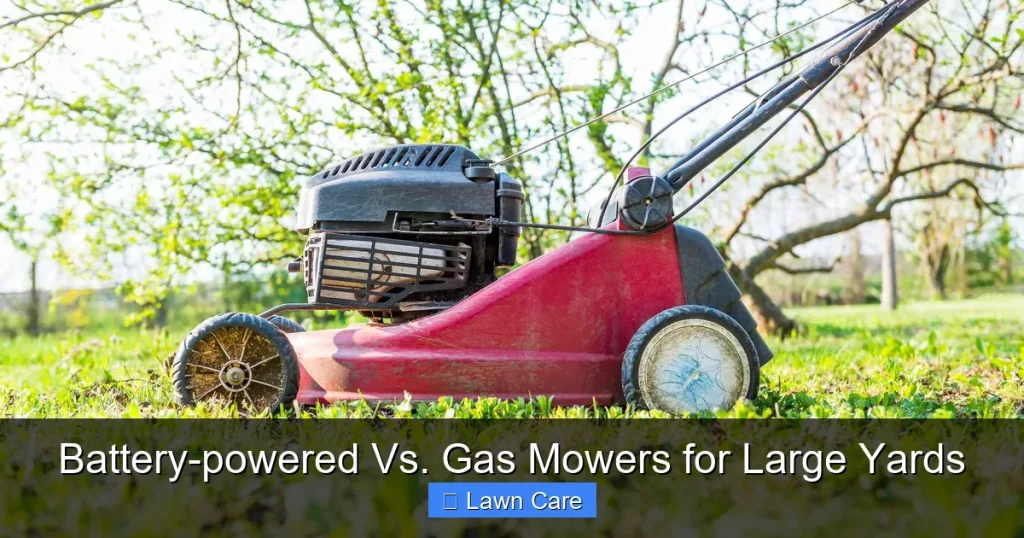
When maintaining a large yard, choosing the right mower makes all the difference. Battery-powered mowers offer quiet, eco-friendly operation with zero emissions, while gas mowers deliver consistent power and longer runtime. For large lawns over half an acre, gas mowers still dominate in raw power and runtime, but modern battery models are closing the gap fast. Your decision should balance upfront cost, long-term savings, noise levels, and ease of use.
If you’ve got a large yard—say, half an acre or more—you’re probably tired of mowing the same patch every weekend. The lawn mower you choose can make the job faster, easier, or even a chore you dread. Two main options dominate the market: battery-powered vs. gas mowers for large yards. Both have strengths, but which one actually works best when you’re dealing with acres of grass?
Let’s break it down. We’ll compare power, runtime, cost, maintenance, and convenience—so you can make a smart choice without the guesswork.
Key Takeaways
- Battery-powered mowers are quieter and produce zero emissions—ideal for noise-sensitive neighborhoods and eco-conscious homeowners.
- Gas mowers typically offer longer runtime and higher power, making them better suited for very large lawns or thick grass.
- Battery mowers require less maintenance—no oil changes, fuel filters, or spark plugs to replace.
- Initial cost is lower for gas mowers, but battery models save money over time on fuel and repairs.
- Modern lithium-ion batteries now support 60+ minutes of runtime, making them viable for large yards when properly planned.
- Gas mowers can be heavier and harder to start, especially in cold weather or with older engines.
- Consider battery compatibility across tools—many brands offer mulching, edging, and blower attachments.
Quick Answers to Common Questions
Can a battery mower handle a 1-acre yard?
Yes, most high-end battery mowers with 60+ minute runtime can mow a full acre on a single charge, especially with proper battery management and sharp blades.
Are battery mowers louder than gas mowers?
No—battery mowers are significantly quieter, producing only 65–75 decibels compared to 85+ decibels for gas mowers.
Do battery mowers work on hilly yards?
Many modern battery mowers are designed for slopes. Look for models with high torque and good weight distribution—brands like EGO and DeWalt perform well on hills.
How long do battery mower batteries last?
Most lithium-ion batteries last 3–5 years or 300–500 charge cycles. Proper storage and avoiding deep discharges extend their life.
Can I use the same battery for multiple tools?
Yes—many brands like Ryobi, Greenworks, and EGO offer universal battery systems compatible with mowers, trimmers, blowers, and edgers.
📑 Table of Contents
- Power and Performance: How Each Mower Tackles Big Lawns
- Battery Life and Runtime: Can Battery Mowers Handle Large Yards?
- Cost Comparison: Upfront vs. Long-Term Expenses
- Maintenance and Upkeep: Less Work for You
- Environmental Impact and Noise Levels
- Convenience and Usability: Ease of Operation
- Which One Should You Choose for Your Large Yard?
- Tips for Maximizing Battery Mower Performance on Large Yards
Power and Performance: How Each Mower Tackles Big Lawns
When it comes to raw power, gas mowers have long been the gold standard. A typical push gas mower delivers 15 to 25 horsepower, which is plenty for thick grass, steep slopes, or uneven terrain. That kind of muscle lets you tackle dense growth without stalling or slowing down.
Battery-powered mowers, on the other hand, have come a long way. Modern lithium-ion batteries now provide up to 80 volts of power, translating to 20+ horsepower. Models like the EGO POWER+ or DEWALT XR can handle tall grass and slopes that once required a gas beast. The key difference? Gas mowers usually maintain peak performance throughout the entire job. Battery mowers may slow slightly as the charge depletes, though most still perform well until the battery hits 20%.
For very large yards, especially those with thick or overgrown grass, gas mowers still edge out in sustained power. But for average to moderately dense lawns, high-end battery mowers are more than capable.
Battery Life and Runtime: Can Battery Mowers Handle Large Yards?

Visual guide about Battery-powered Vs. Gas Mowers for Large Yards
Image source: mowersmania.com
One of the biggest concerns with battery-powered mowers is runtime. If your yard is over an acre, a single charge might not be enough—especially if you’re using mulching or side discharge.
Most mid-range battery mowers offer 45 to 60 minutes of runtime on a full charge. High-capacity batteries (like 6.0Ah or 8.0Ah) can push that closer to 90 minutes. But remember: runtime depends on grass height, density, terrain, and mower speed.
Gas mowers, by comparison, run as long as the gas tank holds out—usually 45 to 75 minutes, depending on the model. You can always refill the tank mid-job if needed, though that adds time.
To manage large yards with a battery mower, consider these strategies:
- Divide the lawn into zones and mow one section at a time.
- Use high-capacity batteries or keep spare batteries charged and ready.
- Time your mowing during cooler parts of the day to reduce battery drain.
Some brands, like Greenworks and Ryobi, even offer dual-battery systems that allow you to swap batteries without stopping.
For very large lawns (2+ acres), a gas mower still has the edge in runtime flexibility. But for most homeowners with half-acre to 1.5-acre yards, a well-charged battery mower is absolutely sufficient—especially with smart mowing habits.
Cost Comparison: Upfront vs. Long-Term Expenses
Visual guide about Battery-powered Vs. Gas Mowers for Large Yards
Image source: storage.googleapis.com
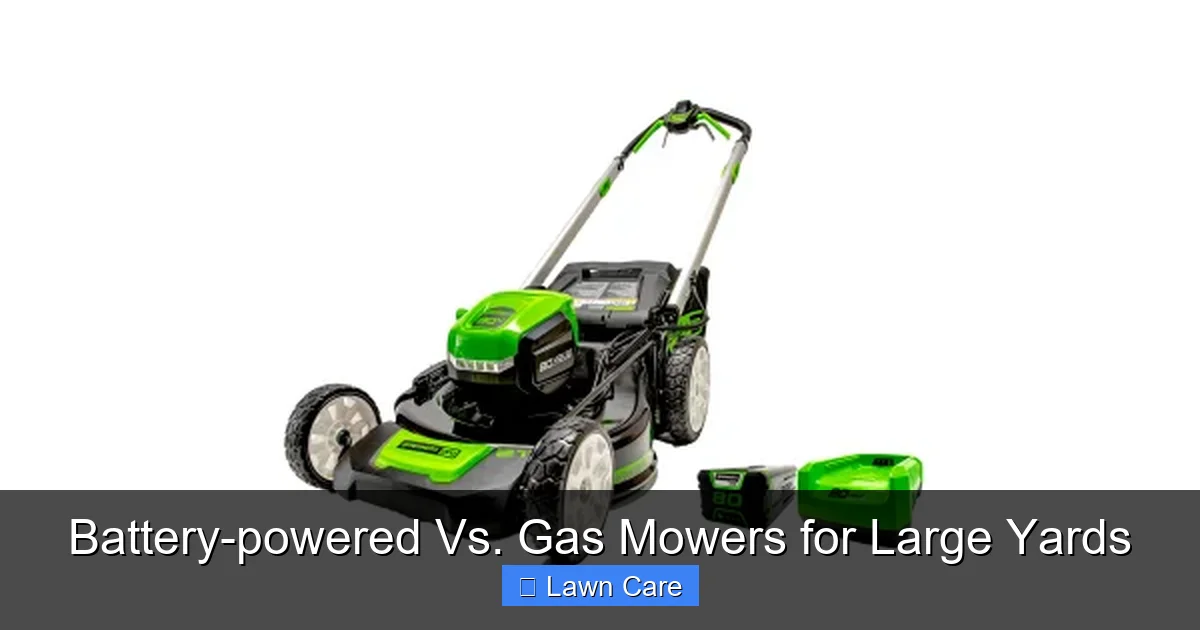
Let’s talk money. Gas mowers are generally cheaper to buy—expect to pay $200 to $400 for a decent push model. Battery mowers start around $300 to $600, depending on features and brand.
But here’s where battery mowers shine: long-term savings. Gas mowers cost more to operate. You’ll spend money on gas, oil changes, spark plugs, air filters, and occasional repairs. Over five years, those maintenance costs can add up to $300 or more.
Battery mowers have no fuel costs. You just plug them in. No oil, no gas, no tune-ups. That means lower operating costs and fewer trips to the mechanic.
Also, consider battery compatibility. Many battery systems—like EGO or Ryobi 18V ONE+—let you use the same battery for trimmers, blowers, and edgers. That’s a big win if you want a full electric yard toolkit.
So while battery mowers cost more upfront, they often save you money over time. And with rebates and tax incentives in some areas, the price gap is narrowing fast.
Maintenance and Upkeep: Less Work for You
Visual guide about Battery-powered Vs. Gas Mowers for Large Yards
Image source: rclawnmowersale.com
If you’re tired of changing oil, cleaning carburetors, or wrestling with pull-start cords, battery mowers are a breath of fresh air. They require almost no maintenance.
Gas mowers need regular attention:
- Change oil every 50 hours
- Replace air filters and spark plugs annually
- Clean or replace the carburetor if the engine sputters
- Winterize the engine if stored during cold months
Battery mowers? Just keep the blades sharp and store the battery in a cool, dry place. Some models even alert you when the battery needs charging or replacement.
For large yards, less maintenance means more time enjoying the lawn—not working on it.
Environmental Impact and Noise Levels
Let’s be honest: gas mowers are loud. They rumble like a small engine, and that noise travels. In neighborhoods with noise ordinances, you might only mow on weekends or early mornings.
Battery mowers are whisper-quiet. You can mow without waking the neighbors or startling pets. Plus, they produce zero emissions—no carbon monoxide, no smog-forming pollutants.
If you care about the environment, battery mowers are the clear winner. They’re powered by clean electricity, which can come from renewable sources. Even if your grid isn’t 100% green, you’re still reducing your carbon footprint.
Gas mowers, while powerful, contribute to air pollution and noise pollution. For large yards in eco-conscious communities, that’s a big drawback.
Convenience and Usability: Ease of Operation
Starting a gas mower can be a hassle. Cold weather, old fuel, or a dirty carburetor means multiple pulls before it fires up. Electric start helps, but not all models have it.
Battery mowers? Just press a button. No cords, no cranks—just instant power. That’s a huge advantage, especially on large lawns where you’ll be mowing multiple times.
Weight is another factor. Gas mowers are typically heavier due to the engine and fuel tank. Battery mowers are lighter, which makes pushing easier—especially on slopes or uneven ground.
Also, battery mowers are easier to store. No fuel to drain, no oil to change. Just plug in and go.
For large yards, convenience adds up. Fewer interruptions, less frustration, and more time to relax.
Which One Should You Choose for Your Large Yard?
So, battery-powered vs. gas mowers for large yards—which is better?
If your yard is:
- Under 1.5 acres
- Moderately dense grass
- Located in a quiet neighborhood
- You want low maintenance and clean operation
Then a high-quality battery mower is likely your best bet.
But if your yard:
- Exceeds 1.5 acres
- Has thick, overgrown grass
- Includes steep slopes or rough terrain
- You mow infrequently or during peak growing season
Then a gas mower still offers unmatched power and runtime.
Many homeowners now choose a hybrid approach: a battery mower for regular upkeep and a gas mower for heavy-duty tasks. But if you want simplicity and eco-friendliness, battery is the future.
Tips for Maximizing Battery Mower Performance on Large Yards
If you’re leaning toward battery power, here’s how to get the most out of your investment:
- Invest in high-capacity batteries—look for 6.0Ah or higher for longer runtime.
- Mow in sections and keep one battery charged while the other runs.
- Keep blades sharp—dull blades strain the motor and drain the battery faster.
- Maintain consistent speed—faster mowing uses more power.
- Store batteries properly—don’t let them sit fully discharged.
With these tips, battery mowers can easily handle large lawns—no sweat.
Frequently Asked Questions
Are battery mowers suitable for very large yards?
Yes, especially with high-capacity batteries and smart mowing strategies. For lawns over 2 acres, consider a riding mower or gas model for longer runtime.
Do battery mowers lose power as they drain?
Most modern battery mowers reduce speed gradually as the charge drops, but they still function well until the battery reaches 20–30% capacity.
What’s the best battery voltage for large lawns?
80V systems (like EGO or DEWALT) offer the best balance of power and runtime for large yards, outperforming 40V and 60V models.
Can I mow with a battery mower on a rainy day?
No—most battery mowers are not weatherproof. Always mow in dry conditions to protect the electronics and ensure safety.
Are battery mowers worth the higher price?
Yes, for most homeowners. Lower maintenance, no fuel costs, and quiet operation make battery mowers cost-effective over time.
Should I buy a gas or battery mower for a 2-acre yard?
For 2+ acres, a gas mower or riding mower is often better due to longer runtime and higher power. However, with multiple batteries and efficient mowing, a high-end battery mower can work too.