Asiatic lily leaves turning brown is one of the most common frustrations lily growers face, and the cause isn't always obvious. It could be something as simple as too much water, or it could be a fungal infection that spreads fast if you don't catch it early. The good news is that most causes are fixable once you know what to look for.
In our research, we found that the majority of cases trace back to four main culprits: watering problems, fungal diseases, environmental stress, or pests. The key is matching the browning pattern to the right cause. Let's walk through each one so you can figure out exactly what's happening with your plants and what to do about it.
Quick Answer
Asiatic lily leaves turn brown due to four main causes. Overwatering and poor drainage are the most common. Fungal diseases like botrytis cause spots that spread.
Environmental stress like frost or sunscald damages leaf tissue. Pests and viruses weaken plants over time. Check the browning pattern first to identify the cause.
The 4 Most Common Causes (And How to Tell Them Apart)
Before you can fix the problem, you need to figure out what's actually causing it. Each cause leaves a different "signature" on the leaves. Here's how to read the signs.
Watering Problems: Too Much or Too Little
Watering issues are the number one reason Asiatic lily leaves turn brown, and they come in two flavors.
Overwatering is the more dangerous of the two. When soil stays constantly wet, the roots can't breathe. They start to rot, and the plant can't take up water or nutrients.
The leaves turn yellow first, then brown from the tips inward. The foliage may look limp even though the soil is wet. If you dig down near the bulb and the roots feel mushy or smell sour, that's your answer.
Underwatering is simpler. The leaves brown at the edges and tips, turning crispy and dry. The soil will feel dry an inch or two below the surface.
Asiatic lilies need about 1 inch of water per week, either from rain or supplemental watering. In hot climates or sandy soil, they may need more.
The fix depends on which problem you've got. If you're dealing with overwatering, improving drainage is your top priority. For underwatering, a consistent watering schedule and a 2 to 3 inch layer of mulch will help retain moisture.
Fungal Diseases: Botrytis and Basal Rot
Fungal diseases are the second most common cause, and they're the ones that make gardeners panic. Two fungi in particular target Asiatic lilies.
Botrytis leaf blight (Botrytis elliptica) shows up as small, oval spots on the leaves. The spots start orange-brown and may have a lighter center. In humid conditions, you'll see gray fuzzy mold on the spots.
It thrives at temperatures between 60 and 75 degrees Fahrenheit with high humidity. This is the most common fungal disease in lilies, according to university extension services.
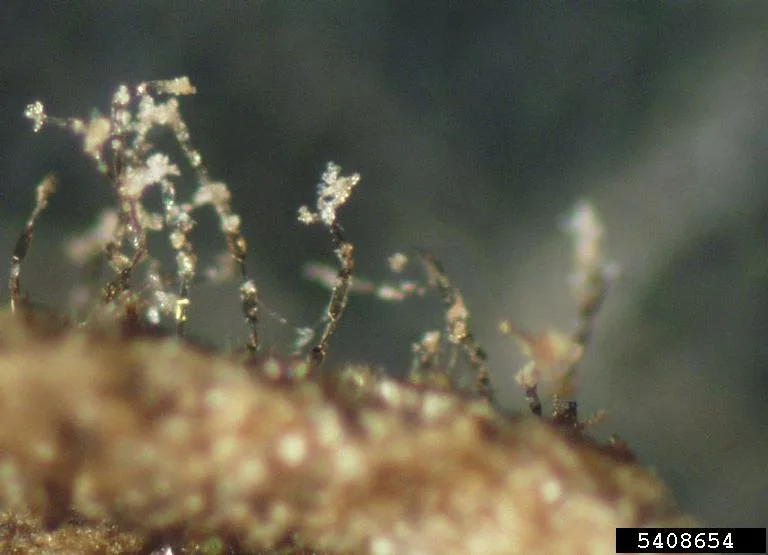
Basal rot (Fusarium oxysporum) attacks the bulb first. The lower leaves turn yellow and brown, and the bulb becomes soft and discolored when you dig it up. You might also see pink or white mold near the base of the stem.
Once basal rot takes hold, the plant usually can't be saved.
The key difference: botrytis starts on the leaves with spots, while basal rot starts at the bulb and works upward.
Environmental Stress: Sunscald, Frost, and Wind
Sometimes the problem isn't a pest or disease. It's the weather.
Sunscald happens when lilies get too much direct afternoon sun, especially in hot climates. The leaves develop pale, bleached patches that turn brown and papery. This is most common in USDA Zones 8 through 9, where summer temperatures regularly exceed 90 degrees.
Frost damage hits emerging spring growth. Asiatic lilies are hardy in Zones 3 through 9, but a late frost after new shoots have emerged can burn the tips and edges of young leaves. The damaged tissue turns brown and won't recover, though the plant usually pushes through with new growth.
Wind damage causes browning on the leaf edges, especially on taller varieties. The constant drying effect of wind strips moisture from the leaf margins faster than the plant can replace it.
Pests and Viruses: Aphids, Red Lily Beetles, and Mottle Virus
Pests and viruses tend to cause gradual decline rather than sudden browning, but they're worth knowing about.
Aphids cluster on new growth and the undersides of leaves. They suck sap and excrete sticky honeydew, which can lead to sooty mold. Heavy infestations cause leaves to curl, yellow, and eventually brown.
Red lily beetles (Lilioceris lilii) are bright red insects that eat holes in lily leaves. Their larvae, which cover themselves in dark excrement, can defoliate a plant entirely. The damage shows up as irregular holes and chewed edges that turn brown.
Lily mottle virus causes mottled, streaked, or spotted discoloration on leaves. Infected plants are stunted and produce fewer flowers. There's no cure for viral infections.
Infected plants should be removed and destroyed to prevent spread.
How to Diagnose the Problem Step by Step
Now that you know the main causes, let's put it all together into a simple diagnostic process. Work through these steps in order, and you'll land on the right answer.
Check the Browning Pattern First
The pattern of browning tells you a lot about the cause.
- Tips and edges browning, crispy texture: Likely underwatering, wind damage, or sunscald.
- Spots with fuzzy mold: Botrytis leaf blight.
- Lower leaves yellowing and browning first, progressing upward: Possible basal rot or nitrogen deficiency.
- Whole leaf turning brown and collapsing: Could be root rot from overwatering.
- Irregular holes with brown edges: Pest damage, likely red lily beetles.
Test Your Soil Moisture
Stick your finger 2 inches into the soil near the base of the plant. If it feels soggy, you're overwatering or the drainage is poor. If it's bone dry, the plant needs more water.
If it feels evenly moist, watering probably isn't the issue.
You can also check by gently digging near the bulb. Healthy roots are white and firm. Rotten roots are brown, mushy, and may smell bad.
Inspect the Bulb and Roots
If the above-ground symptoms aren't giving you a clear answer, it's time to look underground. Carefully dig around the bulb without damaging it.
- Firm, white bulb with healthy roots: The problem is likely above ground (environmental, pests, or foliar disease).
- Soft, mushy bulb with discolored roots: Basal rot or Phytophthora root rot. The bulb may have dark spots or show mold.
- Bulb feels hollow or dried out: The bulb may have been damaged during planting or by pests.
Review Recent Weather and Growing Conditions
Think back over the past few weeks. Did a late frost hit after your lilies emerged? Has it been unusually hot and humid?
Did you recently change your watering routine? Did you plant the bulbs in a new location?
These context clues often point directly to the cause. For example, if browning appeared right after a cold snap, frost damage is the likely culprit. If it started during a stretch of hot, humid weather, botrytis is a strong possibility.
How to Fix Each Cause
Once you've identified the problem, here's what to do about it.
Fixing Overwatering and Poor Drainage
If your lilies are sitting in soggy soil, act fast.
- Stop watering immediately and let the soil dry out.
- If the bulbs are in heavy clay soil, consider transplanting them to a raised bed or amending the soil with compost and coarse sand to improve drainage.
- For container-grown lilies, make sure the pots have drainage holes. Repot with a well-draining potting mix if needed.
- If root rot has already set in, remove the plant, trim away all rotted roots and bulb tissue, and replant in fresh, well-drained soil. There's no guarantee the plant will survive, but it's worth a try.
Good drainage is the single most important factor in preventing lily problems. Asiatic lilies can tolerate a range of soil types, but they absolutely cannot sit in waterlogged soil.
Treating Botrytis Leaf Blight
Botrytis spreads quickly in humid conditions, so don't wait.
- Remove and destroy all affected leaves and stems. Do not compost them. Bag them and throw them in the trash.
- Improve air circulation by thinning out crowded plants. Space lily bulbs 8 to 12 inches apart at planting time.
- Switch to watering at the base of the plant. Overhead watering wets the foliage and creates ideal conditions for fungal growth.
- If the infection is widespread, apply a fungicide labeled for botrytis on lilies. Products containing chlorothalonil or mancozeb are commonly recommended by university extension programs. Follow the label directions exactly.
- Clean up fallen leaf debris around the plants, as the fungus can overwinter in dead plant material.
Addressing Fusarium Basal Rot
Basal rot is harder to treat, and in many cases, the plant can't be saved.
- Dig up the affected plant and inspect the bulb. If more than half of the bulb is soft and discolored, discard it. Do not compost it.
- If the infection is caught early and only a small portion of the bulb is affected, you can try cutting away the diseased tissue with a clean, sharp knife. Dust the cut surface with a fungicide and replant in fresh soil.
- Rotate your planting site. Don't plant lilies in the same spot for at least three years, as the fungus persists in the soil.
- Purchase bulbs from reputable sources and inspect them before planting. Discard any that feel soft, show mold, or have visible damage.
Protecting Lilies from Frost and Sunscald
Environmental damage is mostly about prevention.
- For frost protection, cover emerging shoots with a frost cloth or old sheet if a late frost is forecast. Remove the cover during the day.
- In hot climates, plant lilies where they'll get morning sun but some afternoon shade. This reduces the risk of sunscald significantly.
- A 2 to 3 inch layer of mulch helps regulate soil temperature and moisture, buffering against both heat and cold extremes.
- For wind protection, plant lilies near a fence, hedge, or other windbreak. Avoid exposed, open sites for tall varieties.
Managing Pest Infestations
Pests are manageable if you catch them early.
- For aphids, a strong spray of water from the hose can knock them off. For heavier infestations, insecticidal soap or neem oil works well.
- For red lily beetles, hand-pick the adults and larvae and drop them into soapy water. Check the undersides of leaves for clusters of orange eggs and remove them.
- For lily beetles, you can also apply a systemic insecticide labeled for ornamental plants, but be cautious around pollinators. Apply in the early morning or late evening when bees are less active.
- For viral infections, there is no treatment. Remove and destroy infected plants immediately to prevent aphids from spreading the virus to healthy plants.
What NOT to Do When Lily Leaves Turn Brown
Even with good intentions, it's easy to make things worse. Here are the most common mistakes we see.
Don't cut back green foliage. It's tempting to trim away brown leaves for a cleaner look, but as long as any part of the leaf is still green, it's photosynthesizing and sending energy to the bulb. Cutting foliage early weakens the bulb and reduces next year's blooms. Wait until the entire stem has turned yellow or brown before removing it.
Don't overwater to "fix" browning. If the leaves are brown and the soil is already wet, adding more water accelerates root rot. Always check soil moisture before reaching for the hose.
Don't compost infected plant material. Fungal spores and bacteria survive in compost piles that don't reach high enough temperatures. Bag up diseased leaves and stems and dispose of them in the trash.
Don't apply fungicide without identifying the problem first. If the browning is caused by overwatering or sunscald, a fungicide won't help and wastes money. Use the diagnosis steps above before treating.
Don't ignore the problem hoping it resolves itself. Fungal diseases and pest infestations don't go away on their own. They spread. Early intervention gives you the best chance of saving the plant and protecting neighboring lilies.
How to Prevent Browning Next Season
Prevention is always easier than treatment. Set your lilies up right from the start, and you'll avoid most of these problems entirely.
Planting Best Practices for Healthy Lilies
Good planting is the foundation of healthy lilies.
- Plant bulbs at the right depth. The general rule is 3 times the bulb height, which usually means 4 to 6 inches deep. Too shallow and the bulbs dry out. Too deep and they struggle to emerge.
- Space bulbs 8 to 12 inches apart. Crowded plants have poor air circulation, which invites fungal disease.
- Choose well-drained soil. If you have heavy clay, amend it with compost, peat moss, or coarse sand. Better yet, plant in raised beds.
- Plant in the right location. Asiatic lilies prefer full sun, but in hot climates (Zones 8 through 9), a spot with morning sun and afternoon shade reduces stress.
- Inspect bulbs before planting. Firm, plump bulbs with healthy roots are your best bet. Discard any that feel soft, show mold, or have shriveled scales.
Ongoing Care Through the Growing Season
Once your lilies are in the ground, consistent care keeps them strong.
- Water at the base, not overhead. Wet foliage is an open invitation for botrytis and other fungal diseases. Drip irrigation or a soaker hose works great.
- Apply 2 to 3 inches of mulch. Shredded bark, compost, or pine straw regulates soil temperature, retains moisture, and suppresses weeds. Keep the mulch an inch or two away from the stems to prevent rot.
- Fertilize lightly. A balanced, slow-release fertilizer applied in early spring supports growth. Avoid high-nitrogen fertilizers, which promote lush foliage that's more susceptible to disease.
- Inspect plants weekly. A quick walk-through once a week lets you catch problems early. Look for spots, insects, or wilting that wasn't there before.
- Deadhead spent flowers. Snipping off faded blooms prevents seed formation, which diverts energy from the bulb. But leave the stem and foliage intact.
End-of-Season Foliage Management
What you do after bloom matters just as much as what you do during the season.
- Do not cut back foliage until it has completely yellow or brown. The leaves are still working, storing energy in the bulb for next year's growth and flowers.
- Allow foliage to die back naturally. This usually takes 4 to 6 weeks after blooming. Once the stems are fully brown, cut them down to ground level.
- Clean up fallen leaves and debris. This removes overwintering sites for fungal spores and pests.
- In cold climates (Zones 3 through 5), apply a thick layer of mulch in late fall. This insulates the bulbs against freeze-thaw cycles. Pull the mulch back in spring as new growth emerges.
Quick-Reference Diagnosis Table
Use this table to match symptoms to causes quickly.
| Symptom Pattern | Likely Cause | Key Confirming Sign | First Action |
|---|---|---|---|
| Tips/edges brown, crispy | Underwatering or wind damage | Soil dry 2+ inches down | Water deeply, add mulch |
| Lower leaves yellow then brown, progressing up | Basal rot or overwatering | Bulb soft, roots mushy | Check drainage, inspect bulb |
| Oval spots with fuzzy mold | Botrytis leaf blight | Gray mold on spots, humid weather | Remove affected leaves, improve airflow |
| Pale patches turning brown | Sunscald | Afternoon sun exposure, hot climate | Provide afternoon shade |
| Brown tips on new growth after cold | Frost damage | Recent frost event, damage on new shoots only | Cover next time, new growth will replace it |
| Irregular holes, chewed edges | Red lily beetles | Bright red beetles or larvae on plant | Hand-pick, apply insecticidal soap |
| Mottled or streaked discoloration | Lily virus | Stunted growth, no mold or insects present | Remove and destroy plant |
When to Worry: Signs the Bulb Can't Be Saved
Sometimes, despite your best efforts, the plant is too far gone. Here's when to call it.
- The bulb is completely soft and mushy. If the entire bulb has turned to mush, no treatment will bring it back. Remove and discard it.
- The bulb has a strong, sour smell. This indicates advanced bacterial or fungal rot.
- More than half the basal plate is destroyed. The basal plate is where roots emerge. If it's mostly rotted away, the bulb can't recover.
- The plant collapses at the soil line. This often means the stem has rotted through at the base.
- Multiple bulbs in the same area are affected. This suggests a soil-borne disease like Fusarium or Phytophthora that will keep spreading.
When the bulb can't be saved, remove it promptly. Don't leave infected bulbs in the ground, as they become a source of infection for neighboring plants. If you've lost bulbs to disease, consider replanting in a different location with fresh soil.
Frequently Asked Questions
Should I cut off brown lily leaves?
Only if the entire leaf is brown and dead. If any green remains, leave it alone. Green tissue is still photosynthesizing and feeding the bulb.
Cutting green foliage early weakens the plant and reduces next year's blooms.
Can Asiatic lilies recover from botrytis?
Yes, if caught early. Remove all affected foliage, improve air circulation, and apply a fungicide labeled for botrytis. The plant can put out new growth if the bulb is still healthy.
Severe infections that reach the bulb are harder to recover from.
Is brown foliage at the end of summer normal?
Yes. Asiatic lilies are deciduous. After blooming, the foliage naturally yellows and browns as the plant goes dormant.
This is not a problem. It's the plant storing energy for next season. Cut stems back only after they've turned completely brown.
How often should I water Asiatic lilies?
About 1 inch of water per week is the general guideline. Adjust based on your soil type and climate. Sandy soil dries out faster and may need more frequent watering.
Clay soil holds moisture longer. Always check the soil before watering rather than following a rigid schedule.
Are Asiatic lilies prone to any specific diseases?
Botrytis leaf blight and Fusarium basal rot are the two most common. Botrytis thrives in humid conditions with poor air circulation. Fusarium attacks the bulb and is often linked to poor drainage or infected planting stock.
Good cultural practices prevent both.
Can I grow Asiatic lilies in containers?
Yes, they do well in containers. Use a pot at least 12 inches deep with good drainage holes. Fill with a well-draining potting mix.
Container-grown lilies may need more frequent watering than in-ground plants, especially during hot weather.