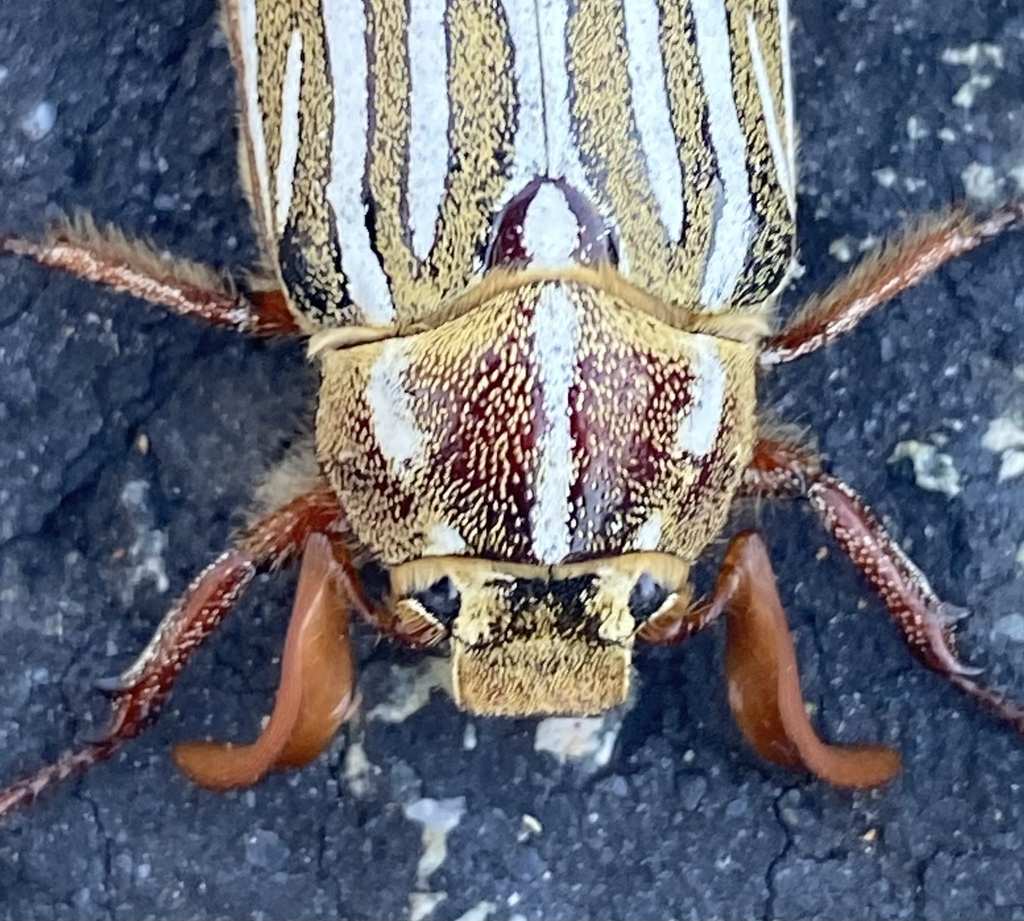
Image source: iNaturalist / Irene
If you've spotted curled, C-shaped larvae wiggling around in your garden soil and wondered whether they're helping or hurting, you're not alone. The answer to "are grubs good for gardens" isn't a simple yes or no. It depends on what species you're dealing with, how many are there, and what you're growing.
Here's the short version: grubs aren't automatically your enemy, but they're not automatically your friend either. A small number can actually contribute to healthy soil biology. A large number can destroy a lawn in weeks.
Most state extension services use a damage threshold of 5 to 10 grubs per square foot as the tipping point where treatment becomes worthwhile. Below that, many turf types tolerate them just fine. Let's walk through how to figure out which situation you're in.
Quick Answer
White grubs are C-shaped scarab beetle larvae that live in soil. At low numbers, some species help break down organic matter. At high numbers, they destroy turfgrass roots and cause brown patches.
The break-even point for most lawns is roughly 5 to 10 grubs per square foot. Identifying the species matters because life cycles and control timing differ by type.
What Grubs Actually Are (And Why It Matters)
When gardeners talk about "grubs," they're usually referring to the larval stage of scarab beetles. White grubs is the umbrella term for several species that look almost identical to an untrained eye but behave very differently underground.
The most common ones you'll encounter in North American gardens and lawns include Japanese beetle grubs, European chafer grubs, June beetle grubs, masked chafer grubs, and black turfgrass ataenius grubs. In the UK and Europe, the European cockchafer and garden chafer are the usual suspects.
All of them share the same basic body plan: a creamy white or pale gray body, a distinct brown head capsule, three pairs of true legs near the head, and that signature C-shape curl when disturbed. They range from about half an inch to over an inch and a half long depending on species and age.
What they eat underground is what determines whether they're a problem. Most scarab larvae feed on organic matter in the soil and the roots of grasses. That root-feeding behavior is what turns them from harmless soil dwellers into destructive pests.
Some species, like green June beetle grubs, feed primarily on decaying organic matter and cause relatively little turf damage even at moderate populations.
Understanding that distinction is the first step toward making a smart decision about what to do, if anything.
The Two Sides: When Grubs Help vs. When They Hurt
Grubs have a reputation problem. Most people hear the word and picture a ruined lawn. The reality is more nuanced.
When Grubs Can Be Beneficial
A low population of grubs plays a role in the soil food web. As they move through the soil, they create small channels that improve aeration and water infiltration. They consume decaying organic matter and convert it into frass (insect excrement), which returns nutrients to the soil in plant-available forms.
They're also an important food source. Birds, ground beetles, ants, and predatory wasps all feed on grubs. A garden with a small, stable grub population often supports more bird activity and a richer community of soil organisms.
Some organic gardeners actively tolerate low grub numbers for exactly this reason.
When Grubs Cause Damage
The trouble starts when populations exceed what your plants can handle. Grubs feed on turfgrass roots, severing the plant's ability to take up water and nutrients. In the early stages, the damage looks like drought stress: patches of turf turn yellow, then brown, even when you're watering regularly.
The telltale sign is that the turf lifts easily off the soil like a loose carpet. That's because the root system has been chewed away underneath. In heavy infestations, you might also notice increased animal activity.
Skunks, raccoons, and moles dig through turf to feed on grubs, creating their own mess on top of the root damage already done.
The damage is most visible in late summer and early fall when grubs are largest and feeding most aggressively, and again in spring when they resume feeding before pupating. Cool-season grasses like Kentucky bluegrass and perennial ryegrass are more vulnerable than warm-season varieties like bermudagrass or zoysiagrass.
How to Identify What's Living in Your Soil
Not all white grubs are created equal. Identification matters because different species have different life cycles, different damage potential, and different optimal treatment windows.
The Easiest Method: The Squish Test and Photo ID
For a quick start, dig up a few specimens and photograph them clearly from above. iNaturalist and most state extension services can help you get a species-level ID from a good photo. Look for body size, color tone, and the timing of when you found them.
The Precise Method: Raster Pattern Examination
If you want to know exactly what you're dealing with, you need to look at the raster pattern. That's the arrangement of hairs, spines, and tiny openings on the underside of the grub's last abdominal segment. Each scarab species has a distinctive raster pattern that acts like a fingerprint.
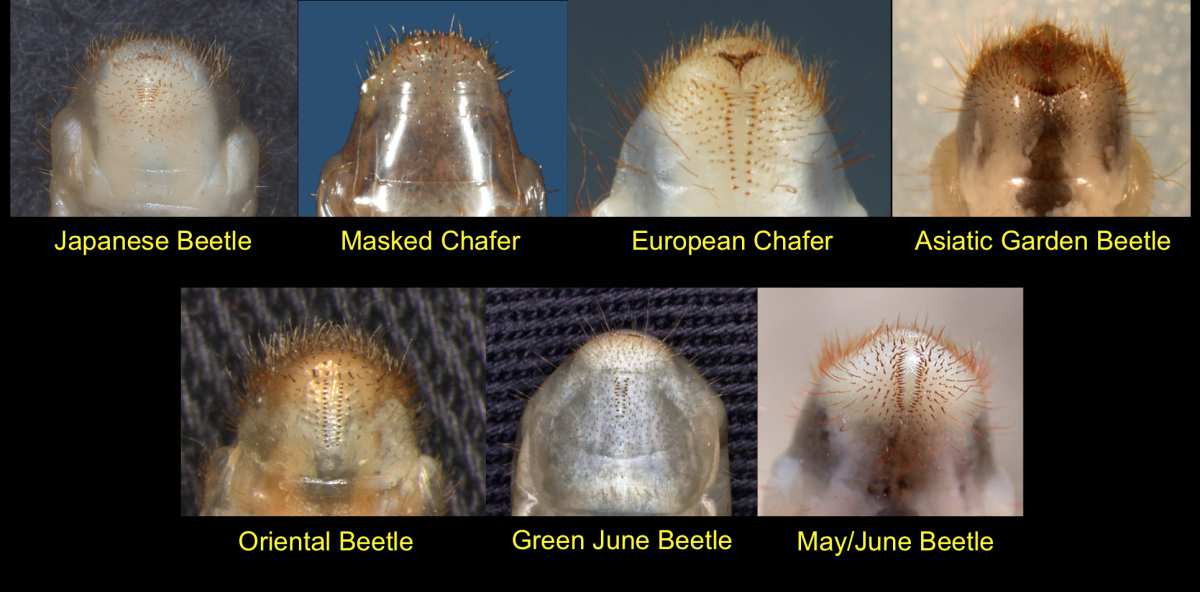
Image source: Bing (Web (fair-use with source credit))
You'll need a hand lens or a basic magnifying glass to see it clearly. Purdue University's extension service and similar land-grant university resources publish comparison charts showing raster patterns for the most common species. Matching your specimen's pattern to a chart is the gold standard for field identification.
Key Species Differences Worth Knowing
| Species | Peak Feeding Period | Damage Severity | Notes |
|---|---|---|---|
| Japanese beetle | Late summer to fall | High | Milky spore disease targets this species |
| European chafer | Fall and spring | Very high | Active later into fall than most species |
| June beetle (May beetle) | Spring and summer | Moderate to high | Three-year life cycle, hard to time treatment |
| Masked chafer | Late summer | Moderate | Common in Northeast and Midwest US |
| Black turfgrass ataenius | Spring and summer | Moderate | Smaller species, often overlooked |
| Green June beetle | Late summer | Low | Primarily feeds on decaying matter |
If you're in the UK, the European cockchafer and garden chafer follow a three-to-four-year life cycle, which makes treatment timing tricky. Your local agricultural extension or equivalent advisory service is your best resource for region-specific identification help.
The Damage Threshold: How Many Grubs Is Too Many?
This is where most people get it wrong. They see one grub in a shovelful of soil and panic. Or they see twenty and assume their lawn is fine because it still looks green.
The reality is that turf health, soil type, and grass species all influence how many grubs your lawn or garden can tolerate before damage becomes visible.
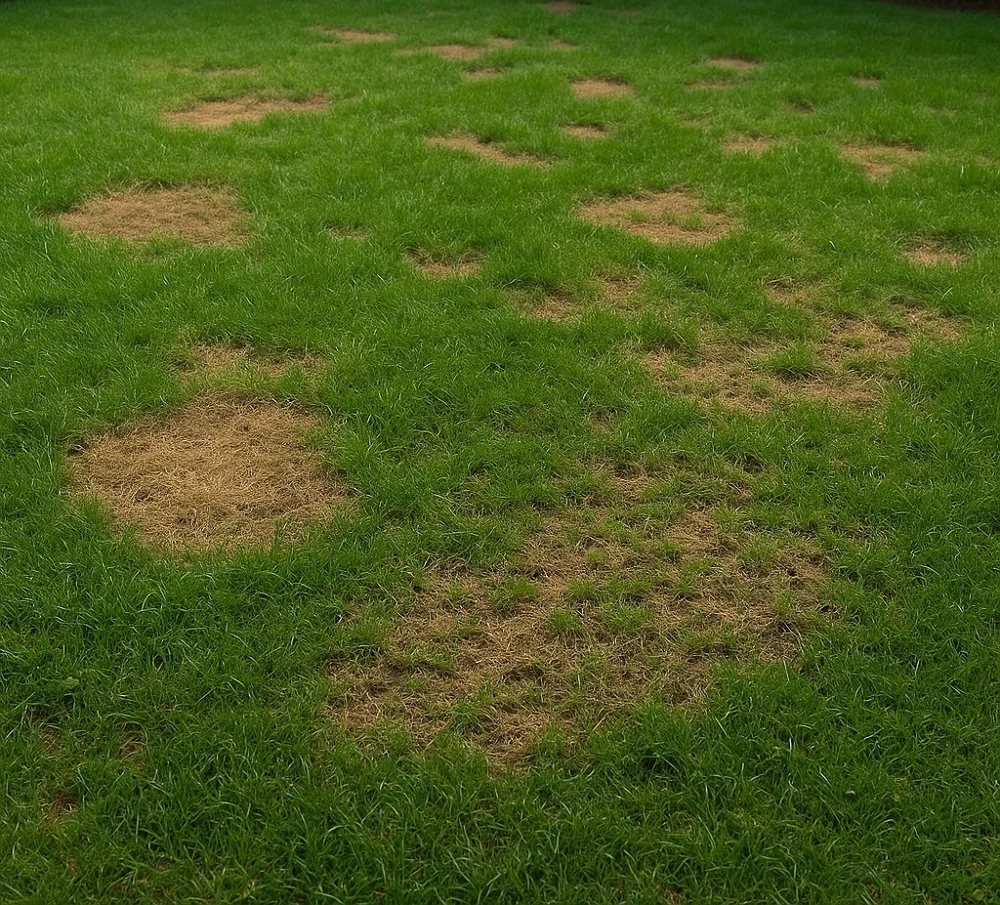
Image source: Bing (Web (fair-use with source credit))
Standard Damage Thresholds
Most university extension programs use these general guidelines:
- High-maintenance turf (Kentucky bluegrass, fine fescue, putting greens): 5 to 6 grubs per square foot triggers treatment
- Standard residential lawns (mixed cool-season grasses): 8 to 10 grubs per square foot is the break point
- Low-maintenance or mixed grass areas: 10 to 15 grubs per square foot before action is needed
- Sandy soils: Damage shows at lower counts, sometimes as few as 3 to 5 grubs per square foot, because sand holds less water and roots are already stressed
- Warm-season grasses (bermudagrass, zoysiagrass): Often tolerate higher counts due to aggressive root regeneration
How to Sample Properly
Cut three sides of a one-square-foot section of turf with a spade, peel it back like a flap, and count the grubs in the exposed soil. Do this in several spots because grub distribution is rarely uniform. Multiply by four if you're sampling a quarter-square-foot section to get the per-square-foot count.
The best time for sampling is mid-August through September for most species, when grubs are present and feeding but haven't yet burrowed deep for winter. Spring sampling works too, but grubs are often larger and have already done their primary damage by then.
If your counts fall below the threshold for your turf type, you can probably skip treatment entirely and let natural predators keep things in check.
Step-by-Step: Should You Treat or Leave Them Alone?
Here's a practical decision framework that walks you from observation to action (or inaction).
Step 1: Confirm You Have a Problem
Don't treat based on seeing one grub. Sample your soil using the square-foot method described above. Get a count.
Step 2: Check Your Threshold
Compare your count to the damage threshold for your grass type and soil. If you're below it, stop here. No treatment needed.
Step 3: Look for Secondary Signs
Even if your count is borderline, check for additional evidence:
- Spongy feel when you walk on the turf
- Brown patches that don't respond to watering
- Increased bird, skunk, or raccoon digging
- Turf that lifts easily without roots attached
If two or more of these signs are present, treatment is probably warranted even at moderate counts.
Step 4: Consider Your Tolerance Level
Some homeowners want a perfect lawn and will treat at lower counts. Others are happy with a more natural approach and accept some root feeding. Neither approach is wrong.
Know which camp you're in.
Step 5: Time Your Response
If you decide to treat, timing is everything. Curative treatments work best when grubs are small and actively feeding, typically August through September for most species in the Northern Hemisphere. Preventive treatments target newly hatched grubs and go down in June or July, depending on your region.
Treating in spring is almost always too late. Grubs are large by then, have already caused damage, and are about to pupate and become adults. A spring treatment kills grubs that were going to stop feeding anyway.
Step 6: Monitor Next Year
Whatever you do this year, resample next season. Grub populations fluctuate naturally. Treating once doesn't mean you'll need to treat every year.
Choosing the Right Treatment (If You Need One)
If you've decided treatment fits your situation, you have three broad paths: biological controls, cultural practices, and chemical insecticides. Each has tradeoffs.
Biological Controls
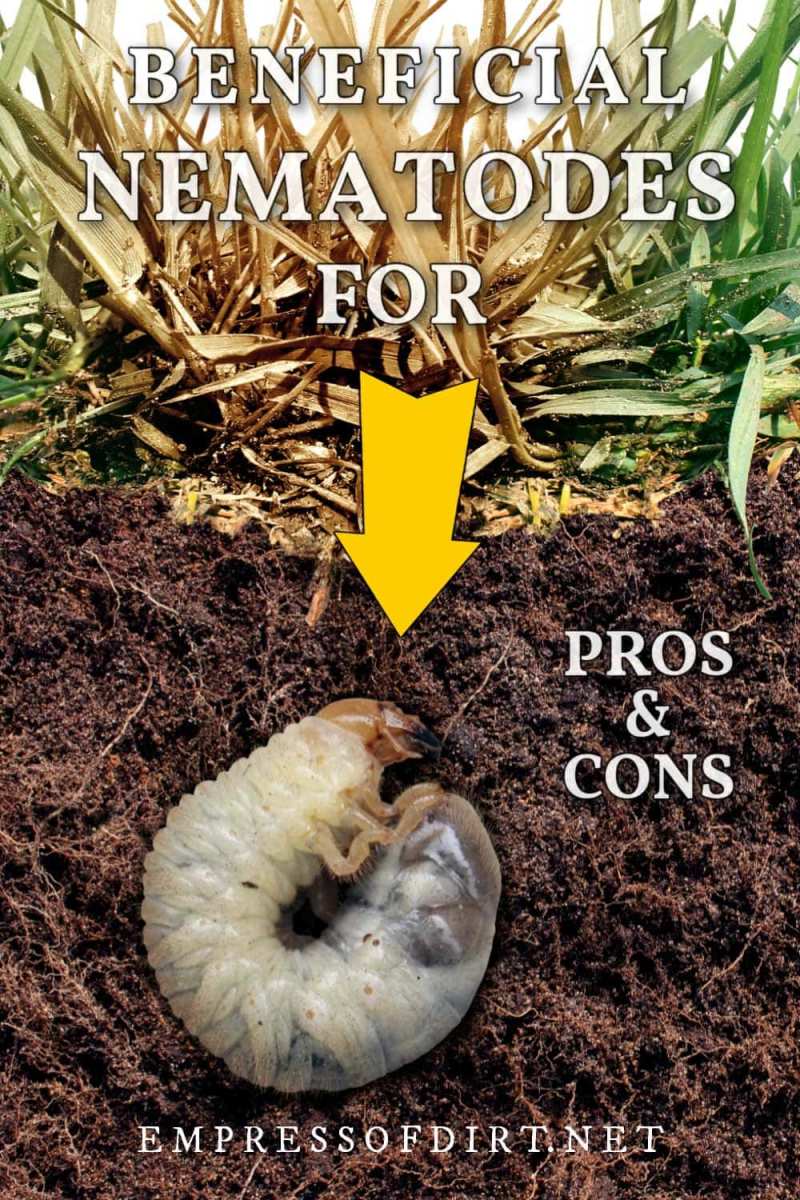
Image source: Bing (Web (fair-use with source credit))
Beneficial nematodes (Heterorhabditis bacteriophora is the species most commonly used against grubs) are microscopic roundworms that enter grubs through body openings and release bacteria that kill the host within 24 to 48 hours. They're applied as a soil drench using a watering can or hose-end sprayer. Key requirements: soil temperatures above 60°F, adequate moisture, and application in the evening to avoid UV exposure.
They're safe around pets, pollinators, and earthworms. Availability can be limited, and shelf life is short, so order close to your planned application date.
Milky spore disease (Paenibacillus popilliae) is a bacterium that specifically targets Japanese beetle grubs. It doesn't affect other scarab species. Once established in soil, it provides control for 10 to 15 years.
The downside: it takes two to three years to build up enough inoculum in the soil to be effective, and it only works where Japanese beetle is the primary problem. If your grub population is a mix of species, milky spore alone won't cut it.
Cultural Practices
Overwatering and overfertilizing actually attract adult beetles to lay eggs. Turf that's lush and well irrigated in midsummer is prime egg-laying territory. Reducing irrigation slightly in July and August (without stressing your grass to the point of death) can make your lawn less attractive for egg deposition.
Choosing grub-tolerant grass varieties is a long-term strategy. Tall fescue handles grub feeding better than Kentucky bluegrass in most trials. Warm-season grasses recover faster due to their aggressive spreading growth habit.
Chemical Insecticides
If you need a fast-acting curative option, chlorantraniliprole (found in some branded products like GrubEx) has become the go-to active ingredient as of 2026. It's effective at low application rates and has a favorable safety profile for non-target organisms compared to older chemistries. Trichlorfon works as a quick-kill curative but has a short window of effectiveness and is restricted or banned in some areas.
Older neonicotinoid products like imacloprid are still available but face increasing regulatory restrictions, particularly in states like Maryland, Connecticut, and Vermont, where cosmetic pesticide laws limit residential use. Always check your state department of agriculture website for current regulations before purchasing any chemical control product.
| Treatment Type | Timing | Best For | Drawbacks |
|---|---|---|---|
| Beneficial nematodes | August to September | Organic gardens, mixed grub species | Short shelf life, strict application requirements |
| Milky spore | Spring or fall (preventive) | Japanese beetle only, long-term control | Slow to establish, species-specific |
| Chlorantraniliprole | July (preventive) | Long-lasting prevention | Apply before grubs hatch |
| Trichlorfon | August to September (curative) | Immediate knockdown | Short effectiveness window |
| Cultural practices | Ongoing | Reducing future populations | Won't fix an existing infestation |
One important note: regardless of which treatment you choose, water it in thoroughly after application. Biological and chemical products both need to reach the root zone where grubs are feeding. A good half-inch of irrigation or rainfall within 24 hours of application makes a significant difference in results.
Common Mistakes That Make Grub Problems Worse
Several recurring patterns show up in grub management, and most of them are avoidable.
Treating without confirming the species is the biggest one. If you have European chafer grubs but you apply milky spore, you've wasted your money. Milky spore only works on Japanese beetle grubs.
Know what you have before you spend a cent on treatment.
Applying curative insecticides in spring is another frequent error. By April or May, grubs are nearly mature and have already done their worst feeding. The insecticide kills larvae that were about to stop feeding anyway.
You see the product container go on the lawn and assume it worked, when the grubs would have stopped regardless. The window for effective curative treatment closes in most regions by early October.
Overwatering right before a nematode application can backfire too. Nematodes need moist soil, but saturated, waterlogged conditions drown them. Aim for evenly damp soil, not puddles.
Finally, forgetting secondary damage leads to underestimating the problem. If skunks or raccoons are tearing up your lawn three nights a week, the grub count is almost certainly well above threshold. Animal digging often means the problem is already severe.
Real Scenarios: What Different Gardeners Should Do
Sandy soil, cool-season lawn, Northeast US. If you're in coastal New England with sandy soil and Kentucky bluegrass, your threshold is lower than average. At 4 to 5 grubs per square foot, you should be thinking about treatment. Beneficultural nematodes applied in late August tend to work well here because the soil warms early and holds enough moisture for nematode survival.
Heavy clay soil, fescue blend, Midwest US. A tall fescue lawn on clay in Ohio or Indiana can often handle 10 to 12 grubs per square foot without visible damage. If your sampling shows 7 or 8, you're probably fine. Keep the lawn healthy with proper mowing height and fall fertilization, and skip treatment.
Organic vegetable garden, mixed soil, Pacific Northwest. If you're growing vegetables and find grubs in your soil during spring planting, they're most likely feeding on organic matter in your compost-rich beds. Populations in gardens rarely reach the densities seen in monoculture turf. Unless you see actual seedlings wilting from root feeding, leave them alone.
Earthworms and grubs coexisting in garden soil is a sign of healthy biology.
Warm-season grass, Southern US. Bermudagrass or zoysiagrass lawns in Georgia or the Carolinas rebound quickly from grub feeding. Count up to 15 grubs per square foot might not warrant treatment if the turf is actively growing. The risk period is late summer when flowering weeds and heat stress compound the damage.
Expert Tips for Long-Term Grub Management
The most effective grub management focuses on prevention and ecosystem balance rather than reaction.
Encourage natural predators. Ground beetles, ants, and certain parasitic wasps all attack grubs. Avoiding broad-spectrum insecticide applications preserves these beneficial populations.
Even something as simple as leaving a small area of your yard unmowed and undisturbed provides habitat for predatory insects.
Mow at the correct height for your grass species. Taller turf develops deeper roots and tolerates more root feeding. Kentucky bluegrass mowed at 3 inches handles grub pressure better than the same grass mowed at 1.5 inches.
The extra root mass gives the plant more reserve to draw from.
Time adult beetle control if you have recurring problems. Since grubs become beetles, managing the adult population in early summer reduces egg-laying and next year's grub cohorts. Pheromone traps for Japanese beetles can actually attract more beetles to your yard if placed incorrectly, so position them at the property border, never near the plants you're protecting.
Keep records from year to year. Jot down grub counts, when you sampled, and what species you identified. Patterns emerge over two to three seasons.
Some years the population crashes naturally. Other years it spikes. Data helps you decide whether to treat or skip.
Frequently Asked Questions
Are white grubs harmful to vegetable gardens?
In most cases, no. Grubs in mixed garden soil typically feed on decaying organic matter and rarely reach densities high enough to damage vegetable roots. Seedlings are more vulnerable than established plants.
If you find a few grubs while turning compost or preparing beds, they're usually not worth worrying about.
How fast can grubs destroy a lawn?
Under heavy infestation conditions, particularly with European chafer or Japanese beetle grubs, visible brown patches can appear within two to three weeks of peak feeding in late summer. The damage accelerates quickly because grubs are largest and consuming the most tissue at that stage.
Can I use dish soap to check for grubs?
A soapy water drench works as a quick survey method. Mix a couple of tablespoons of liquid dish soap in a gallon of water and pour it over a square yard of turf. Grubs will wriggle to the surface within a few minutes.
It's not as accurate as cutting and peeling back turf, but it gives you a fast yes or no on whether grubs are present.
Do grubs come back in the same spot every year?
They often do. Areas of your yard that were attractive to adult beetles for egg-laying last summer will likely attract them again. Sunny, south-facing slopes with well-drained soil tend to be repeat hotspots.
Monitoring those areas first each season saves time.
Is milky spore safe for pets and children?
Yes. Milky spore (Paenibacillus popilliae) is classified by the EPA as a minimum-risk biological control agent. It targets only Japanese beetle grubs and has no known effects on mammals, birds, fish, earthworms, or beneficial insects.
That safety profile is a major reason it remains popular with organic gardeners.
When is the best time to treat for grubs?
For curative treatments, mid-August through September in most Northern Hemisphere climates. For preventive treatments, June to July when adult beetles are laying eggs and newly hatched grubs are small and vulnerable. Always confirm active grub presence before treating.
Your Decision Guide: Treat, Tolerate, or Walk Away
Treat if your grub count exceeds the threshold for your soil and grass type, you see secondary damage like animal digging, or you've had recurring problems in the same area for multiple seasons.
Tolerate if counts are below threshold, your turf looks healthy, and no animal digging is occurring. Low grub populations feed birds and contribute to soil biological activity.
Walk away from treatment if you're tempted to apply insecticides in spring (too late), you haven't identified the species, or your grub count is well within the range your grass can handle without intervention. The best grub management is the one tailored to your specific lawn, soil, and species combination. A few grubs in a healthy garden is not a crisis.
It's biology doing what it does.
Common Mistakes That Make Grub Problems Worse
Apply treatments at the wrong time and you waste money without solving the problem. Spring applications are almost always too late because grubs have already fed heavily and are preparing to pupate.
Not verifying species leads to mismatched treatments. Milky spore only works on Japanese beetle grubs. If you have European chafer grubs, you've thrown money away.
Ignoring soil conditions when using biological controls is another frequent error. Beneficial nematodes die in dry soil or in UV exposure. Apply them to moist soil in the evening for meaningful results.
Over-watering immediately before application can saturate soil and drown nematodes. Aim for evenly damp, not waterlogged conditions.