
Keeping your lawn lush and green doesn’t require a flood of water. By implementing simple strategies, you can significantly reduce your lawn’s water consumption. From watering wisely to choosing the right grass and maintaining your soil, these 8 easy methods will help you conserve water while maintaining a beautiful yard.
Our lawns are often a source of pride. A vibrant green carpet can truly enhance curb appeal and provide a wonderful space for relaxation and play. However, maintaining a picture-perfect lawn can also be a thirsty business, especially during hot, dry spells. In a world where water conservation is increasingly important, it’s wise to rethink how we care for our outdoor spaces. The good news is that you don’t have to sacrifice a beautiful lawn to be water-wise.
Conserving water on your lawn is not only good for the environment and your water bill but also essential for the long-term health of your grass. When we overwater, we can create shallow root systems, encourage disease, and even contribute to water runoff that pollutes local waterways. By adopting smarter watering habits and making a few simple adjustments, you can significantly reduce your lawn’s water footprint without compromising its health and appearance. Let’s dive into eight simple yet effective ways to conserve water on your lawn.
- Water Deeply and Infrequently: Encourage deeper root growth by watering less often but for longer durations.
- Water at the Right Time: Avoid watering during the hottest parts of the day to minimize evaporation.
- Adjust Your Mowing Height: Taller grass shades the soil, reducing water loss and weed growth.
- Improve Soil Health: Healthy soil retains moisture better, meaning your lawn needs less supplemental watering.
- Choose Drought-Tolerant Grass: Opt for grass varieties that are naturally suited to drier conditions.
- Utilize Mulch and Groundcovers: Reduce water needs in garden beds by using mulch and water-wise plants.
- Check for Leaks: Regularly inspect your irrigation system for leaks and fix them promptly.
Quick Answers to Common Questions
Why is watering deeply and infrequently better for my lawn?
Watering deeply encourages grass roots to grow deeper in search of moisture, making the lawn more drought-resistant. Infrequent watering allows the soil surface to dry out slightly between waterings, which can help prevent fungal diseases.
What’s the best time of day to water my lawn to conserve water?
The best times are early morning (between 4 AM and 10 AM) or late evening. Early morning is ideal because it minimizes evaporation due to cooler temperatures and less wind, allowing more water to reach the roots.
How does mowing height affect water conservation?
Taller grass shades the soil, reducing water evaporation. It also encourages deeper root growth, making the lawn more resilient to dry conditions and outcompeting weeds.
Can I water my lawn with gray water?
Yes, in many areas, gray water (water from sinks, showers, and laundry, excluding toilet water) can be used to water your lawn, provided it’s treated properly and local regulations allow it. This is a great way to conserve fresh water resources.
How can I tell if my lawn actually needs watering?
Look for signs like a loss of green color, footprints remaining on the grass after walking on it, or wilting blades. You can also use a screwdriver to check soil moisture; if it’s difficult to push in, the soil is too dry.
📑 Table of Contents
- 1. Water Deeply and Infrequently
- 2. Water at the Right Time of Day
- 3. Adjust Your Mowing Height
- 4. Improve Your Soil Health
- 5. Choose Drought-Tolerant Grass Varieties
- 6. Utilize Mulch and Groundcovers in Garden Beds
- 7. Check for Leaks and Optimize Your Sprinkler System
- 8. Let Your Lawn Go Dormant (When Appropriate)
- Conclusion
1. Water Deeply and Infrequently
This might sound counterintuitive, but watering your lawn less often but for longer periods is one of the most effective ways to conserve water. Think of it like this: a quick sprinkle only wets the very top layer of the soil. This encourages grass to develop shallow roots, making it more vulnerable to drought and heat. When you water deeply, the water penetrates further into the soil, reaching the deeper root zones.
Why Deep Watering Works
When the soil is deeply moistened, grass roots are encouraged to grow deeper in search of water. Deeper roots mean a more resilient lawn. A lawn with a strong, deep root system can better access moisture from lower soil levels, making it less dependent on frequent surface watering. This is crucial for surviving dry periods without significant browning or stress.
How to Do It
Instead of watering for 10-15 minutes every day, aim for watering for 20-30 minutes (or even longer, depending on your sprinkler type and soil) once or twice a week. The key is to apply about an inch of water per watering session. You can measure this by placing several empty tuna cans or shallow containers around your lawn while the sprinklers are on. Time how long it takes to collect about an inch of water in these cans. This will give you a good idea of how long to run your sprinklers for a deep watering. Remember, the goal is to soak the soil thoroughly. You’ll notice the grass respond with healthier, deeper roots.
2. Water at the Right Time of Day
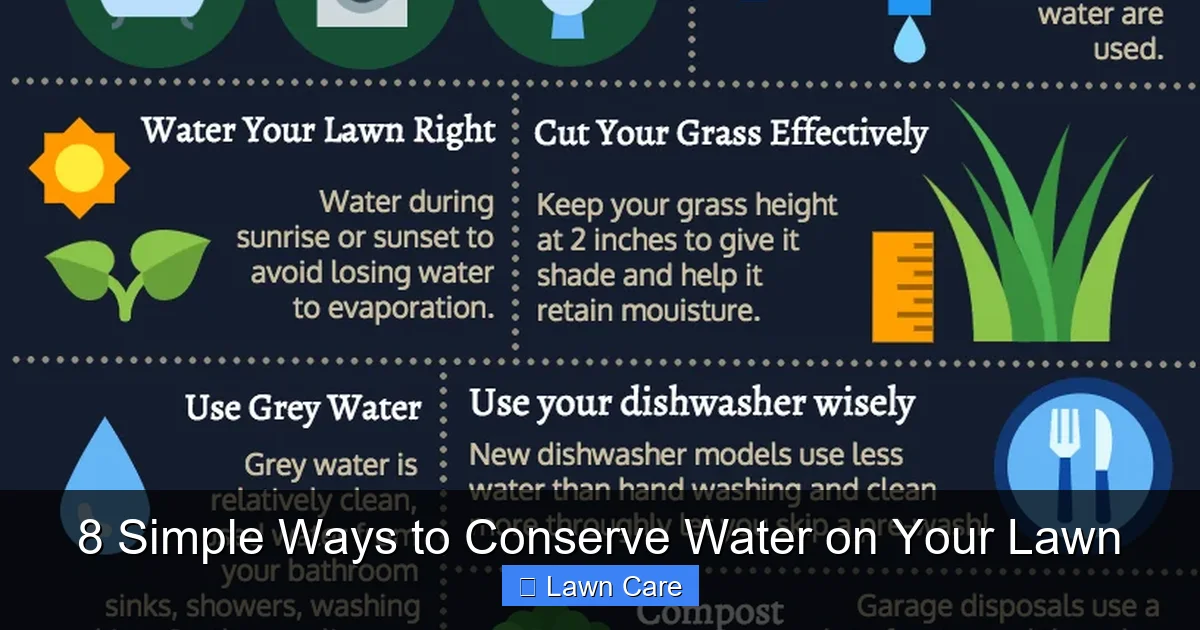
Visual guide about 8 Simple Ways to Conserve Water on Your Lawn
Image source: rfohl.com
The timing of your watering can make a huge difference in how much water actually reaches your grass’s roots. Watering during the hottest part of the day is a major culprit of water waste. Much of the water will evaporate into the air before it even has a chance to soak into the soil and be absorbed by the grass.
Minimizing Evaporation
The best times to water your lawn are early in the morning or in the late evening. Early morning watering, typically between 4 AM and 10 AM, is often considered the gold standard. During this time, temperatures are cooler, and there’s usually less wind, which significantly reduces evaporation. This allows more water to reach the root zone where it’s needed. Watering in the late evening can also be effective, but it comes with a slight risk. If the grass blades stay wet overnight, it can create an environment conducive to fungal diseases. Therefore, early morning is generally preferred. If you need to water in the evening, try to do so before sunset to allow the grass blades some time to dry. For more specific advice, check out our guide on the best time of the day to water your lawn.
Understanding Your Sprinkler System
If you have an automatic sprinkler system, consider programming it to water during these optimal hours. Many modern systems have built-in timers that allow you to set specific watering windows. Also, be aware that even with the best timing, some water loss due to evaporation is inevitable, especially with overhead sprinkler systems. This is another reason why efficient watering practices are so important.
3. Adjust Your Mowing Height
Your lawn mower is more than just a tool for keeping your grass tidy; it can also be a tool for water conservation. The height at which you cut your grass has a significant impact on its health and its water needs. Many people tend to mow their lawns very short, thinking it looks neater. However, this practice can actually be detrimental to water conservation.
The Benefits of Taller Grass
Longer grass blades provide more shade for the soil. This shade helps to keep the soil cooler and reduces the amount of moisture that evaporates from the surface. Think of it like wearing a hat on a sunny day – it keeps you cooler. Taller grass also encourages deeper root growth. When grass is allowed to grow a little taller, its roots tend to grow deeper into the soil, making the lawn more drought-resistant. Additionally, taller grass blades can help to suppress weeds. Weeds often thrive in bare patches of soil, and dense, taller grass can outcompete them for sunlight, water, and nutrients. This means fewer weeds, which often require extra watering to establish themselves.
Finding the Right Height
A good rule of thumb for most common lawn grasses is to set your mower to a higher setting. For example, for cool-season grasses like fescue or bluegrass, aim for a mowing height of 3 to 4 inches. For warm-season grasses like Bermuda or Zoysia, a height of 1 to 2 inches might be more appropriate. It’s often best to follow the “one-third rule” when mowing: never remove more than one-third of the grass blade’s height at any single mowing. This reduces stress on the grass and encourages healthy growth. Properly sharpened mower blades are also important, as dull blades tear the grass, leading to browning and increased water loss. Learn more about how to keep your mower in top shape with easy ways to sharpen your lawn mower blade.
4. Improve Your Soil Health
Healthy soil is the foundation of a healthy lawn, and it plays a critical role in water conservation. Soil that is compacted or lacks organic matter will not absorb and retain water efficiently. When soil is compacted, water tends to run off the surface rather than penetrating it. This leads to wasted water and potential erosion.
The Role of Organic Matter
Adding organic matter to your soil is like giving it a sponge. Organic matter, such as compost or well-rotted manure, acts as a natural conditioner. It improves soil structure, allowing for better water infiltration and retention. It also provides essential nutrients for your grass, reducing the need for artificial fertilizers, some of which can also impact water quality. Aerating your lawn is a great way to combat compaction and improve water penetration. You can rent an aerator or use a garden fork to poke holes in the soil, breaking up the compacted layers. Following aeration with a top dressing of compost can further enhance soil health and water retention. For more on this, explore our tips on simple ways to improve lawn soil quality.
Understanding Soil Types
Different soil types have different water retention capabilities. Sandy soils drain quickly, while clay soils can become waterlogged. Improving your soil’s structure with organic matter helps to create a more balanced medium that can hold sufficient moisture without becoming waterlogged or drying out too fast.
5. Choose Drought-Tolerant Grass Varieties
If you’re establishing a new lawn or looking to reseed, selecting the right type of grass is a game-changer for water conservation. Some grass species are naturally more resilient to dry conditions and require less supplemental watering once established. These are often referred to as drought-tolerant grasses.
Native and Adapted Grasses
Research grasses that are native to your region or are well-adapted to your local climate. For example, in drier climates, consider varieties like tall fescue, buffalo grass, or Zoysia grass. These grasses have deeper root systems and lower water requirements compared to some of the more thirsty ornamental grasses. Even within a species, there can be variations in drought tolerance, so look for specific cultivars known for their resilience.
Overseeding and Lawn Replacement
If your current lawn is made up of water-intensive grasses, you might consider overseeding with a more drought-tolerant variety. This means spreading seeds of the new grass type into your existing lawn. Over time, the more resilient grass will establish itself and gradually take over, reducing your overall watering needs. If your lawn is particularly unhealthy or you have a lot of bare patches, you might consider a complete lawn renovation, opting for a drought-tolerant seed mix from the start.
6. Utilize Mulch and Groundcovers in Garden Beds
While this article focuses on lawn water conservation, it’s important to remember the surrounding landscape. Lawns are just one part of your outdoor space, and often, garden beds surrounding the lawn are also significant water users. Reducing the water needs of your garden beds can free up water resources and indirectly help your lawn by reducing overall demand.
The Power of Mulch
Applying a layer of mulch around your trees, shrubs, and perennial beds is a highly effective way to conserve moisture. Mulch acts as a protective blanket, reducing evaporation from the soil surface, suppressing weeds (which compete for water), and helping to regulate soil temperature. Organic mulches like wood chips, shredded bark, or straw decompose over time, adding nutrients to the soil. Inorganic mulches, such as gravel or stones, also work well for water retention. Aim for a mulch layer of 2-4 inches deep.
Water-Wise Landscaping
Consider incorporating more groundcovers and drought-tolerant plants into your landscaping design. Groundcovers can effectively replace areas that might otherwise be covered by grass, requiring less mowing and less water. Native plants are often an excellent choice because they are naturally adapted to the local rainfall patterns and soil conditions, significantly reducing their need for supplemental watering. When you reduce the overall water needs of your garden, you can direct more resources towards keeping your lawn healthy during dry spells.
7. Check for Leaks and Optimize Your Sprinkler System
A seemingly small drip from a sprinkler head or a leaky hose connection can waste a surprising amount of water over time. Regular maintenance of your irrigation system is crucial for water conservation. Take the time to periodically inspect all parts of your sprinkler system.
Identifying and Fixing Leaks
Walk around your lawn while the sprinklers are running and look for any heads that are broken, clogged, or spraying water onto sidewalks or driveways. Also, check for leaks at hose connections, valves, and underground pipes. Even a slow drip can add up to gallons of wasted water. Many minor leaks, like a loose connection or a worn-out washer, can be easily fixed with simple tools and replacement parts. If you have a more complex system with underground pipes, you might need to call in a professional to locate and repair the leak. Consider using efficient watering methods like drip irrigation or soaker hoses for garden beds, which deliver water directly to the plant roots with minimal waste.
Smart Sprinkler Controllers
Consider upgrading to a smart sprinkler controller. These advanced controllers use weather data and soil moisture sensors to automatically adjust watering schedules, ensuring your lawn receives water only when it truly needs it. This technology can prevent overwatering and significantly reduce water usage.
8. Let Your Lawn Go Dormant (When Appropriate)
Sometimes, the most effective way to conserve water is to simply let nature take its course. Many common lawn grasses, particularly warm-season grasses, have a natural defense mechanism: dormancy. When conditions become too dry or hot, these grasses will go dormant, turning brown. This is not a sign of death, but rather a survival strategy.
Understanding Dormancy
During dormancy, the grass plant significantly slows down its metabolic processes, drastically reducing its water needs. The brown color is simply a loss of chlorophyll, but the crown and roots remain alive, waiting for favorable conditions to return. Many common lawn problems, such as water-damaged lawns, can be exacerbated by overwatering, so allowing dormancy can actually be a healthier option.
When to Water Dormant Lawns
While a dormant lawn doesn’t need frequent watering, it’s still a good idea to provide it with a light watering about once a month during extended dry periods. This helps to keep the crown and roots alive. Once rainfall returns or temperatures moderate, the grass will naturally green up again. This practice is especially beneficial in regions with strict water restrictions or during prolonged droughts. It saves water, reduces stress on your lawn, and is ultimately a more natural approach to lawn care.
Conclusion
Conserving water on your lawn is a responsible and rewarding practice. By implementing these eight simple strategies – watering deeply and infrequently, timing your watering correctly, adjusting your mowing height, improving soil health, choosing drought-tolerant grass, mulching garden beds, checking for leaks, and understanding dormancy – you can maintain a beautiful and healthy lawn while significantly reducing your water consumption. These methods not only benefit the environment and your wallet but also lead to a more resilient and sustainable landscape. It’s a win-win for your lawn and the planet. Making conscious choices about how we manage our outdoor spaces contributes to a healthier future for all.
Frequently Asked Questions
How much water does a lawn typically need?
A typical lawn needs about 1 to 1.5 inches of water per week, either from rainfall or irrigation. This amount can vary significantly based on grass type, climate, soil conditions, and temperature. You can calculate your lawn’s specific needs based on local conditions.
What are the signs of an overwatered lawn?
Signs of an overwatered lawn include shallow root systems, increased susceptibility to fungal diseases like brown patch, yellowing grass, and a spongy feel underfoot. It can also lead to nutrient leaching from the soil.
Is it bad to water my lawn every day?
Yes, watering your lawn every day is generally not recommended. It encourages shallow root growth, makes the grass more dependent on frequent watering, and can increase the risk of disease. It’s better to water deeply and less often.
How can I make my lawn more drought-resistant?
You can make your lawn more drought-resistant by choosing drought-tolerant grass varieties, improving soil health with organic matter, watering deeply and infrequently, and adjusting your mowing height to be taller.
What should I do if my lawn is brown and dry?
If your lawn is brown and dry, first determine if it’s dormant or dead. If it’s dormant (roots are alive), it may recover with water. If it’s dead, you may need to reseed or renovate the lawn. Avoid overwatering, as this can hinder recovery.
Are there any natural ways to fertilize my lawn that help with water conservation?
Yes, using organic fertilizers and improving soil health through composting are natural ways to fertilize that also aid in water conservation. Healthy soil with good organic content retains moisture better, reducing the need for frequent watering. Exploring natural methods can lead to a more sustainable lawn.