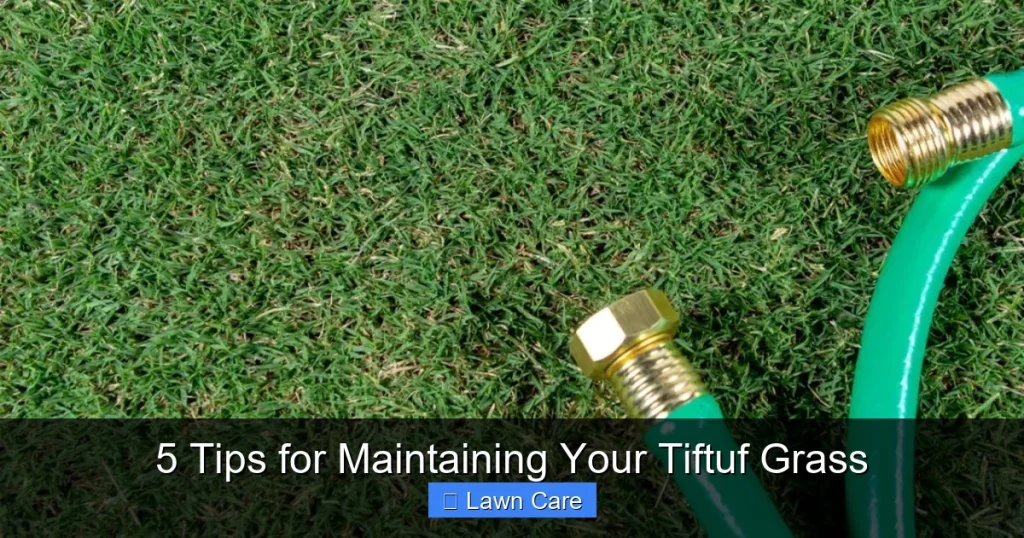
Tiftuf grass is a popular choice for its resilience and attractive appearance. Keeping it in top shape requires consistent attention to a few key areas. By focusing on proper mowing, watering, fertilization, weed control, and aeration, you can ensure your Tiftuf lawn remains a beautiful, healthy carpet of green.
So, you’ve chosen Tiftuf grass for your lawn, and you’re ready to enjoy its dense, attractive appearance and remarkable resilience. That’s a fantastic choice! Tiftuf is a hybrid bermudagrass known for its durability, drought tolerance, and beautiful green color. It’s a favorite for homeowners and professionals alike because it handles foot traffic well and bounces back quickly from stress. But like any living thing, your Tiftuf lawn needs a little care and attention to truly thrive. Don’t worry, maintaining a beautiful Tiftuf lawn isn’t complicated; it just requires understanding its basic needs and sticking to a consistent routine.
Think of your lawn as a finely tuned instrument. If you neglect its maintenance, it might still make noise, but it won’t perform at its best. The same goes for your Tiftuf grass. With the right approach, you can transform a good lawn into a truly spectacular one that will be the envy of your neighborhood. This article is here to guide you through the essential steps, breaking down the process into five key tips that will help your Tiftuf grass stay healthy, vibrant, and lush all year long. Let’s get your Tiftuf grass looking its absolute best!
- Consistent Mowing: Mow Tiftuf grass at the right height, typically 1-2 inches, and never remove more than one-third of the blade at a time to encourage dense growth.
- Strategic Watering: Water deeply and infrequently, aiming for about 1 inch of water per week, especially during dry spells, to promote strong root development.
- Balanced Fertilization: Feed your Tiftuf grass with a balanced fertilizer, applying it in spring and fall to support healthy growth and color.
- Proactive Weed Management: Regularly inspect for and address weeds to prevent them from competing with your grass for resources and space.
- Essential Aeration: Periodically aerate your lawn to relieve soil compaction, allowing water, air, and nutrients to reach the roots effectively.
- Seasonal Care: Adjust your Tiftuf grass maintenance routine based on the season, providing extra care during periods of stress like heat or cold.
Quick Answers to Common Questions
What is the ideal mowing height for Tiftuf grass?
The ideal mowing height for Tiftuf grass is typically between 1 to 2 inches. Mowing at this height encourages dense growth and healthy turf development.
How often should I water my Tiftuf lawn?
Water your Tiftuf lawn deeply and infrequently, aiming for about 1 inch of water per week. The best practice is to water in the early morning.
When is the best time to fertilize Tiftuf grass?
The optimal times to fertilize Tiftuf grass are in late spring after it has fully greened up, and again in the fall to help it store energy for winter.
How can I prevent weeds in my Tiftuf lawn?
A dense, healthy Tiftuf lawn is the best weed defense. This is achieved through proper mowing, watering, and fertilization. Pre-emergent herbicides can also be used in early spring.
Is aeration necessary for Tiftuf grass?
Yes, aeration is important for Tiftuf grass, especially if your soil tends to compact. It relieves compaction, allowing air, water, and nutrients to reach the root zone.
📑 Table of Contents
1. Master the Art of Mowing
Mowing is perhaps the most frequent maintenance task for any lawn, and for Tiftuf grass, it’s crucial for encouraging that dense, carpet-like growth it’s famous for. Getting your mowing habits right is foundational to a healthy lawn.
The Right Height Matters
Tiftuf grass is a warm-season grass, and it thrives when mowed relatively short. The ideal mowing height for Tiftuf is typically between 1 to 2 inches. Mowing too high can lead to weaker, floppier growth, and might even invite diseases. Conversely, mowing too low can stress the grass, making it susceptible to drought and weeds.
The One-Third Rule is Key
This is a golden rule in lawn care for almost any grass type: never remove more than one-third of the grass blade in a single mowing. For Tiftuf, this means you’ll likely need to mow more frequently during its peak growing season (late spring through summer) when it’s actively growing. For instance, if your ideal mowing height is 1.5 inches, and you notice your grass is getting close to 2.25 inches, it’s time to mow. If you let it get too tall, cutting off more than a third can shock the grass, causing yellowing and stunted growth. Regular, frequent mowing promotes a denser turf because it encourages the grass plant to branch out and produce more tillers, which are the individual grass stems.
Sharp Blades are Your Friend
This might sound simple, but dull mower blades tear grass blades rather than cutting them cleanly. This tearing action leaves ragged edges that can turn brown, making your lawn look unhealthy and stressed. Torn grass is also more vulnerable to pests and diseases. So, make it a habit to sharpen your mower blades at least once or twice during the growing season. A clean cut is essential for healthy Tiftuf grass.
Consider Your Mower Type
For Tiftuf grass, a reel mower can be ideal if you want that perfectly manicured, low-cut look. However, a good quality rotary mower set to the correct height will also do an excellent job. If you use a riding mower, remember to follow proper grass collection tips to avoid matting and clumping, which can smother the grass underneath.
2. Water Wisely for Deep Roots
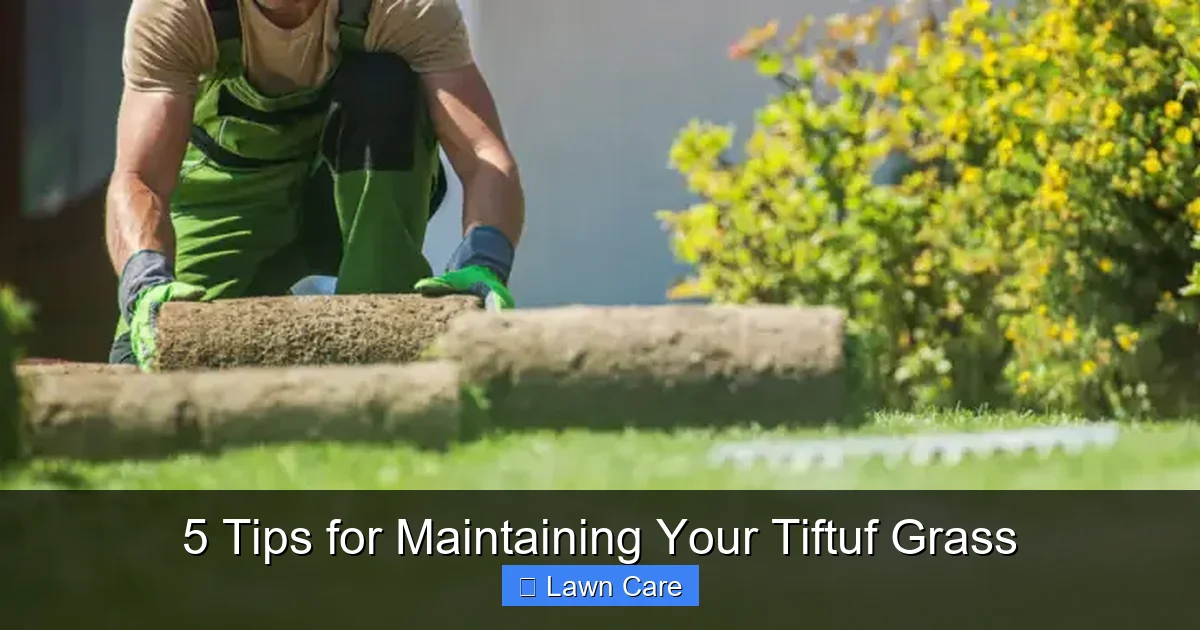
Visual guide about 5 Tips for Maintaining Your Tiftuf Grass
Image source: sodlawn.com
Water is life for your lawn, and Tiftuf grass, while drought-tolerant, still needs adequate moisture to stay healthy and vibrant, especially during establishment and periods of extreme heat. The key is not just how much you water, but how you water.
Deep and Infrequent Watering
The best watering strategy for Tiftuf grass is to water deeply and infrequently. Aim to provide about 1 inch of water per week, either from rain or irrigation. This encourages the grass roots to grow deeper into the soil, searching for moisture. Deeper roots make the grass more resilient to drought and heat stress. Watering shallowly and frequently, on the other hand, leads to shallow root systems that are easily damaged.
When to Water
The best time to water your Tiftuf lawn is in the early morning, generally between 4 AM and 10 AM. This allows the water to soak into the soil before the heat of the day causes excessive evaporation. Watering in the morning also helps to minimize the risk of fungal diseases, as the grass blades have time to dry off before nightfall. Avoid watering in the evening, as prolonged moisture on the grass blades overnight can create a breeding ground for fungi.
How to Tell if Your Lawn Needs Water
Your Tiftuf grass will give you cues when it’s thirsty. Look for signs like a dull, bluish-gray color, or footprints that remain in the grass long after you’ve walked on it. Another good indicator is when the leaf blades start to wilt or curl. You can also use a screwdriver or a soil probe; if it’s difficult to push into the ground, it’s likely too dry.
Seasonal Adjustments
Remember that your watering needs will change throughout the year. During the hot, dry summer months, you might need to water more frequently. In cooler, wetter periods, you may need to water less or not at all. Understanding your local climate and typical rainfall patterns is crucial. If you live in an area prone to drought, learning about maintaining grass during drought can offer valuable insights, though Tiftuf is generally more tolerant than many other grass types.
3. Feed Your Tiftuf Grass with the Right Nutrients
Fertilization is essential for providing your Tiftuf grass with the nutrients it needs to grow strong, stay green, and resist stress. Tiftuf is a heavy feeder, especially during its active growing season.
Timing is Everything
The best times to fertilize Tiftuf grass are in the late spring, after it has fully greened up from dormancy, and again in the fall. The spring application helps fuel its vigorous growth, while the fall application helps it store energy for winter and promotes good root development. Avoid fertilizing too early in the spring while the grass is still emerging from dormancy or too late in the fall, as this can encourage tender new growth that is susceptible to frost damage.
Choosing the Right Fertilizer
For Tiftuf grass, a balanced fertilizer is usually a good choice. Look for a fertilizer with a N-P-K ratio that is relatively even, such as 10-10-10 or 13-13-13. Nitrogen (N) promotes green growth, Phosphorus (P) is crucial for root development, and Potassium (K) helps with overall plant health and stress tolerance. Many regional recommendations exist, and if you’re in a specific area, you might find guides like 5 Best Fertilizer For Zoysia Grass In Texas that can offer localized advice, even though Tiftuf is a hybrid bermudagrass, the principles of fertilization are similar. You may also want to consider a fertilizer specifically designed for warm-season grasses.
Application Rates and Methods
Always follow the application rates recommended on the fertilizer packaging. Over-fertilizing can burn your lawn, causing brown patches and damaging the grass. Apply fertilizer evenly to ensure consistent results. A broadcast spreader is a good tool for achieving even coverage. If you are using a liquid fertilizer, ensure you apply it uniformly according to the product instructions.
Slow-Release vs. Quick-Release
Consider using slow-release fertilizers. These release nutrients over a longer period, providing a steady supply of food to your grass without the risk of a quick surge that can lead to rapid, weak growth or burning. This is particularly beneficial for Tiftuf grass, which can grow quite vigorously.
4. Be Vigilant Against Weeds
Weeds are more than just an eyesore; they compete with your Tiftuf grass for vital resources like water, nutrients, and sunlight, weakening your lawn over time. Proactive and consistent weed management is key to a healthy Tiftuf turf.
Identification is the First Step
Before you can effectively control weeds, you need to know what you’re dealing with. Different types of weeds require different control methods. Common lawn weeds include crabgrass, dandelions, clover, and nutsedge. Familiarize yourself with the weeds that tend to appear in your lawn.
Preventative Measures
A healthy, dense Tiftuf lawn is the best defense against weeds. When your grass is thick and healthy, it crowds out weed seedlings before they can establish. Proper mowing and watering practices, as mentioned earlier, play a huge role in preventing weeds. You can also consider applying pre-emergent herbicides in early spring before weed seeds germinate. These herbicides create a chemical barrier in the soil that prevents weed seeds from sprouting.
Active Weed Control
If weeds do appear, you have several options:
- Hand-Pulling: For small infestations, hand-pulling weeds, especially after rain when the soil is soft, can be very effective. Make sure to pull the entire root system to prevent regrowth.
- Herbicides: For more widespread weed problems, herbicides are often necessary. There are two main types:
- Post-Emergent Herbicides: These are applied after weeds have already emerged. They are effective for killing existing weeds. Be sure to choose a herbicide that is safe for Tiftuf grass. Some herbicides can harm bermudagrass, so always read the label carefully. For example, if you have a mixed lawn or are unsure, looking into products like 5 Best Post Emergent Weed Killer For Bermuda Grass can provide options that are specifically formulated for similar grasses.
- Pre-Emergent Herbicides: Applied in early spring before weed seeds germinate, these prevent weeds from sprouting.
Remember that selective herbicides target specific types of weeds (broadleaf or grassy) without harming your lawn grass. Always follow label instructions precisely to avoid damaging your Tiftuf turf.
Integrated Weed Management
The most effective approach is often an integrated one, combining cultural practices (healthy lawn care) with targeted herbicide applications when needed.
5. Give Your Lawn Room to Breathe: Aeration and Dethatching
Over time, soil can become compacted, and a thick layer of thatch can build up on your lawn. Both conditions hinder the healthy growth of your Tiftuf grass by preventing air, water, and nutrients from reaching the root zone. Addressing these issues through aeration and dethatching is crucial.
Understanding Soil Compaction
Soil compaction occurs when soil particles are pressed together tightly. This can be caused by heavy foot traffic, mowing equipment, and even natural soil settling. Compacted soil restricts root growth and makes it difficult for water and air to penetrate. If your soil feels hard and water tends to run off rather than soak in, compaction is likely an issue. Understanding what soil compaction means for your grass health and how aeration helps is a good starting point for addressing this.
Aeration: The Solution to Compaction
Lawn aeration involves creating small holes in the soil, which relieves compaction and allows air, water, and nutrients to reach the root system. For Tiftuf grass, core aeration is generally recommended. This process pulls out small plugs of soil, which then break down and disappear back into the lawn, adding organic matter. The best time to aerate Tiftuf is during its active growing season, typically late spring or early summer, or early fall. Aerating when the grass is actively growing allows it to recover quickly and fill in any disturbed areas.
What is Thatch?
Thatch is a layer of dead and living organic matter – such as roots, stems, and leaves – that accumulates between the green grass blades and the soil surface. A thin layer of thatch can be beneficial, but when it becomes too thick (more than half an inch), it can act like a barrier. It prevents water from reaching the soil, keeps fertilizers from penetrating, and can harbor pests and diseases.
Dethatching Your Tiftuf Lawn
Dethatching, also known as power raking, is the process of removing this excess thatch layer. It’s best done when your Tiftuf grass is actively growing so it can recover quickly. This is usually in late spring or early summer. You can rent a power rake or dethatcher from a local tool rental shop. Be prepared for your lawn to look a bit rough immediately after dethatching, but with proper care, it will rebound beautifully. For more detailed instructions, look into how to dethatch your lawn for stronger grass growth.
Frequency of Aeration and Dethatching
The frequency depends on your soil type and the amount of traffic your lawn receives. Generally, aerating once a year is sufficient for most lawns. Dethatching may be needed every 1-3 years, depending on the rate of thatch buildup.
Conclusion
Maintaining a beautiful Tiftuf lawn doesn’t require a magic wand, just a commitment to understanding and meeting its needs. By consistently applying these five essential tips – mastering mowing techniques, watering deeply and infrequently, providing balanced fertilization, proactively managing weeds, and periodically aerating and dethatching – you’ll be well on your way to cultivating a lawn that is not only visually stunning but also incredibly resilient. Your Tiftuf grass will reward your efforts with dense, vibrant growth that you can enjoy for years to come. So, get out there, get your hands dirty, and transform your lawn into the lush oasis you’ve always wanted!
Frequently Asked Questions
How often should I aerate my Tiftuf lawn?
Generally, aerating your Tiftuf lawn once a year is sufficient. This can vary based on your soil type and how much traffic your lawn experiences.
What signs indicate my Tiftuf grass needs water?
Your Tiftuf grass will show signs like a dull, bluish-gray color, footprints that remain visible for a long time, or wilting and curling leaf blades.
Can I use a general-purpose fertilizer on Tiftuf grass?
A balanced fertilizer with an even N-P-K ratio, or one specifically formulated for warm-season grasses, is usually best for Tiftuf. Always check the label for suitability.
What is thatch, and why is it bad for my Tiftuf lawn?
Thatch is a layer of dead organic matter between the grass blades and soil. Too much thatch can prevent water, air, and nutrients from reaching the roots, and can harbor pests and diseases.
When is the best time to dethatch Tiftuf grass?
The best time to dethatch Tiftuf grass is during its active growing season, typically late spring or early summer, to allow it to recover quickly.
What should I do if my Tiftuf lawn has a lot of weeds?
For significant weed problems, you may need to use post-emergent herbicides. Always choose a product that is labeled as safe for bermudagrass to avoid damaging your Tiftuf lawn.