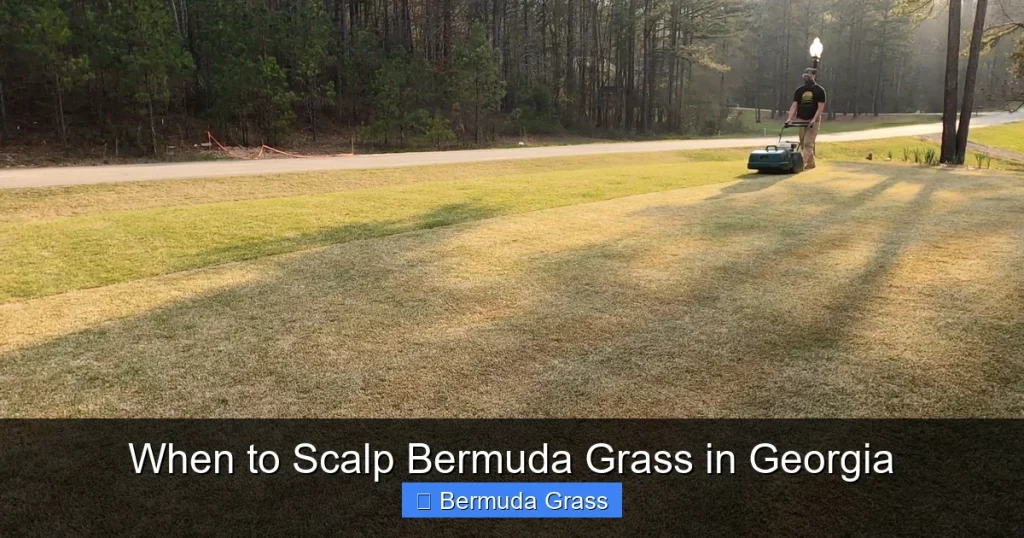
Scalping Bermuda grass in Georgia is a vital practice for a lush, healthy lawn. The optimal time is early spring, typically late February to early April, just as soil temperatures begin to consistently reach 55-60°F but before active green-up. This removes dormant growth, reduces thatch, and allows sunlight to warm the soil, promoting faster and more uniform spring growth.
When to Scalp Bermuda Grass in Georgia
Every homeowner in Georgia dreams of a beautiful, vibrant green Bermuda grass lawn. Achieving that lush carpet of turf requires more than just regular mowing and watering. One of the most important, yet often misunderstood, practices is scalping. If you’ve ever wondered when to scalp Bermuda grass in Georgia for the best results, you’ve come to the right place! This guide will walk you through everything you need to know, from the perfect timing to the step-by-step process and crucial aftercare.
By the end of this article, you’ll understand why scalping is essential for Bermuda grass in our unique Georgia climate. You’ll also learn how to execute it perfectly. We’ll help you unlock the secret to a faster spring green-up and a healthier, more resilient lawn all season long.
Key Takeaways
- Timing is Paramount: The best time to scalp Bermuda grass in Georgia is early spring, usually late February to early April, *before* your lawn actively starts to green up.
- Monitor Soil Temperatures: Don’t rely solely on the calendar. Scalp when soil temperatures consistently reach 55-60°F at a 4-inch depth, and after the risk of hard freezes has passed.
- Understand the “Why”: Scalping removes dead, dormant grass and thatch, allowing sunlight to warm the soil, which encourages faster and more uniform spring green-up.
- Proper Technique is Key: Set your mower to its lowest possible setting (0.5 to 1 inch for rotary mowers) and ensure your blades are sharp. Collect all clippings to prevent thatch buildup.
- Avoid Late Scalping: Scalping after your Bermuda grass has started to actively green up will stress the new growth, potentially damaging the lawn and leading to a longer recovery period.
- Post-Scalp Care Matters: After scalping, apply a pre-emergent herbicide and a balanced spring fertilizer to encourage healthy new growth and prevent weeds. Water thoroughly.
What Exactly is Scalping and Why Do It?
Simply put, scalping Bermuda grass means mowing your lawn at a much lower height than usual. You cut it down significantly, often to its lowest possible setting. Think of it like giving your lawn a “buzz cut” after a long winter.
Why would you want to do this? For Bermuda grass, scalping is incredibly beneficial. Here’s why:
- Removes Dead Growth: During winter, Bermuda grass goes dormant and turns brown. Scalping removes this layer of dead, brown grass. This clears the way for fresh, green growth to emerge in spring.
- Reduces Thatch Buildup: Thatch is a layer of dead and living grass stems, roots, and debris that accumulates between the soil surface and the green vegetation. A thick thatch layer can prevent water, nutrients, and air from reaching the soil. It can also harbor pests and diseases. Scalping helps break up and remove some of this thatch.
- Encourages Faster Green-up: By removing the dormant layer, sunlight can more easily reach and warm the soil. Warmer soil temperatures are key to waking up dormant Bermuda grass. This leads to a quicker and more uniform green-up across your entire lawn.
- Promotes Uniform Growth: When you scalp, you essentially reset the lawn. This encourages all the new grass blades to emerge at a similar height. The result is a more even and aesthetically pleasing turf.
In Georgia, where Bermuda grass is king, scalping is a non-negotiable step for a truly outstanding lawn.
The Critical Factor: Understanding Bermuda’s Dormancy Cycle in Georgia
To know when to scalp Bermuda grass in Georgia, you first need to understand its natural life cycle. Bermuda grass is a warm-season grass. This means it thrives in hot temperatures. It actively grows from late spring through early fall.

Visual guide about When to Scalp Bermuda Grass in Georgia
Image source: m.media-amazon.com
When soil temperatures drop consistently below 55°F in late fall, Bermuda grass enters dormancy. It stops growing and turns brown. It essentially “hibernates” through the winter to protect itself from cold damage. In Georgia, this usually happens around October or November.
As spring approaches and soil temperatures begin to rise, the grass wakes up. It breaks dormancy and starts to send out new green shoots. This “breaking dormancy” period is your cue for scalping. It is essential to scalp *before* significant new green growth appears.
Pinpointing the Perfect Time: When to Scalp Bermuda Grass in Georgia
This is the big question! The timing for when to scalp Bermuda grass in Georgia is crucial. Get it right, and your lawn will thank you with vibrant color. Get it wrong, and you could set your lawn back.
Soil Temperature is Your Best Friend
While the calendar gives us a general idea, soil temperature is the most accurate indicator for when to scalp Bermuda grass in Georgia. Bermuda grass begins to actively grow when soil temperatures consistently reach between 55°F and 60°F at a 4-inch depth. This is your target window for scalping. You want to scalp just as the soil is warming up but before the grass shows significant new green growth.
- You can purchase a soil thermometer at most garden centers.
- Check temperatures in several spots across your lawn for an accurate average.
Watching the Calendar (Late February to Early April)
In most parts of Georgia, this ideal soil temperature window usually falls between late February and early April. However, Georgia’s weather can be unpredictable. A warm winter might shift it earlier, while a lingering cold spell could push it later.
- Coastal Georgia: May see this window closer to late February due to milder winters.
- North Georgia: Might be closer to mid-March to early April, as it experiences colder temperatures for longer.
- Central Georgia: Typically falls right in the late February to mid-March range.
Always prioritize soil temperature over a specific date. Also, make sure the threat of a hard freeze has passed. A hard freeze right after scalping can damage the exposed crowns of the grass, delaying green-up.
The “Before Green-Up” Golden Rule
Remember this: you want to scalp your Bermuda grass *before* it begins to show significant new green growth. You are removing the old, dormant material to make way for the new. If you wait until your lawn is already actively greening up, you will be cutting off healthy new shoots. This stresses the plant and damages its efforts to grow. It also makes your lawn look patchy and brown during the crucial spring growing period.
Why Scalping Timing is Non-Negotiable
The precise timing of when to scalp Bermuda grass in Georgia truly makes a difference. Let’s look at why:
The Risks of Scalping Too Early
If you scalp your Bermuda grass too early, in the middle of winter or when there’s still a risk of hard freezes, you expose the sensitive crowns of the grass plants to cold temperatures. This can lead to:
- Cold Damage: The grass is less protected. It becomes more susceptible to freeze damage.
- Delayed Green-up: The lawn may take longer to recover and green up in the spring.
- Increased Disease Risk: Stressed grass is more prone to diseases.
The Problems with Scalping Too Late
This is a very common mistake. If you wait too long and your Bermuda grass has already started to show significant green, scalping becomes detrimental:
- Stresses New Growth: You’re cutting off new, tender shoots. This depletes the grass’s energy reserves and forces it to start over.
- Ugly Brown Lawn: Your beautifully greening lawn will suddenly turn brown and stay that way for an extended period, looking scalped and unhealthy.
- Slower Recovery: The grass will take much longer to fill in and become dense.
- Increased Weed Competition: Bare spots from late scalping give weeds an open invitation to establish themselves.
The Benefits of Perfect Timing
When you scalp Bermuda grass at the right time in Georgia, you ensure:
- Rapid Green-up: Your lawn wakes up faster and more uniformly.
- Dense, Healthy Turf: New growth is encouraged, leading to a thicker, healthier lawn.
- Reduced Thatch: You prevent excessive thatch buildup, which is vital for long-term lawn health.
- Efficient Nutrient Uptake: With thatch gone, fertilizers and water can reach the root zone more effectively.
Gearing Up: Preparing Your Lawn for the Scalp
Before you jump on the mower, a little preparation goes a long way. This ensures a safe and effective scalping process.
Sharpen Your Blades
This is absolutely critical. Dull mower blades tear the grass blades instead of cleanly cutting them. This leaves jagged edges that are susceptible to disease and create an unsightly brown appearance. Have your mower blades professionally sharpened or sharpen them yourself before you begin.
Clear the Clutter
Walk your lawn and remove any sticks, rocks, toys, or other debris. Scalping means cutting very low. Even small objects can become dangerous projectiles or damage your mower at such a low setting.
Mow at Normal Height First
If your lawn is particularly long from the winter, it’s a good idea to mow it at its normal cutting height one last time. This makes the scalping process easier and less strenuous on your mower. It also reduces the sheer volume of clippings you’ll have to remove in the next step.
The Scalping Process: A Step-by-Step Guide
Once you’ve determined the ideal time to scalp Bermuda grass in Georgia and prepared your lawn, it’s time to get to work!
Set Your Mower Low
This is the defining characteristic of scalping. Adjust your rotary mower to its absolute lowest setting. For most rotary mowers, this will be between 0.5 to 1 inch. If you have a reel mower, you can go even lower, sometimes down to 0.25 to 0.5 inches.
Make Your Passes
Mow your entire lawn at this low setting. Overlap your passes slightly to ensure complete coverage. You’ll be removing a lot of material, so be prepared for a significant amount of clippings.
Collect Every Clipping
This step is non-negotiable for effective scalping. Bag all the clippings. Do not leave them on the lawn. Leaving a thick layer of dormant clippings on your lawn defeats the purpose of scalping. It creates an instant thatch layer, blocks sunlight, and can lead to disease. You might need to empty your mower bag many times.
Don’t Rush It (Repeat if Necessary)
If your lawn had a lot of thatch or was very long, you might find that one pass isn’t enough to get it uniformly low. It’s okay to make a second pass over the entire lawn. Consider mowing in a perpendicular direction on the second pass for the best coverage. The goal is to remove as much of the brown, dormant material as possible.
After the Scalp: What’s Next for Your Georgia Lawn
Once you’ve successfully scalped your Bermuda grass in Georgia, the work isn’t quite done. Proper aftercare is essential to maximize the benefits and encourage a quick, healthy green-up.
Weed Control (Pre-Emergent)
This is the perfect time to apply a pre-emergent herbicide. A pre-emergent creates a chemical barrier in the soil that prevents weed seeds from germinating. Applying it after scalping, but before new growth starts, targets emerging weeds effectively without harming your dormant Bermuda grass. Look for products specifically designed for warm-season grasses like Bermuda.
Fertilization for Spring Growth
Wait until your lawn shows some initial signs of green-up (usually a few weeks after scalping and once soil temperatures are consistently above 60°F) before applying a spring fertilizer. A soil test is always recommended to know exactly what your lawn needs. However, a balanced fertilizer or one with a higher nitrogen content (the first number in the NPK ratio) can help encourage vigorous new growth.
Watering Wisely
After scalping, your lawn needs moisture to support new growth. However, don’t overwater. Water deeply but infrequently. This encourages roots to grow deeper into the soil. Aim for about 1 inch of water per week, either from rain or irrigation. Once the grass is actively growing, adjust your watering schedule as needed for Georgia’s warmer temperatures.
Common Scalping Mistakes to Avoid
Knowing when to scalp Bermuda grass in Georgia is half the battle. Avoiding common errors will ensure your efforts pay off.
Ignoring Soil Temperatures
Relying solely on the calendar or air temperature is a common pitfall. Soil temperature is the most accurate indicator of when Bermuda grass is ready to break dormancy. Invest in a soil thermometer.
Scalping a Wet Lawn
Never scalp your lawn when it’s wet. Wet grass clumps up, clogs your mower, and can lead to an uneven cut. It also makes it harder to collect clippings efficiently. Wait until the grass is completely dry.
Leaving Clippings Behind
This is a big one. As mentioned, leaving clippings after scalping creates an instant thatch layer. It suffocates new growth and encourages disease. Bag those clippings!
Using Dull Blades
Dull blades rip and tear the grass. This stresses the plant and makes it more susceptible to disease. Always start with freshly sharpened blades.
Not Cleaning Up Debris
Any objects on the lawn will become dangerous or damage your mower when cutting at such a low height. Take a few minutes to clear the area thoroughly.
Conclusion
Scalping your Bermuda grass in Georgia is a fundamental practice for cultivating a truly beautiful and healthy lawn. By understanding the dormancy cycle of your grass and paying close attention to soil temperatures, you can pinpoint the perfect early spring window to perform this vital task.
Remember, the goal is to remove the old, dormant growth before the new green shoots emerge. This single, well-timed step will encourage faster green-up, reduce thatch, and set your lawn up for a season of vibrant, dense growth. Follow the steps outlined in this guide, avoid the common pitfalls, and prepare to enjoy the envy-inducing Bermuda lawn you’ve always wanted here in Georgia!