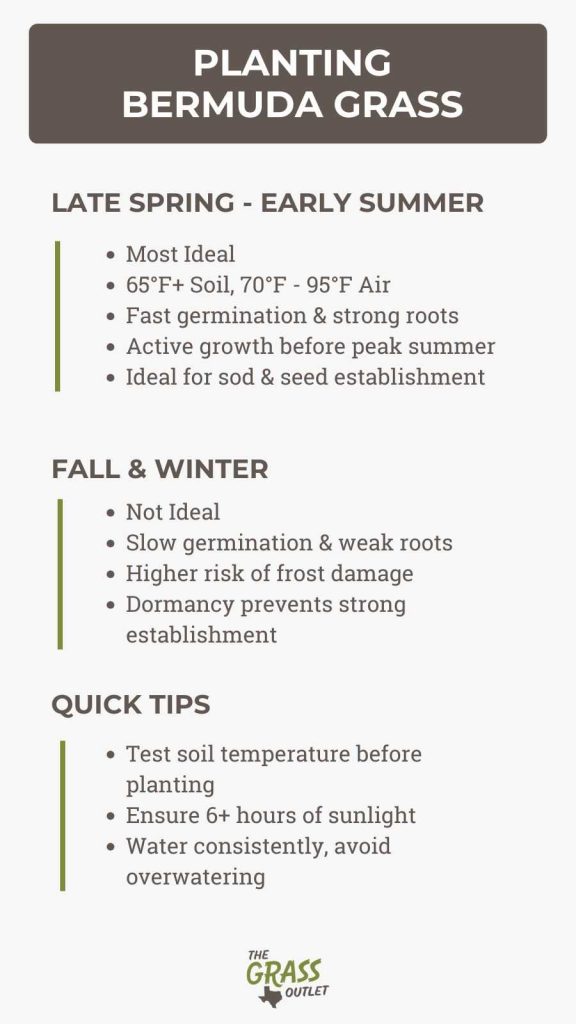
The best time to sow Bermuda grass seed is late spring to early summer when soil temperatures consistently reach around 65-70°F. For lush, healthy growth, it’s crucial to plant when conditions are warm and moist, typically between May and June. This ensures the grass has ample time to establish before the heat of summer or cooler fall weather arrives.
In brief, Bermuda grass seed should be planted in late spring or early summer when soil temperatures are warm enough for germination. Timing is key—it allows the grass to develop strong roots and thrive during the peak growing season. Proper timing maximizes germination rates and results in a dense, vibrant lawn.
When deciding the perfect moment to lay down Bermuda grass seed, the main factor is soil temperature. Planting too early in the spring or late in the fall can hinder germination because the soil isn’t warm enough. Ideally, wait until daytime temperatures consistently stay above 80°F and nighttime temperatures above 65°F. This window typically falls between late spring and early summer in most regions. By choosing the right timing, you give your new lawn the best start, setting the stage for a thick, resilient turf that can withstand heat, drought, and heavy foot traffic. Proper timing combined with good seed bed preparation ensures your Bermuda grass will grow strong and lush, transforming your yard into a beautiful outdoor space.

When to Put Down Bermuda Grass Seed: A Complete Guide
Understanding the Growth Cycle of Bermuda Grass
Bermuda grass is a warm-season turf grass that thrives in hot climates. Knowing its growth cycle helps determine the best time to plant its seed. It begins actively growing when temperatures consistently stay above 65°F (18°C) and peaks between late spring and summer.
During these months, the grass establishes quickly due to optimal warmth and sunlight. In contrast, cooler temperatures in fall and winter slow down seed germination and growth. Recognizing these patterns helps prevent wasting seeds on unsuitable planting times.
Ideal Temperature Range for Bermuda Grass Seeding
Bermuda grass seeds germinate best when soil temperatures are between 65°F (18°C) and 75°F (24°C). This range supports rapid sprouting and healthy root development.
Planting outside this temperature window can result in poor germination rates or seed failure. Typically, late spring through early summer provides ideal soil conditions for bermuda seed sowing.
Why Soil Temperature Matters
Soil temperature influences seed germination speed and success. Warm soil encourages seed swelling and the beginning of root formation. If the soil is too cold, seeds may remain dormant or rot.
Using a soil thermometer helps monitor conditions accurately, making sure you plant at the optimal time. Remember that soil warms faster than air, so check both for better timing.
Best Times of Year to Seed Bermuda Grass
The best window to plant bermuda grass seed is during late spring to early summer. Typically, this timeframe spans from mid-May to early July in most temperate zones.
Avoid planting in early spring when soil remains cold or late summer when temperatures begin to drop. Planting during these optimal months ensures quick germination and healthy lawn establishment.
Seasonal Considerations
Spring planting allows seeds to establish before the heat of summer starts. Summer seeding ensures warmth favors growth but requires attention to watering during hot, dry spells.
Fall planting is generally discouraged because the cooler temperatures delay germination and growth, often leading to poor establishment before winter arrives.
Factors Influencing the Timing
Several environmental factors impact when you should plant bermuda seed. These include soil temperature, air temperature, rainfall, and sunlight availability.
Monitoring weather patterns helps determine the best time, ensuring seeds are sown under favorable conditions for growth.
Climate Zone Specifics
Planting times vary based on your USDA hardiness zone. In warmer zones, seeding can occur earlier in the year. Cooler zones may need to wait until soil consistently reaches suitable temperatures.
Consult local extension offices or gardening resources for tailored planting schedules suited to your area.
Preparing Your Lawn for Seeding
Before putting down Bermuda grass seed, proper preparation increases success. Clear the area of debris, weeds, and stones to provide a smooth, clean surface.
Loosen the soil to improve seed-to-soil contact, and consider aerating if the soil is compacted. This step helps roots penetrate deeply and establishes a strong turf.
Ideal Soil Conditions for Bermuda Grass
Bermuda grass prefers well-drained, loamy soils with a pH between 5.8 and 7.0. Amend your soil if necessary to achieve these conditions.
Adding organic matter or lime can enhance soil health and fertility, encouraging vigorous seedling growth.
How to Time Your Bermuda Grass Seeding for Best Results
To determine the perfect timing, track local weather forecasts and soil temperature. Use a soil thermometer to check the conditions weekly.
Aim to seed when daytime temperatures remain above 80°F (27°C) for several days. This window minimizes seedling stress and ensures rapid germination.
Signs That Indicate the Right Time
– Soil consistently reaches 65°F (18°C) or higher
– No frost forecast for at least two weeks
– Daytime temperatures stay above 80°F (27°C)
– Rainfall is adequate or irrigation can be maintained
Meeting these conditions boosts germination success and establishes a healthy turf faster.
Strategies for Seeding Bermuda Grass Effectively
Timing alone isn’t enough; proper seeding techniques enhance results. Use a seed spreader for even distribution and water regularly to keep the soil moist.
Applying a light layer of soil or compost over the seeds helps protect them and improves germination rates.
Watering and Maintenance
Keep the soil consistently moist until germination, usually within 7 to 14 days. Water lightly but frequently to avoid washing away the seeds.
Once seedlings appear, reduce watering frequency but increase the depth of watering to encourage deep root growth.
Common Mistakes and How to Avoid Them
Planting Bermuda grass seeds too early or too late can lead to poor germination. Avoid seeding during cold or overly hot periods.
Failing to prepare the soil properly can hinder seed contact and growth. Ensure the soil is loose, free of weeds, and has proper nutrients.
Overcoming Challenges
Address surface crusting by light raking, which helps water penetration. Use mulch or straw to retain moisture during hot, dry weather.
Regular monitoring ensures any issues like pests or weeds are managed promptly, giving your seed the best chance to thrive.
Additional Tips for Successful Bermuda Grass Seeding
Timing your seed planting to match your local climate is key. Combining proper soil preparation, consistent watering, and patience results in lush, green Bermuda grass.
Consider overseeding if your lawn is thin or damaged, and always follow manufacturer instructions for seed application rates and care.
Related Topics to Explore
- Best fertilizers for Bermuda grass
- Watering schedules for new Bermuda lawns
- Pest control tips for Bermuda turf
- Common Bermuda grass problems and solutions
By paying attention to the timing and environmental conditions, you can ensure a successful Bermuda grass seeding season. Remember, patience and preparation are the most important ingredients for a beautiful, healthy lawn.
Seeding Bermuda Lawns and Zoysia Lawns
Frequently Asked Questions
What is the best time of year to plant Bermuda grass seed?
The optimal time to plant Bermuda grass seed is during late spring to early summer when soil temperatures are consistently warm, typically between 65°F and 70°F (18°C to 21°C). Planting during this period allows the grass to establish roots before the hotter summer months, ensuring healthy growth and a lush lawn.
How do seasonal changes impact the timing for Bermuda grass seeding?
Seasonal weather variations directly affect Bermuda grass seeding schedules. Warm temperatures and ample sunlight in late spring and early summer promote quick germination and growth. Avoid planting in early spring when soil and air temperatures are still cold, or late fall, as cooler conditions hinder seed development and may lead to poor establishment.
Are there specific soil conditions I should wait for before seeding Bermuda grass?
Yes, wait until your soil warms up adequately and drains well before seeding Bermuda grass. It’s best to perform a soil test to check temperature and nutrient levels. When soil reaches at least 60°F (16°C) consistently and is free from excessive moisture, it provides an ideal environment for seed germination and establishment.
Can I plant Bermuda grass seeds during the hottest months?
Planting during the peak of summer can be risky if soil and air temperatures are excessively high, as this may cause stress to new seedlings. If you choose to seed in summer, ensure consistent watering and shade during the hottest part of the day. Early morning or late afternoon seeding is preferable to reduce heat stress on the seeds.
How long should I wait after the last frost to seed Bermuda grass?
Since Bermuda grass thrives in warm conditions, wait until after the last expected frost date in your region. Typically, this means waiting until soil temperatures are reliably above 60°F (16°C) and all danger of frost has passed. This timing helps prevent cold damage and supports healthy seedling development.
Final Thoughts
The best time to put down Bermuda grass seed is during late spring or early summer when soil temperatures are consistently warm. This period encourages healthy germination and strong growth. Avoid seeding in the cooler months when seeds may not establish well.
Timing is crucial to ensure your Bermuda grass develops fully and stays healthy throughout the season. When to put down Bermuda grass seed depends on local climate conditions and soil warmth. Proper timing sets the foundation for a lush, vibrant lawn.