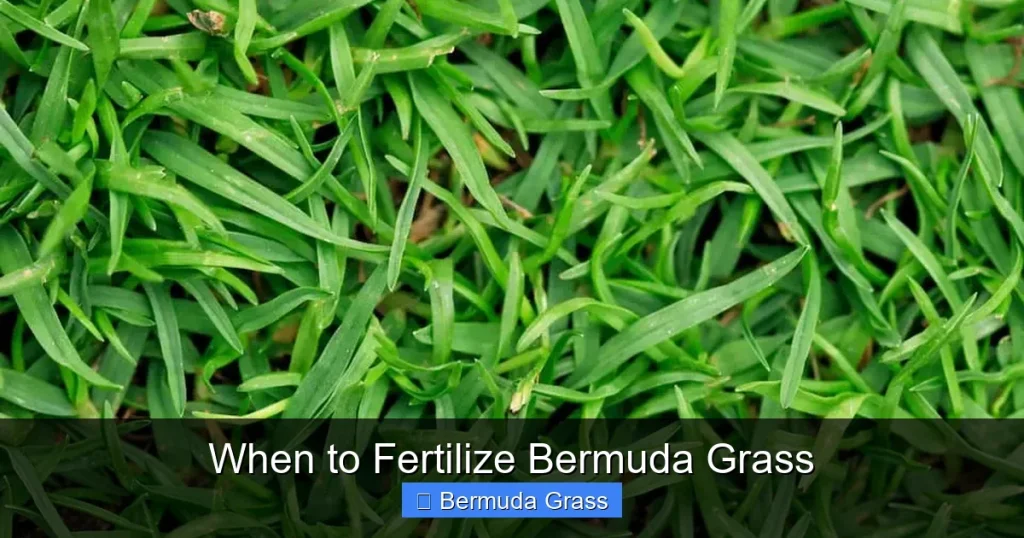
Timing is everything when it comes to fertilizing Bermuda grass. As a warm-season variety, its fertilization schedule depends heavily on soil temperature and its active growth phases. Following a strategic plan from early spring green-up through late summer ensures a vibrant, healthy lawn all season long, helping you achieve that desirable dense, green carpet.
When to Fertilize Bermuda Grass
Welcome to the ultimate guide for achieving a vibrant, healthy Bermuda grass lawn! If you’ve ever wondered when to fertilize Bermuda grass, you’re in the right place. Bermuda grass is a popular choice for lawns, especially in warmer climates, thanks to its resilience and beautiful green color. However, to truly unlock its potential, you need to understand its specific needs, particularly when it comes to nutrition.
This comprehensive guide will walk you through the precise timing for fertilizing Bermuda grass. We will cover everything from understanding its growth cycle and the critical role of soil temperature to choosing the right fertilizer and applying it correctly. By the end of this guide, you’ll have all the knowledge to keep your Bermuda grass looking its best all season long. Let’s get started on creating that lush, green lawn you’ve always dreamed of!
Key Takeaways
- Soil Temperature is King: The most crucial factor for when to fertilize Bermuda grass is when soil temperatures consistently reach 65-70°F in spring, signaling the start of active growth.
- Multiple Feedings are Essential: Bermuda grass benefits from 3-5 applications throughout its active growing season, from late spring through late summer, to maintain vigor and color.
- Start with a Soil Test: Before applying any fertilizer, conduct a soil test to understand your lawn’s specific nutrient needs, preventing over or under-fertilization.
- Adjust NPK Ratios Seasonally: Use a balanced or high-nitrogen fertilizer during peak growth (late spring/summer) and a lower-nitrogen, higher-potassium formula in late summer/early fall to prepare for dormancy.
- Never Fertilize Dormant Grass: Applying nitrogen to dormant Bermuda grass in winter is wasteful and can promote weeds or disease. Wait for green-up.
- Water In Thoroughly: Always water your lawn immediately after fertilizing to help nutrients reach the root zone and prevent burning the grass blades.
- Integrate with Other Lawn Care: For best results, synchronize your fertilization schedule with proper mowing, watering, and weed control practices.
Why Timing Your Fertilizer Matters for Bermuda Grass
Bermuda grass is a warm-season turf. This means it thrives in heat and sunshine, actively growing during the late spring, summer, and early fall months. During winter, or when temperatures drop consistently below 50°F, Bermuda grass enters a state of dormancy. It turns brown and stops growing to conserve energy.
Understanding this growth cycle is fundamental to knowing when to fertilize Bermuda grass. Fertilizing at the wrong time can be ineffective, wasteful, or even harmful to your lawn. For instance, applying nitrogen to dormant grass won’t help it green up; it will simply sit in the soil, potentially leaching away or encouraging weeds. Fertilizing too early in spring or too late in fall can also stress the grass or promote disease. Proper timing ensures that the nutrients are available when your Bermuda grass is actively growing and can best utilize them for root development, blade growth, and overall health.
The Golden Rule: Soil Temperature is Key!
Forget the calendar! While general seasonal guidelines are helpful, the most important factor in deciding when to fertilize Bermuda grass in spring is soil temperature. Bermuda grass really starts to wake up and green up when the soil temperature, measured at a depth of 2-4 inches, consistently stays between 65°F and 70°F for several consecutive days.
You can purchase a soil thermometer to check this yourself, or often, local extension offices or online weather resources provide soil temperature readings for your area. Waiting for the correct soil temperature ensures that the grass’s roots are actively taking up nutrients, making your first fertilization much more effective. Applying fertilizer before the soil is warm enough can waste product and encourage weed growth.
Step-by-Step Guide: When to Fertilize Bermuda Grass
Fertilizing Bermuda grass isn’t a one-time event. It requires a strategic approach throughout its active growing season. Here’s a step-by-step guide to help you plan your applications.
Step 1: Early Spring – The “Wake-Up Call” Fertilization (When Soil Reaches 65-70°F)
This is your first opportunity to fertilize Bermuda grass as it emerges from dormancy.
- When: Wait until your soil temperatures consistently hit 65-70°F. This usually occurs from late March to mid-April in warmer regions, or later in April to early May in cooler areas of the warm-season zone. You should see about 50% of your lawn showing new green growth.
- What to Use: At this stage, your Bermuda grass is hungry for nitrogen to kickstart blade development. A balanced fertilizer (like 16-4-8 or 15-5-10) or one slightly higher in nitrogen is a good choice. Nitrogen (N) promotes green, leafy growth.
- Considerations for Weeds: If you have a history of summer annual weeds (like crabgrass), this is also the ideal time to apply a pre-emergent herbicide. Many products combine pre-emergent with a starter fertilizer. If applying separately, ensure the fertilizer doesn’t interfere with the pre-emergent’s effectiveness.
- Why: This initial feeding provides the essential nutrients your Bermuda grass needs to quickly green up and establish a strong foundation for the coming summer months.
Step 2: Late Spring to Early Summer – Peak Growth Fueling (4-6 Weeks After First Application)
Once your Bermuda grass is fully green and actively growing, it’s time for its most substantial feeding.
- When: Approximately 4-6 weeks after your first application, usually late May to early June, when your Bermuda grass is in full swing and growing vigorously.
- What to Use: A fertilizer with a higher nitrogen content (e.g., 29-0-4, 30-0-10) is ideal now. Nitrogen is the primary driver for the lush, dense growth that Bermuda grass is known for. Look for a slow-release nitrogen source to provide a steady supply of nutrients over several weeks, preventing a sudden growth spurt followed by a slump.
- Why: This application sustains the rapid growth, enhances color, and helps the grass thicken, outcompeting weeds and filling in any thin spots. This is crucial for developing a strong, resilient turf.
Step 3: Mid-Summer – Maintaining the Momentum (4-6 Weeks After Second Application)
Depending on your soil test results, desired lawn appearance, and how fast your Bermuda grass is growing, you might opt for a third feeding.
- When: About 4-6 weeks after your second application, typically in July or early August, when temperatures are at their highest.
- What to Use: Another high-nitrogen fertilizer (similar to your second application) will maintain the vibrant color and density during the hottest part of the year. Consider a liquid fertilizer for a quick boost, or a granular slow-release product if you prefer.
- Why: This helps your Bermuda grass withstand summer stresses like heat and drought, ensuring it maintains its health and color when other grasses might struggle.
Step 4: Late Summer to Early Fall – Prepping for Winter (Last Feeding, 6-8 Weeks Before First Frost)
This final application is crucial for helping your Bermuda grass prepare for dormancy.
- When: Apply this fertilizer about 6-8 weeks before your typical first hard frost date, usually late August to mid-September. The goal is to provide nutrients for root health before the grass stops actively growing.
- What to Use: At this stage, focus on a fertilizer with lower nitrogen (N) and higher potassium (K). For example, a “winterizer” type formula like 5-10-20 or 0-0-20. Potassium helps with root development, disease resistance, and overall stress tolerance, which is vital for surviving winter dormancy. Avoid high-nitrogen fertilizers at this time, as they can promote tender new growth that will be damaged by cold weather.
- Why: This application helps your Bermuda grass store energy in its roots, making it more resilient to winter conditions and promoting a healthier green-up the following spring.
What NOT to Do: Fertilizing Dormant Bermuda Grass
Never apply nitrogen-rich fertilizers to Bermuda grass that has already gone dormant for the winter. This means any time after it has turned completely brown due to cold temperatures. Doing so is ineffective, as the grass cannot absorb the nutrients. It can also lead to nutrient runoff, wasted product, and potentially encourage winter annual weeds or fungal diseases when temperatures fluctuate. Wait until spring and the appropriate soil temperatures for your first application.
Understanding Your Fertilizer: N-P-K Ratios Explained
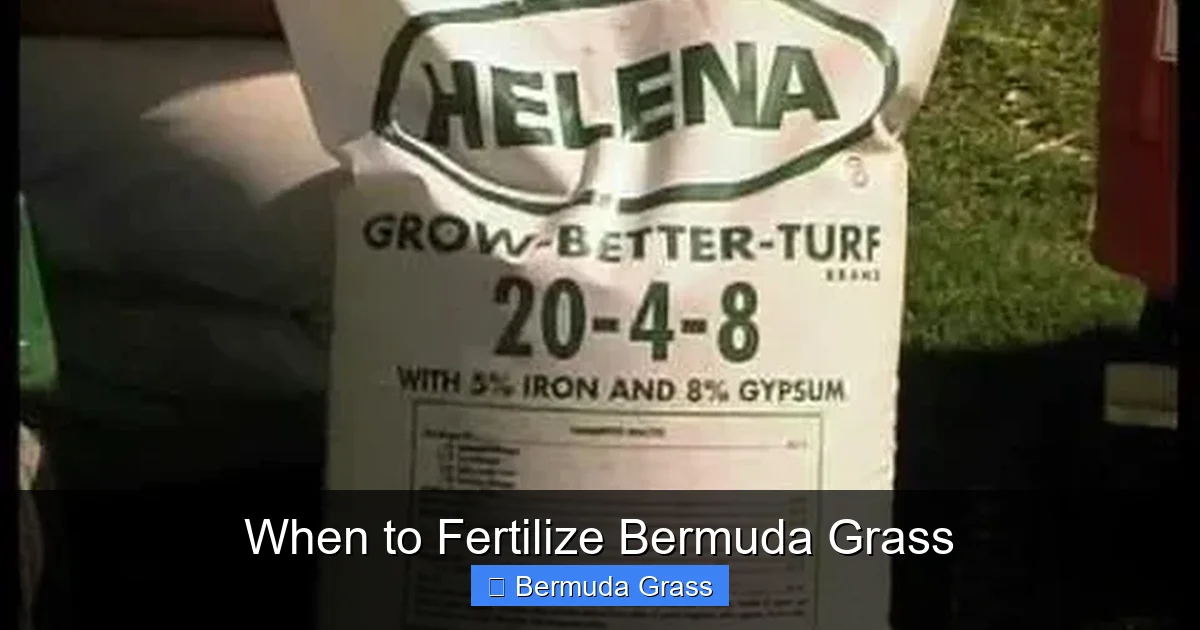
When you look at a bag of fertilizer, you’ll see three numbers, like 29-0-4. These numbers represent the percentage by weight of Nitrogen (N), Phosphorus (P), and Potassium (K) – always in that order (N-P-K).
- Nitrogen (N): Promotes lush, green, leafy growth. It’s the nutrient most responsible for that vibrant green color. Bermuda grass needs a lot of nitrogen during its active growing season.
- Phosphorus (P): Essential for root development, seedling growth, and flowering. Established Bermuda grass typically doesn’t need much supplemental phosphorus unless a soil test indicates a deficiency.
- Potassium (K): Supports overall plant health, stress tolerance (heat, drought, cold), disease resistance, and water regulation. It’s especially important for preparing Bermuda grass for dormancy.
You’ll also see terms like “slow-release” and “quick-release”:
- Quick-Release Fertilizers: Provide immediate nutrients, leading to a rapid burst of green. However, their effects are short-lived, and they carry a higher risk of “burning” your lawn if over-applied.
- Slow-Release Fertilizers: Release nutrients gradually over several weeks or months. This provides a more consistent feeding, reduces the risk of burning, and promotes more sustained, even growth. They are generally preferred for Bermuda grass during peak growth.
The Crucial First Step: Soil Testing
Before you even think about buying fertilizer, conduct a soil test! This is perhaps the single most important action you can take for your Bermuda grass lawn.
- Why it matters: A soil test tells you exactly what nutrients your soil is lacking or has in abundance, as well as its pH level. Without this information, you’re just guessing. You might be applying a nutrient your lawn doesn’t need, or worse, ignoring a critical deficiency.
- How to do it: Most local university extension offices offer affordable soil testing services. They’ll provide a kit with instructions on how to collect soil samples from different areas of your lawn. Send it in, and you’ll receive a detailed report with specific recommendations for fertilizer types and amounts tailored to your Bermuda grass.
- Frequency: Aim to test your soil every 2-3 years to monitor changes and adjust your fertilization strategy.
Application Techniques: How to Fertilize Bermuda Grass Effectively
Once you know when to fertilize Bermuda grass and what type of fertilizer to use, proper application is key to success.
Measuring Your Lawn Area
Before buying fertilizer, accurately measure your lawn’s square footage. This ensures you buy the correct amount and apply it according to the package directions, preventing over or under-application. Most fertilizers specify application rates per 1,000 square feet.
Visual guide about When to Fertilize Bermuda Grass
Image source: img.wonderhowto.com
Choosing and Using a Spreader
- Broadcast (Rotary) Spreader: Ideal for larger lawns. It throws fertilizer granules in a wide arc, providing good coverage quickly. Be careful to overlap slightly to avoid streaks.
- Drop Spreader: Best for smaller, more geometrically shaped lawns. It drops fertilizer directly beneath the hopper in a precise path, reducing the risk of getting granules on sidewalks or garden beds. Requires more passes but offers more control.
Always calibrate your spreader according to the fertilizer bag’s instructions for the specific product you’re using. Different fertilizers have different granule sizes and densities, requiring different settings.
Even Application
To avoid uneven growth and streaking, apply half the recommended amount of fertilizer in one direction (e.g., north to south) and the other half in a perpendicular direction (e.g., east to west). This cross-hatch pattern ensures thorough and even coverage.
Watering After Application
This step is crucial! Immediately after applying granular fertilizer, thoroughly water your lawn. This helps dissolve the granules and wash the nutrients down into the soil, where the roots can absorb them. It also helps prevent “fertilizer burn,” which can happen if granules sit on the grass blades, especially in hot weather.
Practical Tips for a Prize-Winning Bermuda Lawn
Fertilization is just one piece of the puzzle. For the best Bermuda grass lawn, integrate your feeding schedule with other good lawn care practices.
- Mowing: Mow Bermuda grass frequently at a low height (0.5 to 1.5 inches for common varieties, 0.5 to 1 inch for hybrids). Frequent mowing encourages dense growth and discourages weeds. Never remove more than one-third of the blade height at a time.
- Watering: Bermuda grass is drought-tolerant, but deep, infrequent watering promotes strong roots. Aim for about 1 inch of water per week, including rainfall, applied in one or two sessions rather than daily shallow watering.
- Weed Control: A dense, healthy Bermuda grass lawn is your best defense against weeds. Use pre-emergent herbicides in early spring and fall, timed appropriately so they don’t interfere with new grass seed if you’re overseeding. Spot-treat weeds as needed with a selective herbicide safe for Bermuda grass.
- Aeration: Consider aerating your lawn annually, especially if you have compacted soil. Aeration improves air, water, and nutrient penetration to the root zone, making your fertilization more effective. The best time to aerate Bermuda grass is during its peak growing season (late spring to early summer).
Troubleshooting Common Fertilization Issues
Even with the best intentions, sometimes things go wrong. Here are a few common issues and how to troubleshoot them when you fertilize Bermuda grass.
- Yellowing Grass: If your Bermuda grass looks yellow, it could be a sign of a nitrogen deficiency. Check your fertilization schedule and consider if you’ve applied enough. However, yellowing can also be caused by overwatering, disease, or other nutrient deficiencies (e.g., iron). A soil test can help pinpoint the exact problem.
- Brown Streaks or Patches (Fertilizer Burn): This often happens if too much fertilizer is applied in one area, or if granular fertilizer isn’t watered in adequately. To fix it, heavily water the affected area to help dilute the excess nutrients. In severe cases, you might need to reseed or plug the burnt areas.
- Uneven Growth or Color: This usually indicates uneven fertilizer application. Next time, use the cross-hatch application method (applying half in one direction, half in the perpendicular direction) with a properly calibrated spreader.
- Runoff: If you see fertilizer granules or colored water running off your lawn, you’ve likely applied too much or watered too heavily immediately after application. Adjust your spreader settings and watering technique to prevent this, as runoff pollutes waterways.
Conclusion
Mastering when to fertilize Bermuda grass is a key component to achieving a stunning, resilient lawn. By understanding its warm-season growth habits, prioritizing soil temperature, conducting regular soil tests, and following a consistent fertilization schedule, you provide your Bermuda grass with the precise nutrition it needs, exactly when it needs it.
Remember, a healthy lawn is a long-term commitment. Combine your strategic fertilization with proper mowing, watering, and weed control, and you’ll be rewarded with a dense, vibrant green carpet that will be the envy of your neighborhood. Now go forth and grow that gorgeous Bermuda grass lawn!