Figuring out when to apply GrubEx is trickier than most people expect. The answer isn't a single date on the calendar. It depends on where you live, what kind of grass you're growing, and whether you're trying to prevent grubs or already seeing damage.
Get the timing right and you protect your lawn all season. Get it wrong and you waste money or end up with dead patches anyway.
The product itself (GrubEx, with chlorantraniliprole as the active ingredient) is designed to stop grubs before they cause visible harm. According to manufacturer specifications and extension research, it works best when applied just before or during the egg-hatch window, when larvae are small and actively feeding near the soil surface. That window shifts depending on your climate and grub species, which is exactly what we'll walk through below.

Image source: Bing (Web (fair-use with source credit))
The One-Sentence Answer on When to Apply GrubEx
Apply GrubEx in mid-to-late summer, timed to coincide with grub egg hatch in your region. For most of the US, this means July through early August. Northern zones lean toward late July.
Southern zones may need to apply in early-to-mid July. The soil temperature at 2-inch depth hitting 65 to 70 degrees Fahrenheit is a reliable biological signal that hatch is imminent.
Why GrubEx Timing Trips Everyone Up
Here's the core problem: GrubEx is a preventive product, not a rescue treatment. It needs to be in the soil and active when grubs first emerge and start feeding. Most people don't think about grubs until they see brown patches in September or October, by which point the larvae are large, the damage is done, and GrubEx is the wrong tool for the job.
The active ingredient, chlorantraniliprole, works by ingestion and contact. Grubs have to feed on treated soil or root tissue to pick it up. The product doesn't kill on contact the way a curative insecticide does.
That's actually a feature, not a flaw. It means the chemical stays active in the soil for weeks, waiting for tiny larvae to show up. But it also means your timing has to be based on the biology of the pest, not the symptoms in your lawn.
Another layer of confusion comes from regional variation. Japanese beetles in Alabama don't behave the same way as Japanese beetles in Michigan. The adults emerge earlier in warm climates, lay eggs sooner, and the hatch window shifts accordingly.
If you're googling a generic "best time" and applying that date without adjusting for your area, you're almost certainly off by several weeks.
There's also the question of what you're actually dealing with. Not every lawn pest controlled by GrubEx has the same lifecycle. European chafers, June bugs, and billbugs all have slightly different flight and egg-laying schedules.
GrubEx covers them all, but your application date should target whichever species is the primary threat in your area.
How GrubEx Actually Works (And Why That Changes Your Timing)
Chlorantraniliprole belongs to a class of chemistry called diamides. It works by binding to ryanodine receptors in muscle cells of target insects, causing them to stop feeding within hours and die within a few days. It's systemic, meaning it gets taken up into turf roots and organic matter in the top layer of soil.
That's where young grubs feed. So the product is essentially setting a trap in the feeding zone.
Here's why that matters for timing. The chemical begins breaking down as soon as it hits soil. UV exposure, microbial activity, and water movement all reduce its concentration over time.
Manufacturer data and university trials suggest effective residual activity lasts roughly three to four months in typical soil conditions. That's enough to cover one full grub generation if you apply at the start of hatch. But if you apply in May, by the time eggs hatch in August, the concentration may have dropped below effective levels.
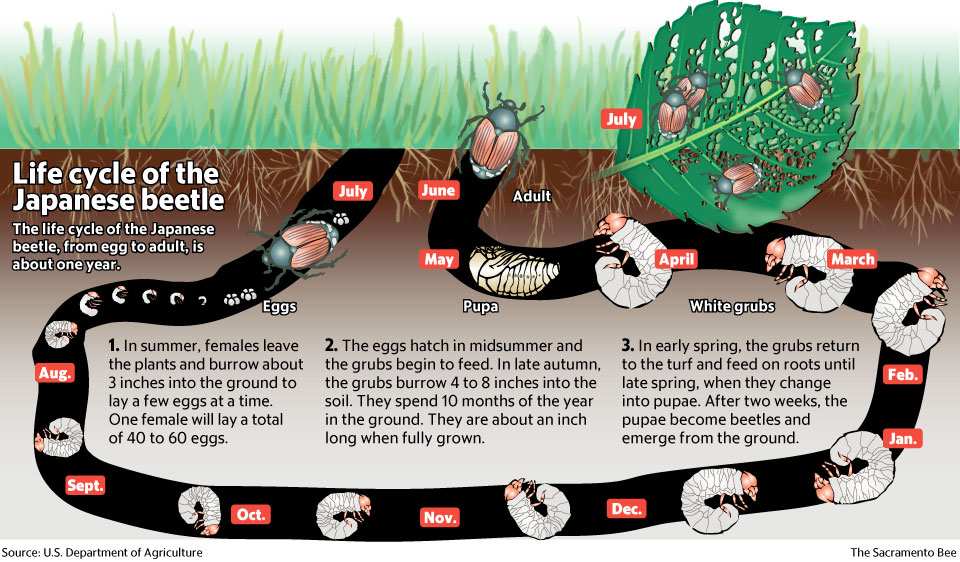
Image source: Bing (Web (fair-use with source credit))
The flip side is that applying too late doesn't help either. Once grubs reach their third instar (the largest larval stage), they're harder to control with any product, including GrubEx. They're deeper in the soil, feeding on larger root systems, and their tougher digestive systems process the chemical less efficiently.
By the time you see obvious turf damage, the grubs are often already in that later stage.
This narrow window, right around early to peak hatch, is why a decision-tree approach works better than memorizing a date. Your specific conditions determine which week in the July-through-August range makes sense for your lawn.
The Grub Lifecycle: What's Happening Underground When
Understanding the lifecycle of the common white grub species is the single most useful thing you can do to nail your GrubEx timing. You're not guessing anymore. You're targeting a biological event.
Adult Beetle Flight and Egg-Laying Window
Adult Japanese beetles typically emerge from the soil in mid-to-late June across most of the eastern and midwestern US. In warmer southern climates, emergence can start as early as late May. The adults feed on foliage and flowers for several weeks.
Mating happens during this period. Female beetles then burrow back into moist turf to lay eggs, usually in clusters 2 to 4 inches below the surface.
A single female can lay 40 to 60 eggs over her lifespan. European chafers, which are a major problem in the Northeast and Upper Midwest, follow a similar pattern but tend to emerge slightly earlier, often in early June. June bugs (Phyllophaga species) vary by species but generally fly in late spring through early summer.
The key point: adult flight is your early warning. Once you see adult beetles feeding on trees or shrubs nearby, egg-laying is happening in your lawn.
Egg Hatch and Active Feeding Stage
Eggs hatch within about two to three weeks after being laid, assuming soil moisture and temperature are adequate. That puts the primary hatch window for Japanese beetles in most of the US from mid-July through August. In the Deep South, hatch may begin in early July.
In northern New England or the upper Midwest, peak hatch may not arrive until early August.
Newly hatched grubs are tiny, roughly 1/8 to 1/4 inch long, and they feed aggressively on fine root hairs and organic matter in the top 1 to 2 inches of soil. This is their most vulnerable stage. It's also when GrubEx is most effective.
The larvae are small, feeding near the surface, and actively ingesting treated soil. If your product is in place during this window, control rates are high.
Over the next several weeks through late summer and into fall, grubs molt into second and then third instar stages. They grow significantly, feed on larger root systems, and move deeper into the soil as temperatures cool. This is when they cause the most visible turf damage, brown patches that peel back like carpet.
By October in many regions, the heavy feeding damage is underway.
When Grubs Are Small Enough for GrubEx to Work
The ideal application window is just before egg hatch begins or right as it starts. That way, the chemical is at peak concentration in the feeding zone when the most vulnerable larvae appear. For preventive control, you want the product active in the soil during the first three to four weeks of the hatch period.
Soil temperature is the most practical field indicator. Extension research from multiple university programs tracks grub egg hatch onset to soil temperatures of 65 to 70 degrees Fahrenheit at a 2-inch depth in the turf canopy. You can monitor this with a basic soil thermometer.
Once you see those readings in early to midsummer, hatch is days to a couple weeks away. That's your cue to get the product down.
In practice, for most of the country, the sweet spot falls between early July and mid-August. But "most of the country" is a huge range. That's exactly why we need to break this down by your specific situation in the decision tree below.
Your grass type, region, and grub history all shift that window by days or weeks.
Your Decision Tree: When to Apply GrubEx Based on Your Situation
The right application date isn't universal. It depends on a handful of variables that are specific to your lawn. Walk through these four questions and you'll land on the correct timing for your situation.
Step 1: What Type of Grass Do You Have?
Cool-season grasses (Kentucky bluegrass, tall fescue, perennial ryegrass) are the most common hosts for white grub damage. These lawns dominate the Northeast, Midwest, and Pacific Northwest. If you're in this category, your primary target is Japanese beetle and European chafer.
The standard July-through-August window applies strongly here.
Warm-season grasses (Bermuda, zoysia, St. Augustine, centipede) are common in the South and transition zone. Adult beetles start feeding on these lawns earlier in the season.
Egg-laying happens sooner. You may need to apply GrubEx in early-to-mid July rather than waiting until late July or August.
Step 2: What Region Are You In?
This is the biggest variable. The table below breaks down approximate timing windows by region.
| Region | Primary Grub Species | Typical Adult Flight | Best GrubEx Window |
|---|---|---|---|
| Northeast (NY, PA, NJ, CT) | Japanese beetle, European chafer | Late June through July | Late July through early Midwest (IL, OH, IN, MI, WI) |
| Deep South (GA, AL, MS, SC) | Japanese beetle, May/June beetle | May through June | Early-to-mid July |
| Upper South / Transition Zone (TN, KY, NC, VA) | Japanese beetle, European chafer | Early-to-mid June | Early-to-mid July |
| Pacific Northwest (WA, OR) | European chafer, black turfgrass ataenius | June through July | Late July through early August |
| Mountain West (CO, UT, AZ) | Japanese beetle (localized) | Late June through July | Mid-July through early August |
These are approximate windows based on aggregated extension data and lifecycle monitoring. Your specific microclimate, elevation, and that year's weather patterns can shift things by a week or two in either direction.
Step 3: Have You Had Grub Problems Before?
If you've confirmed grub damage in previous years, you're dealing with an established population. Adult beetles tend to return to the same areas to lay eggs because the soil conditions and turf quality suit them. In this case, err on the earlier side of your regional window.
Apply at the beginning of the hatch period rather than the middle. You want maximum chemical concentration when those first larvae appear.
If you've never had a grub issue but you're seeing adult beetles on nearby trees or your neighbors are dealing with damage, preventive treatment makes sense. You can target the middle of your regional window in this scenario.
Step 4: What Month Is It Right Now?
This is the practical gut-check question. Timing matters, but so does reality.
- If it's June: You're in the preparation window. Monitor adult beetle activity. Check soil temperatures. Get your spreader ready and buy the product so it's on hand.
- If it's July: This is prime time for most regions. Get the product down if you haven't already.
- If it's early August: You still have time in northern areas. Apply immediately if you haven't treated yet.
- If it's late August or September: GrubEx is no longer your best option. The hatch is largely complete and grubs are growing larger. Consider a curative product like Dylox (trichlorfon) instead, or plan to apply GrubEx earlier next year.
Timing by Region: A Practical Calendar
The decision tree above gives you the logic. This section gives you the calendar. Use it alongside local soil temperature readings for the most accurate timing.
Northern US and Midwest
This is Japanese beetle heartland. Adult emergence typically peaks in late June through mid-July. Egg-laying follows within days.
Egg hatch usually begins in mid-to-late July and continues through early August. The best GrubEx application window here is mid-July through early August. In southern parts of Ohio, Indiana, and Illinois, lean toward mid-July.
In Michigan, Wisconsin, Minnesota, and northern New England, late July through early August is safer.
Soil temperature monitoring is especially useful in this region because spring and early summer temperatures can vary significantly from year to year. A cool, wet spring can delay emergence by a week or more.
Transition Zone
The transition zone (roughly from southern Virginia through Tennessee, Kentucky, and into the lower Midwest) is tricky. You often deal with multiple grub species that have overlapping lifecycles. Japanese beetles fly early here, sometimes in late May.
European chafers may follow in June. The result is a longer hatch period. Applying GrubEx in early-to-mid July gives you the best coverage across species.
Warm-season lawns in this zone add another variable. If you're growing Bermuda or zoysia, the turf may not be fully green and actively growing until late spring. That doesn't change your GrubEx timing much, but it does affect how quickly the product gets watered in and activated.
Southern US and Deep South
In Georgia, Alabama, Mississippi, South Carolina, and northern Florida, adult beetle activity starts early. Japanese beetles can emerge in May. May/June beetles (Phyllophaga species) are often the bigger problem, and they fly even earlier, sometimes in April.
Egg hatch in these areas can begin in late June. Your GrubEx window is early-to-mid July.
If you're in the Deep South and you wait until late July or August to apply, you've likely missed the hatch. The grubs are already feeding and growing. This is one of the most common timing mistakes we see in southern lawns.
What Happens If You Apply at the Wrong Time
Applying Too Early
If you apply GrubEx weeks before egg hatch begins, the chemical concentration in the soil will be lower by the time larvae actually appear. Chlorantraniliprole breaks down through microbial activity, UV exposure, and water movement. In heavy rainfall areas or during a particularly wet summer, the degradation can be faster.
You won't get zero control, but you may not get the season-long protection the product is designed for.
Applying Too Late
Late application means grubs have already started feeding and may have reached their second or third instar. At that stage, they're harder to control with GrubEx. You'll see reduced efficacy.
The product still has some effect, but you're not getting the full preventive benefit. If you're past the hatch window entirely, switch to a curative product rather than wasting money on a preventive that's timed wrong.
Applying in Spring (The Most Common Mistake)
This deserves its own callout because it happens constantly. People see "grub control" on the shelf in April or May, buy it, and put it down with their spring fertilizer. By the time grubs hatch in July or August, the active ingredient has largely degraded.
You've spent the money and applied the product, but you have little to show for it. GrubEx is a mid-to-late summer application. Full stop.
Save your spring lawn care budget for pre-emergent weed control and proper fertilization.
How to Confirm Grubs Are Active Before You Treat
You don't have to guess. A few simple checks can tell you whether grubs are present and whether your timing is right.
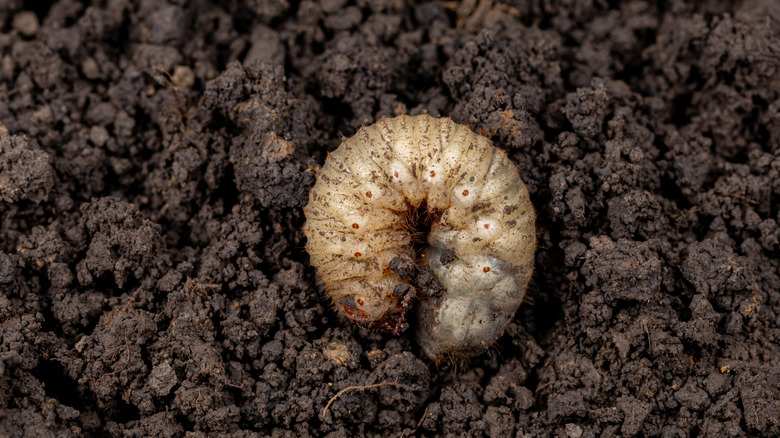
Image source: Bing (Web (fair-use with source credit))
The Soap Flush Test
Mix a tablespoon of dish soap in a gallon of water. Pour it over a 1-to-2-square-foot section of lawn where you suspect grub activity. Wait 10 to 15 minutes.
Grubs and other soil insects will come to the surface. If you see six or more white grubs per square foot, treatment is warranted. This test also helps you confirm that grubs are still small, which means you're within the effective window for GrubEx.
The Turf Tug Test
Grab a handful of brown or dying turf and pull. If it lifts easily, like rolling up a carpet, grubs have likely severed the roots. This indicates active feeding damage.
The grubs are probably in their second or third instar at this point. GrubEx alone may not be sufficient. A curative insecticide is a better choice for immediate control.
Soil Sampling for Egg Hatch Timing
Cut a 1-square-foot sample of turf to a depth of 3 to 4 inches. Sift through the soil and look for small, C-shaped white grubs. If you find very small grubs (under 1/4 inch), hatch is either just starting or underway.
That's your green light for GrubEx. If grubs are already 1/2 inch or larger, you're late in the cycle. Adjust your product choice accordingly.
Step-by–Step: How to Apply GrubEx the Right Way
Getting the timing right is half the battle. The other half is applying the product correctly so it actually works once it's in the soil.

Image source: Bing (Web (fair-use with source credit))
Mow Before You Spread
Mow your lawn to normal height before applying. Shorter turf allows granules to reach the soil surface instead of getting trapped in tall grass blades. You want the product in the soil, not sitting on top of the canopy.
Calibrate Your Spreader
Use a broadcast or drop spreader and set it to the rate specified on the GrubEx label. The standard application rate is roughly 2.8 pounds per 1,000 square feet, but always verify against the current product label. Over-applying wastes money and increases environmental load.
Under-applying reduces efficacy. If you're unsure of your spreader setting, apply a measured amount to a small test area and adjust.
Apply the Granules Evenly
Walk at a steady pace and overlap your passes slightly to avoid streaks. Uneven application creates hot spots and dead zones. Treat the entire lawn, not just areas where you've seen damage before.
Grubs are often present well before visible symptoms appear, and beetles don't lay eggs only in the spots you remember having trouble.
Water It In Within 24 Hours
This step is critical. Water the treated area with at least 1/4 inch of irrigation (or apply before a forecasted rain event). Watering moves the granules off the grass blades and into the soil where the active ingredient binds to organic matter and root zone soil.
Without this step, the product sits on the surface and degrades rapidly from UV exposure. Most extension guidelines recommend watering within 24 hours for optimal results.
Mark Your Calendar for Next Year
If you had a grub problem this year, expect it next year too. Adult beetles are creatures of habit. They return to suitable turf to lay eggs.
Note the date you applied this year and plan to apply within the same window next season. Preventive grub control is often an annual commitment in areas with established beetle populations.
GrubEx vs. Curative Options: When Prevention Isn't Enough
Dylox (Trichlorfon) for Active Infestations
If you're reading this in late August or September and you've already found large grubs in your lawn, GrubEx isn't your best move. Dylox (active ingredient: trichlorfon) is a curative insecticide that kills existing grubs on contact and through ingestion. It works fast, within 24 to 48 hours, and is effective against second and third instar grubs.
The tradeoff is short residual. It breaks down quickly in the soil, so it won't prevent a second wave of hatch or next year's population.
Milky Spore and Nematodes: Biological Alternatives
Milky spore (Paenibacillus popilliae) is a bacterium that specifically targets Japanese beetle grubs. It takes several years to establish in the soil but can provide long-term suppression once it does. Beneficial nematodes (Heterorhabditis bacteriophora) are another biological option.
They actively seek out and kill grubs in the soil. Both require specific soil conditions (warm, moist, above 60 degrees Fahrenheit) to work effectively. Neither provides the reliable, season-long control that GrubEx offers for a single application.
Quick Comparison Table
| Product | Type | Best Timing | Residual | Speed of Kill |
|---|---|---|---|---|
| GrubEx (chlorantraniliprole) | Preventive | Before/during hatch (July-Aug) | 3-4 months | Slow (days) |
| Dylox (trichlorfon) | Curative | When grubs are active (Aug-Oct) | Short (days) | Fast (24-48 hrs) |
| Milky spore | Biological | Any time soil is warm | Years (once established) | Slow (weeks-months) |
| Beneficial nematodes | Biological | During active hatch | Short (weeks) | Moderate (days) |
Common Mistakes People Make with GrubEx
- Applying in spring. This is the number one error. GrubEx applied in April or May has largely degraded by the time grubs hatch in July or August. You get little to no control despite having done the work.
- Skipping the watering step. Granules left on the grass surface break down rapidly. Without irrigation within 24 hours, a significant portion of the product never reaches the soil where it needs to be.
- Confusing grub damage with drought stress. Brown patches in summer can look identical. If your lawn is dry and watering doesn't green it up, check for grubs before treating. Don't apply GrubEx to a lawn that's just thirsty.
- Expecting instant results. GrubEx is preventive. It stops future damage. It doesn't repair dead turf. If your lawn already has extensive brown patches, those areas won't recover from this application. You'll need to reseed or sod damaged areas in fall.
- Treating only damaged areas. Grubs move through the soil and the infestation is rarely limited to the visible brown spots. Treat the entire lawn for full protection.
Frequently Asked Questions
Can I apply GrubEx in the fall?
You can, but it's not ideal. By fall, grubs are large and actively feeding on roots. GrubEx works best on small, newly hatched larvae.
If you missed the summer window, use a curative product like Dylox instead. Plan to apply GrubEx the following summer for preventive control.
How long does GrubEx stay active in the soil?
Manufacturer data and university field trials indicate effective residual activity of roughly three to four months under typical conditions. Heavy rainfall, high microbial activity, and sandy soils can shorten that window. Clay soils and moderate moisture tend to preserve activity longer.
Is GrubEx safe for pets and kids when used as directed?
The product carries a "Caution" signal word, indicating low acute toxicity. Keep pets and children off the treated area until the granules have been watered in and the turf is dry. Once watered in and dry, re-entry is considered safe per label directions.
Always read the current product label for specific precautions.
Do I need to apply GrubEx every year?
Not necessarily. If you've had confirmed grub damage, annual application for two to three years is a sound strategy to break the cycle. If you've never had issues and are just being preventive, you can monitor with soil sampling and soap flush tests each summer and treat only when populations warrant it.
What if it rains heavily right after I apply?
Heavy rain within 24 hours of application can actually help by washing granules into the soil. However, extreme rainfall may also cause runoff, especially on slopes. If you see granules washing into storm drains or neighboring properties, that's a concern.
Apply when light to moderate rain is forecast, or water in lightly yourself.
Your Final Timing Checklist
Before you head to the store or fire up your spreader, run through this quick checklist:
- Know your region and grass type. This determines your base window.
- Check soil temperature. 65 to 70 degrees Fahrenheit at 2 inches means hatch is near.
- Look for adult beetles. If you see Japanese beetles feeding nearby, egg-laying is happening now.
- Confirm grubs are small. Soil sampling or a soap flush tells you what you're dealing with.
- Don't wait for visible damage. By the time turf turns brown, you're already behind.
- Water it in. This step makes or breaks your application.
- Mark your calendar. Note the date and plan for next year if needed.
GrubEx is one of the most effective preventive tools available for white grub control. But its effectiveness lives and dies by timing. Apply it during the hatch window for your region, get it into the soil with proper watering, and you'll protect your lawn with a single application.
Miss that window and you're playing catch-up with products that were never designed for the job.