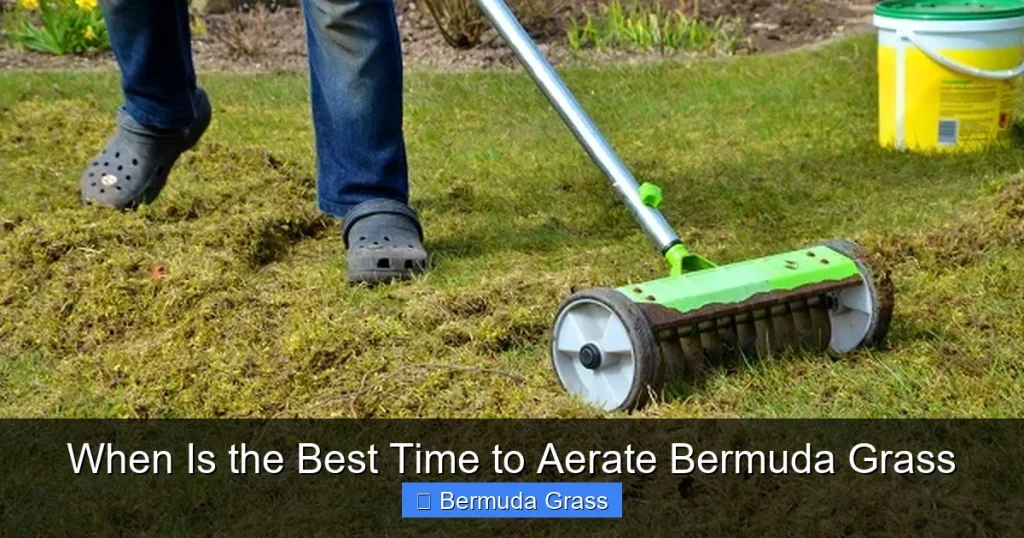
Aerating your Bermuda grass at the right time is crucial for its health and vigor. The best time to aerate Bermuda grass is during its peak active growing season, typically from late spring to early summer, when soil temperatures are consistently above 65°F. This allows the turf to recover quickly, encourages deeper root growth, and maximizes the benefits of improved air, water, and nutrient penetration.
When Is the Best Time to Aerate Bermuda Grass
If you dream of a lush, vibrant green Bermuda grass lawn that feels like a carpet underfoot, then understanding the art of aeration is key. Aeration is a vital lawn care practice that can transform a struggling lawn into a thriving one. But simply aerating isn’t enough; knowing when is the best time to aerate Bermuda grass is absolutely critical for success. Do it at the wrong time, and you could actually harm your beautiful turf.
This comprehensive guide will walk you through everything you need to know about the optimal timing for aerating your Bermuda grass. We’ll dive into why timing matters, what signs to look for, how often to aerate, and what to do before and after the process to ensure your lawn reaps maximum benefits. Get ready to cultivate the healthiest, most resilient Bermuda grass on the block!
Key Takeaways
- Timing is Everything: The absolute best time to aerate Bermuda grass is during its active growth phase, specifically from late spring to early summer (typically May through July), when soil temperatures are reliably above 65°F (18°C).
- Why Active Growth? Aerating during peak growth ensures your Bermuda grass can quickly recover from the stress of aeration, filling in the holes and promoting robust new root development.
- Avoid Extreme Temperatures: Never aerate Bermuda grass when it’s dormant (winter) or under heat stress (mid-to-late summer in very hot climates), as this can severely damage the turf and hinder recovery.
- Look for Signs of Need: Aeration is likely needed if your lawn experiences heavy foot traffic, has poor water absorption, feels spongy due to thatch, or if you have heavy clay soil.
- Core Aerators Are Best: Always opt for a core aerator that pulls plugs of soil out, rather than a spike aerator that just pushes holes, for maximum benefit to your Bermuda grass.
- Follow with Care: After aerating, it’s essential to water deeply, fertilize appropriately, and consider topdressing to further enhance soil health and lawn recovery.
- Frequency Matters: Most Bermuda grass lawns benefit from annual aeration, but high-traffic areas or those with heavy clay soil might benefit from aerating every six months.
Understanding Bermuda Grass: A Warm-Season Wonder
Before we talk about aeration timing, let’s briefly understand Bermuda grass itself. Bermuda grass is a warm-season grass, meaning it thrives in hot temperatures and bright sunshine. It greens up in late spring, grows vigorously throughout the summer, and then enters dormancy, turning brown, with the first hard frost of fall.
The Active Growth Cycle is Key
The crucial takeaway here is its “active growth cycle.” This is the period when the grass is rapidly growing, producing new leaves, expanding its root system, and recovering quickly from any stress. For Bermuda grass, this prime growth period typically spans from late spring through late summer. Aerating your Bermuda grass during this robust phase is essential because it allows the turf to heal and fill in the aeration holes swiftly and effectively.
The Golden Window: When to Aerate Bermuda Grass

Visual guide about When Is the Best Time to Aerate Bermuda Grass
Image source: yardique.com
So, when exactly is the best time to aerate Bermuda grass? The answer is clear: late spring to early summer.
Why Late Spring to Early Summer is Ideal
This period, generally from May through July, is when Bermuda grass is in its strongest, most active growth phase. The soil temperatures are consistently warm (ideally above 65°F or 18°C and rising), and air temperatures are reliably warm too.
Here’s why this timing is perfect for aerating Bermuda grass:
- Rapid Recovery: Your lawn can quickly recover from the temporary stress of aeration. New shoots will readily grow into the open holes, creating a denser turf.
- Enhanced Root Growth: The loosened soil allows roots to penetrate deeper, access more nutrients and water, and withstand drought better.
- Maximum Benefit Absorption: Any fertilizers, topdressing, or soil amendments applied after aeration will have immediate access to the root zone, maximizing their effectiveness.
- Reduced Weed Competition: While some weed seeds might be brought to the surface, the vigorously growing Bermuda grass will quickly outcompete most common weeds if done at the right time.
Think of it like getting a haircut when you know your hair grows fast – it will bounce back and look great in no time. The same principle applies to aerating Bermuda grass.
Factors to Consider Before You Aerate
While late spring to early summer is the general rule, a few specific factors can help you pinpoint the exact best time to aerate Bermuda grass for your lawn.
1. Soil Temperature is Your Best Indicator
Forget the calendar sometimes; your soil temperature is a more accurate gauge. Bermuda grass truly kicks into high gear when soil temperatures consistently reach 65-70°F (18-21°C) at a 4-inch depth. You can purchase an inexpensive soil thermometer to check this, or consult local university extension offices, which often publish soil temperature data for your region. When the soil is warm enough, the grass is actively growing and ready to recover.
2. Look for Signs Your Lawn Needs It
Not every lawn needs aeration every year, though many benefit from it. Here are signs your Bermuda grass is calling for aeration:
- Compacted Soil: If you try to push a screwdriver into your lawn and it’s difficult to penetrate more than a few inches, your soil is likely compacted.
- Heavy Thatch Layer: Thatch is a layer of dead and living organic matter that accumulates between the soil surface and the green grass blades. If this layer is thicker than half an inch, it can prevent water, air, and nutrients from reaching the roots.
- Poor Water Penetration: If water pools on your lawn or runs off quickly after irrigation, it’s a sign that your soil isn’t absorbing water effectively.
- Heavy Foot Traffic: Areas of your lawn that get a lot of foot traffic (play areas, walkways) are prone to compaction.
- Clay Soil: Lawns with heavy clay soil are particularly susceptible to compaction and benefit greatly from regular aeration.
- Struggling Growth: If your Bermuda grass looks generally unhealthy, thin, or struggles to grow despite adequate watering and fertilization, compaction might be the culprit.
3. How Often Should You Aerate?
For most Bermuda grass lawns, aerating once a year during the golden window is sufficient. However, if your lawn experiences heavy foot traffic, has heavy clay soil, or struggles with significant thatch buildup, you might consider aerating twice a year – once in late spring and again in early summer. Just be sure to allow at least 6-8 weeks between aerations to give the grass ample time to recover.
When NOT to Aerate Bermuda Grass
Knowing when to aerate Bermuda grass is as important as knowing when not to. Aerating at the wrong time can cause more harm than good.
1. During Dormancy (Late Fall, Winter, Early Spring)
Never aerate Bermuda grass when it’s dormant. In late fall, winter, or very early spring, the grass is brown and not actively growing. Aerating during this period will stress the turf without any capacity for recovery. This leaves your lawn vulnerable to disease, weeds, and further damage, and you’ll waste your time and effort. Wait until you see consistent green-up and active growth.
2. During Periods of Extreme Stress
Avoid aerating during severe drought conditions or intense heatwaves (e.g., mid-to-late August in many Southern states). While Bermuda loves heat, extreme, prolonged heat can still stress the lawn. Aerating adds more stress, and without adequate moisture and moderate temperatures, the grass will struggle to recover. Ensure your lawn is well-hydrated before and after aeration, and temperatures are favorable for growth.
3. On Waterlogged or Bone-Dry Soil
Timing isn’t just about the season; it’s about the soil condition. Never aerate bone-dry soil, as the tines will struggle to penetrate, or you’ll only achieve shallow holes. Conversely, avoid aerating waterlogged soil, which can create more compaction and a muddy mess. The ideal moisture level is when the soil is moist but not soggy, allowing the aerator to pull clean, intact plugs.
The Aeration Process: A Quick Overview (Focusing on Timing’s Impact)
While this guide focuses on “when,” a quick understanding of “how” reinforces the timing’s importance.
H3. 1. Choose the Right Aerator
Always use a core aerator, which pulls out small plugs (cores) of soil from your lawn. These plugs are crucial because they create true open channels for air, water, and nutrients. Spike aerators, which just poke holes, actually cause more compaction around the edges of the holes and are generally not recommended.
H3. 2. Prepare Your Lawn
Two to three days before you plan to aerate, water your lawn thoroughly. This ensures the soil is moist enough for the aerator to penetrate effectively and pull out good plugs. Mark any sprinkler heads, invisible dog fences, or other buried lines to avoid damage. Mow your lawn to its regular height.
H3. 3. Aerate Methodically
Make two passes over your lawn with the core aerator, ideally in perpendicular directions (e.g., once north-south, once east-west). This ensures good coverage and maximizes the number of holes.
H3. 4. Leave the Plugs
Leave the soil plugs on the lawn surface. They contain valuable microorganisms that will decompose and reintroduce nutrients and organic matter back into the soil. They usually break down within a week or two, especially with watering.
Post-Aeration Care: Maximizing the Benefits
Aerating Bermuda grass is only half the battle. Proper post-aeration care is vital to capitalize on the loosened soil and encourage strong growth.
1. Water Deeply
Immediately after aerating, water your lawn deeply. The newly created holes allow water to penetrate directly to the root zone, rehydrating the turf and helping to break down the soil plugs. Continue to water regularly, ensuring the soil remains moist but not waterlogged.
2. Fertilize Appropriately
Aeration is an excellent time to fertilize your Bermuda grass. With open channels leading directly to the roots, nutrients can be absorbed much more efficiently. Choose a fertilizer specifically formulated for Bermuda grass (often higher in nitrogen for green growth) and apply according to package directions. This gives your lawn a boost as it recovers and encourages lush, green growth.
3. Consider Topdressing
Topdressing involves spreading a thin layer of compost or sand/compost mix over your lawn. This is highly beneficial after aeration as the material will filter down into the holes, further improving soil structure, drainage, and nutrient content. It’s an optional but highly recommended step for long-term soil health.
4. Weed Control Considerations
While aeration is beneficial, it can sometimes bring dormant weed seeds to the surface. If you typically use pre-emergent herbicides, remember that aerating after applying a pre-emergent will break the herbicide barrier. It’s often best to aerate first, then apply your pre-emergent (if timed correctly for the season, typically late winter/early spring for summer weeds, which might be too early for aeration). For post-emergent control, wait a few weeks after aeration to let the grass recover fully before applying weed killer, as herbicides can be stressful.
Common Mistakes to Avoid
Knowing the best time to aerate Bermuda grass means avoiding these pitfalls:
- Aerating Dry Soil: As mentioned, this is ineffective and hard on your equipment.
- Aerating Too Early or Too Late: Harming your lawn during dormancy or extreme stress.
- Ignoring Post-Aeration Care: Skipping watering or fertilizing means you’re missing out on the biggest benefits.
- Using a Spike Aerator: This tool only compacts the soil further, defeating the purpose.
- Not Marking Obstacles: Damaging irrigation lines or other buried items is an expensive mistake.
Troubleshooting Aeration Issues
Sometimes things don’t go exactly as planned, even when you aerate Bermuda grass at the right time.
My Lawn Looks Worse After Aeration!
It’s normal for your lawn to look a little “messy” or stressed immediately after aeration, especially with all the plugs on top. This temporary setback typically resolves within 1-2 weeks as the plugs break down and the grass begins to grow into the holes. If it still looks poor after two weeks, ensure you’re watering adequately and that soil temperatures are warm enough for growth.
The Plugs Aren’t Breaking Down.
This usually happens if your soil is very heavy clay or if there hasn’t been enough moisture to help them disintegrate. You can gently rake them to help spread them out or break them up, or simply ensure consistent watering.
New Weeds Are Appearing.
Aeration can bring dormant weed seeds to the surface, where they can germinate. If you aerated during the recommended window, your actively growing Bermuda grass should outcompete most weeds. If not, spot-treat new weeds with a selective herbicide formulated for Bermuda grass, but always read the label carefully regarding timing after aeration.
Conclusion
Aeration is an incredibly beneficial practice for maintaining a healthy, vibrant Bermuda grass lawn. But the success of your efforts hinges entirely on timing. By understanding Bermuda grass’s active growth cycle and targeting that sweet spot from late spring to early summer, when soil temperatures are consistently warm, you give your lawn the best chance to thrive.
Remember to prepare your lawn properly, use a core aerator, and follow up with deep watering and appropriate fertilization. When you aerate Bermuda grass at the optimal time, you’re not just poking holes in your lawn; you’re creating a gateway for robust root development, improved nutrient uptake, and a lusher, more resilient turf that will be the envy of your neighborhood. Happy aerating!