
Understanding when Bermuda grass goes dormant in Texas is key to a healthy lawn. Typically, this warm-season grass enters dormancy from late October to early December as soil temperatures consistently fall below 50-55°F, turning from green to a straw-like brown. It’s a natural survival mechanism, and proper care during this period ensures a robust return to green in spring, usually around March to April, when consistent warmth returns.
When Does Bermuda Grass Go Dormant in Texas?
Ah, the Texas lawn. For many homeowners, a lush, vibrant expanse of Bermuda grass is the pride of their property during the scorching summer months. This resilient warm-season grass thrives in our intense heat and sunshine, providing a beautiful carpet for outdoor activities. But as the seasons shift and cooler weather arrives, you might notice your once-green lawn starting to change color, leading to a common question: “When does Bermuda grass go dormant in Texas?”
Understanding the dormancy cycle of Bermuda grass is not just about knowing when your lawn will turn brown; it’s crucial for providing proper care that ensures its health and vigor come spring. In this comprehensive guide, we’ll dive deep into the timing, triggers, and essential care practices related to Bermuda grass dormancy in Texas. You’ll learn exactly what to expect, how to prepare your lawn for its winter nap, and what steps to take for a spectacular spring revival.
Key Takeaways
- Dormancy is Natural: Bermuda grass dormancy is a healthy, natural survival mechanism triggered by cold temperatures, allowing the grass to conserve energy during winter.
- Temperature is Key: The primary trigger for Bermuda grass to go dormant in Texas is when consistent soil and air temperatures drop below 50-55°F, typically occurring from late October to early December.
- Visual Cues: Your Bermuda lawn will transition from a vibrant green to a straw yellow, then a brownish-tan color, and growth will halt. This isn’t usually a sign of death, but rather dormancy.
- Regional Variations: The exact timing of dormancy varies across Texas. North Texas experiences earlier and longer dormancy, while South Texas may see later, shorter, or even intermittent dormancy.
- Essential Winter Care: During dormancy, reduce irrigation significantly but don’t stop completely. Avoid nitrogen fertilizers, consider a fall pre-emergent for weeds, and minimize heavy foot traffic.
- Spring Revival: Bermuda grass breaks dormancy and begins to regreen when consistent soil temperatures rise above 60-65°F, typically from March to April, signalling the time for spring lawn care.
Understanding Bermuda Grass Dormancy
Before we pinpoint the exact timing, let’s clarify what dormancy actually means for your lawn.
What is Dormancy?
Think of dormancy as your lawn’s natural hibernation. Just like some animals sleep through winter or deciduous trees shed their leaves, Bermuda grass enters a state of reduced metabolic activity. It’s a survival mechanism, allowing the plant to conserve energy and protect itself from environmental stressors, primarily cold temperatures and sometimes lack of moisture. During dormancy, the grass isn’t dead; it’s simply resting. The roots and crowns remain alive, patiently waiting for favorable conditions to return.
Why Does Bermuda Grass Go Dormant in Texas?
Bermuda grass is a warm-season grass, meaning it prefers and thrives in hot weather. Texas, with its long, hot summers, is an ideal environment for it. However, when the temperatures drop significantly, Bermuda grass struggles to photosynthesize and grow efficiently. Its primary growth stops, and it shifts its energy focus to survival.
The main trigger for Bermuda grass dormancy in Texas is cold. Specifically, when consistent soil and air temperatures fall below a certain threshold, the plant signals itself to slow down. While drought can also cause a stress-induced browning that looks similar, true dormancy is primarily a response to cold. Shorter daylight hours in fall also play a role, signaling the change of seasons to the plant.
Pinpointing the Timing: When Does Bermuda Grass Go Dormant in Texas?
The exact timing of when Bermuda grass goes dormant in Texas isn’t a fixed date on the calendar. It’s influenced by a combination of factors, with temperature being the most significant.
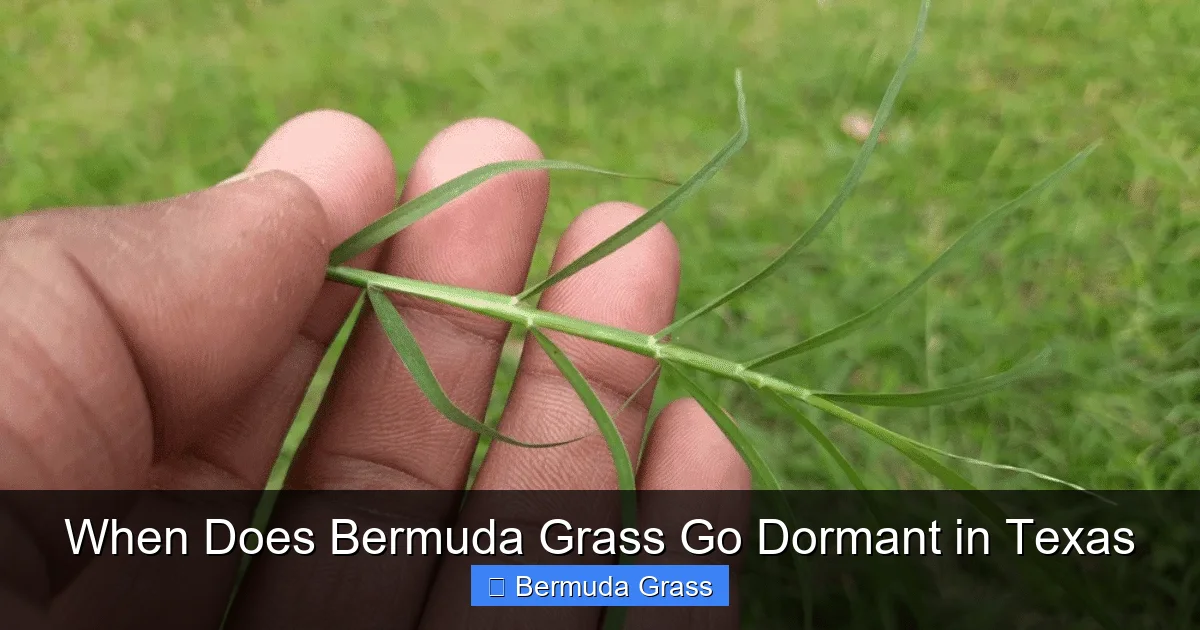
Visual guide about When Does Bermuda Grass Go Dormant in Texas
Image source: grasstasks.com
The Role of Temperature
Bermuda grass begins to slow its growth when temperatures consistently fall below 60-65°F. However, true dormancy, where it completely stops growing and turns brown, typically sets in when soil temperatures consistently drop below 50-55°F. This threshold is crucial for understanding when your Bermuda grass goes dormant in Texas.
- Typical timeframe: For most parts of Texas, you can expect your Bermuda grass to start showing signs of dormancy from late October through November, often becoming fully dormant by early December.
- Variability: An early cold front can push dormancy earlier, while a mild fall might delay it. It’s all about sustained cold, not just a single chilly night.
Impact of Weather Patterns
Texas weather is notoriously unpredictable. One year, we might experience a sudden drop in temperatures in October, pushing lawns into dormancy quickly. The next year, a warm “Indian summer” might extend well into November, delaying the onset of dormancy. Pay attention to your local forecast, especially sustained daytime and nighttime temperatures, rather than just waiting for a specific date.
While cold is the main trigger, severe drought conditions in late fall could also stress your lawn, causing it to brown prematurely. However, this is distinct from true cold-induced dormancy, though the visual effect may be similar.
Regional Differences in Texas
Texas is a huge state, spanning multiple climate zones. Therefore, when Bermuda grass goes dormant in Texas will vary significantly from the Panhandle to the Rio Grande Valley.
- North Texas (e.g., Dallas, Fort Worth, Amarillo): This region experiences colder winters, meaning dormancy often sets in earlier, sometimes as early as late October, and lasts longer. Lawns here will likely be fully brown from November through March.
- Central Texas (e.g., Austin, San Antonio): Winters are generally milder here. Dormancy typically starts in mid-November to early December and might be slightly shorter than in North Texas.
- South Texas (e.g., Houston, Corpus Christi, Rio Grande Valley): This region has the mildest winters. Bermuda grass dormancy will set in latest, often not until December or even January in some years. In very mild winters, it might experience only partial or intermittent dormancy, staying somewhat green for longer periods.
- West Texas (e.g., El Paso): While winters can be cold, the dry climate often means Bermuda grass responds similarly to North Texas, with dormancy starting in late October to November.
Visual Cues: How to Spot Dormancy
The most obvious sign that your Bermuda grass is going dormant is a change in color and growth habit.
Color Change
Your vibrant green lawn will gradually lose its chlorophyll. It typically transitions through shades of:
- Dull green: The first sign, indicating growth is slowing.
- Yellowish-green: Chlorophyll is breaking down.
- Straw yellow: More widespread browning begins.
- Brownish-tan: The grass is fully dormant, resembling dried straw.
It’s important to remember that a brown lawn isn’t necessarily a dead lawn. This color change is a natural and healthy part of the Bermuda grass lifecycle.
Growth Halts
Once fully dormant, your Bermuda grass will stop growing completely. This means:
- No new blades will emerge.
- Stolons (above-ground runners) and rhizomes (underground runners) will cease expansion.
- You won’t need to mow your lawn at all during the peak dormancy period.
Caring for Your Dormant Bermuda Lawn
Even though your Bermuda grass is resting, it still needs some attention during dormancy to ensure it bounces back strong in the spring.
Irrigation During Dormancy
You might think a dormant lawn needs no water, but that’s not entirely true. While water requirements drastically decrease, completely stopping irrigation can lead to desiccation, especially during dry Texas winters. The roots still need some moisture to stay alive.
- Reduced frequency: Water deeply but infrequently. Aim for once every 2-4 weeks, or even less, depending on rainfall.
- Deep watering: When you do water, ensure it penetrates deeply to the root zone.
- Check soil moisture: Use a screwdriver or soil probe to check moisture levels a few inches down before watering.
Mowing Practices
Before your Bermuda grass goes fully dormant in Texas, make sure your last few mows are done at a slightly higher height. This leaves more leaf surface to protect the crowns of the grass, offering a bit more insulation against cold snaps. Once the grass is fully brown and no longer growing, mowing is no longer necessary until spring.
Fertilization
Avoid applying nitrogen-rich fertilizers to your Bermuda grass once it starts showing signs of dormancy or is fully brown. Nitrogen promotes green growth, which would be susceptible to cold damage and waste the plant’s stored energy. If you plan to fertilize in the fall, do so in early to mid-fall (September-October) with a “winterizer” fertilizer that is higher in potassium, which helps with root development and cold hardiness.
Weed Control
Winter weeds can be a problem in a dormant Bermuda lawn. They germinate in the cooler temperatures and can take over bare spots. This is an excellent time for:
- Pre-emergent herbicides: Apply a pre-emergent in late fall (October-November) before winter weed seeds germinate. This creates a barrier that prevents them from sprouting.
- Post-emergent herbicides: If you already have existing winter weeds, apply a post-emergent herbicide formulated for dormant turf. Always read labels carefully to ensure it’s safe for Bermuda grass and effective in cooler temperatures.
Foot Traffic
While dormant Bermuda grass can withstand some traffic, heavy or concentrated foot traffic on a frozen or dormant lawn can damage the crowns, leading to bare spots in spring. Try to minimize activity on your lawn during its winter rest.
The Awakening: When Bermuda Grass Breaks Dormancy
Just as your Bermuda grass enters dormancy, it will eventually break it, ushering in the green growth of spring. Understanding this transition is key to getting your lawn off to a good start.
Triggers for Regreening
The primary trigger for Bermuda grass to break dormancy is the return of consistent warmth. Specifically:
- Soil temperatures: When soil temperatures consistently rise above 60-65°F.
- Air temperatures: Consistent daytime air temperatures in the 70s°F and nighttime temperatures above 50°F.
- Longer daylight hours: Increasing daylight signals spring’s arrival.
Typical Timing for Regrowth
For most of Texas, you can expect your Bermuda grass to start showing signs of greening up from mid-March through April. Again, this will vary by region:
- South Texas: Often as early as late February or early March.
- Central Texas: Mid-March to early April.
- North and West Texas: Late March to mid-April.
Look for faint green hues emerging from the crowns of the grass blades. This is a sign that the grass is waking up!
Post-Dormancy Care
Once your Bermuda grass shows signs of greening:
- Gradually increase watering: As temperatures rise and growth resumes, gradually increase your irrigation frequency.
- First spring fertilization: Apply your first nitrogen-based fertilizer of the season once your lawn is about 50% green. This will fuel strong spring growth.
- Light mowing: Once the grass starts to actively grow, give it a light mow at a normal height to remove any remaining dead blades and encourage new growth.
Troubleshooting Common Dormancy Questions
Even with a good understanding of when Bermuda grass goes dormant in Texas, you might have specific concerns.
My Bermuda Grass is Brown, Is it Dead?
In most cases, no! If your lawn turned brown during the typical dormancy period (late fall/winter), it’s almost certainly dormant, not dead. To check, pull up a small handful of grass and look at the nodes (small bumps) near the soil line. If they are still white or light green, the grass is alive and just dormant. If they are completely brittle and brown, and it’s outside the normal dormancy window, you might have other issues.
Why Did My Neighbors’ Grass Stay Green Longer?
Several factors could contribute:
- Microclimates: Their yard might have more protection from cold, or their soil might retain heat differently.
- Different Cultivars: Some Bermuda grass varieties have slightly better cold tolerance.
- Overseeding: Your neighbor might have overseeded their Bermuda lawn with a cool-season grass (like ryegrass) in the fall. This provides a green lawn through winter, but it’s a separate practice with its own pros and cons (e.g., competition with Bermuda in spring).
Can I Prevent Dormancy?
No, not naturally or healthily. Bermuda grass is genetically programmed to go dormant in response to cold. Trying to force it to stay green with excessive watering or fertilizing in winter will only weaken the plant and make it more susceptible to disease and winter kill. The best approach is to embrace dormancy as a natural part of its cycle.
If you absolutely desire a green lawn year-round, your options are to overseed with ryegrass in the fall (as mentioned above) or install an artificial turf lawn. Overseeding, however, requires specific timing and care to ensure it doesn’t negatively impact the Bermuda when it tries to come out of dormancy.
Conclusion
Understanding when Bermuda grass goes dormant in Texas is a fundamental aspect of successful lawn care in our state. It’s a natural, healthy process that allows this incredible warm-season grass to survive our cooler winters and return with vigor in the spring. By recognizing the triggers—primarily consistent cold temperatures below 50-55°F from late October to early December—and adapting your lawn care practices accordingly, you’re setting your lawn up for success.
Embrace the brown during winter, knowing that beneath the surface, your Bermuda grass is simply taking a well-deserved nap. With proper, minimal care during dormancy and attentive practices during its spring awakening, you’ll be rewarded with a vibrant, healthy, and beautiful Texas lawn for years to come.