There's nothing more frustrating than watching your lawn turn brown in patches, rolling back like carpet, and realizing grubs have been quietly destroying the roots all season. If you're wondering when do you put down grub killer, the answer isn't a single date on the calendar. It depends on what type of product you're using, what stage the grubs are in, and what your soil is doing right now.
Get the timing right and one application protects your lawn all season. Get it wrong and you've wasted money, time, and still ended up with dead grass. The difference comes down to understanding the grub life cycle and matching your treatment window to it.
Soil temperature, grub size, and product type all matter more than the month on your phone.
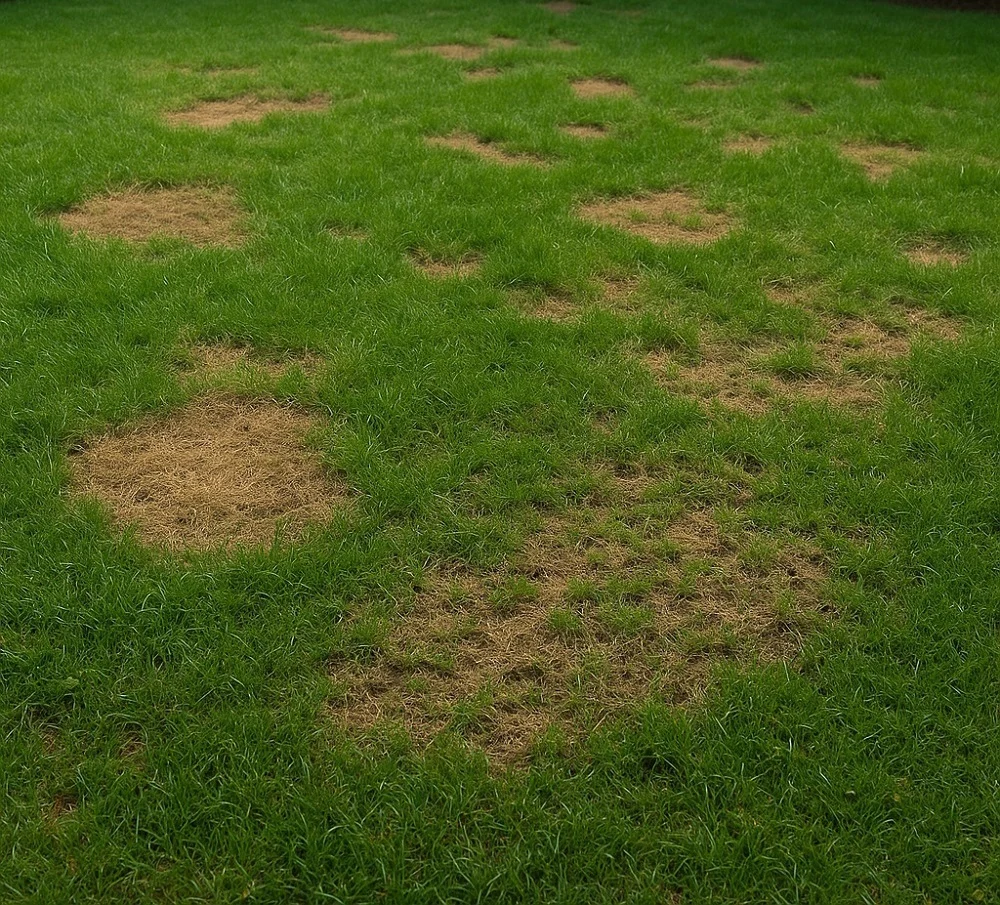
Image source: Bing (Web (fair-use with source credit))
The Quick Answer: When to Apply Based on Your Situation
Apply preventive grub killer in late spring to early summer, typically June through July in most regions. This targets eggs just before or right as they hatch. Apply curative grub killer in mid to late summer, usually August through early September.
That's when grubs are small and actively feeding near the surface. Soil temperature at 2 inches deep should be approaching 50°F (10°C) for egg hatch to begin. Always confirm with your local extension office for region-specific timing.
Why Grub Killer Timing Makes or Breaks Your Lawn
Here's the thing most people miss. Grub killers aren't one-size-fits-all products with one magic application date. The timing window changes completely depending on whether you're using a preventive product or a curative one.
And if you mix those up, you're basically watering your lawn with expensive granules that do nothing.
Preventive products like those containing imidacloprid or chlorantraniliprole need to be in the soil before grubs hatch or when they're newly hatched and tiny. These work systemically, meaning the plant roots absorb the active ingredient and the grubs ingest it when they start feeding. Apply too late and the grubs are already too big and feeding too aggressively for the product to keep up.
Curative products like those containing trichlorfon (Dylox) work on contact and through ingestion by existing grubs. These are your rescue treatment. You apply them when you already see damage or when you confirm grubs are present and active.
But even curative products have a window. Wait until grubs are fully grown in late fall and they're much harder to kill.
The stakes are real. A heavy grub population can destroy a lawn in weeks. And once the roots are gone, no amount of watering or fertilizer brings that turf back.
You're looking at reseeding or resodding, which costs significantly more than a $20 to $40 bag of grub preventive.
How the Grub Life Cycle Dictates Your Timing
Understanding the grub life cycle is the single most important piece of this whole puzzle. Adult beetles lay eggs in mid to late summer, typically July through August depending on your region. Those eggs hatch within about two weeks, and the tiny larvae immediately start feeding on grass roots.
The grubs go through three growth stages, called instars. First and second instar grubs are small, usually under half an inch, and they're the easiest to kill. This is your sweet spot for curative treatments.
By the third instar, usually in late September and October, grubs are larger, tougher, and feeding more aggressively before they burrow deep into the soil to overwinter.
Come spring, those overwintered grubs return to the surface briefly to feed again, then pupate and emerge as adult beetles by early summer. Spring feeding damage is usually less severe because the grubs are nearing the end of their life cycle. This is why spring grub treatments are generally not recommended unless you confirmed a heavy population.
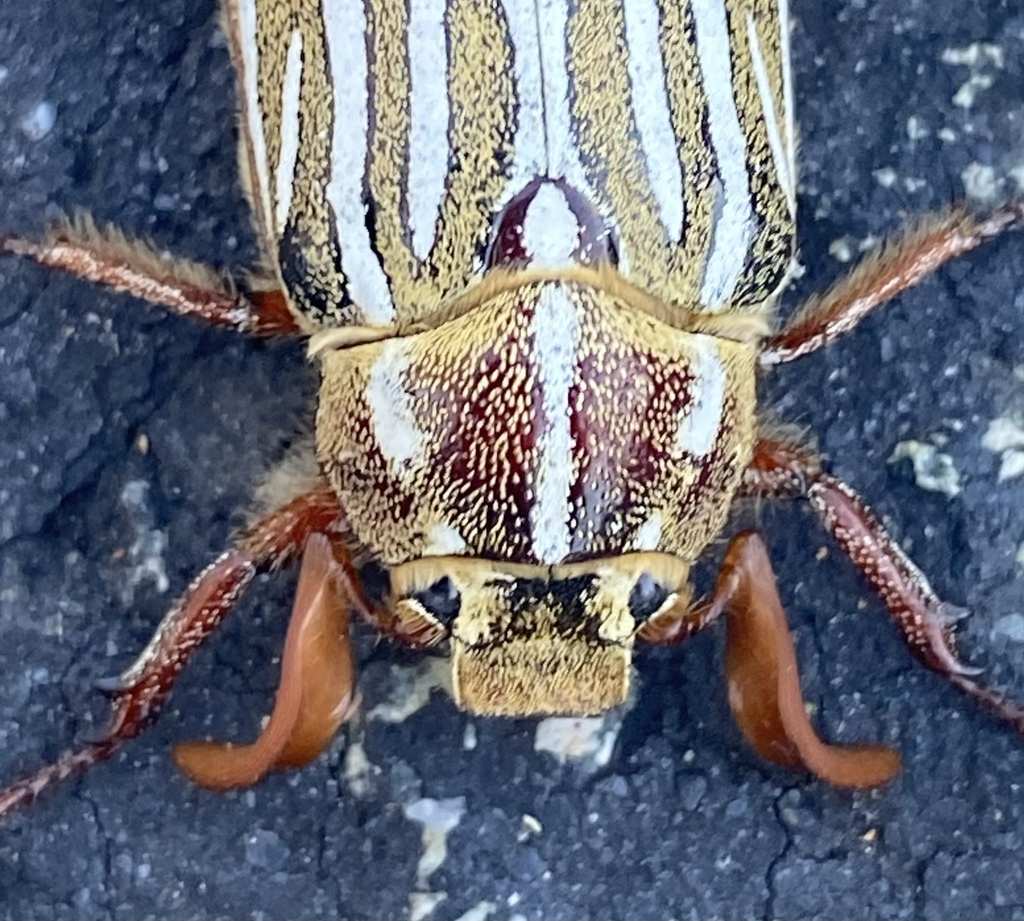
Image source: iNaturalist / Irene
Here's a simplified life cycle timeline for most common grub species in the US:
| Life Cycle Stage | Approximate Timing | What's Happening | Treatment Relevance |
|---|---|---|---|
| Adult beetles active | June to August | Mating and egg laying | Not a treatment target |
| Eggs in soil | July to August | Eggs hatch in 10 to 14 days | Preventive window opens |
| Young grubs (1st/2nd instar) | August to September | Small grubs feeding near surface | Best curative window |
| Mature grubs (3rd instar) | October to November | Deep feeding, then burrowing down | Harder to kill, less effective |
| Overwintered grubs | March to May | Brief surface feeding before pupation | Spring treatment rarely needed |
Preventive vs. Curative: Choosing the Right Product Window
This is where most homeowners get tripped up. They grab a product off the shelf without realizing there are two completely different categories with two completely different timing requirements. Let's break it down clearly.
Preventive Grub Killers
These are your long-game products. They contain active ingredients like imidacloprid or chlorantraniliprole that stay active in the soil for weeks to months. You apply them before or just as eggs are hatching so the chemical is in place when tiny grubs start feeding.
- Best applied: June through July in most regions
- Works on: Eggs and newly hatched grubs only
- Residual activity: Up to 4 months for imidacloprid
- Common products: Scotts GrubEx (chlorantraniliprole), Merit-based products (imidacloprid)
- Key limitation: Will not kill established, larger grubs
Curative Grub Killers
These are your fast-acting rescue products. They contain active ingredients like trichlorfon that kill grubs on contact and through ingestion within 24 to 72 hours. You apply these when you've confirmed grubs are present and actively damaging your lawn.
- Best applied: August through early September
- Works on: Small to medium grubs (under half an inch)
- Residual activity: Short, typically 1 to 2 weeks
- Common products: BioAdvanced 24-Hour Grub Killer Plus (trichlorfon)
- Key limitation: Won't prevent next year's population, only kills current grubs
The critical mistake is applying a preventive product in September thinking it'll kill the grubs already tearing up your lawn. It won't. By that point, you need a curative product.
Conversely, applying a curative product in June is premature because the grubs from last year have already pupated and the new eggs haven't hatched yet.
How to Read Soil Temperature and Know It's Time
Calendar dates are a rough guide, but soil temperature is what actually drives grub activity. Adult beetles respond to soil warmth when deciding where and when to lay eggs. And egg hatch is triggered by sustained soil temperatures reaching about 50°F (10°C) at a 2-inch depth.
You don't need fancy equipment. A basic soil thermometer, available for under $10 at most garden centers, does the job. Push it 2 to 3 inches into the soil in a few spots across your lawn and take an average reading.
Do this in the morning for the most consistent results.
Here's how to use soil temperature to time your application:
- Soil temp consistently above 50°F: Egg hatch is beginning or imminent. This is your signal to apply preventive products if you haven't already.
- Soil temp between 60°F and 80°F: Peak grub feeding activity. This is the ideal window for curative applications because grugs are active near the surface and actively ingesting treated soil.
- Soil temp dropping below 50°F in fall: Grubs are burrowing deeper to overwinter. Curative products become much less effective at this point.
Many university extension services publish real-time soil temperature data for your area. Check your state's agricultural extension website for local readings rather than relying on air temperature alone. Air temperature can be 75°F while soil temperature is still 55°F, and that gap matters.

Image source: Wikimedia Commons / Steve Shook from Moscow, Idaho, USA (CC BY)
A practical tip from turf management research: if you're using a preventive product, apply it when soil temps hit 50°F and stay there for at least three consecutive days. That's your biological trigger that egg hatch is underway. For curative products, wait until you can actually confirm grubs in the soil.
Cut a 1-square-foot section of turf, peel it back, and count. More than 5 to 10 grubs per square foot means it's time to treat.
The Decision Tree: Which Timing Window Applies to You
Let's cut through the guesswork with a simple decision tree. Answer these three questions and you'll land on the right product and the right timing.
Question 1: Have you found grubs in your lawn this year?
- No, but you had them last year: Go with a preventive product in June or July. History repeats itself in the same spots.
- Yes, small brown patches are appearing: Go with a curative product immediately, ideally in August or September when grubs are still small.
- No, and you've never had grub problems: You may not need to treat at all. Spot-check a few areas before spending money.
Question 2: What time of year is it right now?
- Spring (March to May): Hold off. Grubs are pupating and most products won't be effective. Focus on lawn recovery instead.
- Early summer (June to July): This is your preventive window. Apply now for season-long protection.
- Late summer (August to September): This is your curative window. If grubs are present, treat now before they grow larger.
- Fall (October onward): Too late for most chemical treatments. Wait and plan for next year's preventive approach.
Question 3: What type of grub species are you dealing with?
Different species have slightly different timing. Japanese beetles and European chafers are the most common in the Northeast and Midwest, with peak egg-laying in late July through August. Black turfgrass ataenius, common on golf courses, can have two generations per year, requiring both a spring and a late summer application.
If you're unsure, your local extension service can identify grubs from a sample.
Here's how the decision tree plays out for the most common scenarios:
| Your Situation | Best Product Type | Application Timing | Expected Outcome |
|---|---|---|---|
| Had grubs last year, preventive approach | Chlorantraniliprole or imidacloprid | June to July | Season-long prevention |
| Finding grubs now in August | Trichlorfon (Dylox) | Treat immediately | Grubs die within 24 to 72 hours |
| First-time grub sighting in September | Trichlorfon (Dylox) | Treat within 2 weeks | Kill remaining grubs before they bury deep |
| Organic lawn, preventive focus | Beneficial nematodes | Late August to early September | 60 to 80% control under ideal conditions |
| Two generations confirmed (ataenius) | Combination approach | May and August | Target both spring and fall feeding |
Step-by-Step: Applying Grub Killer the Right Way
Timing is half the battle. The other half is applying the product correctly. A perfectly timed application can still fail if you skip these steps.
Step 1: Mow your lawn first.
Cut your grass to normal height a day or two before you plan to apply. You want the granules or spray to reach the soil surface, not get trapped in tall grass blades.
Step 2: Check your spreader calibration.
Granular grub killers need even coverage. If your spreader puts down too little, you get patchy control. Too much and you're wasting product and risking runoff.
Most product labels specify a spreader setting, but these are starting points. Test by applying to a measured area and checking how much product was used.
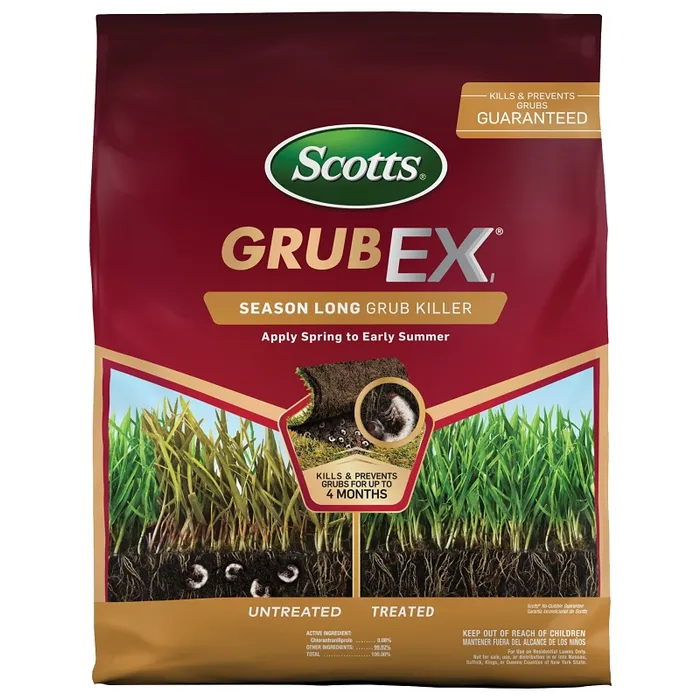
Image source: Bing (Web (fair-use with source credit))
Step 3: Apply evenly across the entire treatment area.
Don't just treat the brown patches. Grubs move underground and the damage you see is rarely the full extent of the infestation. Apply across the entire lawn or at least a generous buffer around visible damage.
Overlap your passes slightly to avoid stripes of untreated lawn.
Step 4: Water in the product.
This step trips up a lot of people. Most granular grub killers need about half an inch of water after application to move the active ingredient into the soil where grubs are feeding. If rain isn't in the forecast, run your sprinklers for 20 to 30 minutes after applying.
Do not skip this step or the granules sit on the surface and degrade before reaching the root zone.
Step 5: Keep pets and children off the lawn during application.
Follow the re-entry interval on the product label. Most products are safe once they've been watered in and the lawn has dried, but check the specific guidelines on whatever you're using.
Common Timing Mistakes That Waste Your Money
After reviewing turf management recommendations and user reports, a few mistakes come up again and again. Avoid these and you'll get far more value from every application.
Applying preventive products in September. This is probably the most common error. By September, eggs have already hatched and grubs are actively feeding. A preventive product won't touch them.
You need a curative product at that point.
Treating in spring as a routine practice. Spring applications are rarely worth it for most grub species. The grubs present in spring are near the end of their life cycle and will pupate soon. University extension research consistently shows that fall prevention and late summer curative treatments outperform spring applications for long-term grub management.
Waiting for visible damage before treating. Brown patches mean the grubs have already been feeding for weeks. If you know you're in a high-pressure area or had grubs before, don't wait for the damage. Use preventive products proactively.
Not watering after granular application. Dry granules on the soil surface break down through UV exposure and never reach the root zone. The active ingredient needs to be in the soil solution where grubs feed.
Assuming one treatment lasts multiple years. Most preventive products provide one season of control. Grub populations can rebound quickly, and new beetles migrate in from neighboring areas. Annual monitoring and treatment are usually necessary in problem areas.
Here's a quick troubleshooting reference if things go wrong:
| Problem | Likely Cause | Fix |
|---|---|---|
| Grubs appear after preventive treatment | Applied too late or product degraded | Switch to curative product, confirm timing for next year |
| Brown patches worsen after treatment | Grubs were already too large when treated | Replace dead turf, plan preventive application for next June |
| Product seems ineffective | Not watered in properly | Always water 0.5 inch after granular application |
| Grubs return the following year | New adult beetles migrated in | Preventive application needs to be annual in problem areas |
Spring vs. Summer vs. Fall: What Actually Works and When
Let's settle the seasonal debate once and for all. Each season has a role in grub control, but only two of them matter for chemical treatments.
Spring (March to May)
Spring grub treatments are largely unnecessary for most homeowners. The grubs you'd find now are overwintered third instars that are about to pupate. They're deep in the soil, not feeding aggressively, and they'll be gone within weeks.
Save your money and focus on fertilizing and repairing any damage from last fall instead.
The one exception is black turfgrass ataenius, which can produce a spring generation. If you manage a golf course or have confirmed this species, a May application of a curative product may be warranted. For everyone else, skip it.
Summer (June to August)
This is your primary preventive window. June and July applications of chlorantraniliprole or imidacloprid give you season-long protection. The product is in the soil and active when eggs hatch in late July and August.
If you only make one grub control application all year, this is the one.
Early August can still work for prevention in cooler northern regions where egg hatch runs later. But by mid-August in most areas, you're transitioning into curative territory.
Fall (September to November)
September is your last effective window for curative treatments. Grubs are still small enough to kill and they're feeding actively near the surface. Once October arrives and soil temperatures drop, grugs burrow deeper and most products lose effectiveness.
Fall is also your best time to assess how well this year's treatment worked. Dig a few test holes and see what you find. That information tells you whether to repeat the same plan next year or adjust your approach.
Organic and Biological Alternatives: Different Timing Rules
If you're avoiding synthetic chemicals, your options work on completely different schedules. Don't apply these at the same time you would a synthetic preventive or you'll be disappointed.
Beneficial Nematodes (Heterorhabditis bacteriophora)
These microscopic worms seek out grubs in the soil and release bacteria that kill them. They need moist soil and temperatures between 60°F and 80°F to be active. Apply in late August or early September when grubs are small and soil is still warm.
Water the lawn before and after application. Nematodes are UV-sensitive, so apply in the evening or on an overcast day.
Milky Spore (Paenibacillus popilliae)
Milky spore is a bacterial disease that specifically targets Japanese beetle grubs. It takes 2 to 4 years to establish fully in the soil, but once it does, it can provide 10 to 15 years of control. Apply anytime the ground isn't frozen, but spring and fall are most common.
This is a long-term strategy, not a quick fix.
Neem Oil (Azadirachtin)
Neem oil acts as a repellent and feeding deterrent for some grub species. It's less effective than synthetic options but can reduce populations when applied consistently. Apply in early summer as adults are laying eggs.
It works best as part of an integrated approach rather than a standalone solution.
Regional Timing Differences You Need to Know
Your zip code matters more than you might think. Grub species and climate vary significantly across the country, and a timing guide written for Ohio won't work in Georgia.
Northern US and Cool-Season Lawns
Egg hatch typically runs from late July through August. Preventive applications in June and July work well. Curative treatments should go down in August or early September.
You get one generation per year for most species, which simplifies your plan.
Southern US and Warm-Season Lawns
Everything happens earlier. Adult beetles may start laying eggs in May or June. Preventive applications need to go down in May or June.
Curative treatments work best in July or August. Some species produce two generations per year, requiring closer monitoring.
Transition Zone
This is the tricky middle ground where both cool and warm-season grasses grow. You may deal with multiple grub species with different life cycles. Soil temperature monitoring becomes especially important here because calendar dates are unreliable.
Coastal and Mild Winter Regions
Grubs may remain active well into November or even through winter in areas like the Pacific Northwest and deep South. This extends your curative window but also means populations can build up faster year over year.
Expert Tips for Getting It Right Every Year
A few practical habits separate homeowners who get consistent results from those who fight grubs every season.
Keep a lawn journal. Write down when you applied, what product you used, the rate, and what the weather did afterward. After two or three years, you'll have a personalized timing guide that's more accurate than any generic calendar.
Monitor soil temperature, not air temperature. Air temperature can swing 20 degrees in a day. Soil temperature at 2 inches deep is far more stable and far more relevant to grub activity. Check it weekly starting in May.
Treat the whole lawn, not just the damaged spots. Grubs spread underground and visible damage is usually just the center of the problem. Spot-treating leaves untreated grugs at the edges that will move in next year.
Rotate product types if you treat annually. Using the same active ingredient every year can reduce effectiveness over time. Alternate between different chemical classes if you're doing preventive treatments year after year.
Coordinate with your neighbors. Adult beetles don't respect property lines. If your whole block treats preventively, the overall grub pressure drops for everyone. If you're the only one treating, you're fighting a constant influx from surrounding areas.
Frequently Asked Questions
Can I apply grub killer before it rain?
Yes, and it's actually ideal. Rain after a granular application helps water the active ingredient into the soil. Just avoid applying right before heavy downpours that could wash product off sloped areas.
Light to moderate rain within 24 hours of application is perfect.
How long does grub killer take to work?
Preventive products work gradually as grugs ingest treated root tissue over days to weeks. Curative products like trichlorfon kill grubs within 24 to 72 hours. You may not see dead grubs on the surface because they decompose underground.
Is it too late to treat grubs in October?
For most chemical treatments, yes. By October, grugs are large and burrowing deep for winter. Your best move is to plan a preventive application for next June or July.
Milky spore can still be applied in fall since it works on a longer timeline.
Do I need to treat for grubs every year?
If you've had grub problems before, annual preventive treatment is the most reliable approach. If you've never had grugs, spot-check your lawn each August. Treat only when you find more than 5 to 10 grugs per square foot.
Can I fertilize and apply grub killer at the same time?
Yes. Many homeowners combine these tasks in early summer. Apply the grub preventive first, then fertilize.
Water both in together. This saves time and a trip across the lawn.