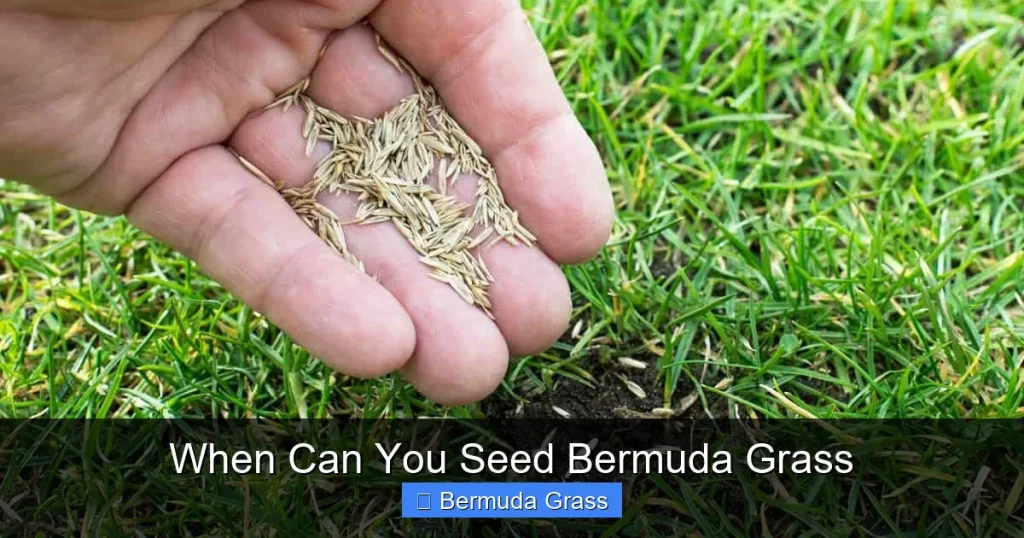
Successfully seeding Bermuda grass hinges on perfect timing. The most crucial factor is soil temperature, which needs to consistently be between 65-75°F (18-24°C), typically from late spring to early summer. Proper preparation, consistent watering, and choosing quality seed are also vital for establishing a vibrant, healthy Bermuda lawn that thrives in the heat.
When Can You Seed Bermuda Grass
Are you dreaming of a lush, vibrant green lawn that stands up to summer heat? If you’re considering Bermuda grass, you’ve made an excellent choice for many sunny climates. But here’s the secret to success: timing is everything when it comes to seeding Bermuda grass. Planting at the wrong time can lead to poor germination, patchy growth, or even complete failure, leaving you frustrated and your lawn looking less than ideal.
This comprehensive guide will walk you through exactly when and how to seed Bermuda grass successfully. We’ll cover the most critical factor – soil temperature – and give you practical steps to prepare your lawn, sow the seeds, and care for your new grass. By the end, you’ll have all the knowledge you need to achieve that thick, resilient Bermuda lawn you’ve always wanted.
Understanding Bermuda Grass: A Warm-Season Favorite
Bermuda grass (Cynodon dactylon) is a warm-season turfgrass known for its exceptional heat and drought tolerance, quick recovery from damage, and beautiful deep green color. It thrives in full sun and warmer climates, making it a popular choice across the Southern United States and other regions with hot summers.
Because it’s a warm-season grass, Bermuda grass goes dormant and turns brown when temperatures drop in the fall and winter. It then “greens up” again when spring brings consistent warmth. This lifecycle is crucial to understanding the best time to seed Bermuda grass. It needs warmth not just to grow, but to germinate effectively.
The Golden Rule: Soil Temperature is Key
When it comes to seeding Bermuda grass, forget about the air temperature for a moment. What truly matters is the *soil temperature*. The ground holds heat differently than the air, and it’s the warmth within the soil that tells a Bermuda grass seed it’s time to sprout.
The ideal soil temperature range for Bermuda grass germination is consistently between 65°F and 75°F (18°C and 24°C). While some germination might occur outside this range, the most robust and uniform results happen within it.
Why Air Temperature Isn’t Enough
Think about a warm spring day. The air might feel lovely and warm, but the ground underneath can still be quite cool, especially after a long winter. If you sow your Bermuda grass seeds when the air is warm but the soil is cold, they’ll simply sit dormant, waiting for the ground to heat up. This delay can leave your seeds vulnerable to birds, pests, or washing away with rain. It also gives weeds a head start.
How to Measure Soil Temperature
Don’t guess! Measuring your soil temperature is easy with an inexpensive soil thermometer, available at most garden centers or online.
- Probe Deeply: Insert the thermometer about 2-3 inches into the soil.
- Check Multiple Spots: Take readings from several areas of your lawn.
- Monitor Consistently: Check the temperature daily for a few days to ensure it’s consistently within the ideal 65-75°F range. This is often in the late morning or early afternoon when the sun has had a chance to warm the ground.
Best Time of Year to Seed Bermuda Grass
Given the crucial soil temperature requirement, the best time of year to seed Bermuda grass is typically from late spring to early summer.
Late Spring (May)
For many regions, particularly the transition zone and southern states, late April or May is an excellent time to start seeding Bermuda grass. By this point, the risk of frost is gone, and the soil has usually warmed up consistently. Planting earlier in May gives your new Bermuda grass seedlings a long growing season to establish deep roots before the peak heat of summer and the eventual arrival of cooler fall temperatures.
Early Summer (June to Mid-July)
Seeding Bermuda grass in June and even into early July can also be very successful, especially in the warmest climates. The key is to plant early enough so that the grass has at least 8-10 weeks of warm weather to mature before fall temperatures start to drop. This period offers plenty of heat and sunlight, which Bermuda grass absolutely loves.
Regional Considerations
* Deep South/Southern Regions: You might be able to start seeding Bermuda grass a bit earlier, perhaps mid-April, as soil temperatures warm faster. You also have a longer window, potentially into late July, as your warm season extends.
* Transition Zone: This area, where both cool and warm-season grasses struggle, is where timing is most critical. Aim for late May to June to give Bermuda grass the best chance to establish before winter.
Why You Should Avoid Late Summer/Fall Seeding
It’s tempting to try and squeeze in seeding Bermuda grass late in the season, but it’s generally a bad idea. If you seed Bermuda grass in late August, September, or October:
- The soil temperature will soon begin to drop.
- The days are shorter, and sunlight is less intense.
- Your young Bermuda grass plants won’t have enough time to develop a strong, deep root system before they are forced into dormancy by cold weather. This makes them highly vulnerable to winter kill and can lead to a sparse, weak lawn the following spring.
Step-by-Step Guide to Seeding Bermuda Grass
Once you’ve determined the ideal time based on soil temperature, it’s time to get to work! Follow these steps for the best chance of success when seeding Bermuda grass.
Key Takeaways
- Soil Temperature is Paramount: Bermuda grass seeds germinate best when the soil temperature consistently stays between 65-75°F (18-24°C). Air temperature alone is not a reliable indicator.
- Timing is Late Spring to Early Summer: In most regions, this window falls between May and July, after the last frost and once the ground has warmed up sufficiently. Avoid seeding too late in the season.
- Thorough Soil Preparation is Essential: Clear existing weeds, test your soil for pH and nutrient deficiencies, and amend it with compost or a starter fertilizer to create an ideal environment for new seedlings.
- Consistent Moisture is Crucial for Germination: Keep the seedbed consistently moist with light, frequent watering (2-3 times a day) until the seeds sprout and establish a root system. Avoid letting the soil dry out.
- Choose High-Quality Seed: Invest in a good quality Bermuda grass seed appropriate for your climate. Coated seeds can offer benefits like improved moisture retention and pest deterrence.
- Patience and Proper Initial Care: Germination can take 7-30 days. After sprouts appear, continue careful watering, introduce light mowing at the right height, and consider a gentle starter fertilizer to support growth.
- Avoid Seeding Too Late in the Season: Seeding Bermuda grass in late summer or fall doesn’t give it enough time to establish a deep root system before cooler temperatures arrive, making it vulnerable to winter kill.
1. Prepare Your Seeding Area Thoroughly
Proper preparation is the foundation of a successful new lawn. Don’t skip these critical steps.
Clear the Existing Lawn or Weeds
Before you seed Bermuda grass, you need a clean slate.
- Small Areas: For small patches, you can manually remove weeds and existing grass by hand or with a shovel.
- Larger Areas: For renovating an entire lawn, consider using a non-selective herbicide (like glyphosate). Follow product instructions carefully and allow the recommended time for it to work (usually 7-14 days) before proceeding. Alternatively, solarization (covering the area with clear plastic for several weeks in hot sun) can kill existing vegetation and weed seeds naturally.
- Tilling: Once existing growth is gone, light tilling (2-4 inches deep) can help loosen compacted soil, but don’t over-till, as it can bring dormant weed seeds to the surface.
Test Your Soil
A soil test is invaluable. It tells you your soil’s pH and nutrient levels, guiding your amendments. You can get a soil test kit from your local extension office or a garden center.
- Ideal pH: Bermuda grass prefers a soil pH between 6.0 and 7.0.
- Nutrients: The test will tell you if you’re lacking nitrogen, phosphorus, or potassium.
Amend the Soil if Necessary
Based on your soil test results:
- pH Adjustment: If your pH is too low (acidic), add agricultural lime. If it’s too high (alkaline), add elemental sulfur. Follow product instructions for application rates.
- Organic Matter: Incorporate 1-2 inches of good quality compost. This improves soil structure, water retention, and provides a slow release of nutrients.
- Starter Fertilizer: A “starter fertilizer” specifically formulated for new grass (high in phosphorus, the middle number) is highly recommended. Lightly rake it into the top inch of soil before seeding.
Level the Ground
After all amendments, use a rake to ensure the area is smooth and level. Fill in any low spots where water might collect, as this can drown new seedlings. A light rolling with a water-filled roller can help create good seed-to-soil contact, but don’t compact the soil too much.
2. Choose the Right Bermuda Grass Seed

Visual guide about When Can You Seed Bermuda Grass
Image source: smallspacegardeningbasics.com
Not all Bermuda grass seeds are created equal. Your choice can impact the final look and performance of your lawn.
Select Quality Seed
- Improved Varieties: Look for improved or “hulled” varieties, which often have better disease resistance, finer texture, and denser growth than common Bermuda grass.
- Coated vs. Uncoated: Coated seeds may have a protective layer that helps with moisture retention, deters birds, and can make seeding easier. While they might cost more, they can improve germination success. Uncoated seeds require precise watering.
- Read Labels: Always check the purity and germination rates on the seed bag. Higher numbers mean better quality.
Calculate Seed Rate
The bag will specify the recommended seeding rate (e.g., 2-3 pounds per 1,000 square feet). It’s crucial not to overseed, as this can lead to competition among seedlings, resulting in weak, thin grass. Measure your lawn area accurately.
3. Sow the Bermuda Grass Seed Correctly
Even distribution is key to a uniform lawn.
Broadcast the Seed Evenly
- Use a Spreader: For even distribution, use a broadcast spreader or a drop spreader. Hand-seeding often leads to patchy results.
- Cross-Hatch Pattern: To ensure complete coverage, apply half of the seed walking in one direction (e.g., north-south), then apply the other half walking perpendicular to the first direction (east-west).
Lightly Cover the Seed
Bermuda grass seeds are tiny and need light to germinate, but also require good contact with the soil.
- Gentle Raking: After spreading, lightly rake the seed into the top 1/8 to 1/4 inch of soil. Don’t bury it too deep!
- Peat Moss or Topdressing: Applying a very thin layer (1/8 inch) of peat moss, compost, or finely screened topsoil can help retain moisture and protect the seeds.
- Light Rolling: A light pass with an empty or partially filled roller can improve seed-to-soil contact, which is vital for germination.
Avoid Burying the Seed Too Deep
Bermuda grass seeds are small and need light to germinate effectively. Burying them too deep will prevent them from sprouting.
4. Water Immediately and Consistently
This is arguably the most critical step after planting. Without consistent moisture, your seeds won’t germinate.
Keep the Seedbed Moist, Not Saturated
New seeds need constant moisture.
- Light, Frequent Watering: Immediately after seeding, water lightly to moisten the top inch of soil. Continue this light, frequent watering regimen. The goal is to keep the seedbed consistently moist, like a wrung-out sponge.
- Avoid Puddles: Do not let water puddle or run off, as this can wash away your seeds.
Watering Schedule for Germination
For the first 2-3 weeks (or until significant germination occurs):
- Water 2-3 times per day for 5-10 minutes each time, depending on your soil and weather. Hot, sunny, or windy days will require more frequent watering.
- The surface of the soil should never be allowed to dry out completely.
Transitioning to Less Frequent Watering
Once the seedlings are a couple of inches tall and have developed a noticeable root system (usually 3-4 weeks):
- Gradually reduce the frequency and increase the duration of watering.
- Aim for deep, infrequent watering that encourages roots to grow deeper into the soil. For example, water once a day for 15-20 minutes, then every other day for longer periods.
- Eventually, transition to the typical Bermuda grass watering schedule: 1 inch of water per week, applied in 1-2 deep soakings.
5. Initial Care After Germination
Your hard work is starting to pay off! Now, help your new Bermuda grass thrive.
First Mowing
When your new Bermuda grass reaches about 3 inches tall, it’s time for its first mow.
- Sharp Blades: Use a mower with a very sharp blade to avoid tearing the young grass.
- High Setting: Set your mower to its highest setting for the first few mows. You are only trimming the very top.
- Avoid Stress: Don’t remove more than one-third of the blade height at a time.
Fertilizing Young Grass
If you applied a starter fertilizer during preparation, you might not need to fertilize again for 4-6 weeks. If not, or if your soil test indicated deficiencies, a light application of a balanced or phosphorus-rich starter fertilizer can be beneficial about 3-4 weeks after germination. Be cautious and follow product instructions to avoid burning the young grass.
Weed Control in New Lawns
Weeds are the bane of new lawns.
- Manual Removal: For the first few months, hand-pulling weeds is often the safest option, as young Bermuda grass can be sensitive to herbicides.
- Pre-Emergents: Avoid using pre-emergent herbicides for at least 60-90 days after seeding, as they can prevent your new grass seeds from germinating or damage young seedlings.
- Post-Emergents: If you must use a post-emergent herbicide, choose one specifically labeled “safe for new lawns” or “safe for Bermuda grass seedlings” and always test on a small area first.
Troubleshooting Common Seeding Issues
Even with the best intentions, sometimes things don’t go perfectly.
Poor Germination or Sparse Patches
- Issue: Seeds aren’t sprouting, or only a few are.
- Possible Causes: Soil too cold or too hot; inconsistent watering (drying out or waterlogged); old or low-quality seed; seeds buried too deep; birds or pests eating seeds.
- Solution: Check soil temperature. Adjust watering. If a long time has passed, re-evaluate seed quality and consider reseeding the sparse areas after correcting the issue.
Weed Invasion
- Issue: Weeds seem to be growing faster and thicker than your Bermuda grass.
- Possible Causes: Poor site preparation (not killing existing weeds/seeds); late application of pre-emergent after seeding; environmental conditions favoring weeds.
- Solution: Hand-pull weeds diligently. For severe infestations, carefully research and use a post-emergent herbicide labeled safe for new Bermuda grass lawns, following all directions.
Uneven Growth
- Issue: Some areas are thick and green, while others are thin.
- Possible Causes: Uneven seed distribution; variations in soil quality or moisture across the lawn; compaction in certain spots.
- Solution: Re-seed thin areas, ensuring even distribution and proper soil preparation. Use a soil aerator in compacted zones once the grass is established.
Practical Tips for Success
- Read the Seed Bag: Every seed mix can be slightly different. Always read and follow the specific instructions on your chosen Bermuda grass seed bag.
- Be Patient: Bermuda grass can take 7-30 days to germinate, and sometimes even longer in cooler conditions. Don’t give up too soon!
- Monitor Weather: Keep an eye on the forecast. A sudden cold snap or extended dry spell can impact your new seedlings.
- Don’t Overseed: Resist the urge to spread too much seed. More isn’t always better; it can lead to weaker plants due to competition.
- Consider a Starter Fertilizer: As mentioned, a starter fertilizer designed for new lawns provides essential nutrients for root development.
- Protect Your Investment: Keep foot traffic, pets, and lawn equipment off your newly seeded areas until the grass is well-established.
Conclusion
Seeding Bermuda grass successfully is a rewarding endeavor that can provide you with a beautiful, resilient lawn for years to come. The most critical factor is undoubtedly timing, specifically ensuring the soil temperature is consistently in that sweet spot of 65-75°F (18-24°C). This typically means a window from late spring to early summer for most regions.
Combine this perfect timing with thorough soil preparation, careful seed selection, consistent light watering, and diligent initial care, and you’ll be well on your way to a vibrant, healthy Bermuda grass lawn. Remember to be patient, observe your lawn closely, and adjust your care as needed. With these tips in hand, you’re now equipped to give your Bermuda grass the best possible start. Happy seeding!