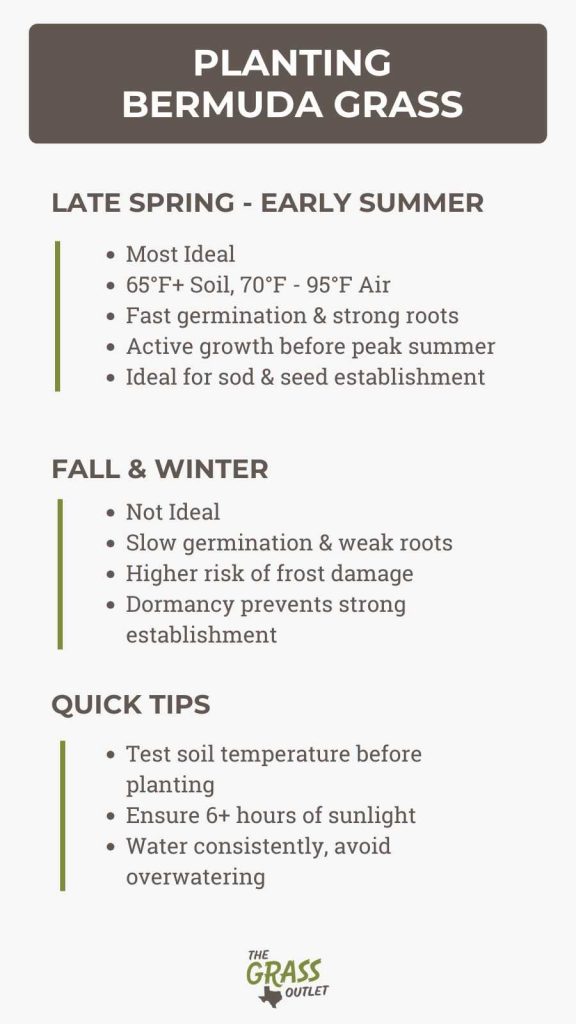
The best time to plant Bermuda grass seed is during the warm months of late spring to early summer when soil temperatures are consistently between 65°F and 70°F. Planting at the right time ensures optimal germination and healthy growth, helping you achieve a lush, green lawn.
In short, you should plant Bermuda grass seed once the danger of frost has passed and soil temperatures are warm enough, typically from late spring through early summer. For the best results, wait until the soil warms up and nighttime temperatures stay above 60°F.
Planting Bermuda grass at the ideal time is crucial for establishing a vibrant, resilient lawn. If you plant too early, cold temperatures can hinder germination and damage the young grass. Conversely, planting too late in the season can mean the grass doesn’t have enough time to develop a strong root system before colder weather sets in. The key is to monitor local weather patterns and soil temperatures, ensuring conditions are just right for seed germination and healthy growth. This way, you set your lawn up for a beautiful, durable finish that will thrive throughout the warm months.

When Can I Plant Bermuda Grass Seed?
Understanding Bermuda Grass and Its Growing Needs
Bermuda grass is a warm-season grass that thrives in hot, sunny climates. It is popular for lawns, sports fields, and golf courses because it creates a dense, green cover. Knowing the right time to plant Bermuda grass seed helps ensure healthy, lush growth.
Ideal Timing for Planting Bermuda Grass Seed
The best time to plant Bermuda grass seed is late spring to early summer. Usually, this period spans from late April to early July, depending on your location. Planting during this window allows the grass to establish before the hottest part of summer.
Why Timing Matters
Planting at the right time ensures the soil temperature is suitable for seed germination. If you plant too early, cold weather can slow growth or kill young seedlings. Conversely, planting too late might not give the grass enough time to develop before extreme heat arrives.
Soil Temperature and Its Role in Germination
Bermuda grass seeds germinate best when soil temperature reaches between 65°F and 70°F. To check soil temperature, use a soil thermometer at a depth of about 2 inches. Consistent soil temperatures within this range promote quick and even germination.
Monitoring Soil Conditions
Prior to planting, test your soil to ensure it is warm enough. Warm soil indicates good conditions for Bermuda seed sprouting. Avoid planting if soil temperatures are below 60°F, as seed emergence will be slow or unlikely.
Climate Considerations and Regional Differences
Your geographic location greatly influences the planting schedule. Warmer southern regions can plant earlier in the season, while cooler northern areas should wait until later in spring or early summer.
Southern Regions
In states like Texas, Florida, and southern California, planting can begin as early as April. Consistently warm temperatures support fast germination.
Northern Regions
In places like Illinois, New York, or northern U.S., planting is best from late May to June. Watch for soil temperatures and ensure no frost risk remains.
Factors That Affect Planting Time
Several environmental factors can influence the optimal planting period. These include recent weather patterns, soil moisture levels, and the prediction of frost.
Weather Patterns
Avoid planting during periods of heavy rain, as overly wet soil can hinder seed contact and germination. Hot, dry spells also delay seed growth.
Frost Risks
Even in warmer regions, late spring frosts can damage young Bermuda grass. Wait until the threat of frost has passed entirely, usually after temperatures stay above freezing consistently.
Preparing Your Lawn Before Seeding
Proper preparation helps Bermuda grass establish quickly. Start by clearing the area of weeds, rocks, and debris. Loosen the soil to improve seed-to-soil contact and ensure nutrients can penetrate.
Soil Testing and Amendment
Test your soil to check pH and nutrient levels. Bermuda grass prefers a pH of 5.8 to 7.0. Amend the soil with lime or fertilizer if necessary to create optimal conditions for seed growth.
Seeding Techniques for Best Results
Use a broadcast spreader to distribute Bermuda seed evenly. Lightly rake the soil afterward to cover the seed lightly with soil, promoting better germination.
Watering and Maintenance After Planting
Consistent watering is key in the first few weeks after planting. Keep the soil moist but not waterlogged to facilitate seed germination and seedling development.
Watering Schedule
Water lightly two to three times daily until the seeds sprout. Once the grass is established, reduce watering frequency but increase depth to encourage deep roots.
Ongoing Lawn Care
Apply a balanced fertilizer after the grass has germinated. Maintain mowing height around 1.5 to 2 inches to promote dense growth and prevent weeds.
Additional Tips for Successful Bermuda Grass Seeding
For the best results, consider overseeding or aerating your lawn. Overseeding helps fill in bare spots and improves overall lawn quality.
Best Practices
Use high-quality Bermuda seed for uniform growth. Follow all steps carefully, from soil preparation to watering, to maximize germination success.
Common Mistakes to Avoid
Avoid planting during cold or wet conditions, as these hinder seed growth. Do not overwater, which can lead to disease and seed rot.
Seasonal Maintenance and Transitioning from Seeding to Lawn Care
Once your Bermuda grass is established, adapt your lawn care routine to maintain its health. Regular mowing, watering, and fertilization will keep your lawn lush and green.
Seasonal Adjustments
In cooler months, Bermuda grass goes dormant, turning brown until warm weather returns. Do not fertilize heavily during dormancy, but resume regular care in spring.
End-of-Season Tips
In late fall, reduce watering frequency and avoid fertilizing late in the season. Prepare your lawn for dormancy to ensure a healthy comeback next year.
—
This detailed overview provides a comprehensive understanding of the best times and conditions to plant Bermuda grass seed. Timing, soil temperature, climate, and proper lawn care all play vital roles in achieving a successful and resilient Bermuda lawn.
Seeding Bermuda Lawns and Zoysia Lawns
Frequently Asked Questions
What is the ideal time of year to plant Bermuda grass seed?
Plant Bermuda grass seed best during late spring to early summer when soil temperatures are consistently between 65°F and 70°F. This period provides optimal warmth for germination and promotes healthy growth. Avoid planting in fall or winter, as cooler temperatures can hinder seed sprouting and establishment. Timing your planting during these warmer months helps ensure the grass establishes well before summer heat or winter cold sets in.
How do soil conditions affect the timing for planting Bermuda grass seeds?
Bermuda grass seeds thrive in well-drained, fertile soils that are warm and slightly moist. Before planting, test your soil to confirm it reaches at least 65°F for several consecutive days, since cooler soils slow germination. Wait until after any heavy rains have subsided, and soil is not overly saturated. Proper soil conditions enable seeds to take root quickly and reduce the risk of disease, leading to a more successful planting.
Can I plant Bermuda grass seed in the late summer or early fall?
Planting Bermuda grass seed in late summer or early fall is possible if you live in a warm climate with a long growing season. Ensure soil temperatures remain above 65°F and that the weather forecast predicts warm, consistent temperatures without early frosts. Keep in mind that the grass might not establish fully before colder weather arrives, so you may need to provide additional care, such as watering and fertilizing, to sustain growth until it becomes more resilient.
How does regional climate influence the best planting time for Bermuda grass?
Your regional climate significantly impacts when you should plant Bermuda grass. In warmer regions with mild winters, you can start planting as early as late spring. In areas with cooler summers or shorter growing seasons, aim for late spring or early summer when soil temperatures rise adequately. Adjust your schedule based on local frost dates and typical weather patterns to give your Bermuda grass the best chance to establish successfully.
Is it better to overseed or plant new Bermuda grass seed at certain times of the year?
Overseeding Bermuda grass is most effective during late spring or early summer when the existing turf is actively growing, and soil temperatures are ideal for seed germination. If planting new Bermuda grass in an area that has become sparse or damaged, choose a time when the weather is warm and consistently dry, typically late spring to early summer. Proper timing helps new grass establish quickly and reduces competition from weeds.
Final Thoughts
The best time to plant Bermuda grass seed depends on your local climate. Generally, you should plant it in late spring when soil temperatures reach around 65-70°F. This encourages healthy germination and strong growth.
Using proper soil preparation and watering practices will give you the best results. When can I plant Bermuda grass seed? The answer is when the weather warms and soil conditions are right for optimal growth.