
Bermuda grass is a notoriously aggressive and persistent weed, famous for its deep root system and rapid spread. Eliminating it completely can be a challenging endeavor, often requiring a multi-pronged approach and significant patience. This comprehensive guide details various proven strategies, from powerful chemical herbicides to sustainable organic methods like solarization and manual removal, helping you understand what will kill Bermuda grass effectively. You’ll discover how to assess your situation, choose the best treatment plan, and prevent its return, ensuring a healthier, Bermuda-free landscape.
What Will Kill Bermuda Grass
Bermuda grass (Cynodon dactylon) is a common sight across many landscapes, particularly in warmer climates. While some appreciate its drought tolerance and durability as a turfgrass, for many, it’s a relentless, invasive weed that chokes out desirable plants, invades garden beds, and creates an unsightly patchwork in mixed lawns. Its deep, aggressive root system, extensive network of stolons (above-ground runners), and rhizomes (underground runners) make it incredibly difficult to eliminate. If you’ve ever tried to get rid of it, you know its reputation for being stubborn is well-earned.
But don’t despair! While challenging, successfully killing Bermuda grass is absolutely achievable with the right knowledge, tools, and a good dose of patience. This comprehensive guide will walk you through various proven strategies – from potent chemical solutions to environmentally friendly organic approaches – designed to help you reclaim your yard. We’ll explore exactly what will kill Bermuda grass, covering preparation, application, and long-term prevention. Get ready to learn how to tackle this tenacious invader once and for all!
Key Takeaways
- Persistence is Paramount: Bermuda grass is incredibly resilient. Successfully killing Bermuda grass often requires multiple applications and ongoing vigilance, regardless of the method chosen.
- Chemicals Offer Strong Solutions: Non-selective herbicides like glyphosate are highly effective for killing Bermuda grass, especially in areas you plan to replant. Selective herbicides can be used to target Bermuda grass within other desirable turf.
- Organic Methods are Viable, But Slower: Techniques like solarization, smothering with cardboard, and manual removal are excellent non-chemical options. They are environmentally friendly but typically require more time and consistent effort to fully kill Bermuda grass.
- Preparation is Crucial for Success: Proper preparation, such as mowing low, watering the area, and clearing debris before treatment, significantly enhances the effectiveness of any method you choose to kill Bermuda grass.
- Choose the Right Method for Your Situation: Your decision on how to kill Bermuda grass should consider the size of the infestation, your timeline, environmental concerns, and whether you need to protect surrounding plants.
- Prevent Re-infestation: After successfully killing Bermuda grass, focus on proper soil preparation, installing barriers, and consistent monitoring to prevent new growth from rhizomes or seeds.
Step 1: Understand Your Enemy and Assess the Situation
Before you launch your attack, it’s vital to understand why Bermuda grass is so tough and to assess the scope of your problem. This helps you choose the most effective strategy to kill Bermuda grass.
Understand Bermuda Grass Resilience
Bermuda grass thrives on disturbance. Each tiny piece of rhizome or stolon can sprout a new plant. This is why simply tilling it often makes the problem worse, spreading fragments and creating more weeds. It loves full sun, tolerates poor soil, and bounces back from drought, making it a formidable opponent. Knowing this helps you appreciate why a thorough, persistent approach is necessary to kill Bermuda grass.
Assess the Scope of the Infestation
Is it a small patch in a flower bed, an entire lawn you want to convert, or scattered runners creeping into your vegetable garden?
- Small Patches: Manual removal or spot treatment with herbicides might be sufficient.
- Large Areas (entire lawn/garden section): More intensive methods like solarization or broad-application herbicides will be needed to truly kill Bermuda grass.
- Mixed Lawns (Bermuda in Fescue/Rye): This is trickier, as you need selective methods that won’t harm your desirable grass.
Consider Your Timeline and Resources
Killing Bermuda grass isn’t a quick fix. Are you willing to wait several weeks or months for organic methods, or do you need faster results with chemicals? What’s your budget for materials, and how much labor can you commit? Your answers will guide your method selection.
Step 2: Choose Your Weapon – Chemical Control Methods
Chemical herbicides are often the quickest and most effective way to kill Bermuda grass, especially for larger infestations. It’s crucial to use these products safely and according to instructions.
Non-Selective Herbicides (Glyphosate-Based Products)
These are your heavy hitters. Glyphosate-based products kill almost any green plant they touch, including Bermuda grass. They work by absorbing through the leaves and moving down to the roots, disrupting plant growth.
How to Use Glyphosate to Kill Bermuda Grass:
- Timing is Key: Apply when Bermuda grass is actively growing, typically in late spring through early fall, when temperatures are consistently above 60°F (15°C). Avoid application during drought stress, as the plant won’t absorb the chemical effectively.
- Preparation: Mow the area a few days before application, but don’t cut it too short. This ensures enough leaf surface for absorption. Water the area well 24-48 hours prior to application to encourage active growth.
- Application: Follow the product label carefully for mixing ratios and application rates. Use a sprayer to evenly coat the leaves. Avoid spraying on windy days to prevent drift onto desirable plants.
- Multiple Applications: Bermuda grass is incredibly tough. You’ll likely need 2-3 applications, spaced 7-14 days apart, to completely kill Bermuda grass. Wait until the grass shows significant signs of dying (yellowing, browning) before reapplying.
- Wait Before Planting: Most glyphosate products allow you to plant new seeds or plants within 7-14 days after the final application, as the chemical breaks down in the soil. Always check the specific product label.
Safety Tip: Always wear appropriate personal protective equipment (gloves, eye protection) and follow all label instructions when using chemical herbicides.
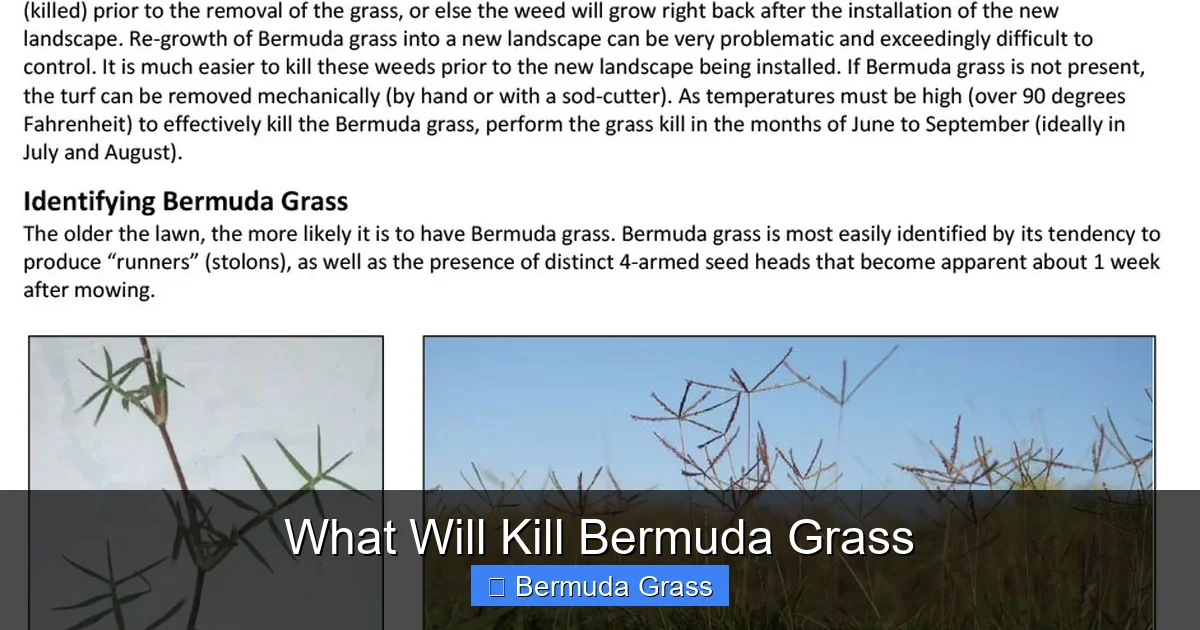
Visual guide about What Will Kill Bermuda Grass
Image source: schillinghorticulture.com
Selective Herbicides (for Bermuda Grass in Other Lawns)
If you have Bermuda grass growing within a desired cool-season lawn (like fescue or ryegrass) and want to kill Bermuda grass without harming your turf, selective herbicides are your best bet. These products are designed to target specific types of grass while leaving others unharmed.
Types of Selective Herbicides:
- Fenoxaprop-p-ethyl, Fluazifop-p-butyl, Sethoxydim: These active ingredients are often found in “grass killer” products designed to kill grassy weeds in broadleaf groundcovers or sometimes in specific cool-season grasses.
- Dithiopyr or Prodiamine (Pre-emergents): While primarily pre-emergents that prevent new seeds from sprouting, some formulations can suppress existing Bermuda grass or prevent its spread. These won’t kill mature Bermuda grass but can be part of a long-term control strategy.
How to Use Selective Herbicides:
- Identify Your Lawn Type: Ensure your desirable grass is listed as safe on the product label. Incorrect use can damage your entire lawn.
- Timing: Apply when Bermuda grass is actively growing. Multiple applications are usually needed.
- Follow Instructions: Mixing rates and application timing are crucial for success and to protect your existing lawn.
- Be Patient: Selective herbicides work slower than non-selective ones. It may take several weeks and repeated applications to significantly reduce or kill Bermuda grass.
Step 3: Choose Your Weapon – Organic and Non-Chemical Methods
For those who prefer to avoid synthetic chemicals, several organic methods can effectively kill Bermuda grass, though they often require more time and manual effort.
Solarization (Heat Treatment)
Solarization uses the sun’s heat to “cook” the Bermuda grass and its seeds under clear plastic sheeting. This method is excellent for large, open areas.
How to Solarize to Kill Bermuda Grass:
- Prepare the Area: Mow the Bermuda grass as short as possible. Remove any large rocks or debris that could puncture the plastic. Water the area thoroughly; moist soil conducts heat better.
- Lay Clear Plastic: Use heavy-duty, clear plastic sheeting (4-6 mil thick). Black plastic won’t work as well because it absorbs heat rather than allowing it to penetrate the soil.
- Seal the Edges: Bury the edges of the plastic deeply with soil, rocks, or heavy objects to create an airtight seal. This traps moisture and heat.
- Wait: Leave the plastic in place for at least 6-8 weeks during the hottest, sunniest part of the year (usually summer). In cooler climates or during less intense sun, it might take 2-3 months. The goal is to reach soil temperatures that effectively kill Bermuda grass rhizomes and seeds.
- Remove Plastic: After the treatment period, remove the plastic. The Bermuda grass should be completely dead and brittle.
Tip: Solarization works best when temperatures are consistently above 80°F (27°C) for several weeks.
Smothering (Sheet Mulching)
This method involves depriving the Bermuda grass of light and oxygen, effectively smothering it. It’s great for converting an area into a garden bed.
How to Smother to Kill Bermuda Grass:
- Mow Low: Cut the Bermuda grass as short as possible.
- Water: Lightly water the area.
- Layer Cardboard/Newspaper: Lay down a thick layer of overlapping cardboard or several layers of newspaper directly over the Bermuda grass. Ensure no gaps for light to penetrate. Wet the cardboard/newspaper thoroughly.
- Add Organic Material: Top the cardboard with a thick layer (6-12 inches) of organic material like wood chips, compost, leaves, or straw. This acts as mulch, holding down the cardboard and improving soil over time.
- Wait: Leave this in place for at least 4-6 months, or even a full growing season, to completely kill Bermuda grass and allow the materials to break down. You can plant directly into the top layer of organic material if it’s thick enough.
Manual Removal (Digging)
For small patches or garden beds, good old-fashioned digging can be effective, but it requires meticulous attention to detail.
How to Manually Kill Bermuda Grass:
- Tools: Use a sharp shovel or garden fork.
- Deep Digging: Dig down at least 6-8 inches, ensuring you get below the deepest rhizomes.
- Remove ALL Fragments: This is the most crucial step. Carefully sift through the soil, removing every single piece of rhizome and stolon you can find. Even a tiny fragment can regrow. Dispose of these fragments in the trash, not your compost pile, unless you have a very hot composting system that will kill Bermuda grass roots.
- Repeat as Needed: New sprouts will inevitably appear from missed fragments or dormant seeds. Be diligent in pulling them out as soon as they emerge.
Horticultural Vinegar (Acetic Acid)
High-concentration horticultural vinegar (10-20% acetic acid, much stronger than household vinegar) can burn the foliage of Bermuda grass on contact.
How to Use Horticultural Vinegar:
- Caution: Horticultural vinegar is corrosive and can cause skin and eye irritation. Always wear protective gloves and eyewear. It can also damage desirable plants and etch concrete.
- Application: Spray directly onto the Bermuda grass on a sunny, dry day. Avoid windy conditions.
- Mechanism: It works by dehydrating and burning the plant’s surface tissues. It does not typically kill the roots of established Bermuda grass.
- Repeated Applications: You’ll need frequent reapplication (weekly or bi-weekly) to continually burn back new growth and eventually deplete the root reserves of the Bermuda grass.
Step 4: Preparation – The Foundation for Success
No matter which method you choose, proper preparation significantly increases your chances of success when trying to kill Bermuda grass.
Mow Low
A few days before treatment (except for smothering, where you can do it right before), mow the Bermuda grass to its lowest setting. For chemical treatments, this exposes more surface area to absorb the herbicide. For solarization, it helps heat penetrate better.
Water the Area (Most Methods)
For chemical applications and solarization, water the area thoroughly 24-48 hours beforehand. Actively growing, well-hydrated plants absorb herbicides better, and moist soil conducts heat more efficiently for solarization.
Clear Debris
Remove any leaves, sticks, or other debris that might impede herbicide contact or plastic coverage.
Step 5: Application and Monitoring – The Ongoing Battle
Once you’ve prepared, it’s time for the main event and subsequent follow-up.
Follow Product Instructions Meticulously
If using chemical products, read and follow the label instructions precisely. This includes mixing ratios, application rates, safety precautions, and reapplication intervals. Deviating can lead to poor results or unintended damage.
Monitor Progress and Reapply
Bermuda grass is persistent. Don’t expect a one-and-done solution.
- Chemicals: You’ll likely see yellowing and browning within 7-14 days. Reapply according to the product label (usually every 1-2 weeks) until no new green growth emerges.
- Organic Methods: Patience is paramount. Solarization takes months. Smothering takes many months. Manual removal requires continuous vigilance as new sprouts appear.
Be Patient
The battle to kill Bermuda grass can be a long one. Don’t get discouraged if you see regrowth. It means you need another application or more time. Persistence is your best friend.
Step 6: Post-Treatment and Prevention – Keeping it Gone
Successfully killing Bermuda grass is only half the battle. Preventing its return is crucial for long-term success.
Prepare the Soil for New Planting
Once the Bermuda grass is truly dead, prepare the soil for what you want to grow next.
- Amend the Soil: Incorporate compost or other organic matter to improve soil structure and fertility.
- Till if Necessary: For new lawns or garden beds, a light tilling can help prepare the seedbed, but be cautious not to bring up dormant Bermuda grass seeds or rhizome fragments from deeper soil layers.
Choose Desirable Grasses or Plants
If reseeding a lawn, select a competitive grass type that is well-suited to your climate and sun conditions, such as a dense fescue or ryegrass. For garden beds, choose plants that will quickly establish and shade out any potential Bermuda grass sprouts.
Implement Ongoing Weed Control
- Pre-Emergent Herbicides: For lawns, apply a pre-emergent in early spring and fall to prevent Bermuda grass seeds (and other weeds) from sprouting.
- Mulch: Maintain a thick layer of mulch (2-4 inches) in garden beds to suppress weed growth, including any stray Bermuda grass.
- Vigilance: Regularly inspect your yard. Pull out any new Bermuda grass sprouts immediately before they establish deep roots.
Install Edging or Barriers
Bermuda grass loves to creep. Install deep edging (at least 4-6 inches deep) along garden beds, driveways, and property lines to create a physical barrier against its aggressive runners.
Troubleshooting: When Bermuda Grass Won’t Die
Even with the best efforts, Bermuda grass can sometimes seem invincible. Here are common reasons for failure and how to address them:
Incomplete Coverage or Timing Issues
If you’re still seeing green, you might not have applied your treatment thoroughly enough, or the timing was off.
- Solution: Re-evaluate your application technique. Ensure complete leaf coverage for chemicals. Reapply during active growth periods. For solarization, check for plastic punctures or inadequate sealing.
Product Ineffectiveness (Chemicals)
Sometimes, a product might not be strong enough, or the Bermuda grass is under stress and not absorbing it.
- Solution: Ensure your herbicide is fresh and mixed correctly. If using selective herbicides, they often take longer and multiple applications. Consider a stronger non-selective product if acceptable for your area.
Hidden Rhizomes or Seeds
Bermuda grass has a vast underground network and persistent seeds. You might have killed the visible plant, but new growth is emerging from survivors.
- Solution: Persistence is key. Continue with follow-up applications or manual removal. For manual methods, dig deeper and sift soil more thoroughly. Consider a second round of solarization or a more robust smothering technique.
Re-evaluation and Persistence
If a method isn’t working after several attempts, it might be time to switch strategies. For instance, if manual removal is too overwhelming for a growing patch, consider solarization or a chemical treatment. Never give up; just adjust your approach.
Conclusion
Killing Bermuda grass is undeniably a challenge, requiring dedication and the right strategy. Its aggressive growth habit and tenacious root system make it one of the most difficult weeds to eradicate. However, by understanding its biology and employing a combination of the methods outlined in this guide – whether through powerful chemical herbicides, sustainable organic practices like solarization and smothering, or meticulous manual removal – you can effectively reclaim your landscape.
Remember, success hinges on careful preparation, precise application, and, most importantly, unwavering patience and persistence. Don’t be discouraged by initial regrowth; it’s a testament to the plant’s resilience, not a sign of your failure. With consistent effort and a clear understanding of what will kill Bermuda grass, you can achieve a beautiful, Bermuda-free lawn or garden that you can truly enjoy. Your hard work will pay off!