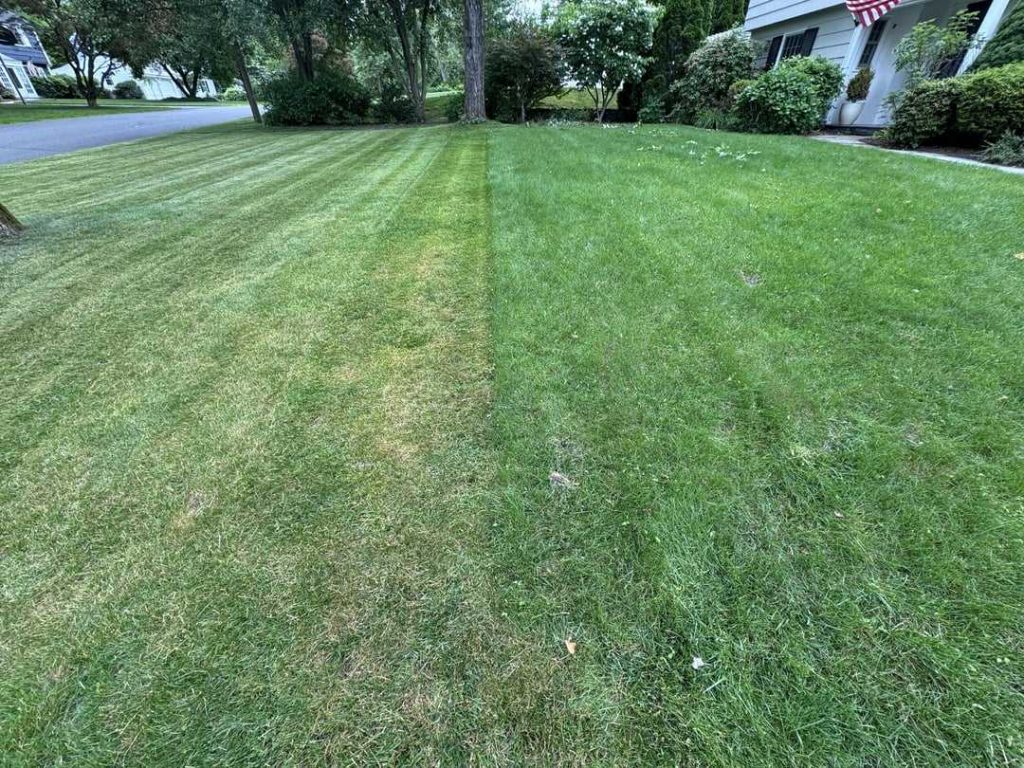
To revive your brown patches after mowing, ensure you’re not cutting the grass too short, water deeply to encourage healthy growth, and apply appropriate fertilizers to boost vitality. Addressing these issues promptly can turn your dead-looking lawn back to lush, green perfection.
If your grass turns brown after mowing, it’s often caused by stress from cutting too low, dehydration, or nutrient deficiencies. To fix it, adjust your mowing height, water deeply, and consider fertilizing. These steps help your lawn recover quickly and stay healthy.
Having a green, vibrant lawn is a goal many homeowners cherish, but sometimes mowing mishaps cause the grass to turn brown unexpectedly. Often, this is due to cutting the grass too short, which exposes the roots to stress and makes the turf more vulnerable to drought or disease. Weather conditions, improper watering, or nutrient shortages can also contribute to the problem. Luckily, you can turn things around with some simple steps—raising the mower height, watering regularly, and providing the right nutrients can help your lawn bounce back. Acting promptly and understanding the causes will keep your grass lush and inviting all season long.

What to do if grass turns brown after mowing
Understanding Why Grass Turns Brown After Mowing
When your lawn’s grass turns brown right after mowing, it can be frustrating. Several factors can cause this, ranging from the type of grass to mowing practices. Knowing why this happens is the first step toward fixing the issue and keeping your lawn healthy.
One common reason is that mowing too short can damage grass blades and roots. This stresses the plant, making it unable to produce enough chlorophyll, which is responsible for the grass’s green color. Additionally, mowing during hot weather can cause grass to dry out and turn brown quickly.
Another factor is the use of dull mower blades. Dull blades tear grass instead of cutting it cleanly, leading to a ragged appearance and increased stress for the turf. Grass that is already weakened by drought, disease, or pests may also turn brown after mowing because it cannot recover easily.
Lastly, over-fertilizing or applying too much fertilizer at once can cause the grass to become stressed, leading to browning after mowing. Understanding these causes helps you take steps to prevent future problems and restore your lawn’s lush appearance.
How Mowing Height Affects Grass Color
The height at which you mow plays a crucial role in your lawn’s health and color. Cutting grass too low, often called scalping, exposes soil and roots, increasing the chance of dryness and browning.
Most grasses need to be mowed at a height that allows enough leaf surface for photosynthesis. For example, cool-season grasses like Kentucky bluegrass should be cut around 2.5 to 3 inches, while warm-season grasses like Bermuda should be maintained at 1 to 2 inches.
Maintaining the correct mowing height encourages deep root growth and better drought resistance. When grass is cut too short, it weakens the plant and causes the grass to turn brown because it cannot produce enough energy. Adjusting your mower to the proper height supports healthier, greener grass.
Proper Mowing Techniques to Prevent Browning
Using the right mowing technique is vital to prevent grass from turning brown after mowing. Always set your mower blades to the recommended height for your grass type before mowing.
Make sure not to remove more than one-third of the grass height in a single mow. Cutting too much at once stresses the lawn and can cause browning. Instead, mow regularly to keep the grass at a consistent, healthy height.
Additionally, avoid mowing when the grass is wet, as this can cause uneven cuts and increase the risk of disease. Always mow with sharp blades to ensure clean cuts. Sharp blades reduce stress on the grass and minimize tearing, helping your lawn stay green and healthy.
watering Practices for a Green Lawn
Watering is essential for keeping grass green and resilient after mowing. Proper watering practices can prevent browning related to drought stress.
Water deeply and infrequently rather than shallow and frequent watering. For most lawns, aim for about an inch of water per week, including rain. Deep watering encourages roots to grow deeper into the soil, making the grass more drought-tolerant.
The best time to water is early in the morning, which minimizes evaporation and reduces disease risk. Avoid watering during the heat of the day or at night, as excess moisture can promote fungal growth that turns grass brown.
Using a rain gauge can help monitor how much water your lawn receives. Consistent and adequate watering will help your grass recover from mowing stress and stay lush and green.
Fertilizing Tips to Keep Grass Healthy
Proper fertilization plays a big role in preventing browning after mowing. Fertilizer provides essential nutrients that promote healthy green growth.
Use a balanced fertilizer tailored to your grass type, usually with nitrogen, phosphorus, and potassium. Apply fertilizer during the growing season, but avoid overdoing it, as too much can stress the grass and cause browning.
Follow the recommended application rates and timing specified on the fertilizer package. For most lawns, fertilizing in early spring and fall is ideal. Incorporate slow-release fertilizers to ensure steady nutrient availability.
Testing your soil can help determine nutrient deficiencies. A healthy, well-fed lawn is more resistant to stress and less likely to brown after mowing.
Dealing with Drought and Heat Stress
Hot and dry weather can cause grass to turn brown after mowing, especially if the lawn isn’t properly cared for. During such conditions, it’s essential to adjust your maintenance routine.
Reduce mowing height slightly during high temperatures, but avoid scalping. Higher grass blades shade the soil, helping retain moisture. Watering deeply early in the morning also helps keep the grass hydrated and reduces browning.
Applying a layer of mulch or leaving grass clippings can help retain soil moisture. Avoid mowing during the hottest parts of the day to minimize stress.
If browning persists, consider overseeding with more drought-tolerant grass varieties or repairing damaged areas with fresh seed. Consistent watering and proper mowing can reduce heat stress effects on your lawn.
Managing Pests and Diseases that Cause Browning
Bacterial, fungal, or insect pests can cause your grass to brown after mowing. It’s important to identify these problems early to prevent further damage.
Inspect your lawn for signs of pests like grubs, chinch bugs, or armyworms. Look for patches of dead grass, irregular coloring, or insect activity. Use appropriate pest control methods, such as organic options or chemical treatments, following product instructions.
Fungal diseases like dollar spot or brown patch also cause browning. These often appear as circular patches of dead or discolored grass. Treat fungal infections with fungicides suitable for your grass type and keep the area well-drained and aerated.
Regular lawn inspections and early intervention are key to managing pests and diseases that contribute to browning after mowing.
Repairing Damaged or Browning Areas
If your lawn has brown patches after mowing, it’s important to restore these areas promptly. Start by removing dead or browned grass to prepare for repair.
Aerate compacted soil to improve water and nutrient absorption. Overseed bare or damaged patches with compatible grass seed to encourage new growth. Lightly fertilize the area to support seed germination and growth.
Keep the soil consistently moist during the recovery period, and avoid mowing these areas until new grass is established. Over time, healthy grass will fill in the patches, making the lawn look uniform again.
Proper lawn care and timely repairs prevent browning from becoming a persistent problem and keep your yard looking lush and inviting.
Preventive Measures for a Greener Lawn
Ultimately, prevention is the best way to avoid brown grass after mowing. Establishing good lawn care habits reduces the stress that leads to browning.
Maintain a regular mowing schedule, adjusting the height for your specific grass type. Water deeply and infrequently to promote deep roots, and fertilize appropriately.
Implement aeration and overseeding when necessary to improve soil health and strengthen turf. Keep an eye on weather conditions and avoid mowing during extreme heat or drought.
Using organic lawn care products and avoiding chemical overuse can also promote a healthier environment for grass growth. Continuous attention to these practices helps your lawn stay vibrant and green year-round.
By understanding the causes of browning after mowing and adopting the right strategies, you can enjoy a beautiful, lush lawn even through challenging conditions.
Why your Bermuda Grass turns brown after you cut it // Browning Lawn after mowing
Frequently Asked Questions
How can I revive my grass after it turns Brown following mowing?
To revive your grass, avoid cutting it too short and ensure proper watering. Give your lawn adequate moisture by watering deeply but infrequently, especially during dry spells. Also, consider aerating the soil to improve airflow and nutrient absorption, which helps grass recover and stay healthy.
What are the common causes of browning grass after mowing, and how can I address them?
Brown grass after mowing often results from cutting too low, drought stress, or nutrient deficiencies. To prevent this, raise the mower height to avoid stressing the grass, water regularly to maintain hydration, and fertilize your lawn with the appropriate nutrients. Regularly checking soil health can also prevent deficiencies.
Should I change my mowing habits if I notice brown patches after mowing?
Yes, adjusting your mowing habits can help. Mow at a higher setting to leave more foliage, which provides shade and cools the grass. Avoid removing more than one-third of the grass height at a time, and always mow when the grass is dry to prevent tearing and stress. These practices promote healthier, greener lawns.
Final Thoughts
If grass turns brown after mowing, assess the cause immediately. Check if the mower blades are sharp, as dull blades tear grass, leading to browning. Ensure you’re not cutting more than one-third of the grass height at once, which stresses the lawn.
Adjust your watering schedule if the soil feels dry. Proper hydration helps grass recover quickly. Consider aerating the lawn to improve airflow and nutrient absorption.
What to do if grass turns brown after mowing? Focus on proper watering, mowing at the right height, and feeding your lawn with appropriate fertilizer. Taking these steps encourages healthy, green grass and prevents future browning.