Tackling invasive Bermuda grass without harming your desirable plants can be a challenge, but it’s achievable with the right strategy. This guide reveals what kills Bermuda grass only, focusing on selective herbicides like fluazifop-p-butyl and sethoxydim, which target Bermuda grass while leaving most cool-season grasses and broadleaf plants unharmed. You’ll also learn about careful manual removal and cultural controls to effectively eliminate this persistent weed.
What Kills Bermuda Grass Only
Bermuda grass (Cynodon dactylon) is a fantastic turf grass in many warm-season climates, prized for its durability and drought tolerance. However, for gardeners, homeowners with cool-season lawns, or anyone trying to grow specific plants in its vicinity, it can quickly become a relentless, invasive weed. Its aggressive growth habit, deep root system, and ability to spread rapidly via rhizomes (underground stems) and stolons (above-ground runners) make it incredibly difficult to control. The real challenge? Figuring out what kills Bermuda grass only, without harming your prized roses, your fescue lawn, or your carefully curated flower beds.
If you’ve been battling Bermuda grass, you know the frustration of seeing it creep into areas where it doesn’t belong. You’ve probably asked yourself, “Is there really a way to kill this stuff without destroying everything else?” The good news is, yes, there are methods and products specifically designed to target Bermuda grass while leaving many other plants, especially cool-season grasses and broadleaf ornamentals, untouched.
In this comprehensive guide, we’ll walk you through the most effective strategies for what kills Bermuda grass only. We’ll cover selective herbicides, careful manual removal techniques, and essential cultural practices that will help you reclaim your garden and lawn. By the end, you’ll have a clear action plan to tackle this persistent problem with precision and confidence.
Key Takeaways
- Selective Herbicides are Key: Use post-emergent selective herbicides containing active ingredients like fluazifop-p-butyl or sethoxydim to target Bermuda grass without harming most desired cool-season grasses, shrubs, or perennials.
- Timing is Crucial: Apply herbicides when Bermuda grass is actively growing and healthy, typically in warm weather (70-85°F), for maximum effectiveness. Avoid application during drought stress.
- Repeat Applications are Necessary: Bermuda grass has extensive rhizomes, so a single treatment is rarely enough. Plan for 2-3 applications, 2-4 weeks apart, to fully exhaust its root system.
- Read Labels Carefully: Always follow the product label’s instructions for mixing ratios, application rates, safety precautions, and compatibility with your specific desirable plants to avoid damage.
- Cultural & Manual Methods Help: For chemical-free options or stubborn patches, consider solarization, smothering with cardboard, or diligent hand-pulling (though challenging) to weaken and remove Bermuda grass.
- Protect Desired Plants: When spot treating or using non-selective options in specific areas, shield nearby desirable plants from overspray with barriers like cardboard or plastic.
Understanding Bermuda Grass: The Persistent Invader
Before we dive into how to kill Bermuda grass only, it helps to understand why it’s such a tough opponent. Bermuda grass thrives in warm weather, quickly forming dense mats. Its extensive root system can penetrate deep into the soil, making simple hand-pulling often ineffective as small pieces of rhizome left behind can easily regrow. It also spreads seeds, further complicating control. This robust nature is precisely why selective removal requires a strategic approach.
The Challenge of Selective Control: What Kills Bermuda Grass Only Without Harming Others?

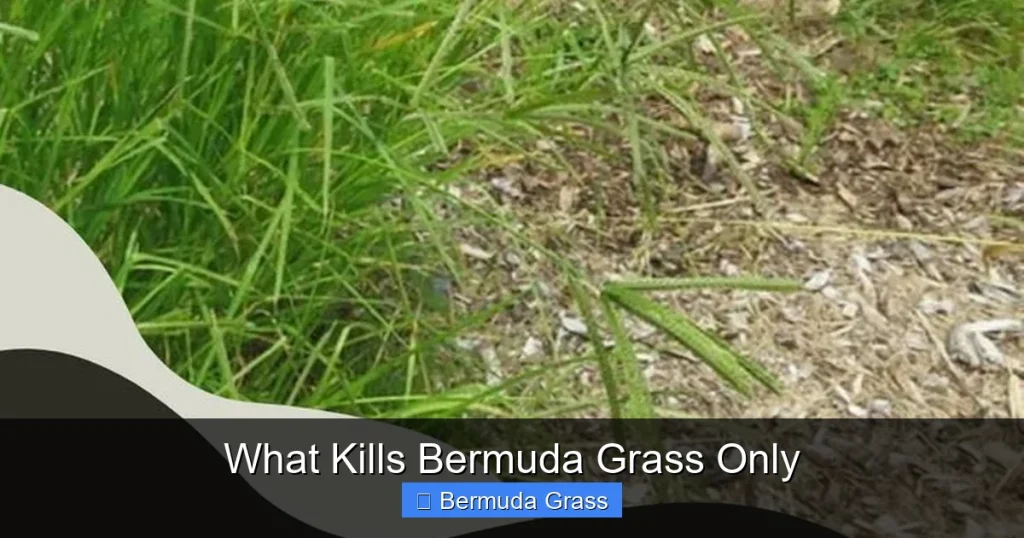
Visual guide about What Kills Bermuda Grass Only
Image source: i.pinimg.com
Many common weed killers are non-selective, meaning they will kill any plant they come into contact with. Using these indiscriminately is like dropping a bomb on your garden – it gets rid of the problem, but also everything you love. The key to what kills Bermuda grass only lies in identifying tools and techniques that exploit differences between Bermuda grass and your desired plants. Fortunately, advancements in herbicide technology offer solutions that are much more targeted.
Method 1: Selective Post-Emergent Herbicides
This is often the most effective and least labor-intensive way to kill Bermuda grass only when it’s growing amidst desirable plants, especially cool-season lawns, groundcovers, or in perennial beds. Post-emergent means the herbicide is applied after the weed has emerged and is actively growing. Selective means it targets certain plant types while leaving others unharmed.
H3. Choosing the Right Active Ingredients
The magic behind what kills Bermuda grass only in these situations comes down to specific active ingredients that are graminicides – they target grassy weeds.
* Fluazifop-p-butyl (e.g., Ornamec 170, Fusilade II, Grass Getter): This is a highly effective selective herbicide for Bermuda grass. It’s generally safe to use around many broadleaf plants (flowers, shrubs, trees) and even some desired turf grasses like tall fescue, fine fescue, and rye grass. Always check the label for specific plant compatibilities. It works by inhibiting lipid synthesis in susceptible grasses, effectively starving them.
* Sethoxydim (e.g., Poast, Vantage): Similar to fluazifop-p-butyl, sethoxydim is another selective graminicide that can kill Bermuda grass only. It’s also safe for use around a wide range of broadleaf plants and some desired turf species. Again, refer to the product label for exact recommendations.
These herbicides are absorbed by the Bermuda grass leaves and then translocated throughout the plant, including its extensive root system. This systemic action is crucial for truly killing the grass and preventing regrowth from rhizomes.
H3. Step-by-Step Application for Selective Herbicides
1. Read the Label Meticulously: This is the most critical step. Product formulations and concentrations vary. The label will tell you:
* The correct mixing ratio for your specific application (e.g., ounces per gallon of water).
* Which desirable plants are safe for treatment and which are not.
* Recommended application temperatures and conditions.
* Safety precautions (PPE).
* Re-entry intervals.
2. Timing is Everything:
* Apply when Bermuda grass is actively growing and healthy, not stressed by drought or extreme heat. Ideal temperatures are typically between 70-85°F (21-29°C).
* Avoid applying immediately before or after rain. The grass needs time to absorb the herbicide, usually 24-48 hours.
* Do not mow for 2-3 days before application and for at least 5-7 days after. This ensures there’s enough leaf surface to absorb the herbicide and allows it to translocate throughout the plant.
3. Prepare Your Solution: Mix the herbicide with water according to the label’s instructions. A surfactant (a wetting agent) is often recommended or included in these products. Surfactants help the herbicide stick to and penetrate the waxy leaf surface of the Bermuda grass, significantly increasing effectiveness.
4. Apply with Precision:
* Use a pump sprayer or backpack sprayer for even coverage.
* Target the Bermuda grass leaves, aiming for thorough but not excessive wetting (to the point of runoff).
* Be careful to minimize drift onto non-target plants, even if the product is selective. While generally safe, direct overspray can sometimes cause temporary stress or discoloration.
5. Observe and Reapply:
* It takes time for these herbicides to work. You’ll likely see yellowing and browning begin within 7-14 days.
* Bermuda grass is tenacious. A single application is rarely enough to kill it completely due to its extensive rhizomes. Plan for 2-3 applications, spaced 2-4 weeks apart, following the product’s instructions. This helps to deplete the energy reserves in the rhizomes.
* Wait until you see new growth from the Bermuda grass after the first application before applying again. This indicates it’s actively pulling nutrients and therefore herbicide into its system.
Method 2: Non-Selective Herbicides for Spot Treatment (Extreme Caution)
While the goal is what kills Bermuda grass only, there might be situations where Bermuda grass is growing in isolated patches, along pathways, or in areas where no desirable plants are present. In these specific cases, a non-selective herbicide like glyphosate can be used, but with *extreme caution and precision*.
H3. Targeted Glyphosate Application
1. Choose Your Formulation: Glyphosate is available in various concentrations. A ready-to-use spray is convenient for small spot treatments. For larger areas, a concentrate allows you to mix your desired strength.
2. Protect Desirable Plants: This is paramount. If Bermuda grass is growing near plants you want to keep, create a physical barrier. Use a large piece of cardboard, plastic sheeting, or even a bucket to shield the desirable plants completely from any spray drift.
3. Apply with a Fine Mist or Paintbrush:
* For small, isolated clumps, consider painting the glyphosate directly onto the Bermuda grass leaves using a foam paintbrush. This provides incredibly precise application and virtually eliminates drift.
* For slightly larger areas, use a sprayer with a narrow stream setting on a calm, windless day.
4. Monitor and Reapply: Like selective herbicides, glyphosate takes time to work. Symptoms will appear in 7-14 days. Repeat applications may be necessary for complete kill, especially for established Bermuda grass.
5. Avoid Soil Contact (Generally): Glyphosate is generally inactivated upon contact with soil, but it’s still best to minimize overspray.
Important Warning: Glyphosate kills *everything* it touches. Never use it in a broadcast application over your lawn or garden if you wish to keep any plants alive. This method is strictly for specific, isolated infestations of Bermuda grass where “what kills Bermuda grass only” is less about selectivity and more about targeted application.
Method 3: Cultural Control & Manual Removal
For those who prefer a chemical-free approach or want to supplement herbicide use, cultural methods and manual removal can be effective, though often more labor-intensive and slower.
H3. Solarization
This method uses the sun’s heat to “cook” the Bermuda grass and its seeds.
1. Prepare the Area: Mow the Bermuda grass as short as possible. Water the area thoroughly to encourage weed seeds to sprout.
2. Cover with Plastic: Lay clear, heavy-gauge (4-6 mil) plastic sheeting directly over the infested area. Ensure the edges are completely sealed by burying them in a trench or weighing them down with rocks or soil. This traps solar heat.
3. Wait it Out: Leave the plastic in place for 6-8 weeks during the hottest part of summer. The temperatures under the plastic can reach lethal levels (120-140°F), killing Bermuda grass, other weeds, and even some soil pathogens.
4. Remove and Replant: Once the Bermuda grass is dead, remove the plastic and prepare the area for planting.
Consideration: Solarization is excellent for clearing large, open beds or garden areas before planting, but not suitable for areas with existing desirable plants.
H3. Smothering with Cardboard and Mulch
This method works by blocking sunlight and air, effectively suffocating the Bermuda grass.
1. Mow Short: Cut the Bermuda grass as low as possible.
2. Lay Cardboard: Place overlapping layers of plain, uncolored cardboard (remove all tape and labels) directly over the Bermuda grass. Ensure no gaps for light to peek through. Water the cardboard thoroughly to help it settle and begin decomposing.
3. Add Mulch: Cover the cardboard with a thick layer (6-12 inches) of organic mulch, such as wood chips, straw, or compost.
4. Monitor and Maintain: Check periodically for Bermuda grass trying to grow through the cardboard or mulch. Add more mulch as needed. This process can take several months to a year for complete eradication.
Consideration: This method is slower but great for creating new garden beds or pathways where you want to suppress weeds long-term. Not ideal for existing lawns.
H3. Persistent Hand-Pulling and Digging
While incredibly tedious, consistent manual removal can eventually weaken and eliminate Bermuda grass, especially in small, contained areas.
1. Use Tools: A sturdy trowel, weeding fork, or shovel is essential.
2. Dig Deep: Bermuda grass rhizomes can go deep. You must try to remove as much of the root and rhizome system as possible. Even small pieces left behind can regrow.
3. Consistency is Key: This is not a one-time job. Return to the area frequently (weekly or bi-weekly) to remove any new shoots that emerge. The goal is to starve the rhizomes by preventing photosynthesis.
4. Bag and Dispose: Do not compost Bermuda grass you’ve pulled, as its rhizomes can survive and root in compost piles. Bag it and send it out with yard waste.
Consideration: Best for very small infestations or as follow-up to other methods. Highly labor-intensive for larger areas.
Method 4: Strategic Planting and Competition
Sometimes, the best defense is a good offense. If Bermuda grass is invading your cool-season lawn, one strategy for what kills Bermuda grass only (or at least weakens it significantly) is to promote the health and density of your desired grass.
H3. Overseeding and Fertilizing
1. Heavy Overseeding: In late summer or early fall (for cool-season grasses), heavily overseed your lawn with your preferred grass type (e.g., tall fescue, Kentucky bluegrass, perennial rye). A dense stand of desirable grass will compete for light, water, and nutrients, making it harder for Bermuda grass to establish or spread.
2. Proper Fertilization: Follow a consistent fertilization schedule appropriate for your desired grass. Healthy, vigorous cool-season grass can outcompete Bermuda grass during its peak growing season.
3. Adjust Mowing Height: Mow your cool-season lawn at a higher setting (3-4 inches). Taller grass shades the soil, reducing the light available for sun-loving Bermuda grass to grow.
Consideration: This is a long-term strategy and won’t eradicate established Bermuda grass quickly, but it can significantly reduce its presence over time.
Important Considerations and Tips for Success
* Patience is a Virtue: Eliminating Bermuda grass is rarely a quick fix. It takes persistence and often multiple treatments over weeks or even months.
* Read and Re-read Labels: We can’t stress this enough. Product labels are your instruction manual for safe and effective use.
* Test a Small Area: If you’re unsure about the compatibility of a selective herbicide with your specific desirable plants, test it on a small, inconspicuous area first.
* Combine Methods: Often, the most effective strategy for what kills Bermuda grass only involves combining approaches. For example, use selective herbicides, then follow up with manual pulling of any stragglers, and then overseed to fill in bare spots.
* Prevent Reinfestation: Once you’ve controlled the Bermuda grass, be vigilant. Install edgings or root barriers along garden beds bordering infested areas. Keep your desirable plants healthy and dense to make it harder for Bermuda grass to return.
* Clean Tools: After working in an infested area, clean your mowers, trimmers, and shovels to prevent inadvertently spreading Bermuda grass rhizomes or seeds to other parts of your property.
Troubleshooting Common Issues
H3. Herbicide Doesn’t Seem to Be Working
* Check Timing and Conditions: Was the Bermuda grass actively growing? Were temperatures too low or too high? Was it stressed by drought? Herbicides are less effective on dormant or stressed plants.
* Did You Add a Surfactant? Many selective graminicides require a surfactant for optimal absorption.
* Correct Mixing Ratio? Ensure you followed the label’s dilution instructions precisely. Too weak, and it won’t work; too strong, and you risk harming desirable plants or wasting product.
* Mowing Schedule: Did you mow too soon before or after application?
* Persistence: Remember, it often takes multiple applications. Don’t give up after the first one!
H3. Bermuda Grass Is Returning
* Rhizome Regrowth: This is the most common reason. Small pieces of rhizomes or stolons were left behind or weren’t fully killed by the initial treatment. Continue with repeat applications or manual removal.
* Seed Germination: Bermuda grass produces seeds. If the area was heavily infested, new plants may be germinating from the seed bank in the soil.
* Neighboring Invasion: Is Bermuda grass creeping in from an untreated area or a neighbor’s yard? Consider installing root barriers or creating a buffer zone.
H3. Desirable Plants Were Damaged
* Overspray/Drift: Even selective herbicides can cause temporary stress if applied excessively or if the desirable plant is particularly sensitive. Non-selective herbicides will kill.
* Incorrect Product Selection: Did you verify the herbicide was safe for *your specific* desirable plants? Labels are key.
* High Temperatures: Applying herbicides in very high temperatures can sometimes increase phytotoxicity (plant damage) to desirable plants, even if normally safe.
* What to Do: For mild damage, often the plant will recover. Water deeply, and avoid further stress. For severe damage from non-selective herbicides, replacement might be necessary. Learn from the experience and be even more cautious next time.
Conclusion
Tackling Bermuda grass selectively is a journey, not a sprint. Knowing what kills Bermuda grass only is the first step, but applying that knowledge with patience and precision is where you’ll find success. Whether you opt for the targeted power of selective graminicides like fluazifop-p-butyl, the careful precision of spot-treating with non-selective options, or the enduring efforts of cultural and manual removal, a consistent and multi-faceted approach will yield the best results.
By understanding the nature of this tenacious grass and employing the strategies outlined in this guide, you can effectively manage and eliminate Bermuda grass from your cool-season lawn, garden beds, and other unwanted areas, allowing your desired plants to thrive without competition. Reclaim your landscape and enjoy the satisfaction of a Bermuda grass-free environment!